
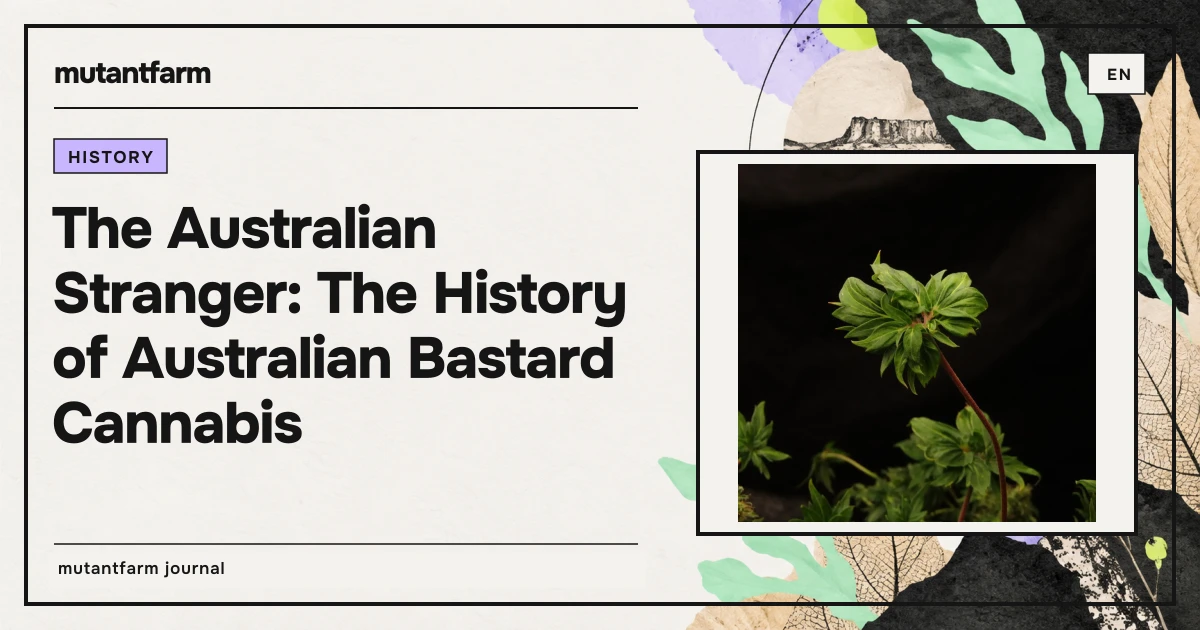
Hey, bro! Even people who have never seen a living cannabis plant recognize the serrated, fingered leaf. Australian Bastard Cannabis does not have that leaf: its leaves are small, their outlines unfamiliar, and the plant is shaped like a shrub. That appearance is what made ABC one of the best-known mutants.
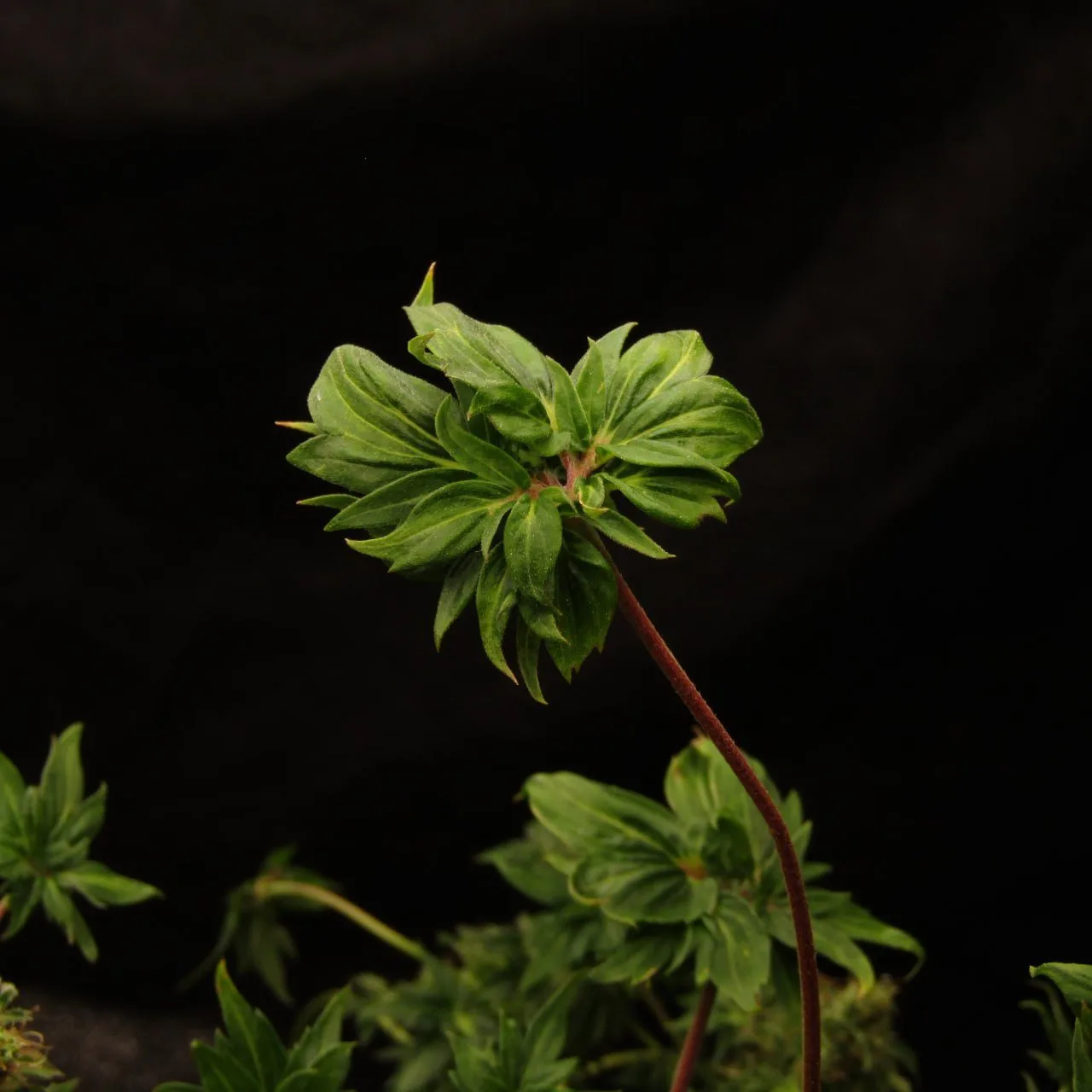
Its history involves Australian friends of friends, a Canadian magazine, several different names, and a genetic study from which people online drew stronger conclusions than its authors did. Some people gave the plant its name, others preserved it. Let’s take it in order.
First publications, 1999
The earliest known publication using the name Australian Bastard Cannabis is Dana Larsen’s article Strange Aussie Genes on the Cannabis Culture website, dated June 28, 1999. Larsen described a trip to Australia and wrote that the editorial team had given the unusual plant the name ABC. By then, the magazine already had hundreds of seeds, and they were passed on to various people in North America. Dana Larsen, Strange Aussie Genes
The more detailed report Growing Down Under came out on August 1 of the same year. Mr Ayers met Larsen in Sydney and showed him plants on his farm a few hours’ drive from the city. That is where Larsen saw ABC with his own eyes.
Ayers did not claim to have created ABC. He first read about unusual cannabis in a report on an arrest in Australia, and later came across another publication. The material reached him through a chain of acquaintances. Dana Larsen, Growing Down Under
Larsen wrote both 1999 articles. The history of the name ABC begins with them, while the plant itself had been living in Australia before that.
Local names
In August 2000, Cannabis Culture published a follow-up, Aussie mutant update, with a letter from an Australian using the name Ketra Hybud. He wrote that in the eastern mountain country of northern New South Wales such plants were known as Mutant, so the plant had a local name before ABC.
The same letter gave two versions of its origin: a colchicine experiment and cannabis grafted onto hops. Larsen discussed them, but the article contains no experimental protocol, original material, or witness, so both versions are rumors from 2000. The informal name Cannabis Australis also appeared in the same article. Aussie mutant update
ABC later picked up other names: Mongy Weed, Mongy Madness, Bindi or Bindy, Bindi Buds. Some regarded them as names for the same original material, while for others similar words referred to their own populations and hybrids.
MongyMan’s account
A detailed account of the early history was left by a participant known as MongyMan. It survives in a repost on Rollitup dated October 4, 2013; within the copy, the original is dated November 11, 2006.
According to him, an elderly couple found the unusual population near Sydney. MongyMan did not claim the discovery for himself. He received the seeds later, when the previous keepers could no longer continue the work. He called the mixed material that later circulated among acquaintances Mongy Madness.
The same author connected ABC with seeds that reached Marc Emery in Canada. According to the 1999 articles, Larsen saw the plant and the editorial team gave it its name. The surviving repost of MongyMan’s account
MongyMan’s account shows whose hands the plant passed through: the elderly couple noticed it and did not throw it away, then the seeds came to him, then the material spread among his acquaintances.
Where did the bastard go?
On July 1, 2004, a thread titled Where is ABC? was opened on ICMag. Its author remembered the Cannabis Culture article and asked what had happened to the plant since. Replies recalled acquaintances, old forums, and other mutant forms. In the early 2000s many people had heard of ABC, but finding particular collections was difficult. Where is ABC? discussion, 2004
On June 13, 2005, Dana Larsen and a participant called Volcano returned to the subject in Cannabis Culture. The article Aussie Bastard Cannabis Redux described ABC × Flo, which came from the magazine’s earlier seed distribution. Volcano described dark, glossy leaves with an unfamiliar margin, and the article included photographs.
So part of the distributed material survived and kept producing plants. ABC × Flo, however, is already a cross, a separate branch from Ayers’s original material. Dana Larsen and Volcano, Aussie Bastard Cannabis Redux
Dizzy: a similar leaf, disputed ancestry
Older discussions associate Dizzy with FET and Spice Brothers. It is sometimes listed among ABC’s synonyms, and MongyMan also linked the two in his account.
On November 8, 2009, in an ICMag discussion, happyherb objected: as he remembered it, FET had insisted that Dizzy had a different origin. Discussion of ABC, Dizzy, Bindi, and Mongy Madness
So the relationship between Dizzy and ABC is disputed: some participants linked them, others did not.
Ducksfoot is a different leaf form: tissue remains between the lobes, like webbing. MongyMan made that distinction explicitly. Both plants come from Australia and both are popular with collectors, but Duck and ABC are different names.
The 2015 study
In 2015, the proceedings of the International Cannabinoid Research Society (ICRS) included a report by Kevin McKernan, Cameron Miller, and colleagues from Medicinal Genomics and The WercShop. They studied ABCh, Australian ABC crossed with Purple Skunk Oregon.
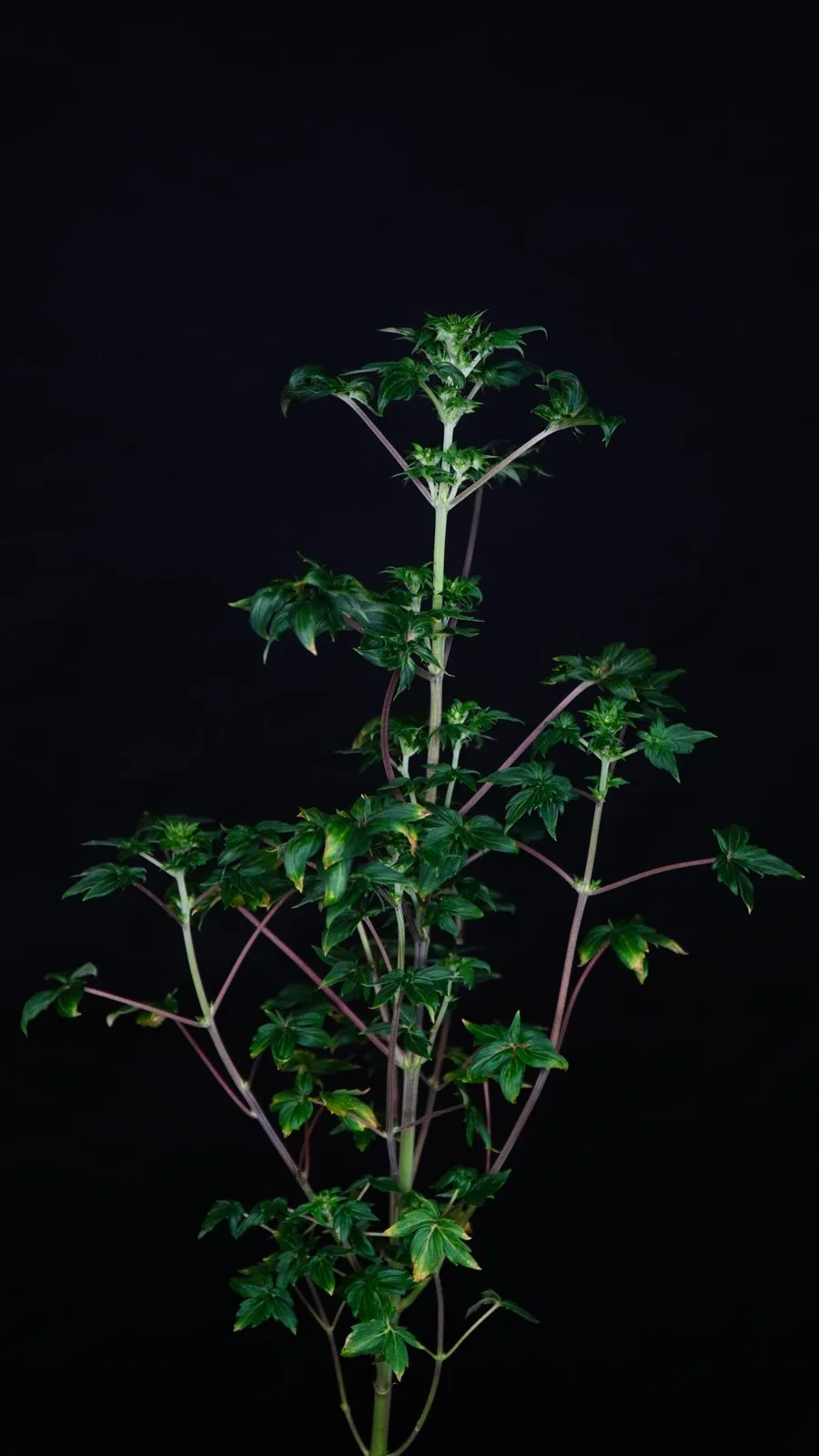
By some measures, the ABCh sequences differed more from the comparison samples than those samples differed from one another. The authors discussed what this might mean for taxonomy, and in their conclusion wrote that the original, non-hybrid material needed to be sequenced next. ICRS 2015, printed p. 14
Medicinal Genomics also states on its page that the cultivar shown is a hybrid and is not the original Australian Bastard. The page publishes data and photographs of that sample and mentions the history of cannabis introductions to Australia. Medicinal Genomics material on Australian Bastard
Online, this work gets retold as “geneticists proved that ABC is older than all other cannabis” or “its genome confirmed a fourth species.” There is nothing like that in the published result. According to Kew, the genus Cannabis has one accepted species, Cannabis sativa, and there is no separate species called ABC or Cannabis australis. Cannabis in Plants of the World Online
In other words, ABC is Cannabis sativa with an unusual leaf.
hyb and Subterfuge #1
The second big wave of interest in ABC is associated with hyb and the Hybri-Tech project. His line Subterfuge #1 is mentioned in an ICMag post dated January 26, 2019. The post quotes the breeder’s description: the project began with ABC seeds from Cannabis Culture in 1999, followed by years of work.
This is the breeder’s own promotional description, preserved in a repost. Subterfuge #1 in the 2019 discussion
On March 15, 2020, Sava opened a dedicated ICMag thread about hyb’s line. That spring he was already showing labeled plants of Subterfuge, AutoBastard, ABC Site 4, and ABC from another Australian source, all on one page.
The thread shows which names were in use in 2020 and which forms Sava distinguished from one another. AutoBastard appears in it in 2020. Hyb’s Subterfuge #1, posts by Sava
Site 3, Site 4, and new keepers
Painted Forest Farms and CSI Humboldt appear in discussions from 2019, and material labeled ABC Site 3 and ABC Site 4 was associated with them. By autumn 2019, both names were already circulating on Overgrow. Australian Bastard .. wtf?, posts from 2019
Sava also showed ABC Site 4 in his ICMag thread in spring 2020.
In the 1999 reports, ABC is the name of unusual Australian material. In later collections, the name covers historical populations, individual lines, and hybrid families.
From Subterfuge to Drunken Bastard
Drunken Bastard is a 7East Genetics line. The breeder lists Subterfuge No.1 and Sangria in its ancestry. In its own description, 7East thanks Full Throttle Farms for the Subterfuge material and names Hybri-Tech and Aficionado Estates among the sources of the parental lines.
On January 26, 2022, a THCFarmer forum participant unconnected to the breeder already mentions Drunken Bastard F3 obtained from 7East. Contemporary evidence on THCFarmer
In short, the ancestry is written as Subterfuge × Sangria. The full pedigree from 7East lists Subterfuge No.1 #8 and #12 and Sangria #7 and #21.
A whole family now
Next come projects crossing ABC lines with Freakshow, individual collections, and new working names. In March 2021, lilmanbigplan on Overgrow described a project with Subterfuge, ABC Site 4, and Freakshow and noted from the start that the outcome was still unknown. lilmanbigplan’s project, March 2021
Jayma Mutant Research has ABC Crazy Crosses. My report records Jayma’s explanation: it is a mix of several ABC lines, including Site 3, Site 4, Subterfuge, and ABC × Flo. The author’s report with Jayma’s account
That is how ABC came to have many names, each with its own people behind it.
Summing up
Retellings often date the discovery of ABC to the 1970s. The first dated documents about it are Larsen’s 1999 articles.
After 1999, the history follows documents: Larsen’s articles, readers’ letters, Volcano’s plants, keepers’ accounts, the ABCh study, Subterfuge, individual ABC collections, and new families.
ABC made many people take a serious look at cannabis that does not look like the familiar picture. People came along who preserved that oddity, and thanks to them there is now something to compare, photograph, and study.