
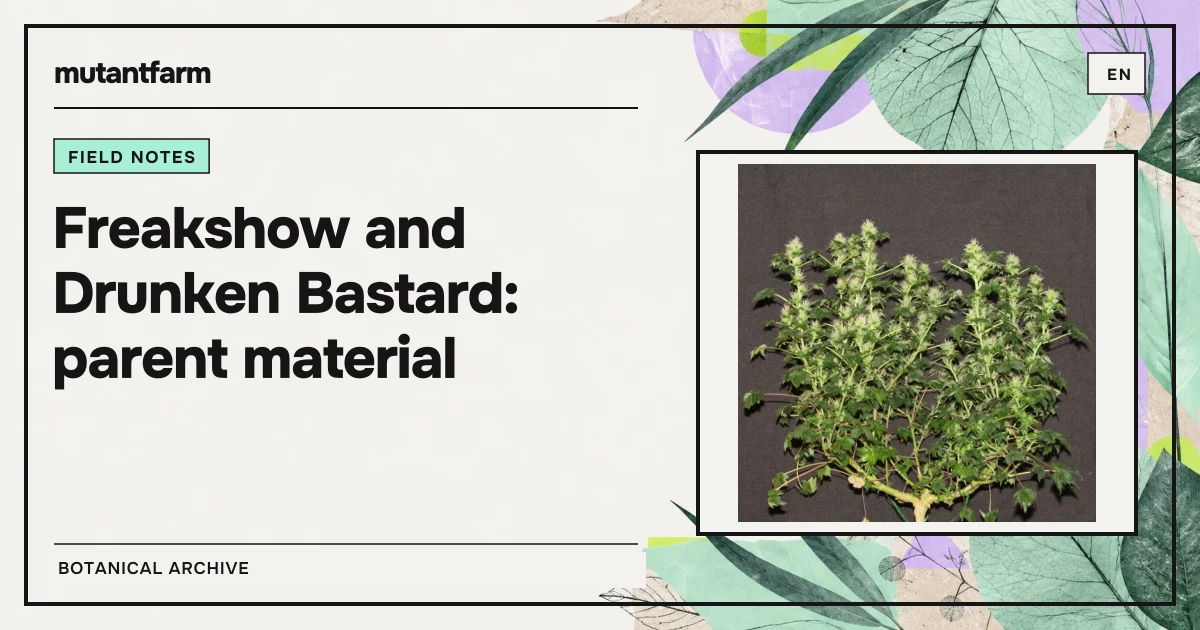
Freakshow and Drunken Bastard: parent material
My first selection of Freakshow IBL and Drunken Bastard F3: morphology, sex, parent pairs and seeds of the first hybrids, then a third season with Freakshow IBL, Drunken Bastard F4 and the selection of Drunken Bastard × Freakshow F1 for F2.
Mar 30, 2022 - Mar 29, 2023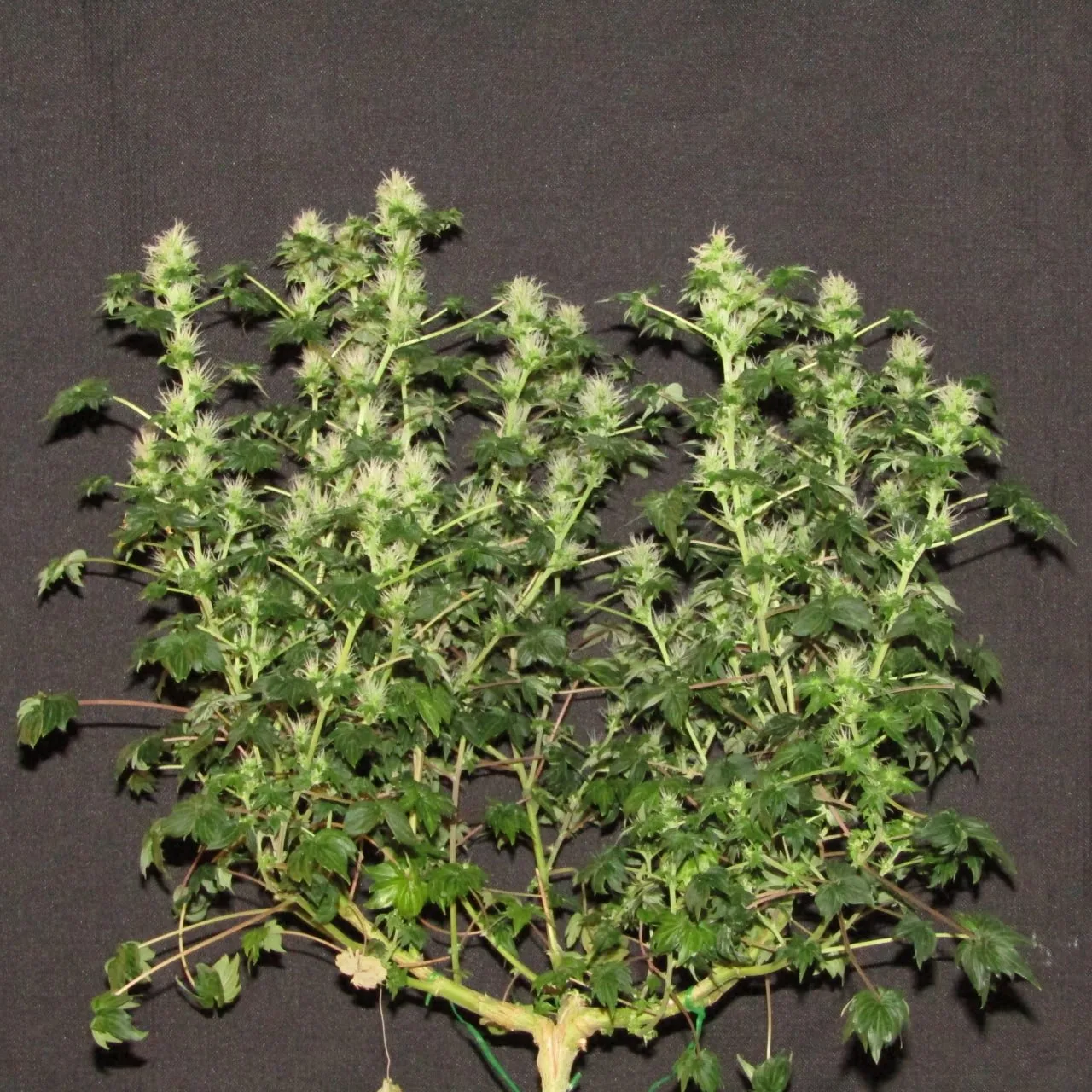
- Material
- Freakshow IBL; Drunken Bastard F3
- Generation
- Parents of the first F1
- Years
- 2022–2023
- Seeds in selection
- 29: 16 FS and 13 DB
March 2022. Parent material
Welcome, friends! Growerstuffer is starting a new season. The main quests are to gain experience with Regular seeds can produce both male and female plants. regular seeds ↗, preserve the genetics as clones and next-generation seeds, learn the basics of breeding, and try crossing two strains.
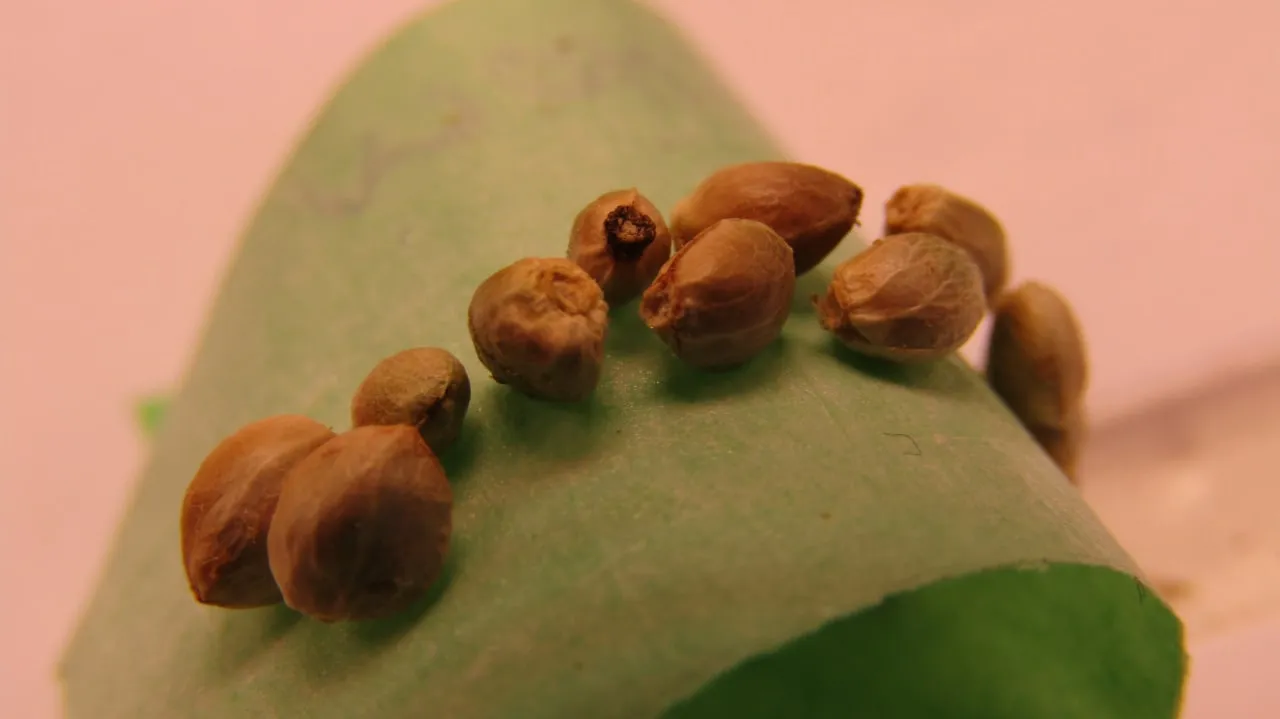
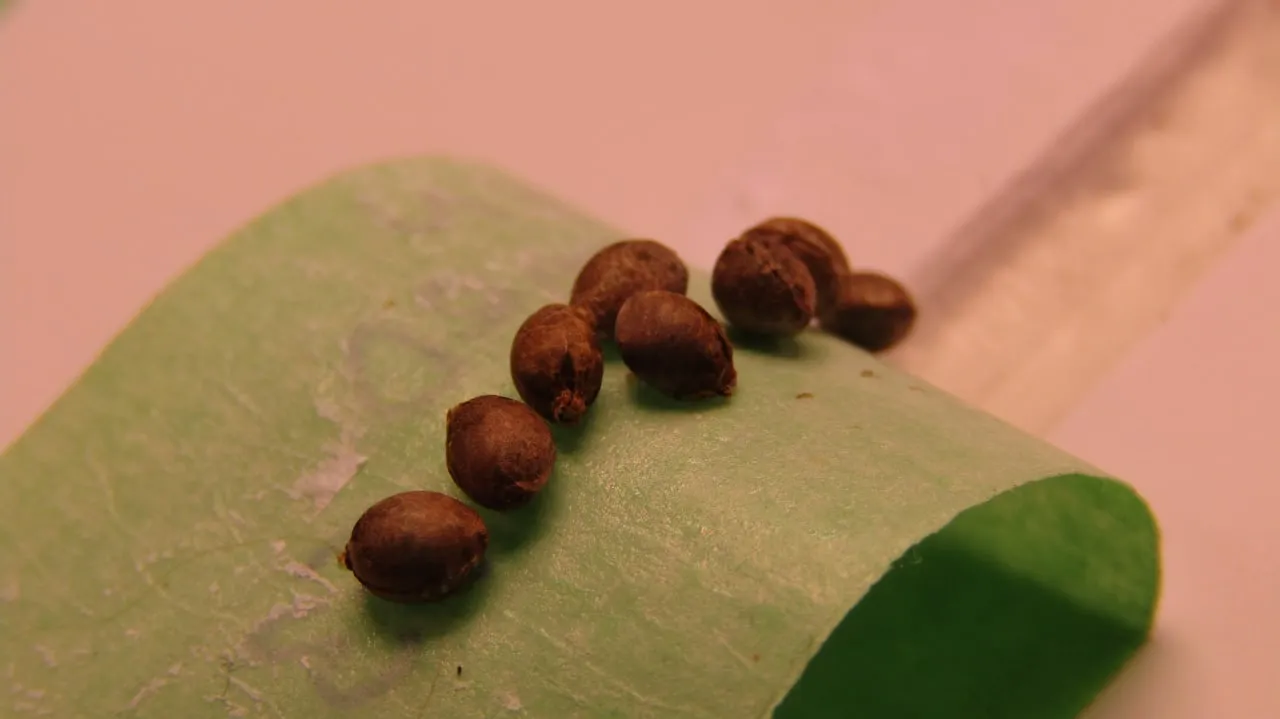
I am working with Freakshow Inbred Line: a line selected over generations to reproduce particular traits consistently. IBL ↗ and Drunken Bastard F3 from 7East Genetics. The FS seeds are mostly medium to large, pale, and faintly patterned. The DB seeds are similar in size but much darker. I number the specimens 1–8 for FS and 11–18 for DB.
April 4. Germination and a larger population
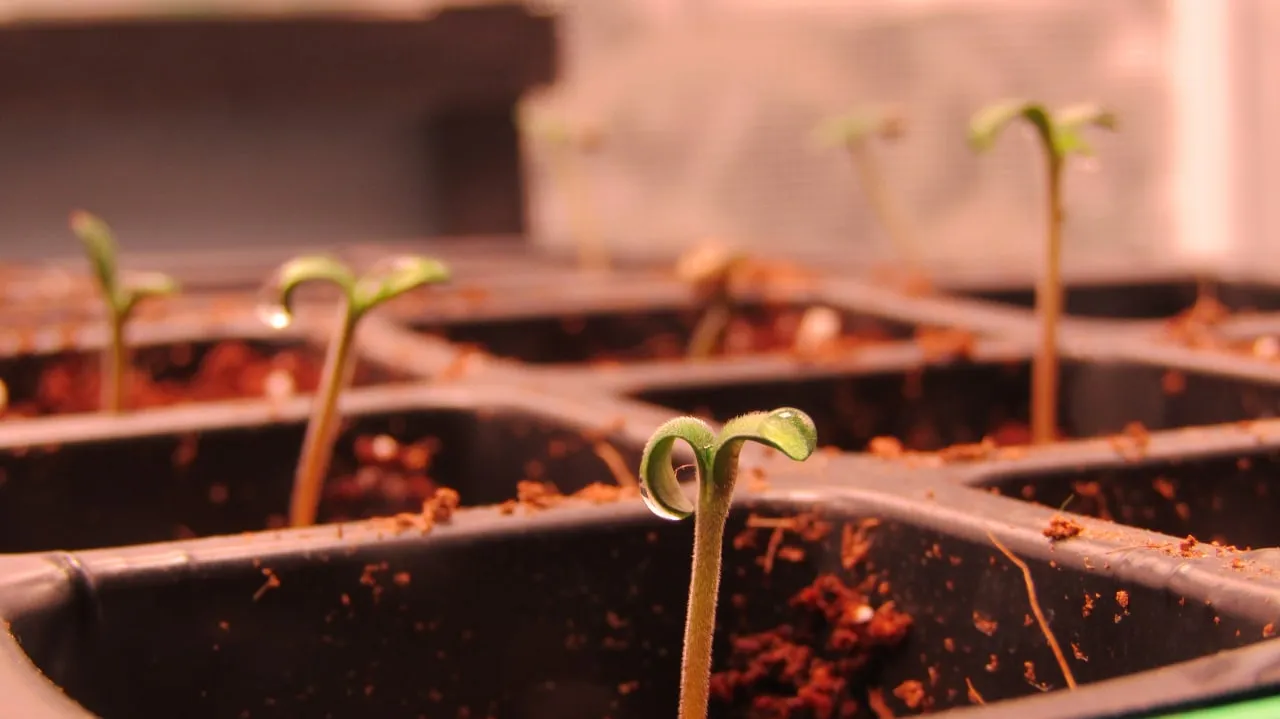
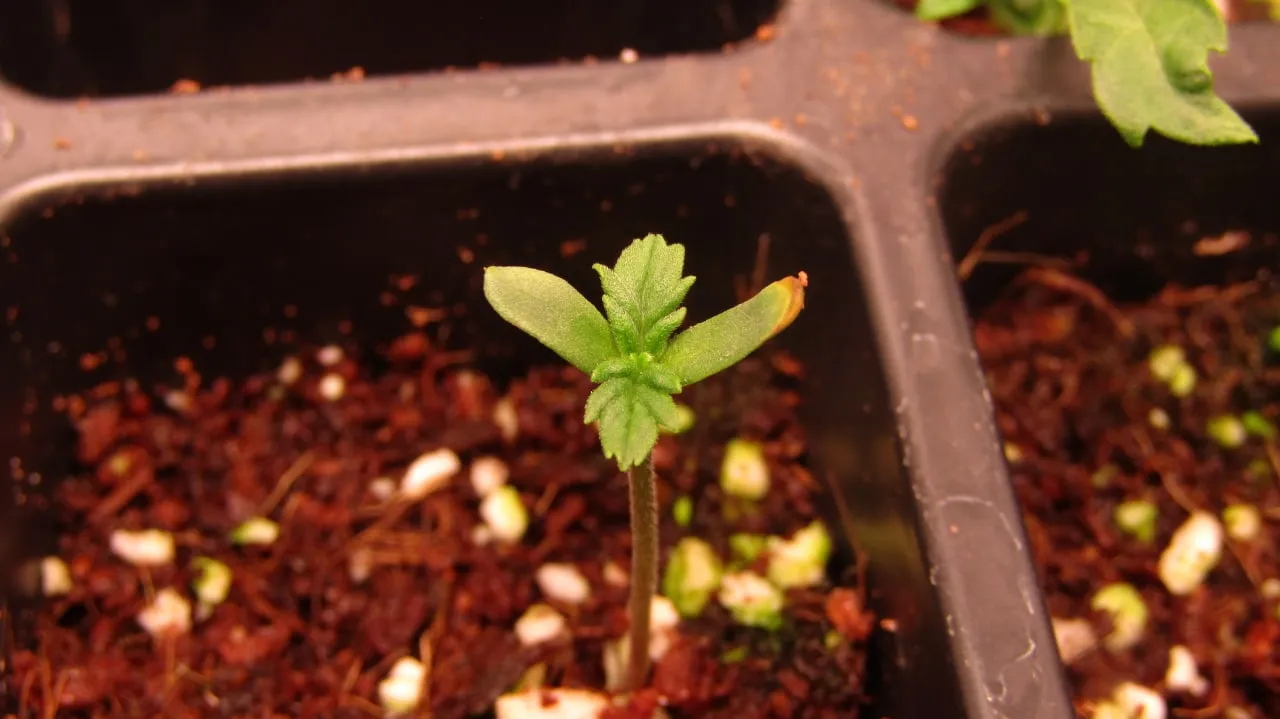
The seedlings began emerging on March 26. By April 4, 7 out of 8 Freakshow seeds and 8 out of 8 Drunken Bastard seeds had germinated.
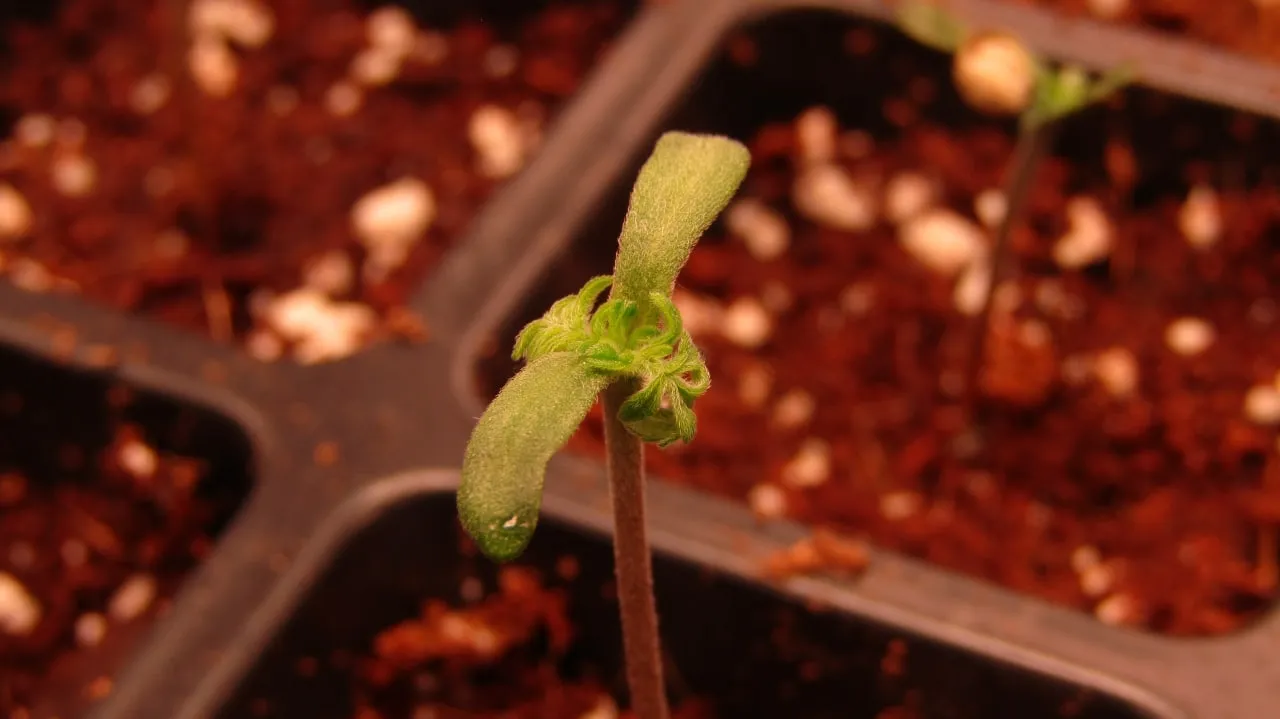
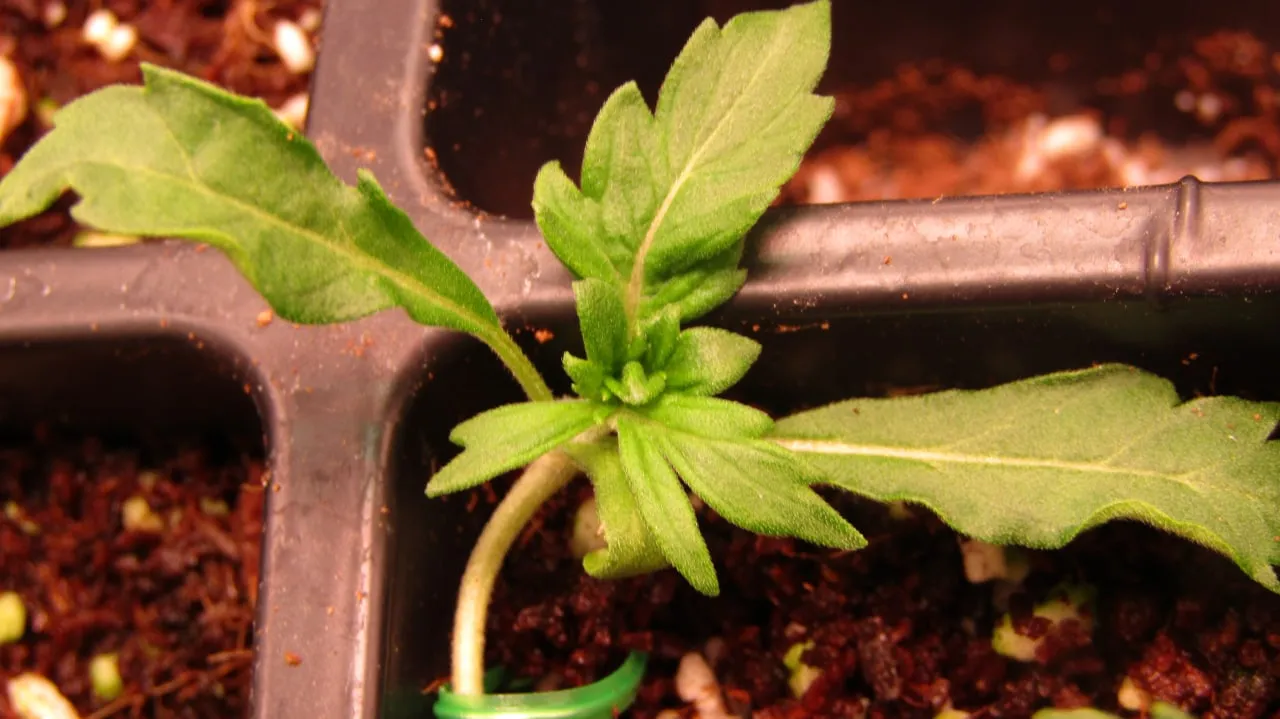
Three Freakshow plants looked suitable for breeding: FS#2, FS#4, and FS#5. Only these plants immediately had the proper Freakshow leaf shape without distortions. FS#3 was a malformed mutant; the others produced flawed first leaves. All the Drunken Bastard plants are developing properly.
With too little material for the selection I wanted, I decided to add the remaining seeds: 8 FS and 5 DB. That makes 29 seeds entering selection: 16 FS and 13 DB.
April 5. The first elimination
Freakshow:
- FS#1 is eliminated from the next round: the first pair of leaves shows a slight anomaly and distortion.
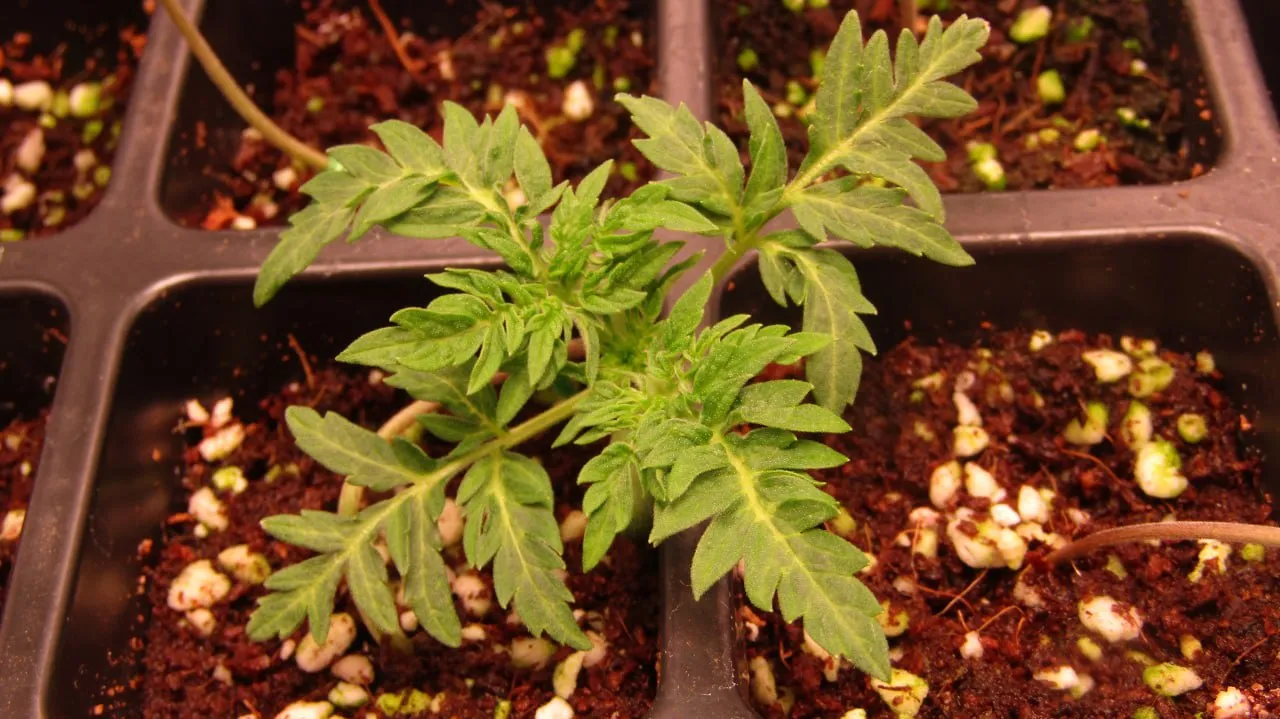
- FS#2 has the proper Freakshow leaf shape, with nothing unusual.
- FS#3 is definitely eliminated: a malformed mutant.
- FS#4 has the proper leaf shape, with nothing unusual.
- FS#5 is the best breeding candidate: the correct shape and vigorous growth.
- FS#7 has the proper leaf shape with flaws; the central leaflet grows from a point below the side leaflets. I think I will eliminate it.
- FS#8 has the proper leaf shape with slight flaws. The first leaves grow somewhat unevenly; it remains under observation.
The tally: 2 are eliminated at the start, because one did not germinate and one is malformed. Another 2 are unstable and will not enter the breeding work. Three definitely advance to the next round. Three plants are too few to continue the project: all 3 could turn out to be females or all males.
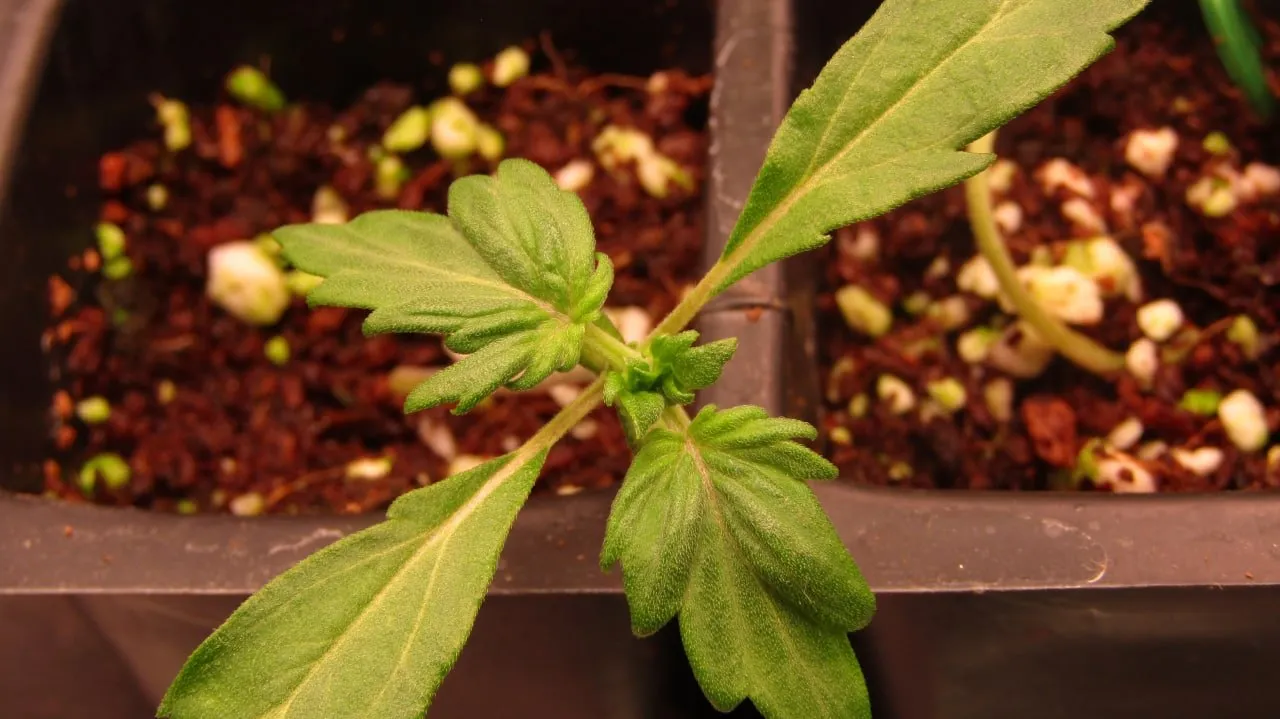
In Drunken Bastard, DB#12, DB#13, DB#15, DB#16, DB#17, and DB#18 have the proper leaf shape without anything unusual. I may eliminate one because of trouble shedding its seed shell; another died for the same reason. Six remain: their leaves are developing properly and the plants are stable.
April 13–19. The first phenotypes
Looking at the plants, I realized that Freakshow #5 was the best breeding candidate in the first batch. It grows vigorously without delays and is the only plant in the batch whose first pair of leaves had no defects.
I provisionally divided Freakshow into 2 The observable traits of a plant, such as its height, leaf shape or colour. phenotypes ↗: a stretching type with rapidly developing side branches, and a short type with short internodes and slowly developing side shoots. FS#5 belongs to the second type. FS#25 from the second batch has properly shaped leaves with minimal flaws.
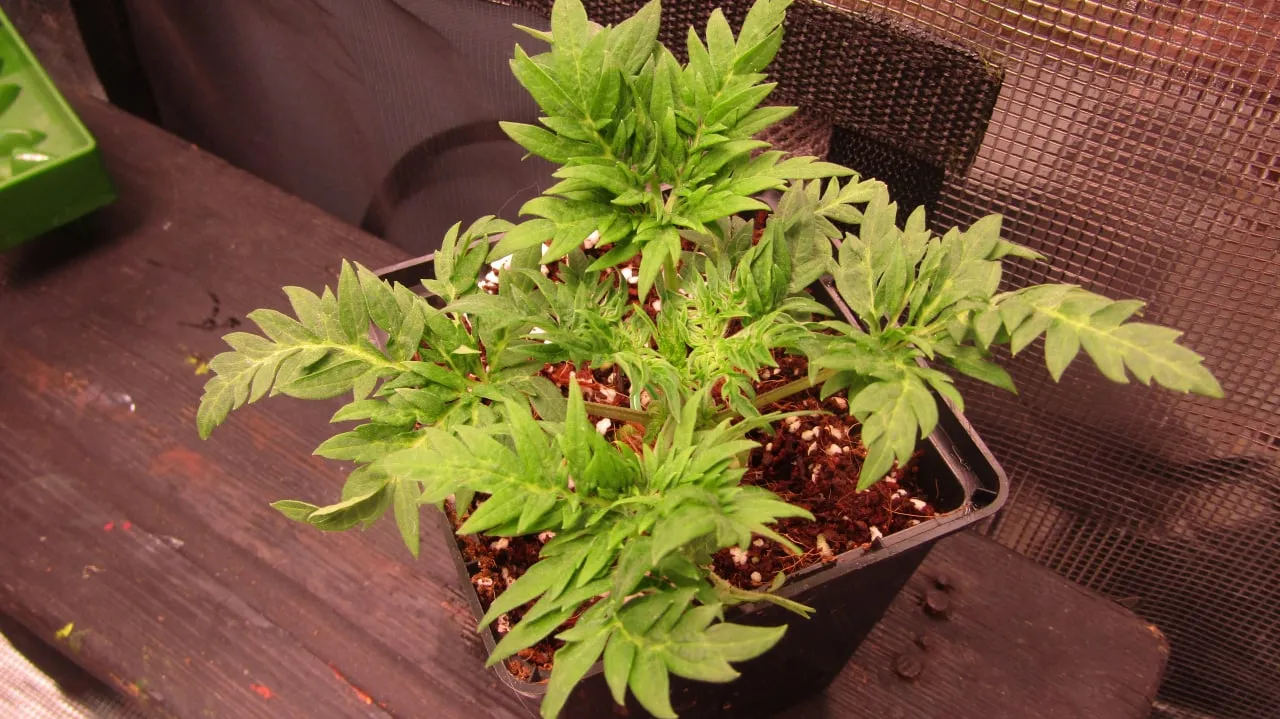
Drunken Bastard #12 and #15 are 2 good specimens, growing vigorously without problems and clearly showing anthocyanins as purple petioles. I also divided the Bastards into 2 main types: #12 is stocky and branchy, with short petioles; #15 is intermediate, with medium-to-long petioles and moderately developing side branches. The difference between them has become even clearer.
Late April - May 1. Structure and aroma
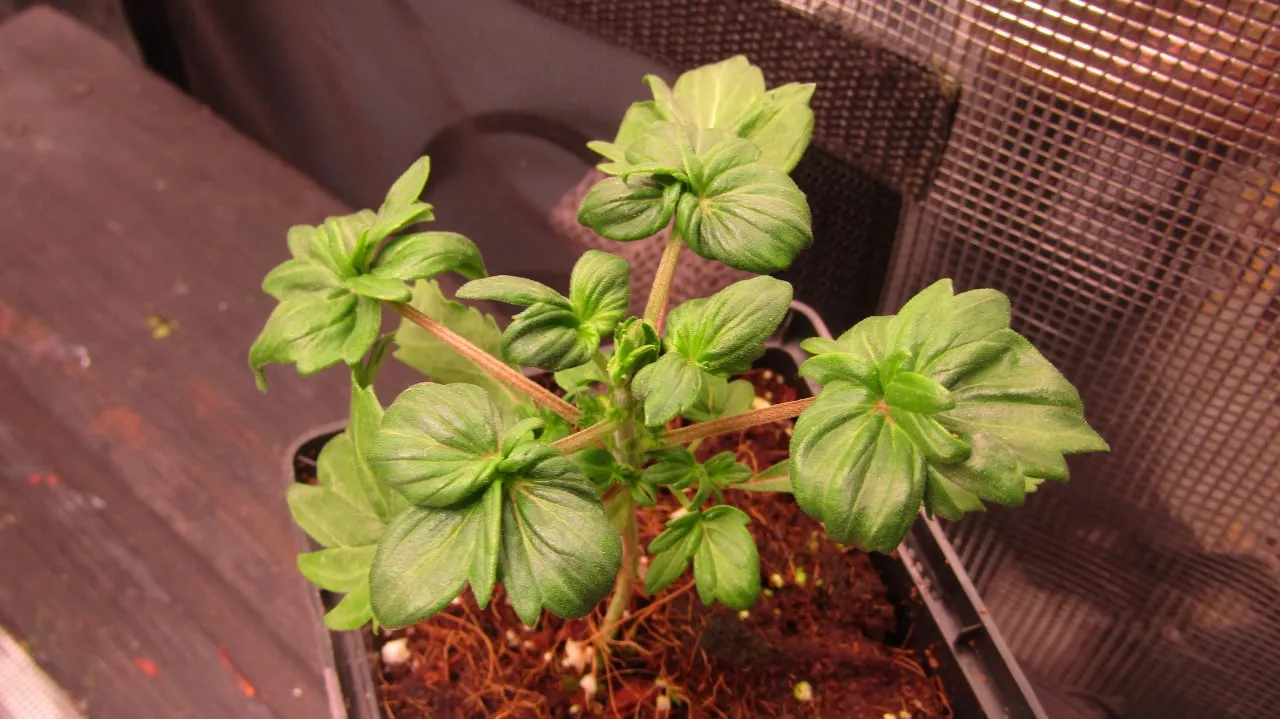
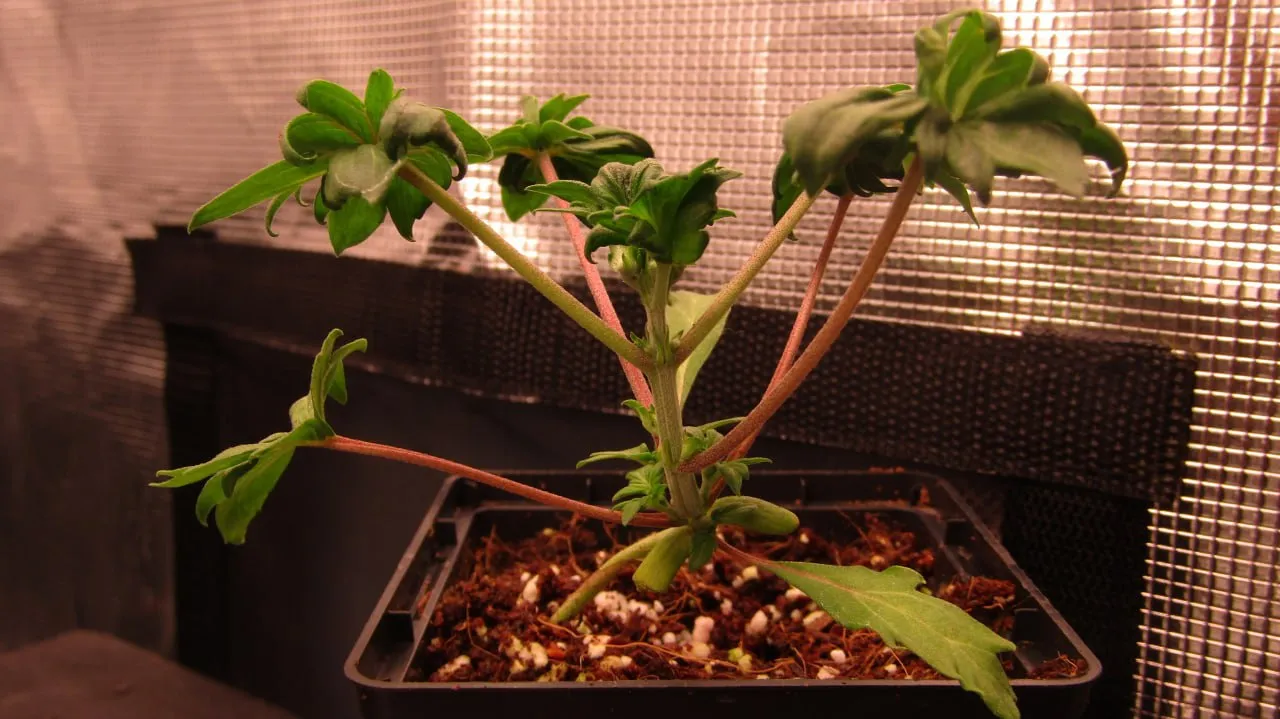
FS#5 is putting on plenty of green growth. Its petioles are exceptionally thick and substantial; I have not encountered this structure before. The stem and side branches have short internodes, and the branches are substantial. FS#25 has medium internodes. Both plants have a faint cannabis smell. Rubbing the stem and petioles releases an earthy diesel aroma, with a slight swampy note in #5.
DB#12 branches well. Its branches are medium in length, with medium internodes. It has no obvious cannabis smell; rubbing the stem releases faint musk notes. DB#15 branches well, with long branches and long internodes. The foliage has a faint cannabis smell; rubbing the stem and petioles releases a strong sour, musky, earthy aroma.
May 16–22. The first males
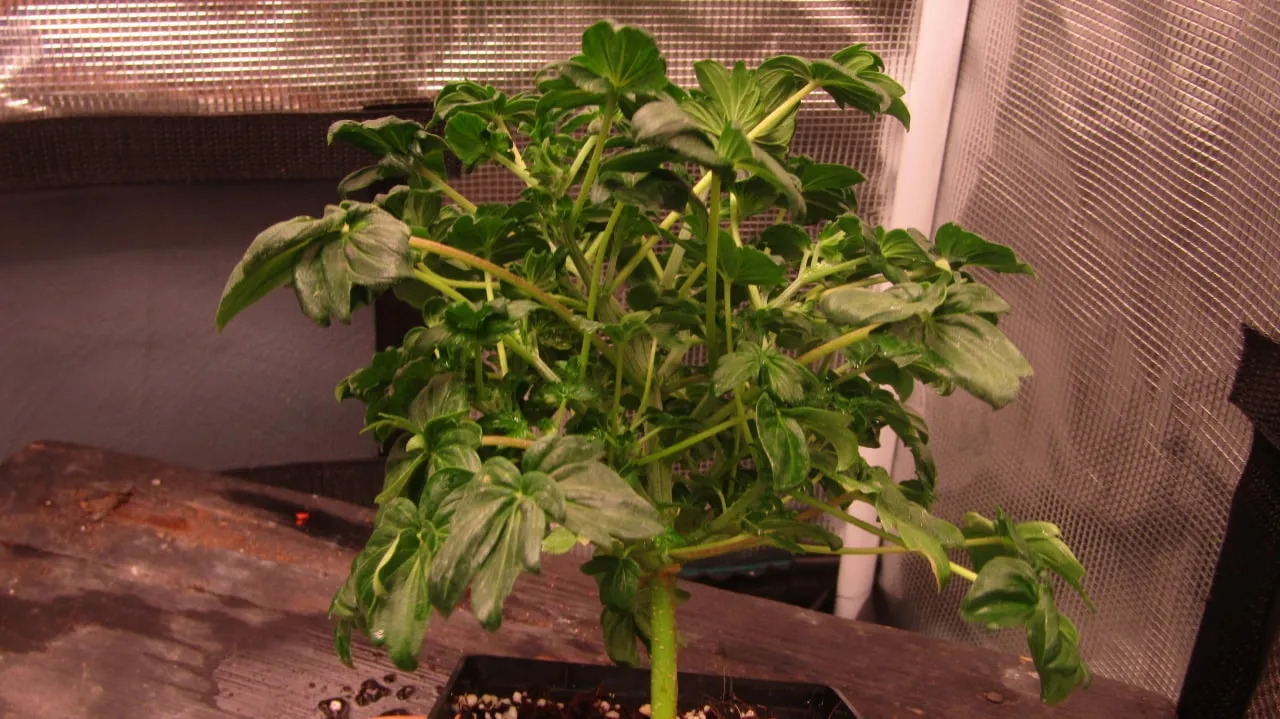
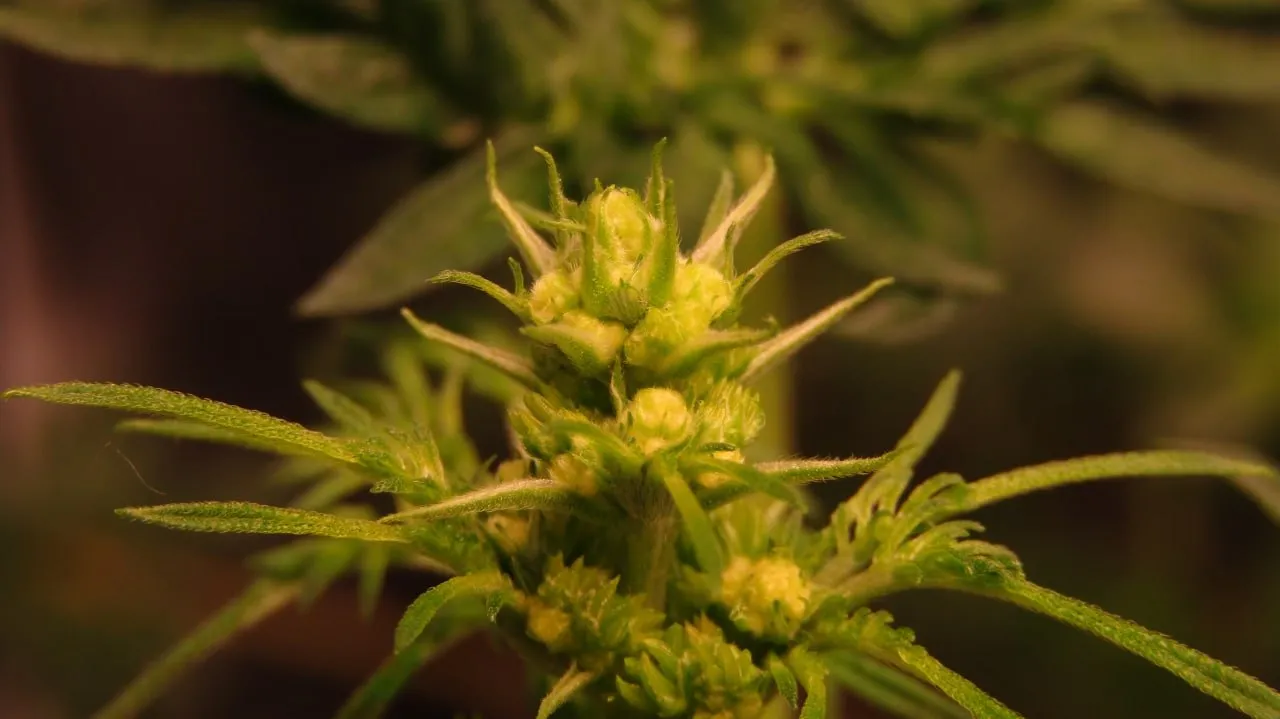
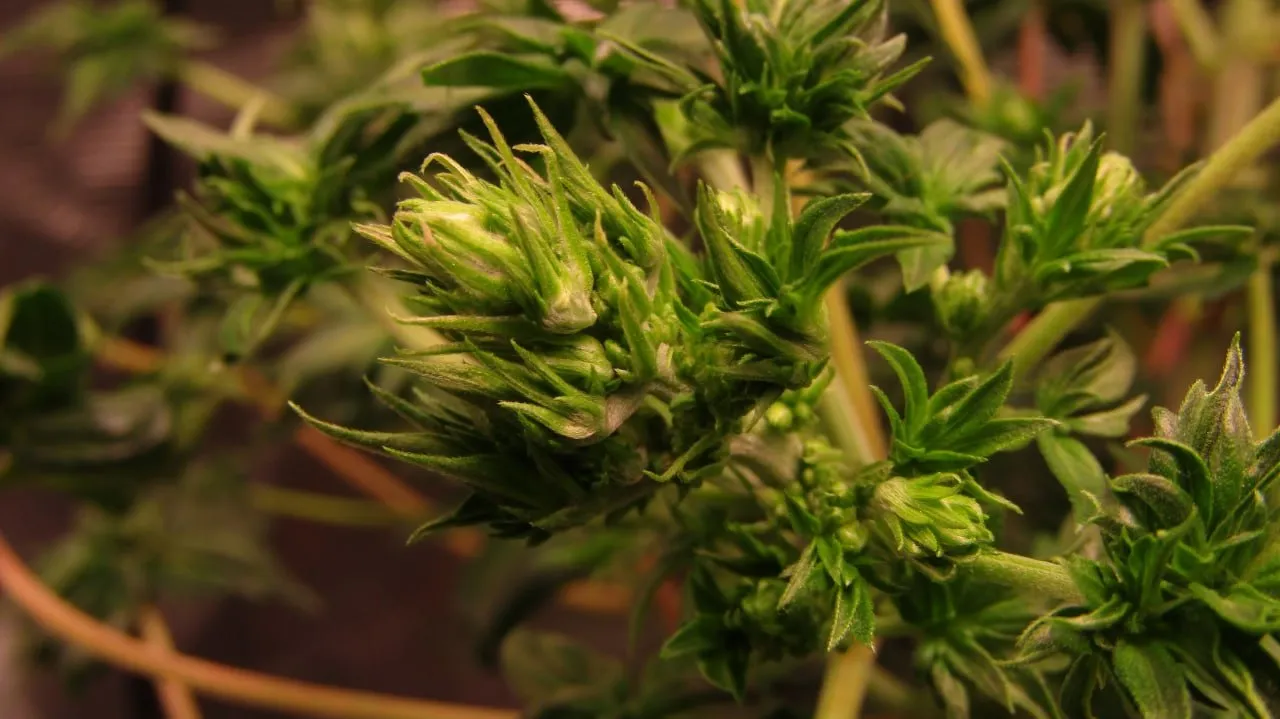
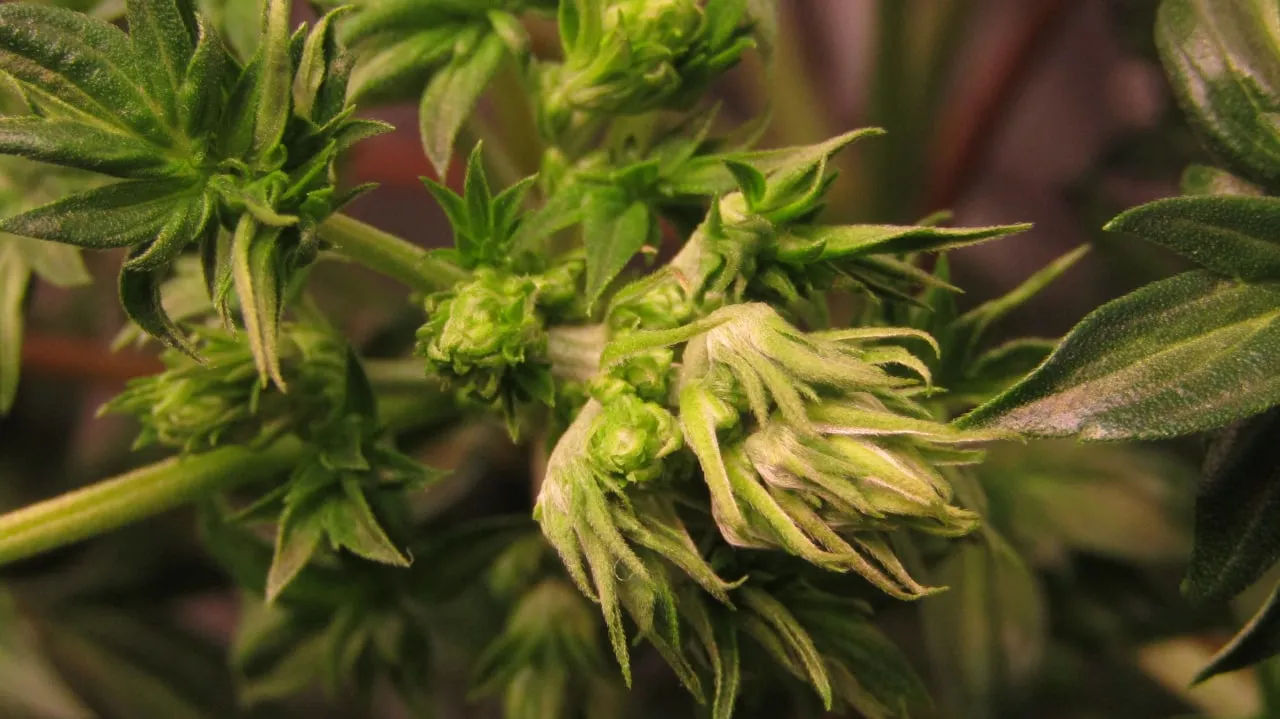
Freakshow IBL #4 showed its sex on May 16: male. The leaves are uniformly deep green, and the stem is light green. Its FS-shaped leaves are correct and undistorted. It has a stretching, branching structure, with long, slender colas and long internodes. It has almost no smell on its own. The stem and petioles have earthy pepper notes.
For now, I have selected the 3 best males from 2 FS phenotypes and 1 distinctly purple DB phenotype. A small spoiler: I was not happy with the male-to-female ratio.
21 May. DB#15
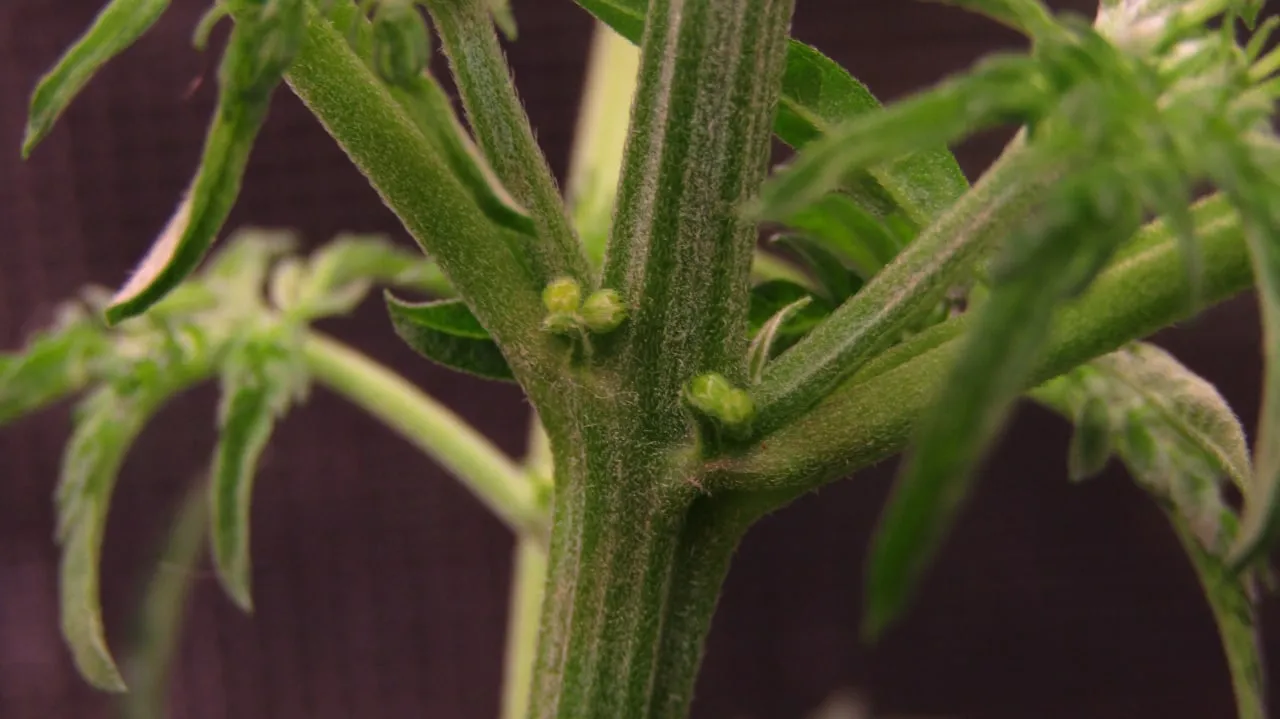
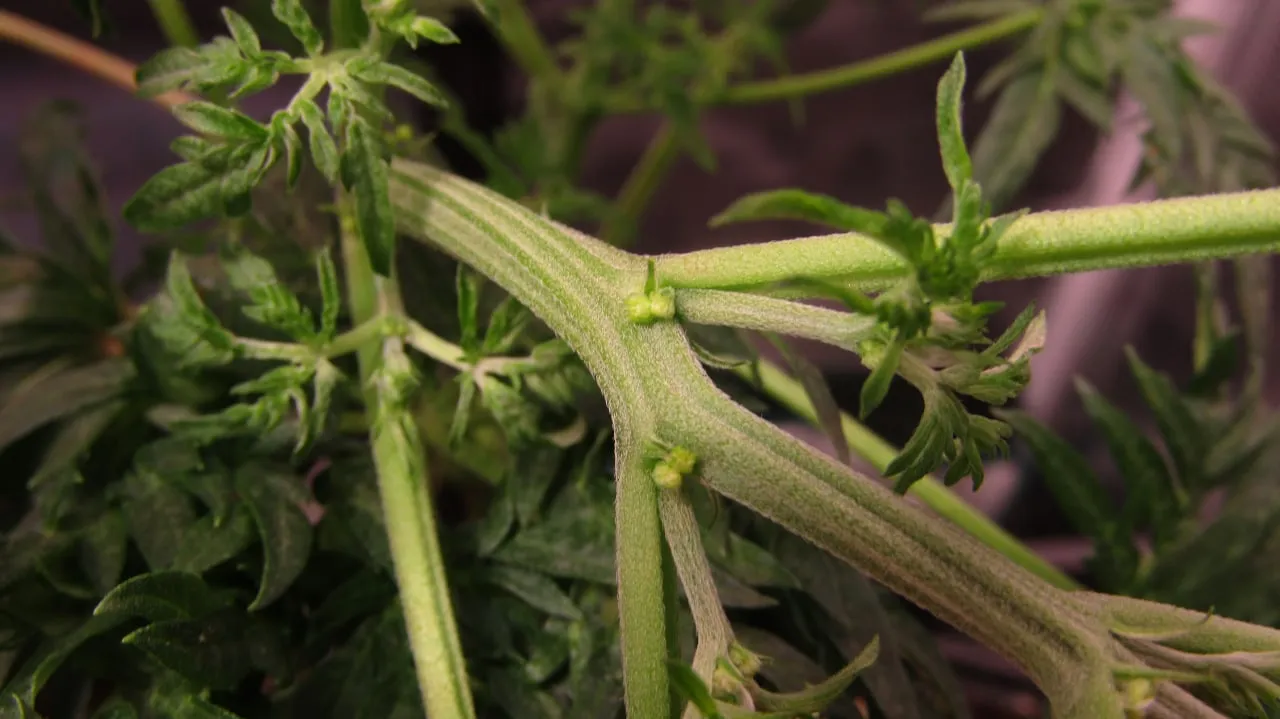
DB#15, which I have liked since the first day we met, has shown clear male sexual characteristics. So here we have the best male specimen from the DB strain.
May 23. Phenotype descriptions
Freakshow produced 3 distinct phenotypes:
- Phenotype 1: FS#2, FS#4, and FS#7. Pepper-diesel, peach, and lemon aromas. Branchy and stretching, with medium-to-long internodes.
- Phenotype 2: FS#5 and FS#8. Citrus, pine, and earthy honey notes. Short, resinous, and sparsely branching, with substantial branches.
- Phenotype 3: FS#25. A deep citrus-lemon aroma. Medium height, sparse branching, and long internodes.
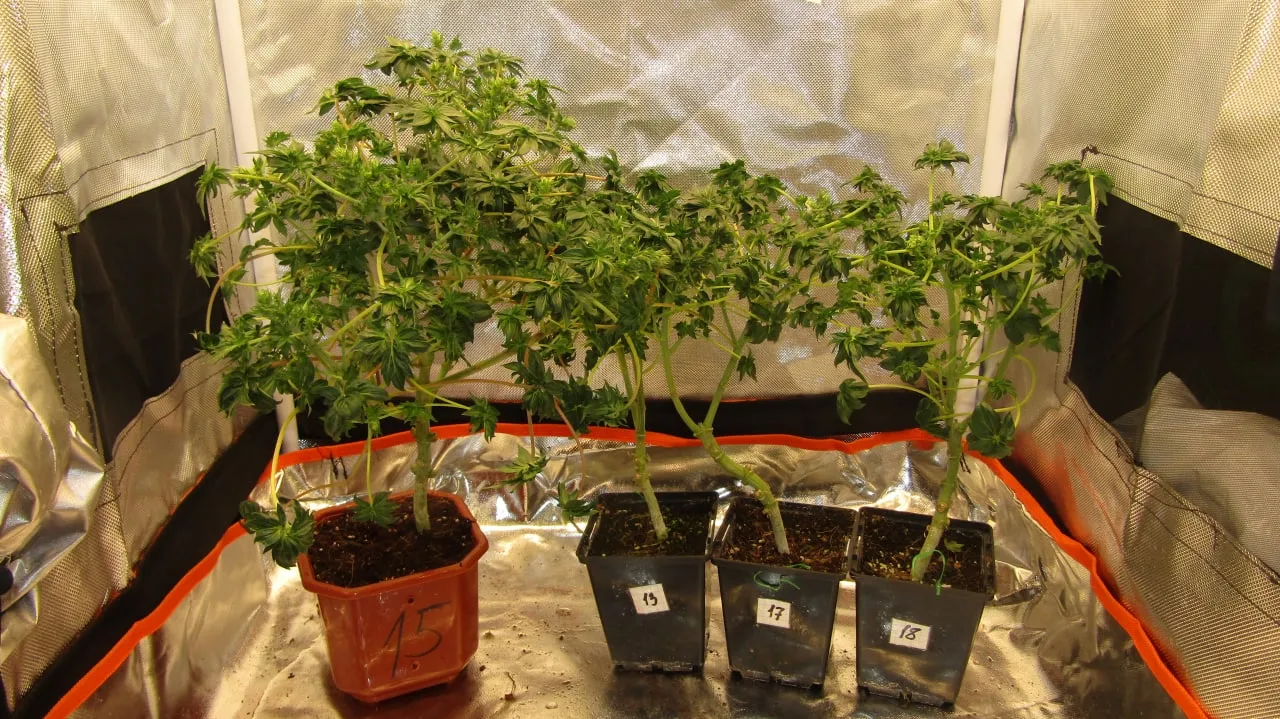
The males remaining for pollen are #4, fast and vigorous, and #5, robust and resinous.
Drunken Bastard F3 produced 2 clearly distinct phenotypes:
- Phenotype 1: DB#15 and DB#31. Musky blueberry aromas, slightly reminiscent of durian. Tall and branchy, with long branches, long internodes, and purple petioles.
- Phenotype 2: all the other Bastards. Sour, earthy blueberry aromas. Medium height and good branching, with long branches, medium internodes, and green petioles or faint purple speckling.
The males for pollen are #15, robust and distinctive, and #18, aromatic and resinous.
May 24–26. Sex and clones
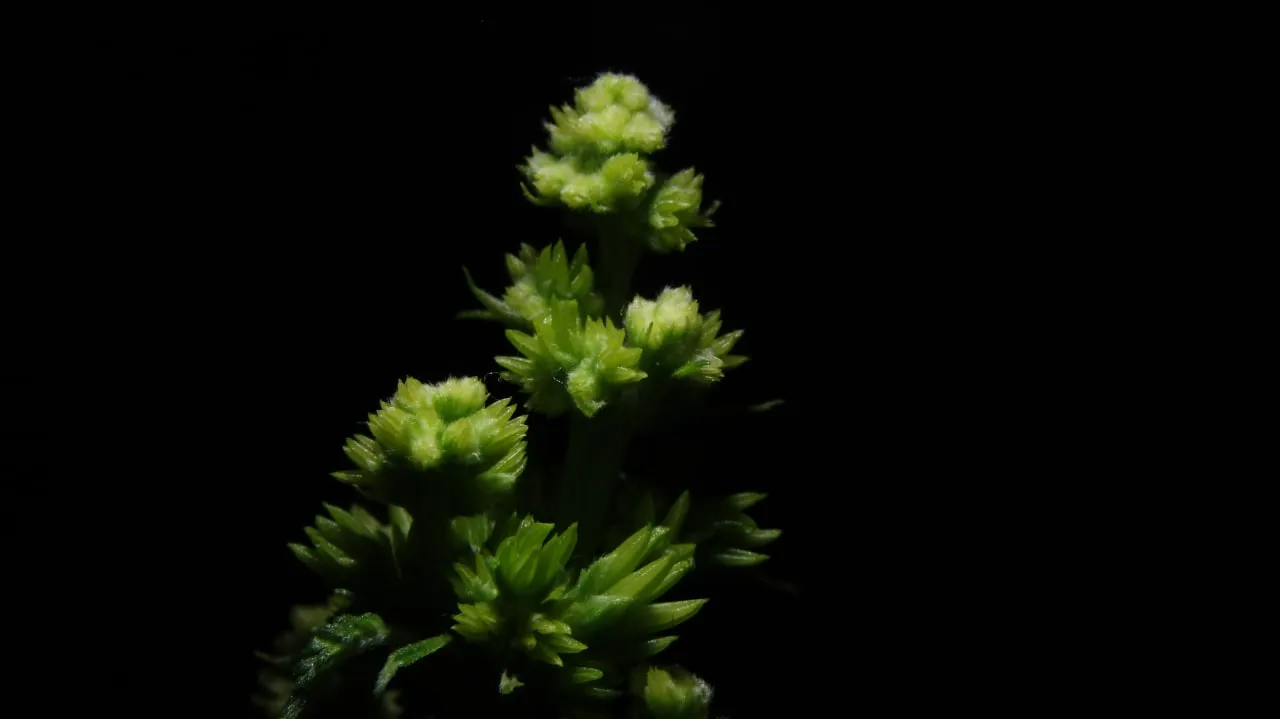
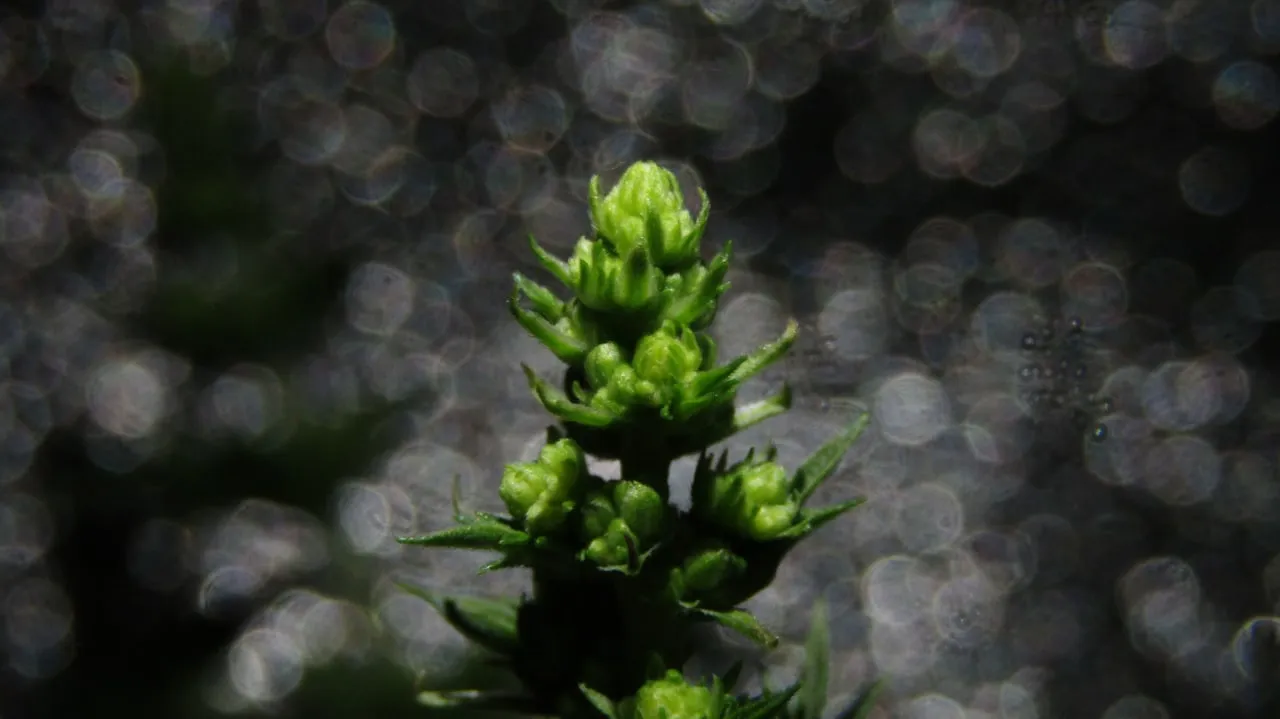
Plants whose sex is not yet clear are starting to show hairs. I am not drawing hasty conclusions until the signs are clear, because some show microscopic male and female buds at once; this may simply be how Freakshows and Bastards look. Going through breeding threads on overgrow.com, I found that many people have the same difficulty determining sex.
I potted up all the clones: 14 Freakshows and 9 Bastards in total. Clones from eliminated males went in the bin. I kept 1 clone of each selected best male; the rest are undetermined or female. I brought DB#11 back into the selection to check its sex.
FS#25 showed male sex characteristics and moved over to the males. I discarded another couple of males from the second batch. Only the plants that have shown themselves female remain; one of the two Bastards is still 50/50, and I cannot tell.
May 28–30. Final parent selection
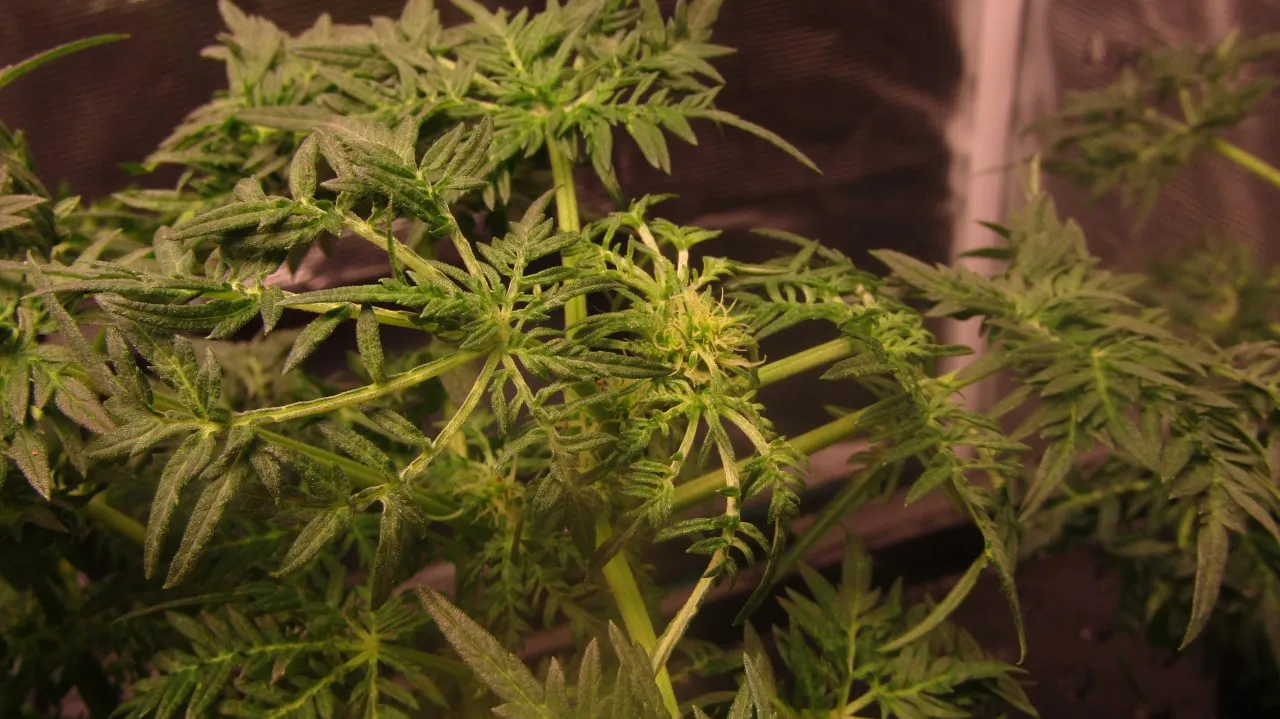
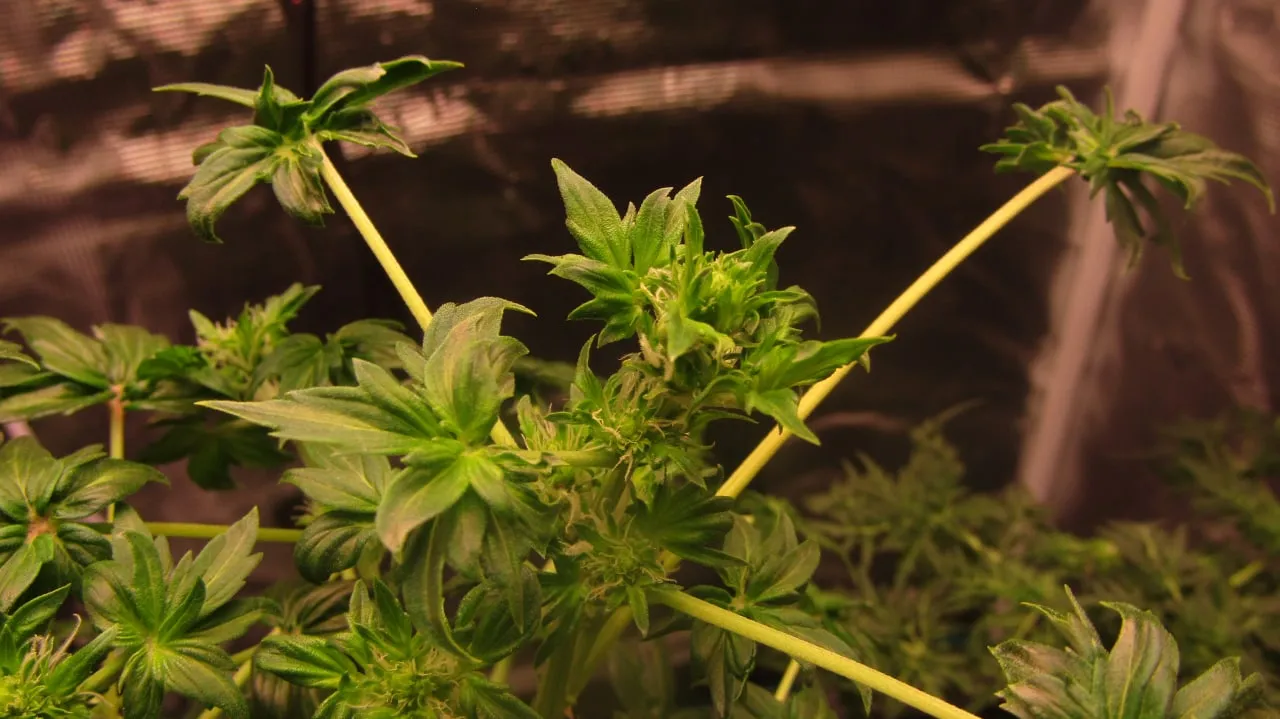
FS#2 and FS#7 showed signs of hermaphroditism. I kept FS#8 for breeding: so far, she is the only plant from the first sowing without mixed sex characteristics. FS#5, the male I gave more time, continued showing stigmas on some colas, so he was also eliminated. FS#4 remains for breeding as the most vigorous and resilient male. FS#25 is gradually showing male sex characteristics; I will watch his stability.
The second batch of Freakshows has 3 females, including 1 hermaphrodite, and one plant that seems male. I am waiting for it to show clearly.
DB#16 remains as the female breeding plant, because all the other Bastards turned out male. I discussed this with a couple of breeders working with Bastards: they say 80–90% males is normal for this strain. DB#15 remains as the male because of his purple petioles, vigorous growth, and good framework.
June 1–4. The first pollination
We have reached the first round of pollination, friends! I list crosses as “female plant × male plant.”
Reproduction for the next round:
- Drunken Bastard F3 #16 × Drunken Bastard F3 #15.
- Freakshow IBL #8 × Freakshow IBL #4.
- Two female Freakshow IBL plants from the second sowing × Freakshow IBL #4.
Because the population is small, I will run another round with both Freakshows and Bastards next season to select mothers for stable breeding. I am waiting for Lowryder to flower for the next crosses: Drunken Bastard F3 #16 × Lowryder IBL and Freakshow IBL #8 × Lowryder IBL.
At the start of the Freakshow selection, my main task was to choose Freakshows with stable leaves and reproduce them. The additional task was to find some interesting mutations. Since the main task is done and the plants have been pollinated, we move on to the second. I brought #1 and #3 back into the selection to determine their sex: they have distorted leaf shapes, and #3 grows 3 colas on one of its tiers.
June. Observing the mothers
Freakshow and Drunken Bastard are doing well; the Freakshow leaves are becoming covered in trichomes. I have removed the hermaphrodites for good. FS#1 and FS#3, with distorted leaves, turned out female.
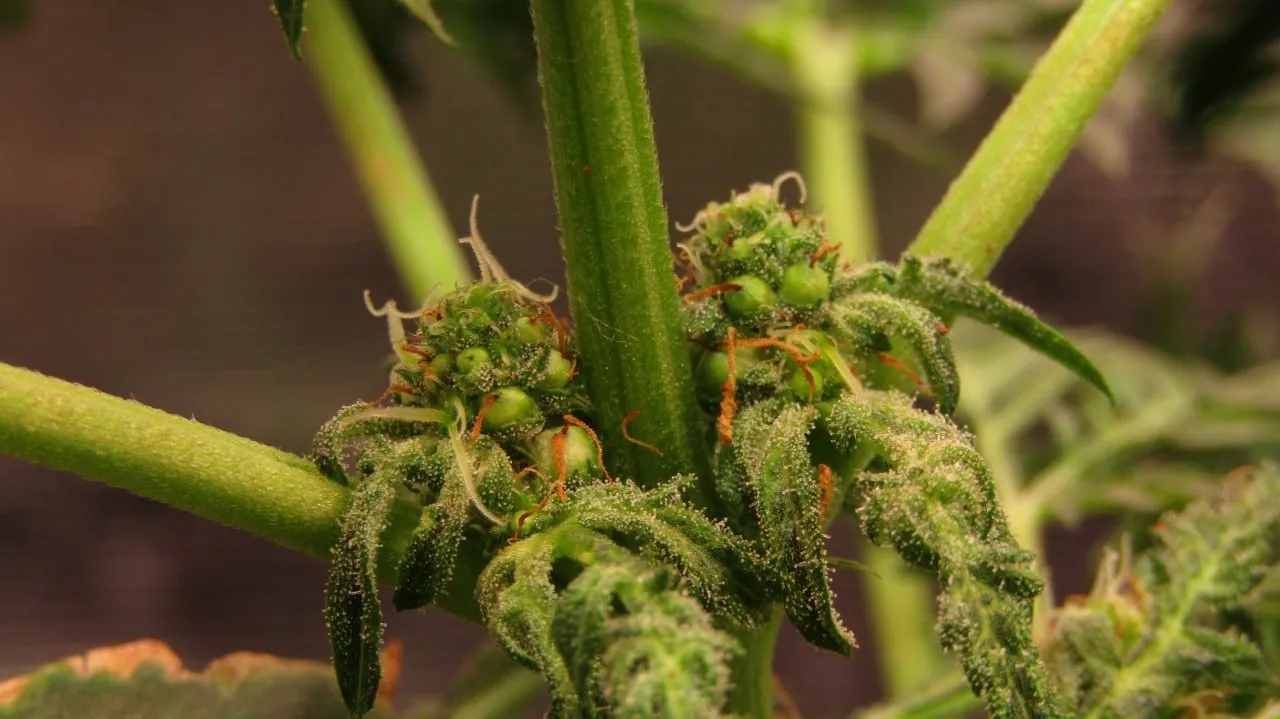
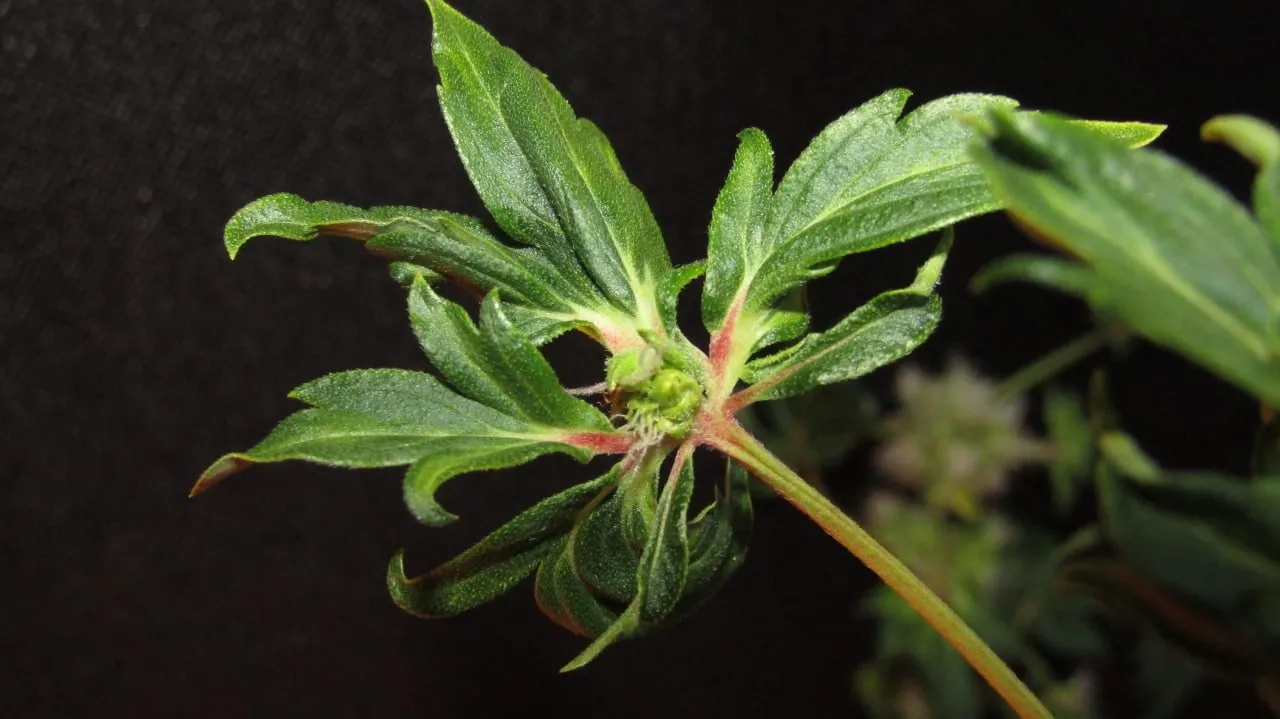
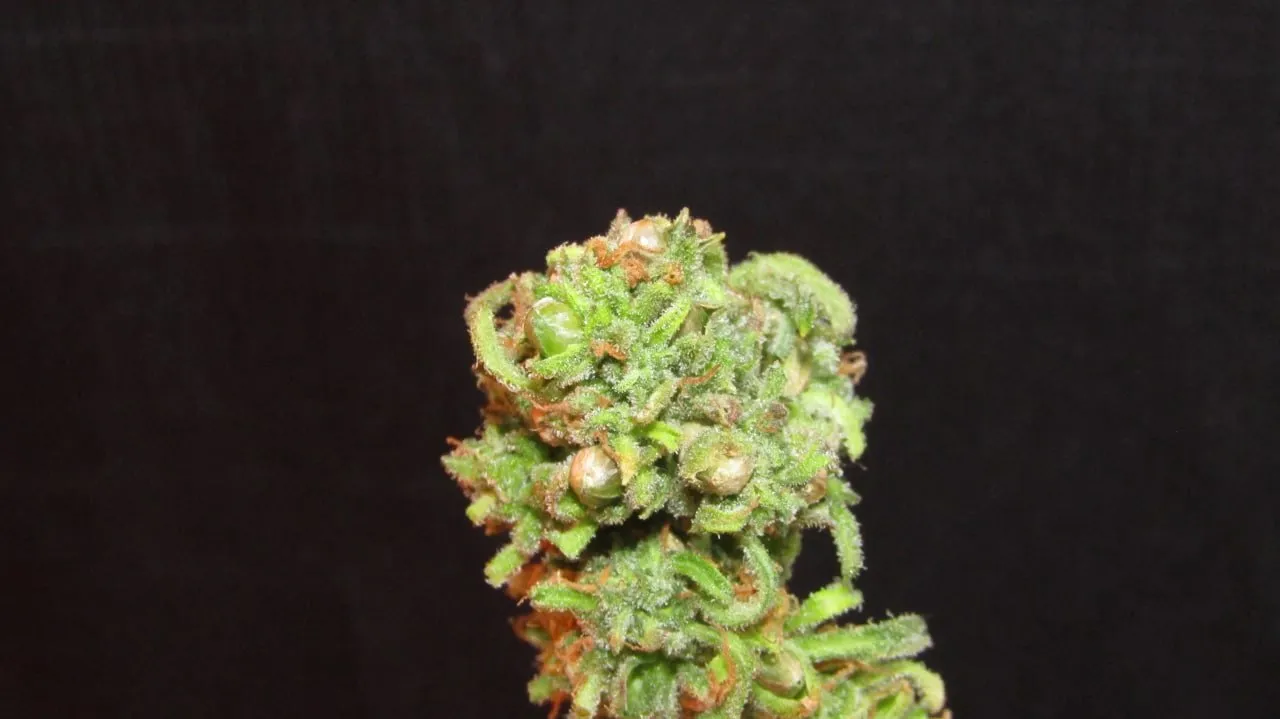
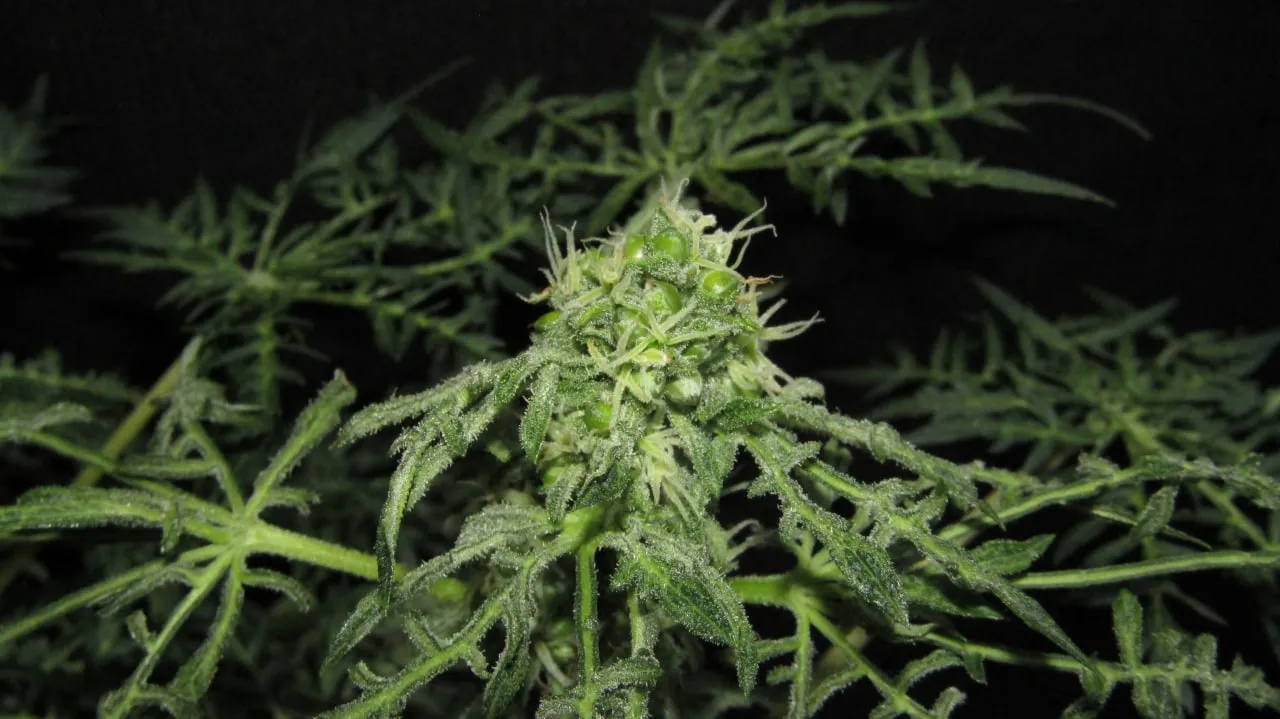
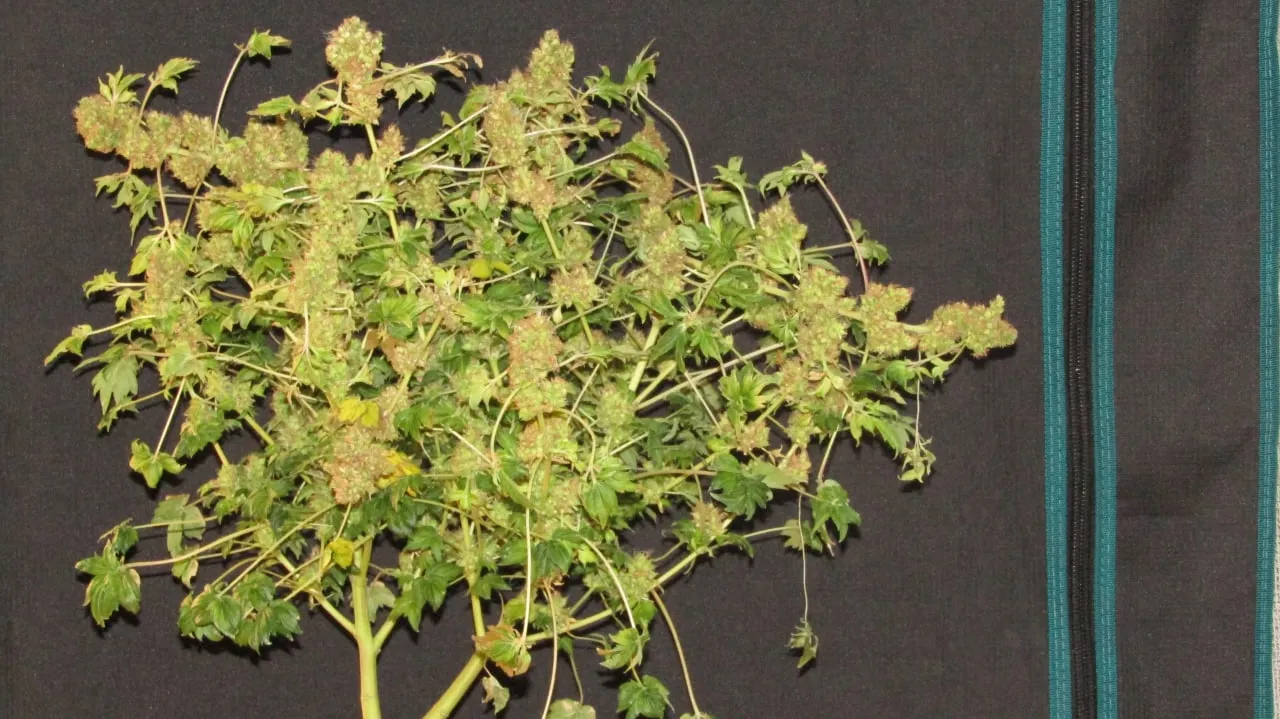
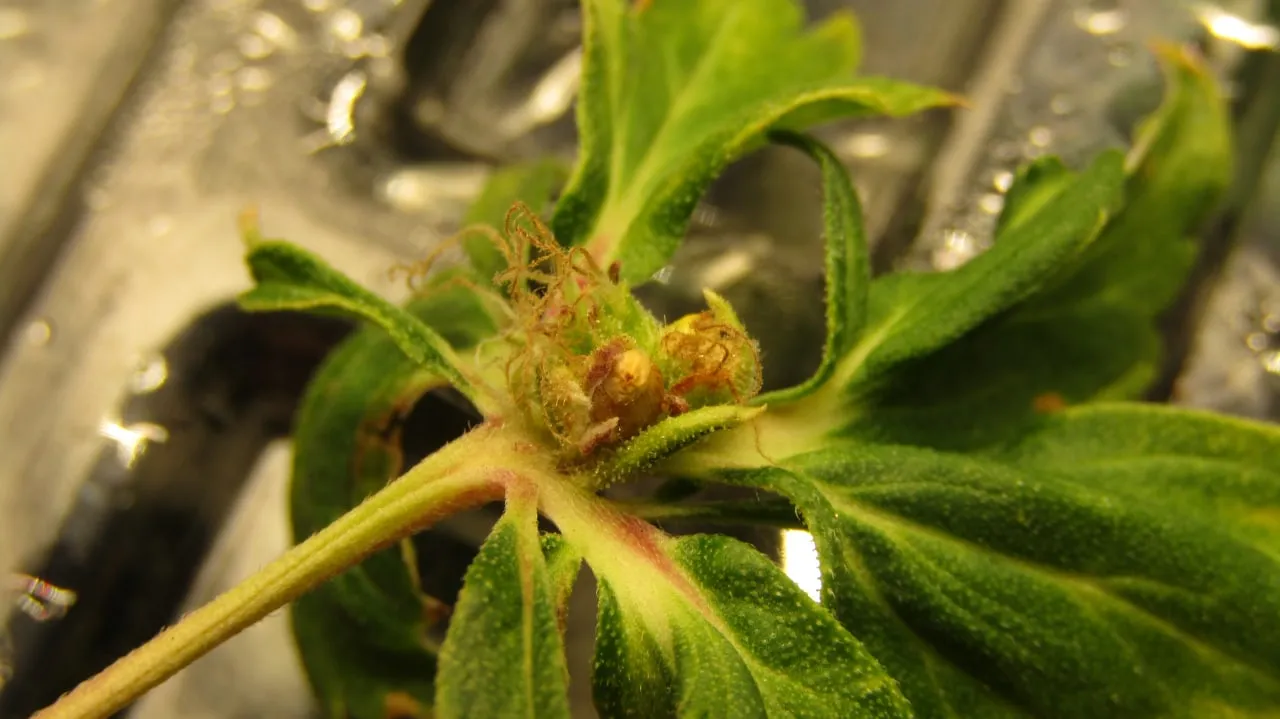
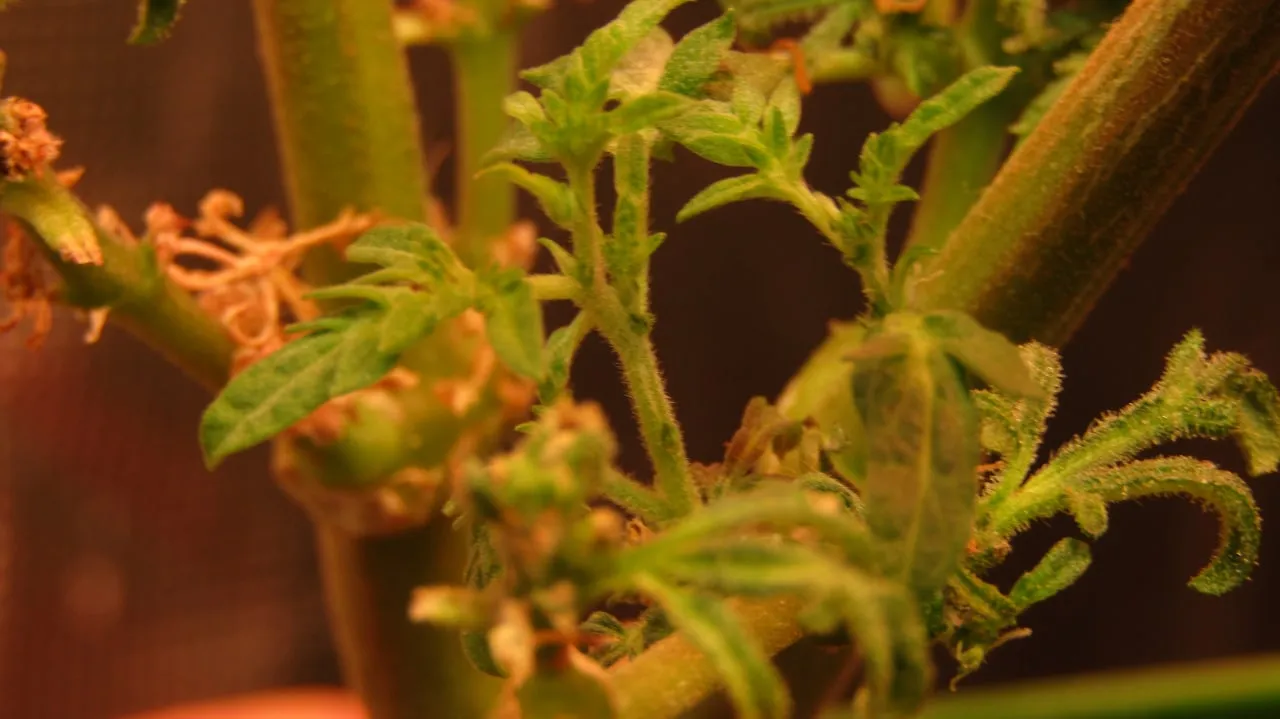
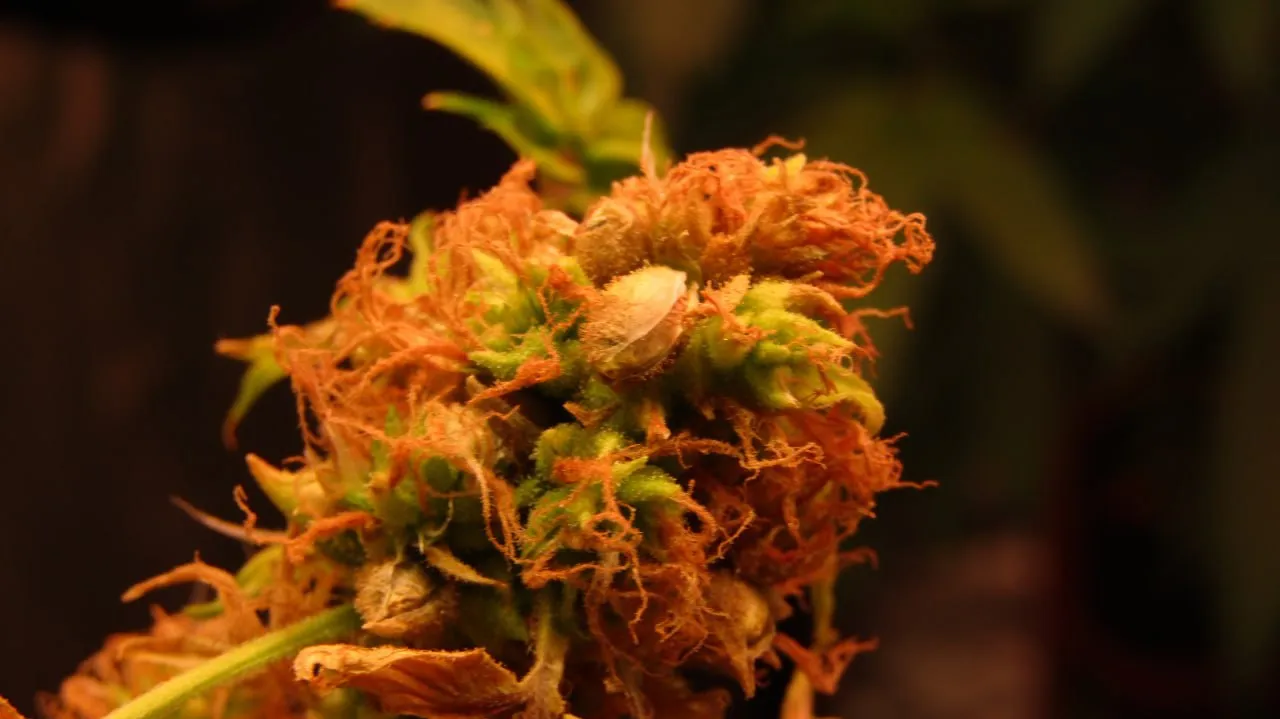
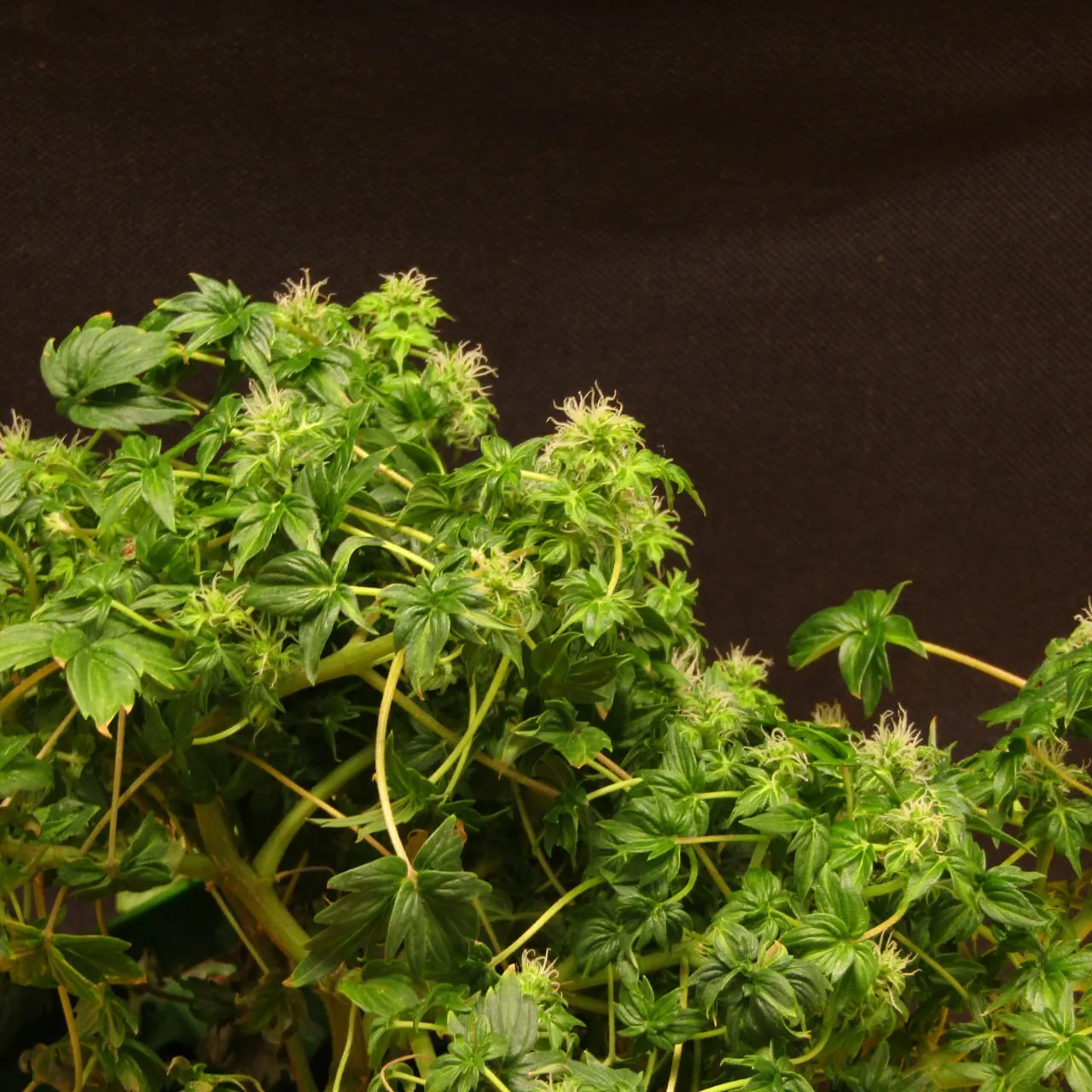
Drunken Bastard F3 #16: how about mutations on a mutant, friends? Flowers have begun forming on the leaves. I have not seen this before among the Bastard breeders I follow. I was told this is a rare mutation for Bastard and that I was lucky to catch it: out of my sample of 12 plants there was a single female, and with such a bonus. So in the coming seasons we will try to fix it by selecting good specimens among the offspring and by A backcross: crossing a descendant with one of its parents to preserve or reinforce that parent's traits. backcrossing ↗. The strain grows outward rather than into a Christmas-tree shape. The aroma is bright, fresh, sweet citrus, with clear lime notes. This very rare phenotype, with flowers forming at the bases of leaflets, offers no significant advantage in extra weight or other parameters. It is simply an aesthetic pleasure to look at the mutations.
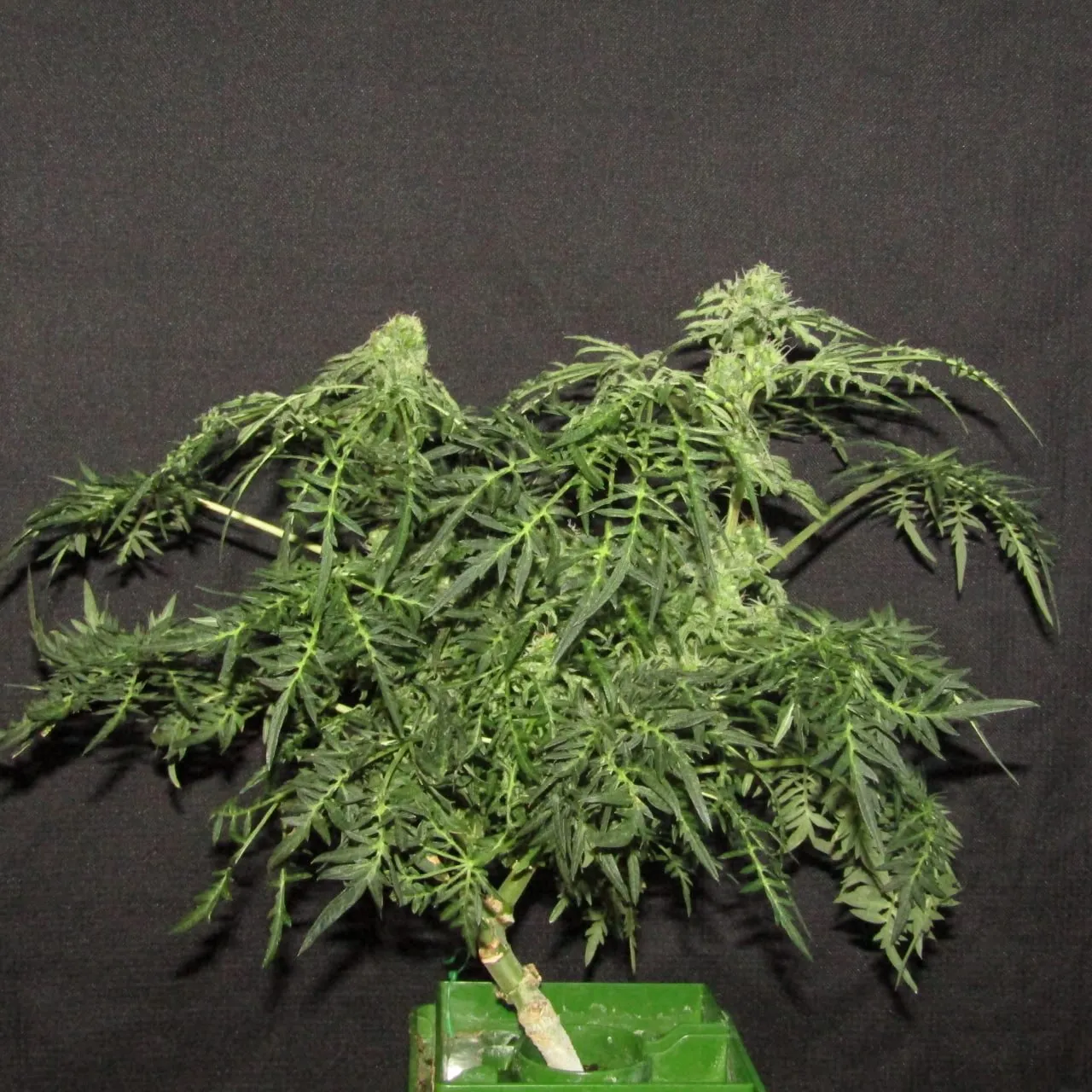
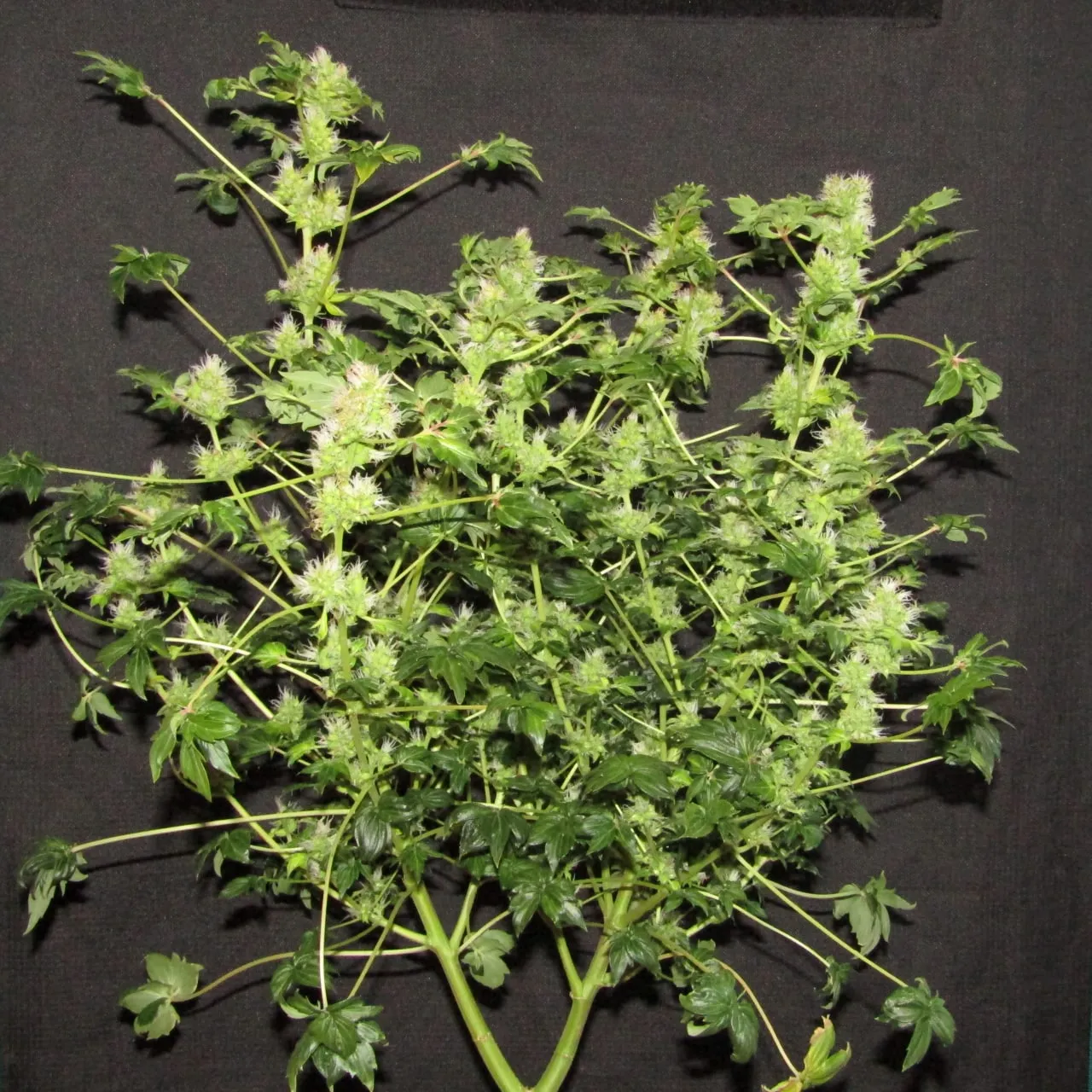
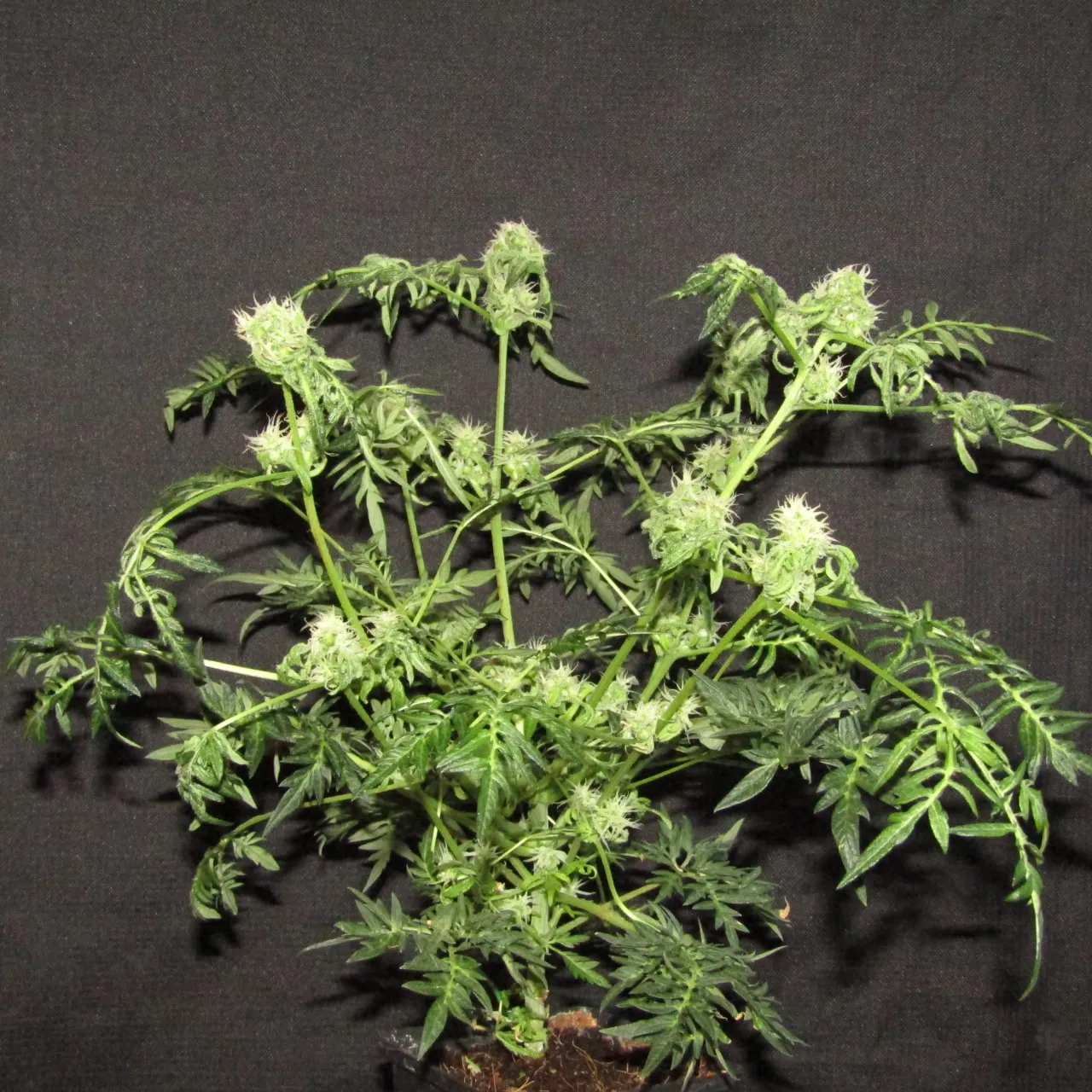
Freakshow #8 is short. Its shoots do not develop into numerous colas; instead, each growing point forms a flower alongside the main stem. The plant becomes one continuous flower. The aroma is tart, citrusy, slightly musky and woody, with orange notes dominating. It most reminds me of the orange sweets in a bag of Skittles.
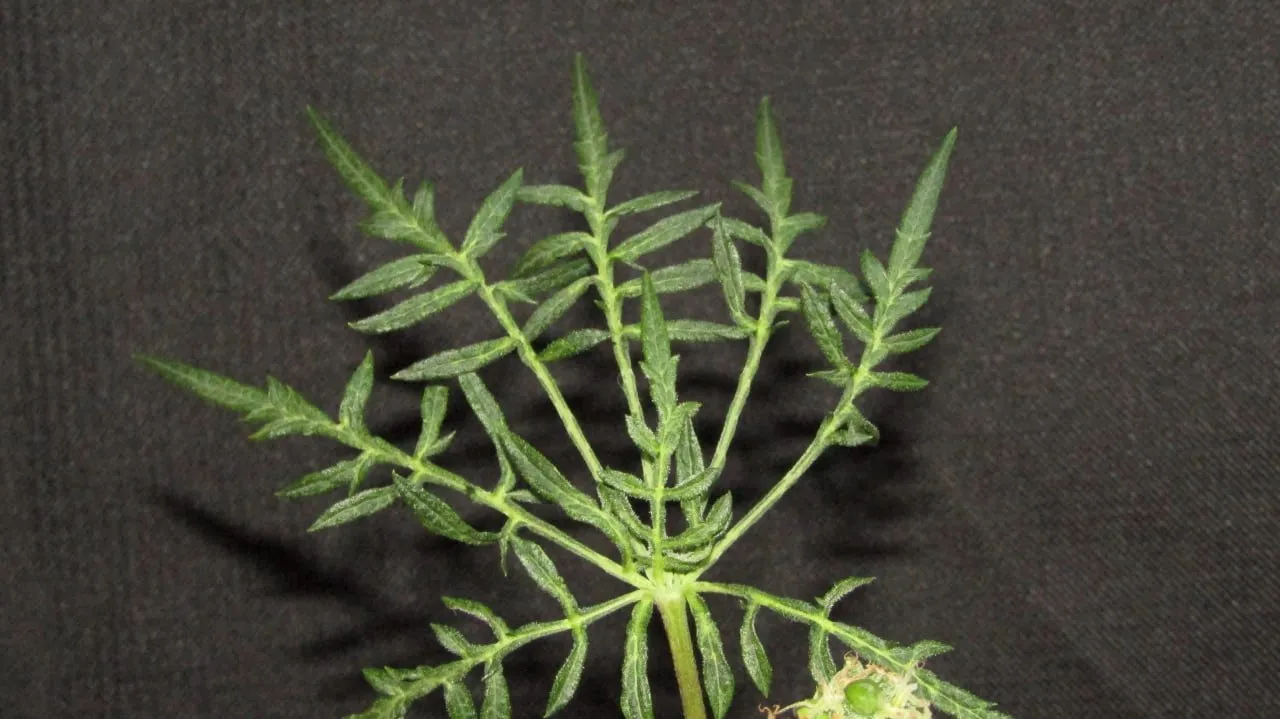
The other Freakshows are elongated, with medium-to-long internodes and small round flowers. Their aromas range from predominantly lemon to earthy peach.
June 13. Crosses with Lowryder
It has happened, friends! Another round of pollination produced these crosses:
- Drunken Bastard F3 #16 × Lowryder IBL Boyzzz.
- Freakshow #8 × Lowryder IBL Boyzzz.
- Lowryder #5 × Lowryder IBL Boyzzz.
Boyzzz is pollen from 4 males. FS#1, FS#3, and another DB#16 clone received FS#4 pollen.
Late June - early July. The first seeds
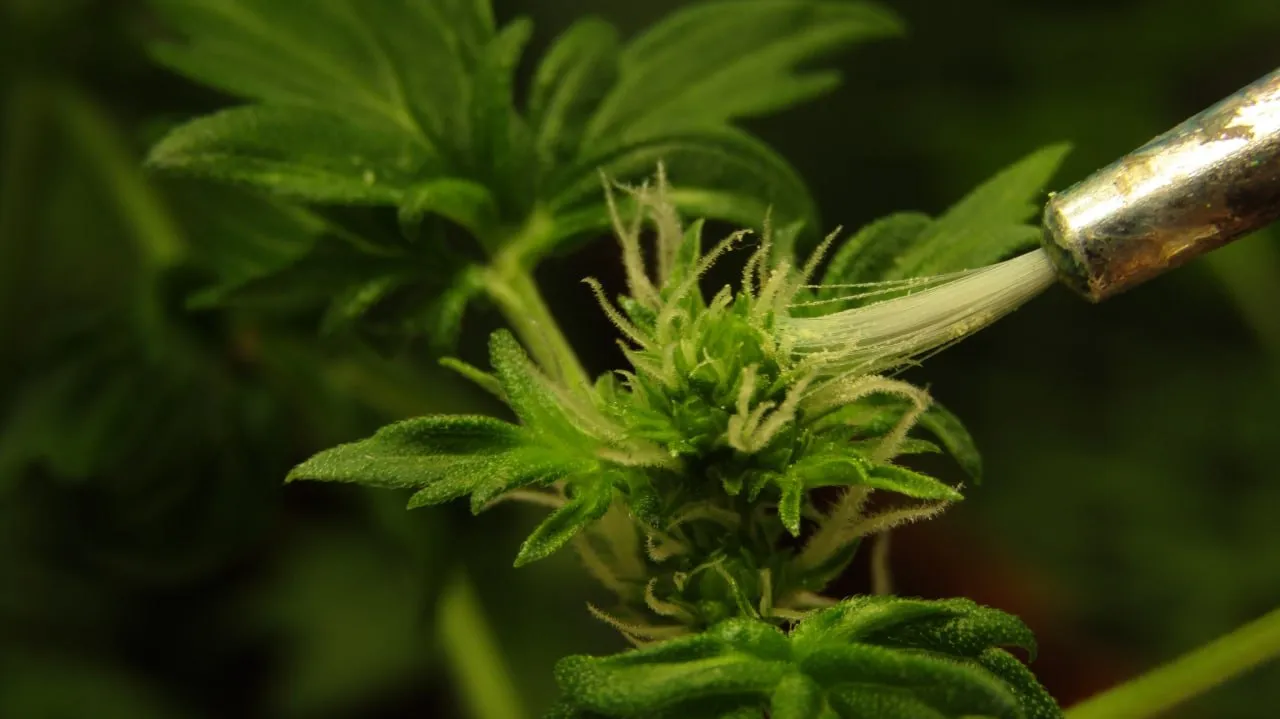
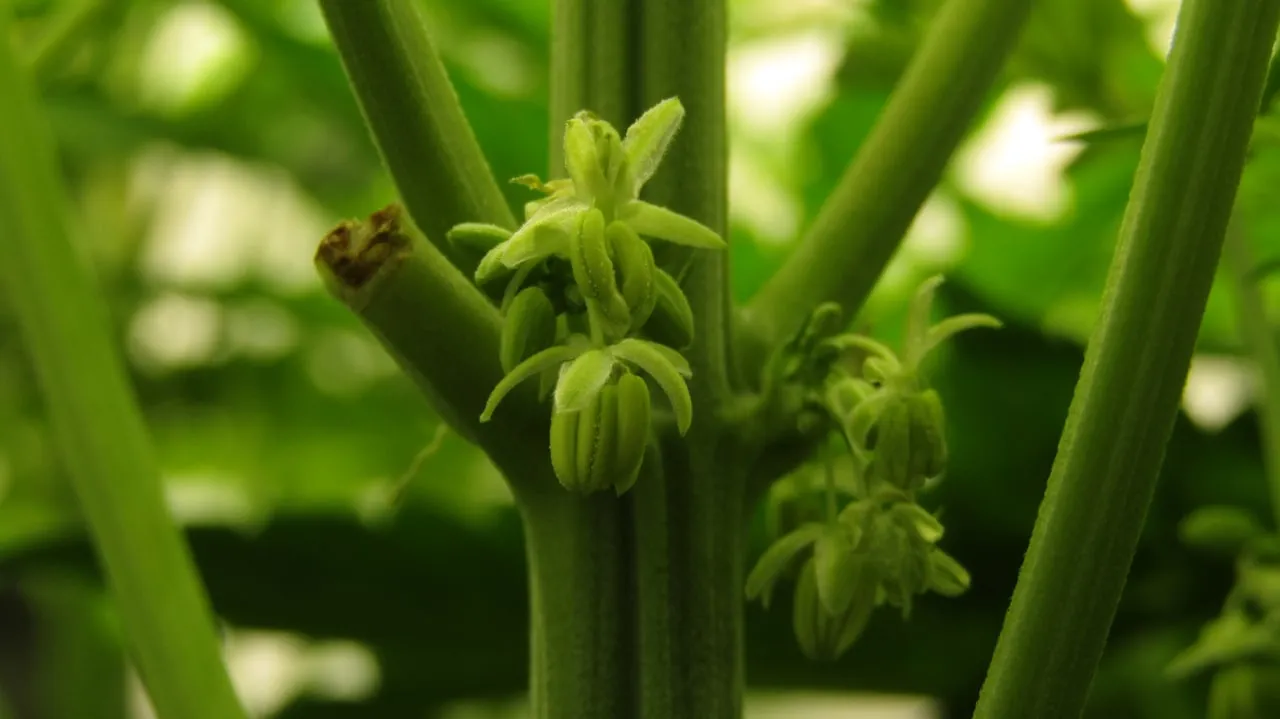
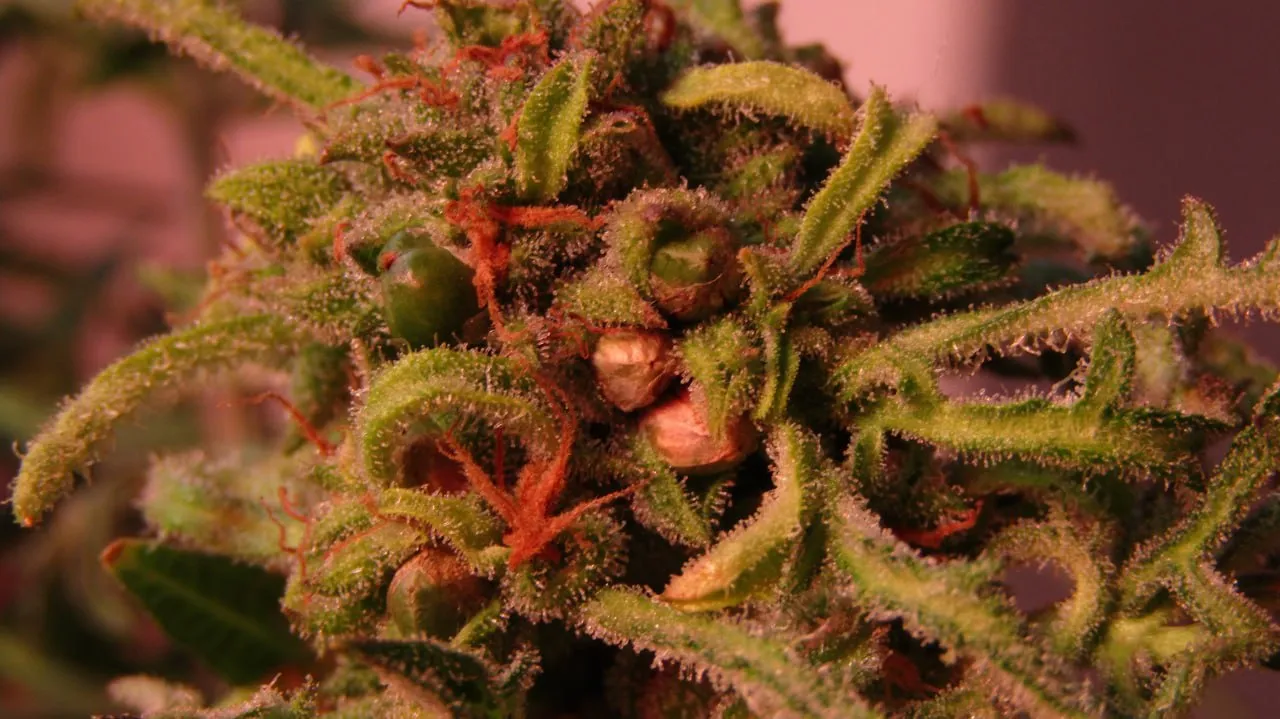
FS#1 and FS#3 are showing developing seeds after pollination by FS#4. The males preserving the genetics, FS#4 and DB#15, are doing very well. DB’s petioles and stem have vivid anthocyanin coloration; FS also shows purple, mainly on the lower branches.
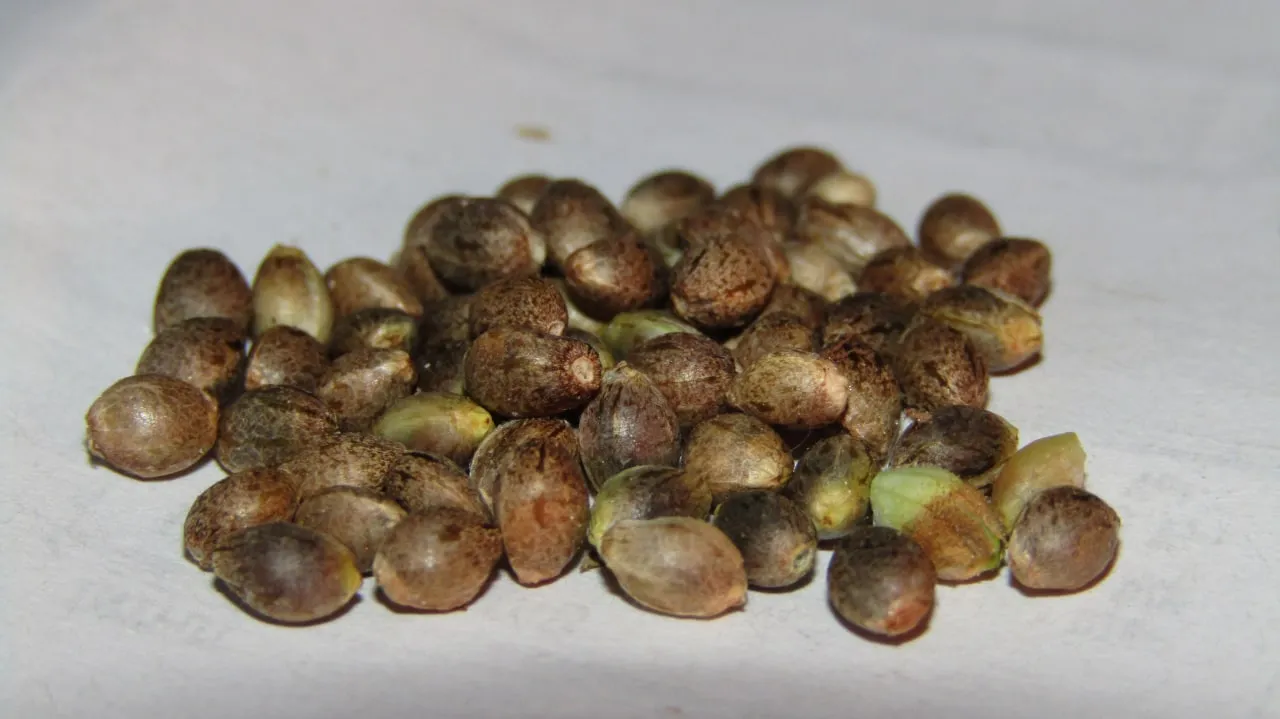
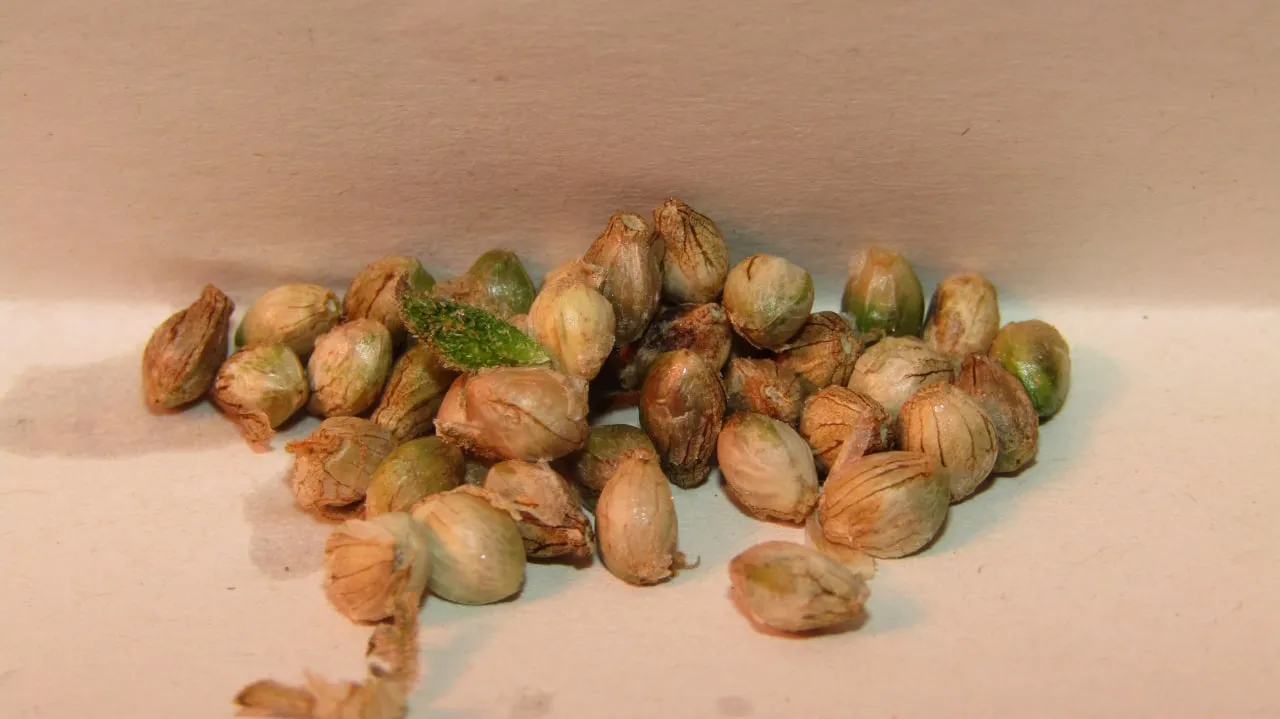
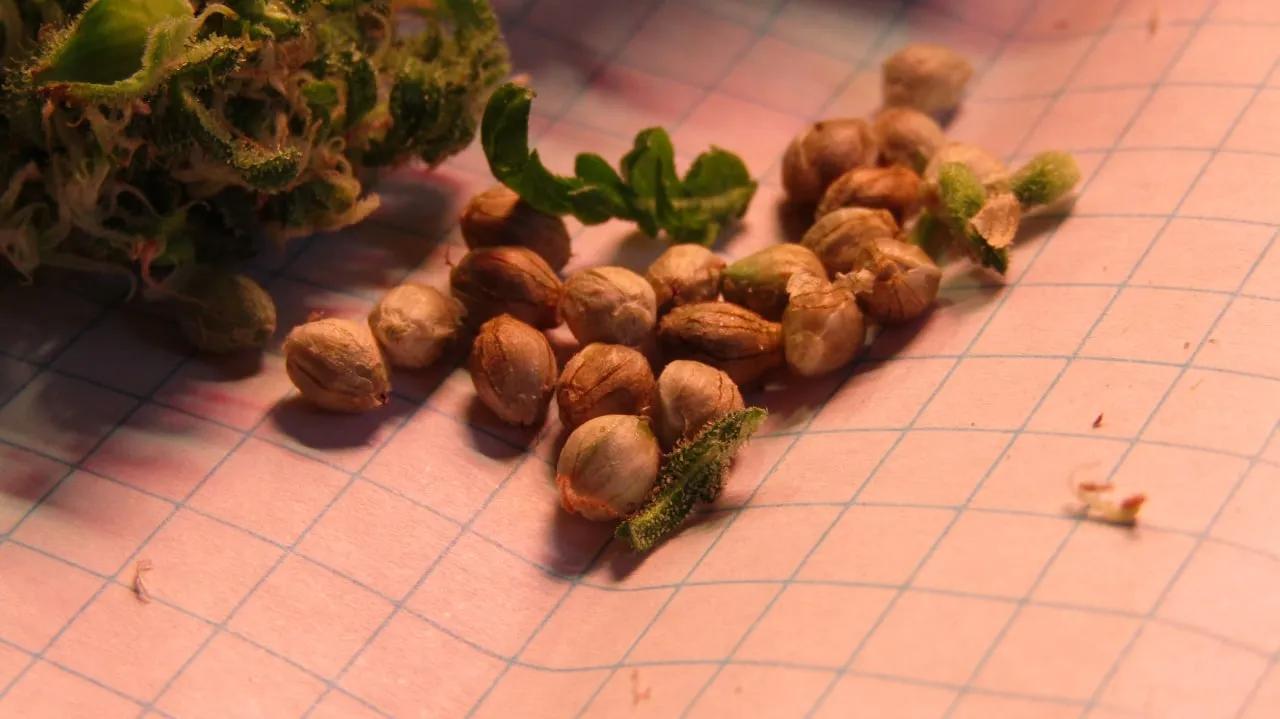
A small first batch of Bastard seeds is ready. On July 4, I collected another handful of DB#16 seeds that were ready to fall. On July 5, while inspecting FS#8, I collected some seeds that had detached from the flower and were ready to fall.
July 7. Freakshow IBL #8 harvest
Specimen #8 was pollinated by Freakshow #4 for reproduction within the strain. She definitely advances to the next round.
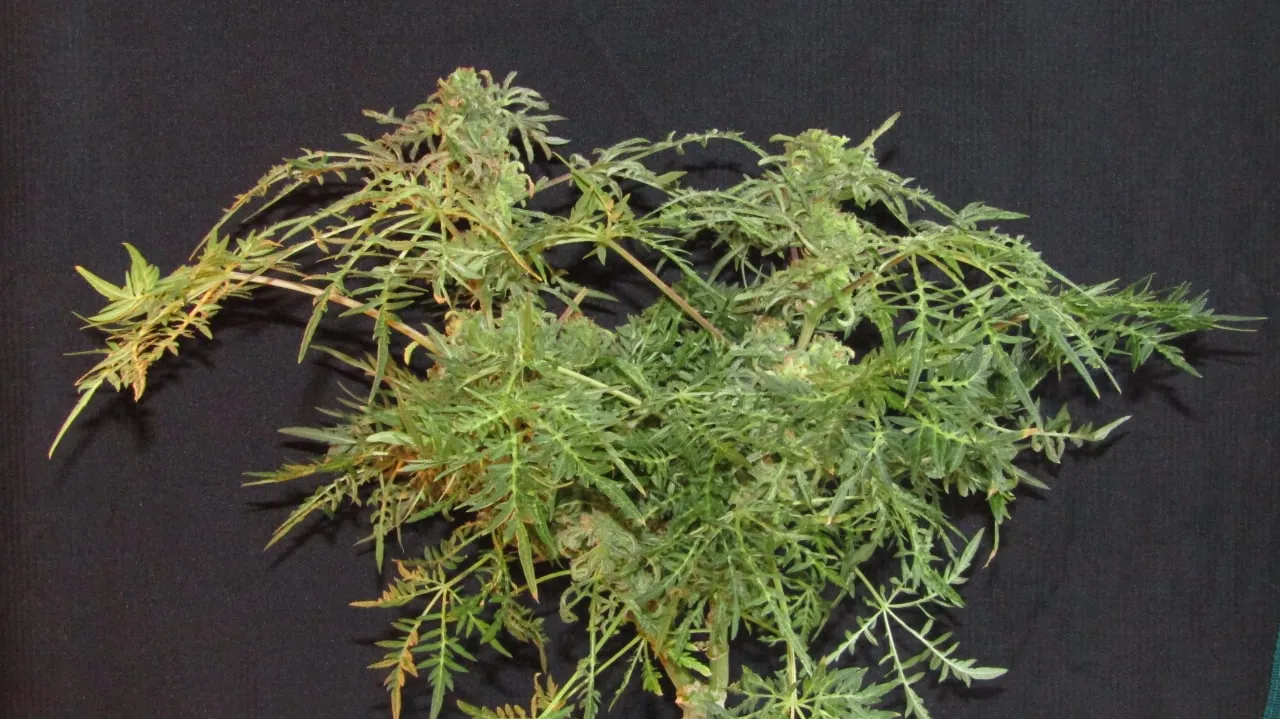
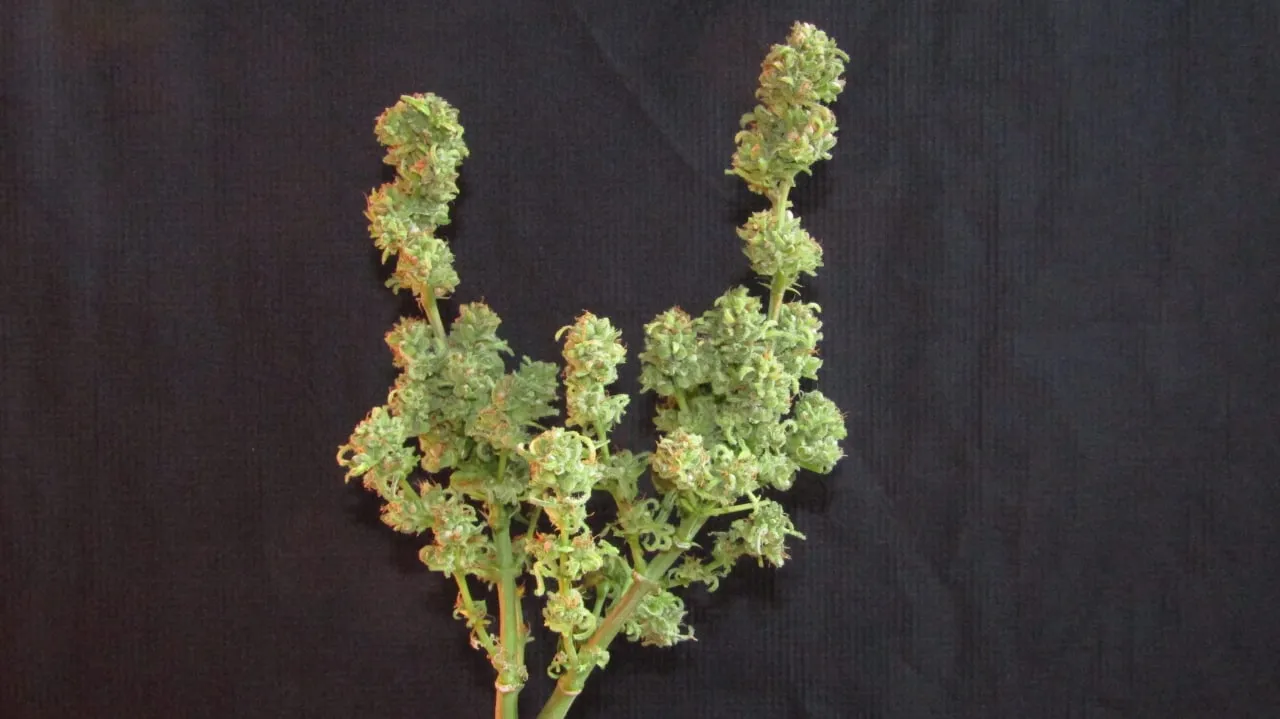
Vegetative phase: 43 days. Flowering: 62 days. Pollination to seeds: 37 days. Height: 32 cm. Sex: female, with no signs of hermaphroditism.
Early vegetative aromas were earthy diesel. Before flowering, there were citrus, pine, and earthy honey notes. In flower, the aroma was tart, citrusy, slightly musky and woody, with dominant orange notes. At harvest, it was a tart, deep fruity citrus aroma, reminiscent of sour green apple with orange and Skittles.
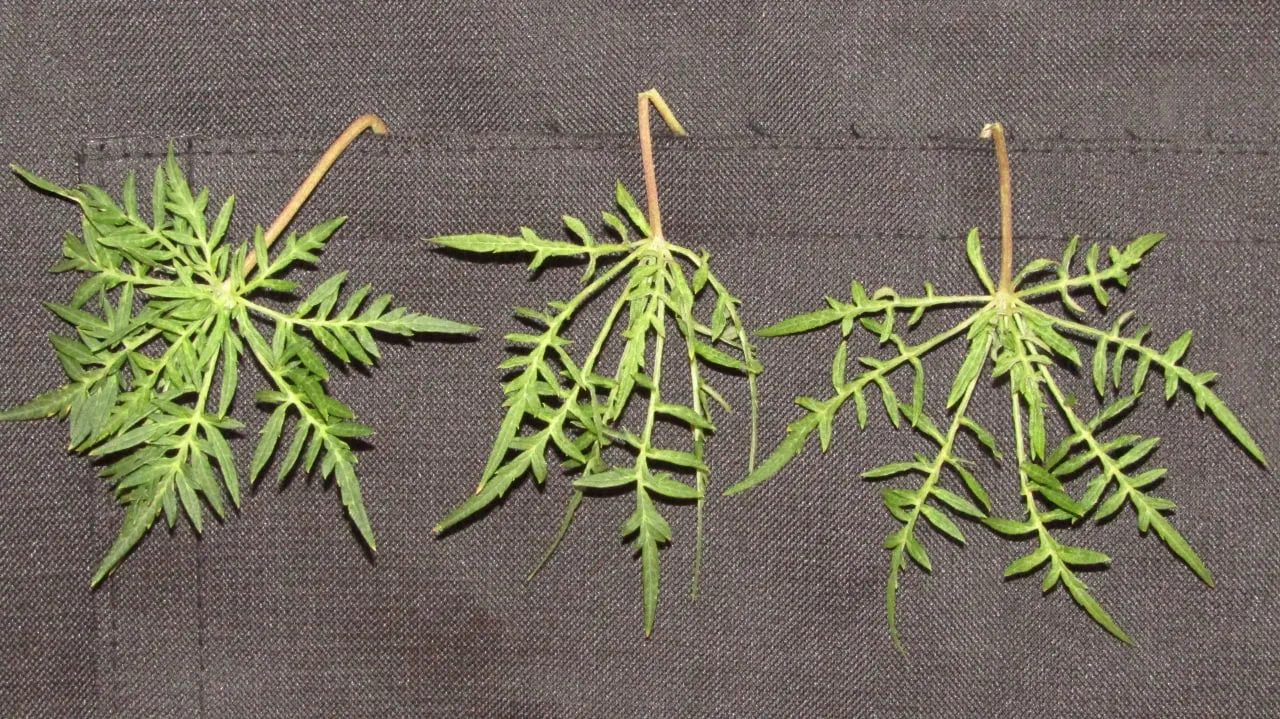
Throughout the cycle, the plant was short and stocky, with short internodes and small, substantial branches. It stretched slightly when flowering began, but did not branch further. All the shoots became flowers alongside the main colas. The first leaves were slightly malformed. From the vegetative phase onward, their shape fully matched the strain. The leaves are dark green.
Emergence: March 26. Sex shown: May 25. Flowering: May 30. Pollination: June 1. Harvest: July 7.
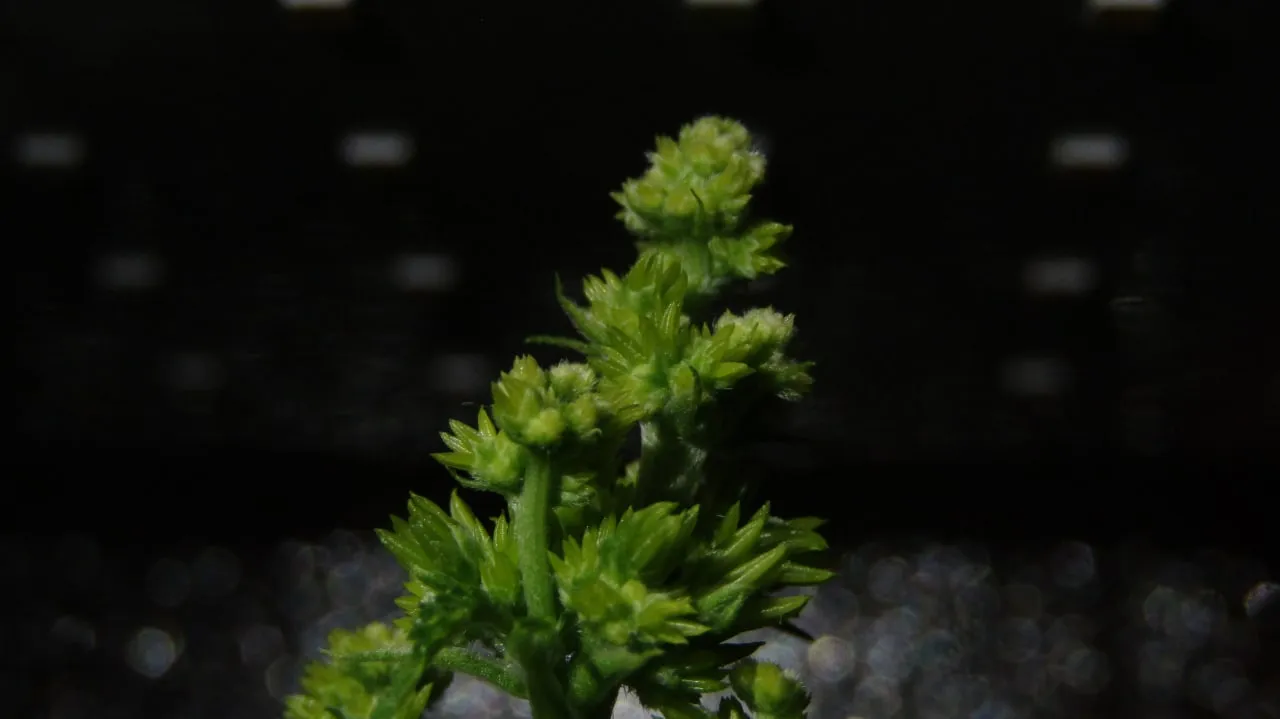
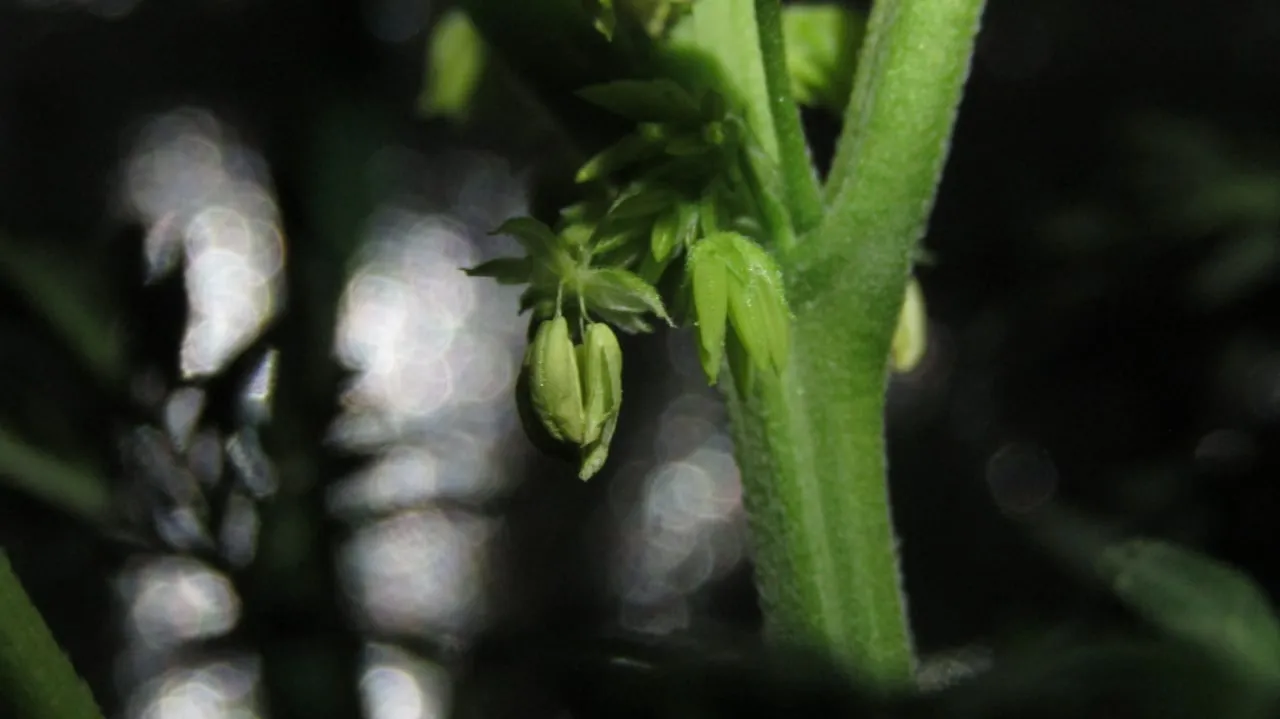
July 8. Pollen donor Freakshow IBL #4
Freakshow #4 was used to pollinate Freakshow IBL #8, Drunken Bastard F3 #16, Freakshow #24, Freakshow #28, Freakshow #1, and Freakshow #3. A great, vigorous male. He produced plenty of anthers in flower and began shedding pollen in the fourth week after the transition. After pollination, I collected some pollen and discarded the plant, retaining a clone.
The vegetative phase lasted 43 days. Rubbing the stem releases earthy pepper notes in the vegetative phase and a strong pepper-diesel, peach, and lemon smell in flower.
He branched well from early vegetative growth, forming colas with long internodes. The first leaves immediately had the proper Freakshow shape without distortions. Later leaves in the vegetative and flowering phases also had the proper shape. The leaves are dark green.
Emergence: March 26. Sex shown: May 16. Flowering: May 18. Pollination: June 1.
July 8. Freakshow IBL #28 harvest
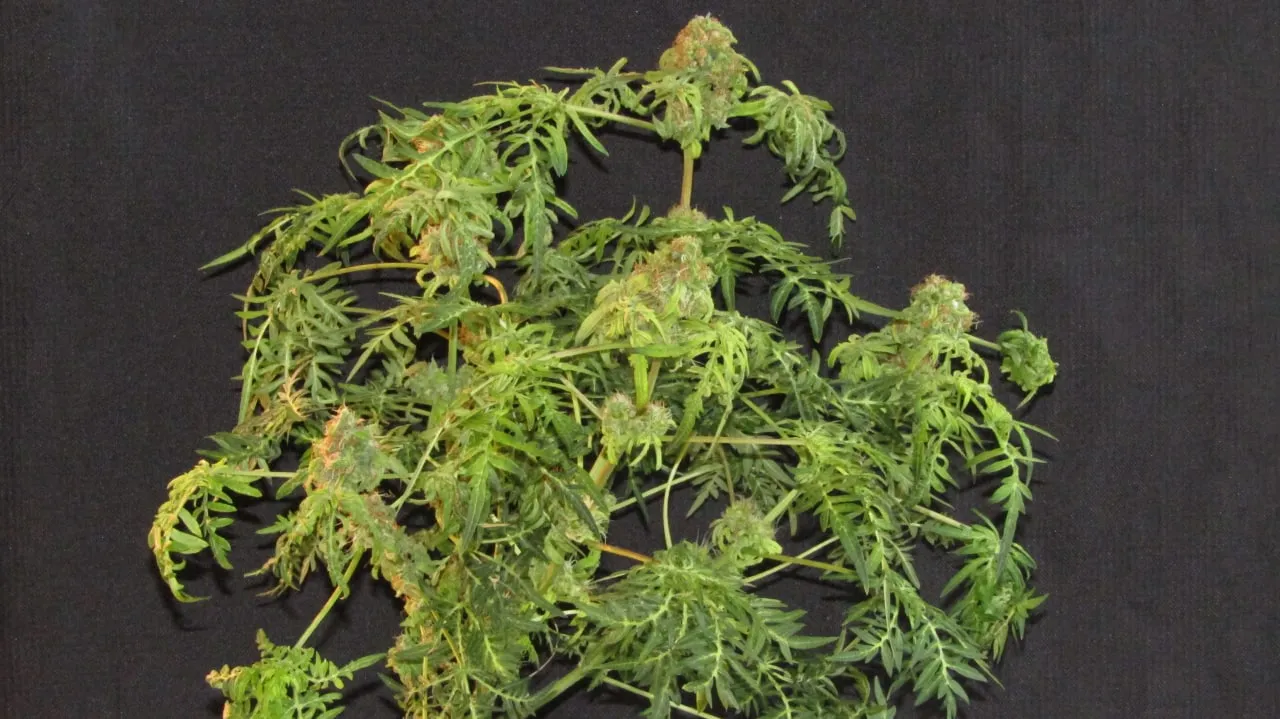
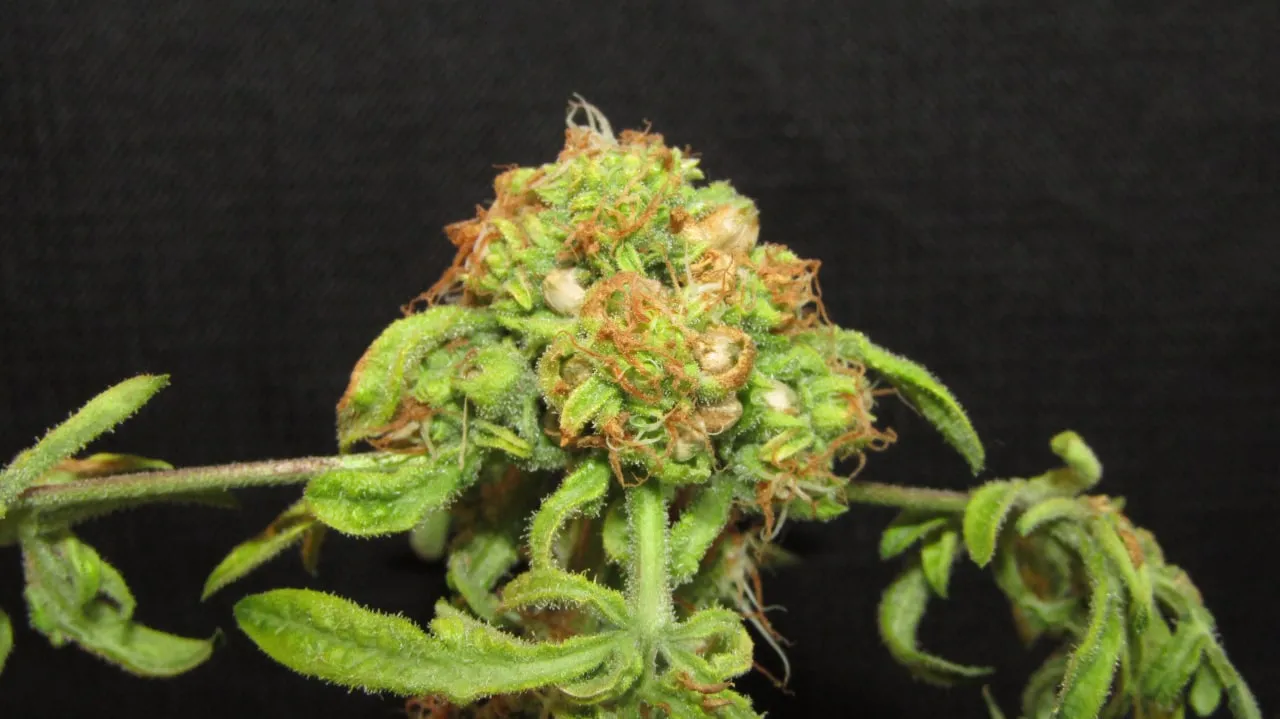
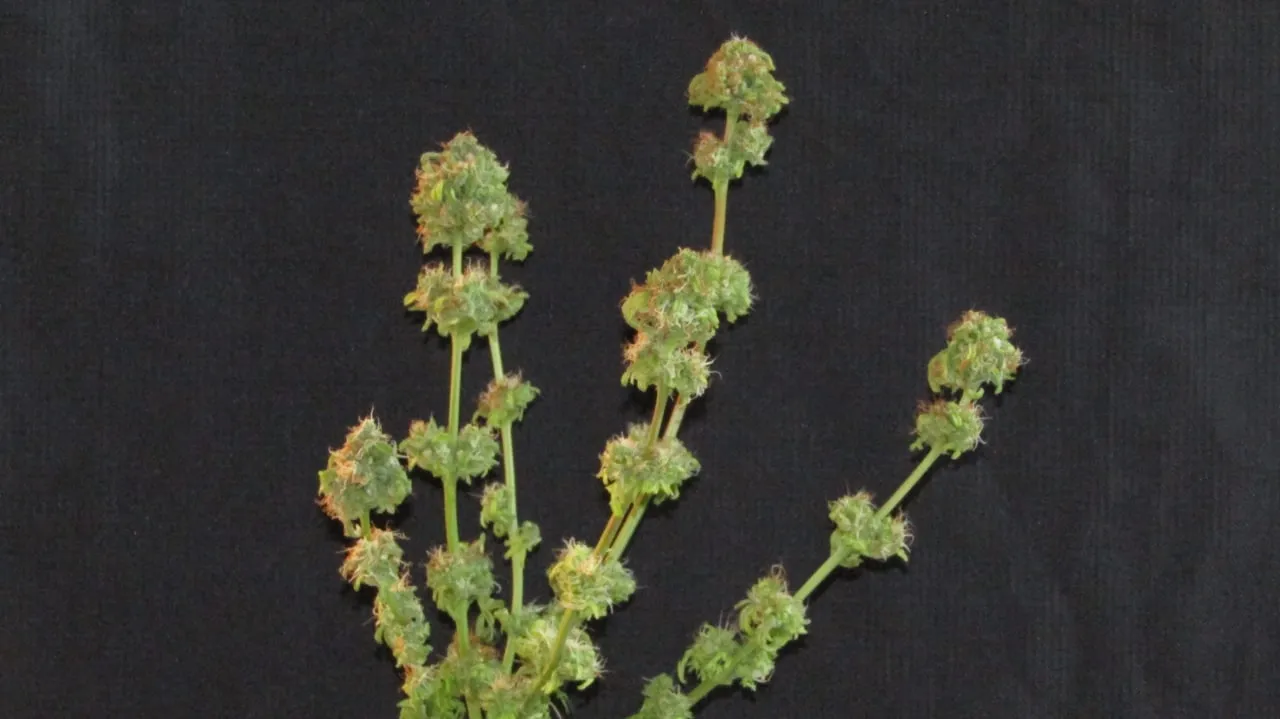
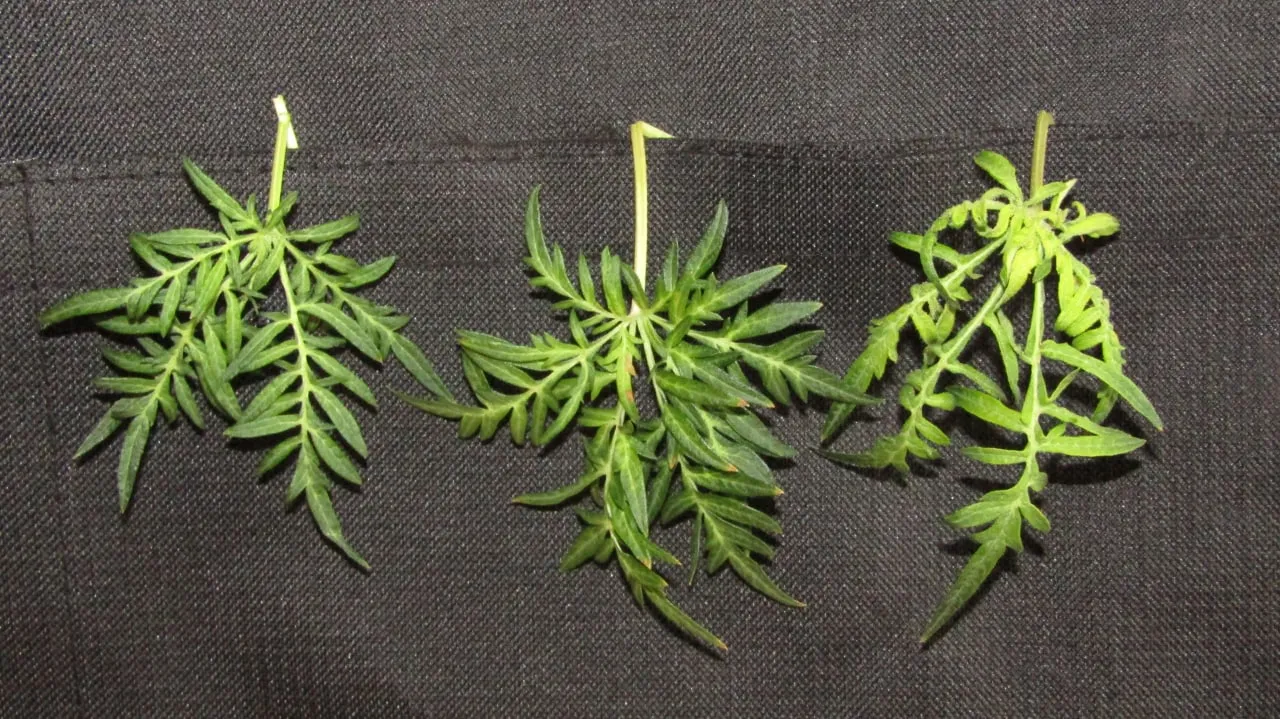
Specimen #28 was pollinated by Freakshow #4 for reproduction within the strain. She was added in the second batch to expand the population from the initial 8 seeds. Her structure resembles male pollen donor #4: good branching and long internodes. She grows quickly, taking up space both upward and outward, and forms dense round flowers with a sweet aroma.
Vegetative phase: 25 days. Flowering: 63 days. Pollination to seeds: 38 days. Height: 31 cm.
At harvest, the aroma has delicate sweet green apple, peach, and pine notes. On the transition to flowering, she increased to 2–2.5 times her volume. She forms dense round flowers spaced loosely along the cola. The leaves were slightly malformed at first, as in most specimens. During vegetative growth, they had the proper FS shape; by late flowering, some sugar leaves had rounded leaflets without serrations.
Emergence: April 5. Sex shown: May 29. Flowering: May 30. Pollination: June 1. Harvest: July 8.
July 9. FS#8 seeds and the male keepers
The FS#8 seeds collected at harvest have dried. I sifted them, picked out properly shaped, mature seeds without defects, and put them in the fridge for storage. FS#8 and FS#28 are returning to vegetative growth.
FS#4 and DB#15 are the males preserving the genetics. I will take a clone from each and collect pollen. Besides DB#15, with A trait that can be inherited without being expressed in a cross. Autoflowering is an example in the Lowryder story. recessive ↗ traits in color and aroma, I still have a spare male, DB#18, with dominant traits, since all the other males were identical to him. I will take a clone and pollen from him too; I may develop 2 lines.
July 11. Freakshow IBL #24 harvest
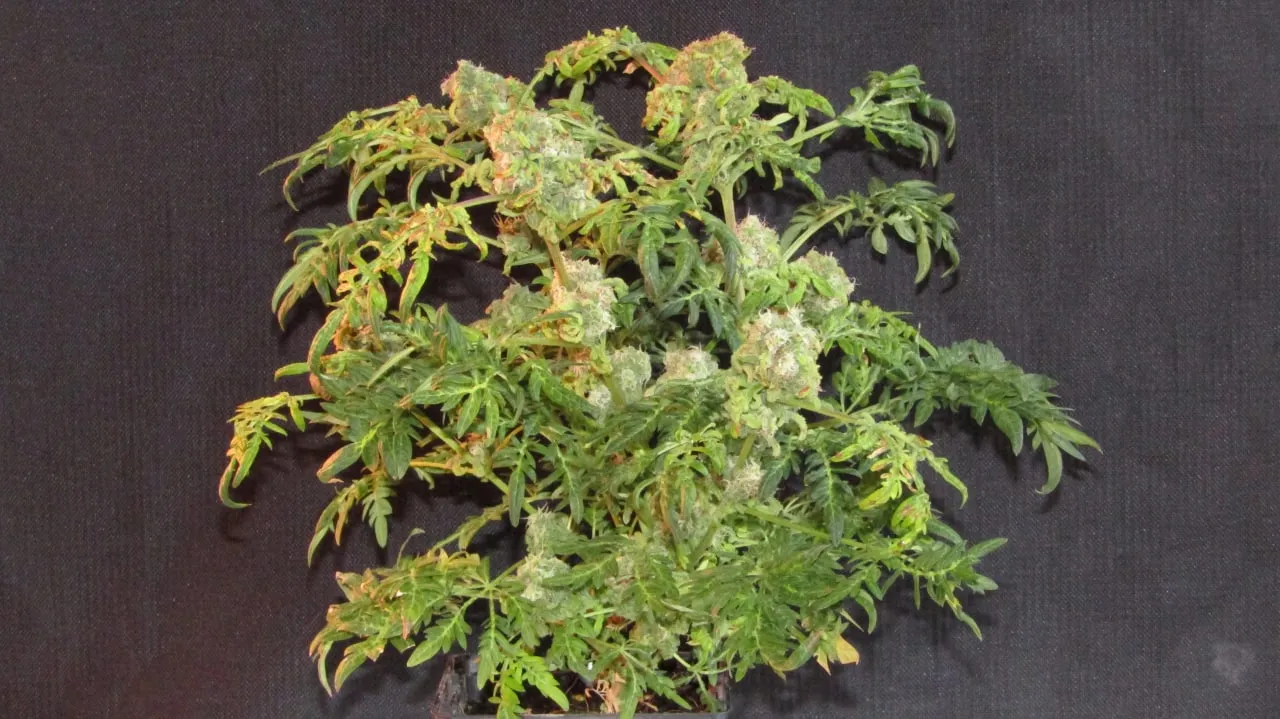
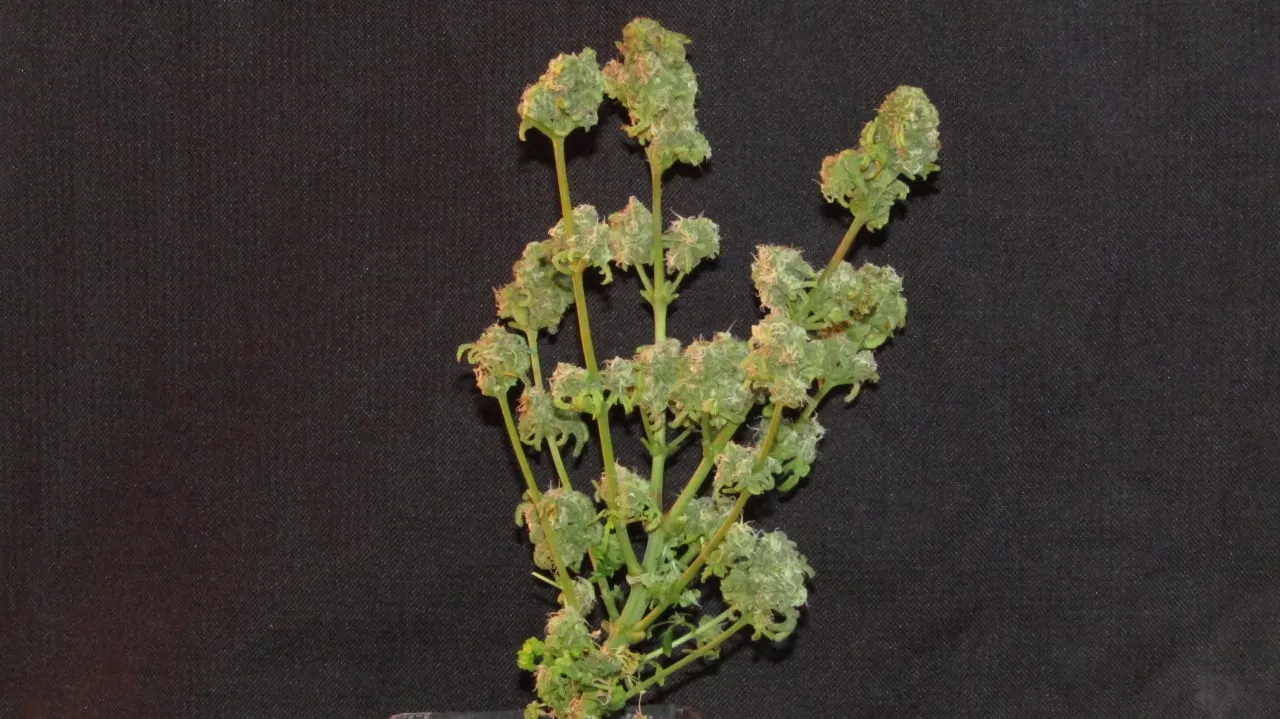
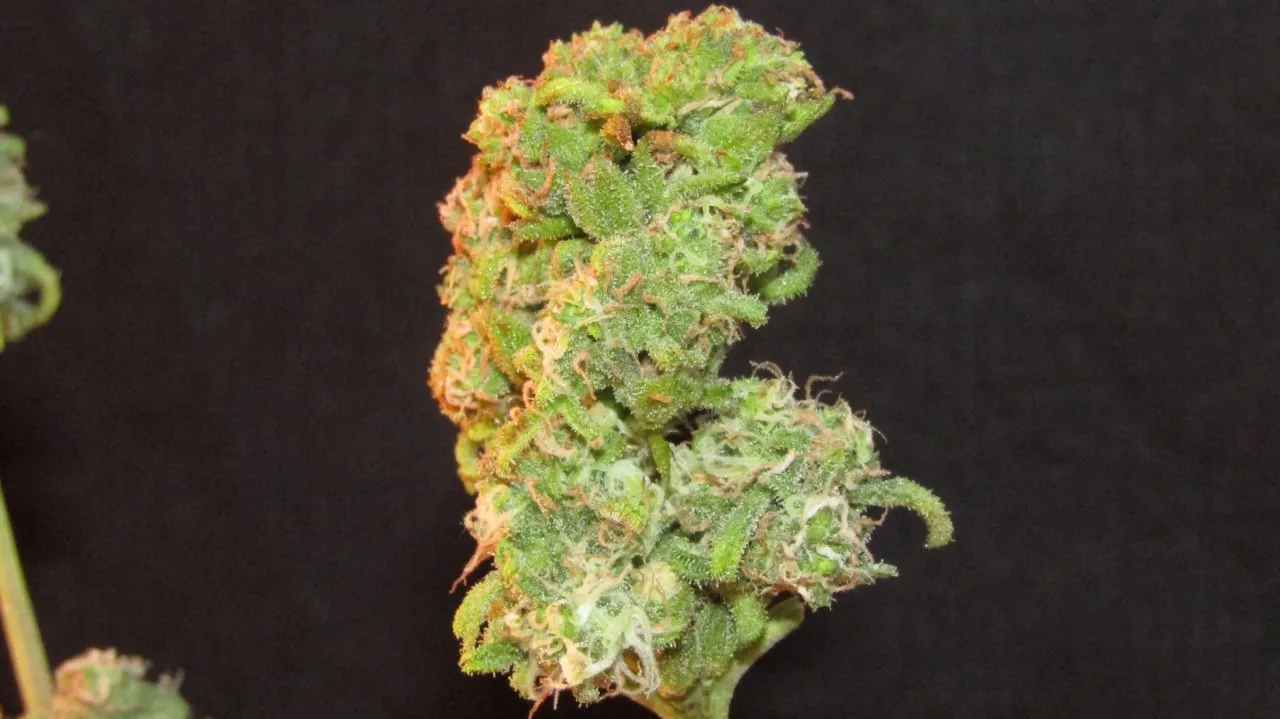
Specimen #24 was pollinated by Freakshow #4 for reproduction within the strain. She came from the second sowing. The plant is intermediate between #8 and #28: stretching, medium height, with dense round flowers and more trichomes than her sisters. I will use her for phenotype selection in the next round. She flowers longest of all. I think she could have stayed another week, but I already have enough mature seeds for selection.
Vegetative phase: 25 days. Flowering: 66 days. Pollination to seeds: 40 days. Height: 22 cm. The aroma is citrusy, with pine and pepper notes. She branches well, with dense round flowers spaced loosely along the branches. During vegetative growth, the leaves had the proper FS shape; by late flowering, some sugar leaves had rounded leaflets without serrations.
Emergence: April 5. Sex shown: May 29. Flowering: May 30. Pollination: June 1. Harvest: July 11.
July 13–22. Clones of the parents
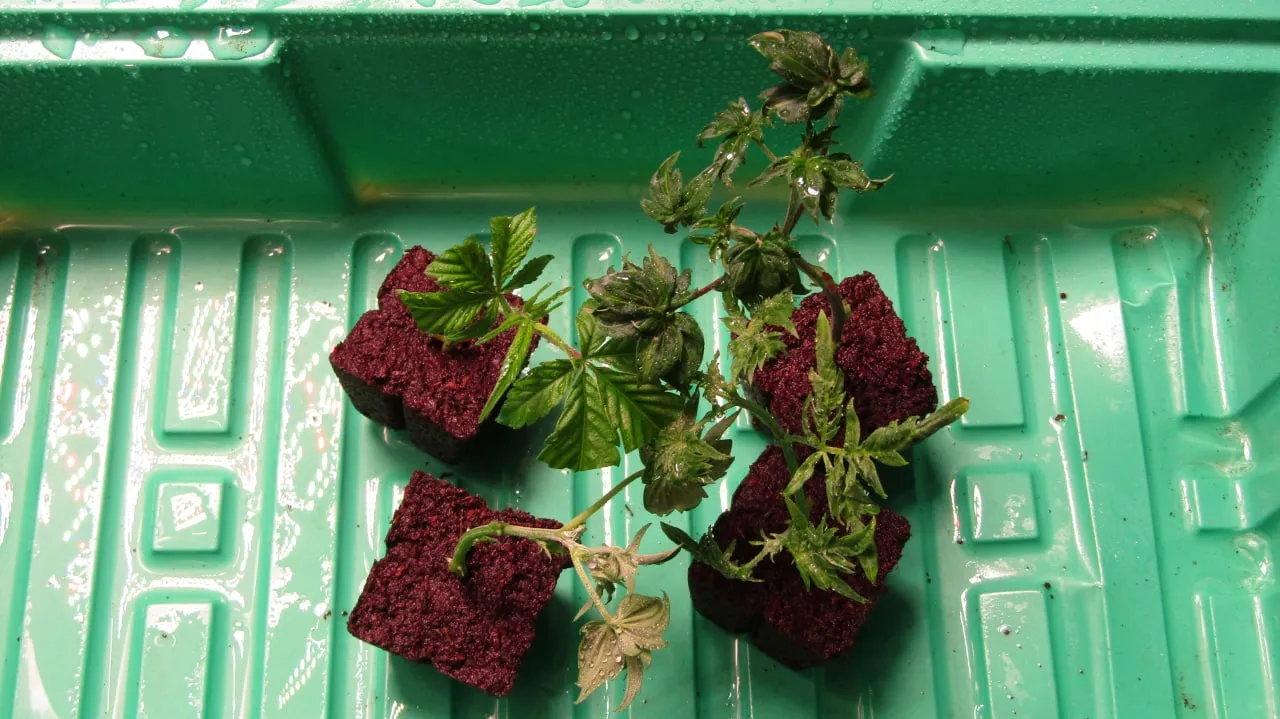
I took clones from the males DB#15 and FS#4 and the female DB#16. I took another 4 clones from the vegetating mother plant DB#16. The DB#15 and FS#4 clones needed 9 days to root.
July 20. Drunken Bastard #16 harvest
Specimen #16 was pollinated by Drunken Bastard #15 for reproduction within the strain. Throughout the cycle, she grew vigorously, branched abundantly, and was undemanding. She tolerates stress easily and clones well. The plant produced foxtails and flowers growing from the leaves. This made up for the absence of purple flowers in her phenotype.
Vegetative phase: 47 days. Flowering: 70 days. Pollination to seeds: 50 days. Height: 54 cm. Sex: female, with no signs of hermaphroditism.
During vegetative growth, she has a faint grassy aroma; the stem has a sour, musky, earthy smell. In flower, the aroma is bright, fresh, sweet citrus, with clear lime notes. At harvest, it is fresh sweet-and-sour lime, with lemon and pine notes.
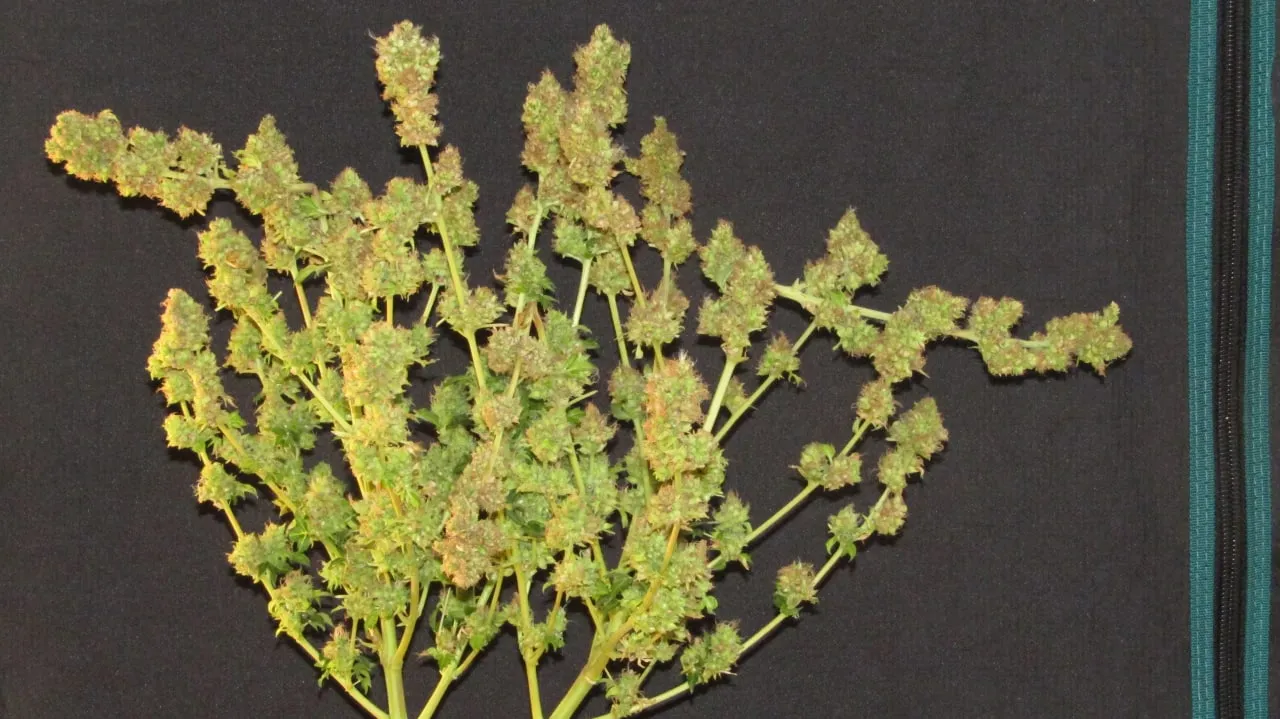
The framework is very branchy and tall, stretching in every direction, with long internodes. She forms small, heavy flowers. The leaves are uniformly deep dark green and have the proper ABC shape. The stem is light green, and the petioles are faintly purple.
Emergence: March 27. Sex shown: May 25. Flowering: May 26. Pollination: June 1. Harvest: July 20.
July 25–28. Seeds of the first hybrids
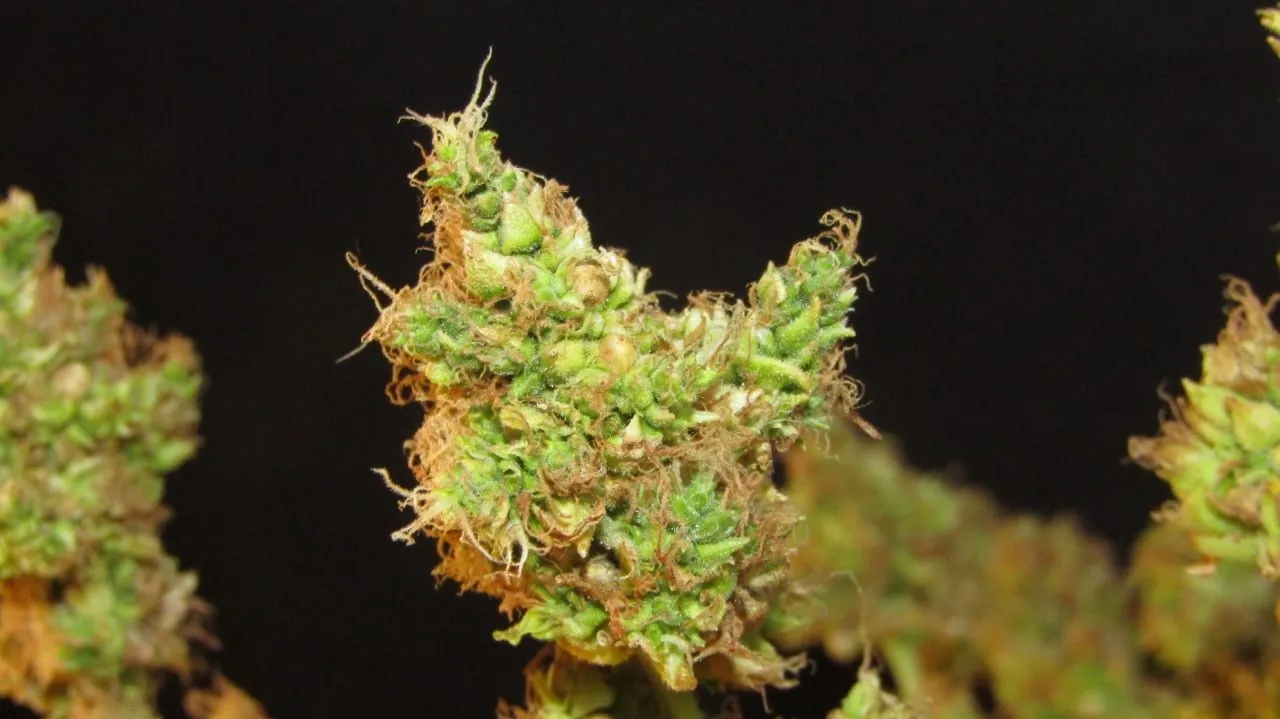
I harvested the clones carrying offspring: Drunken Bastard #16 × Lowryder Boyzzz, using pollen from 4 males, and Drunken Bastard #16 × Freakshow #4. Then came Freakshow IBL #8 × Lowryder Boyzzz.
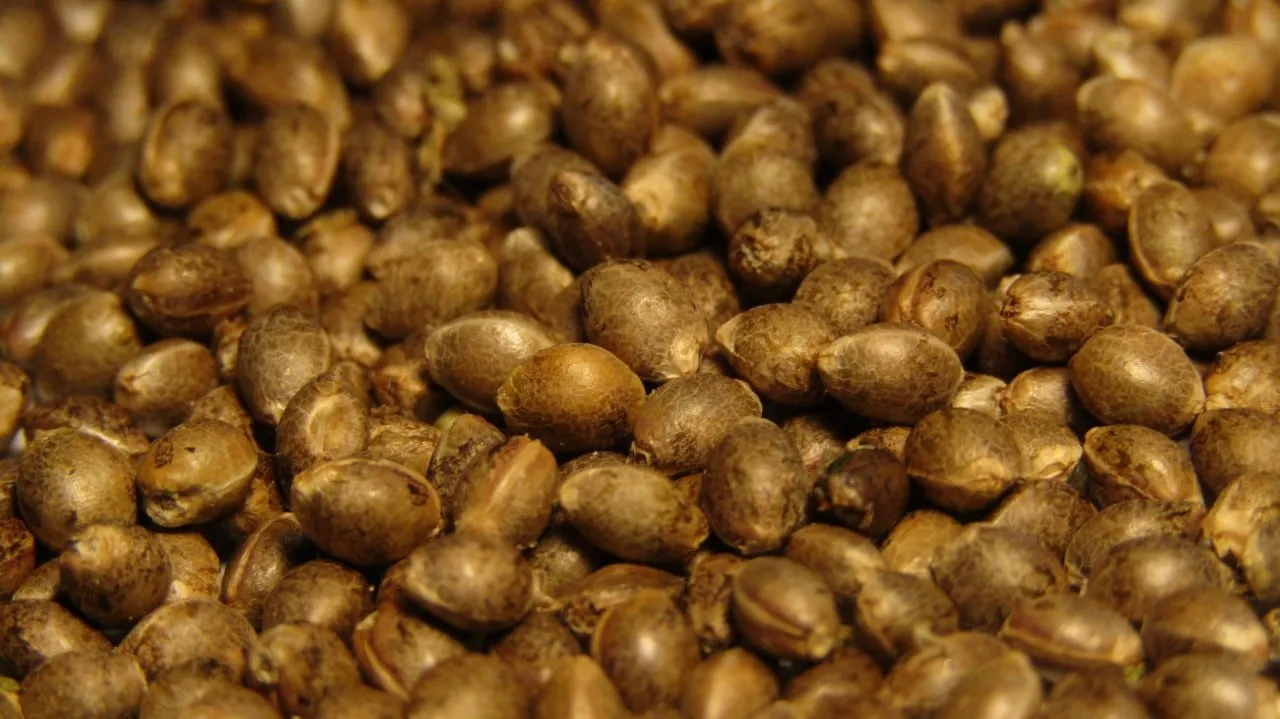
Sorting the DB#16 seeds, inspecting them, testing each for firmness, and picking the best: that is what can really add to the workload.
I collected seeds from the recent clone harvest. Soon I will move to the next stage: germination tests. Freakshow IBL #8 successfully returned to vegetative growth and has begun developing new branches.
August 3. The last Freakshows
FS#3 was pollinated by Freakshow #4 for reproduction within the strain. I decided to bring her back into the work and see the result. Overall, I liked the aroma, flower shape, and appearance.
Vegetative phase: 65 days. Flowering: 64 days. Pollination to seeds: 52 days. Height: 29 cm. Sex: female, with no signs of hermaphroditism. The aroma is bright, fresh, sweet orange, lime, and lemon, reminiscent of Skittles. She has medium height, medium internodes, and good branching. The leaves were badly malformed at first but ended up with the proper FS shape.
Emergence: March 26. Sex shown: May 13. Flowering: May 30. Pollination: June 13. Harvest: August 3.
FS#1 was also pollinated by Freakshow #4. She began with malformed leaves and followed the same course as #3. Nothing in her aroma, growth, or structure stood out, so I did not describe her in full.
August. Preserving the parents
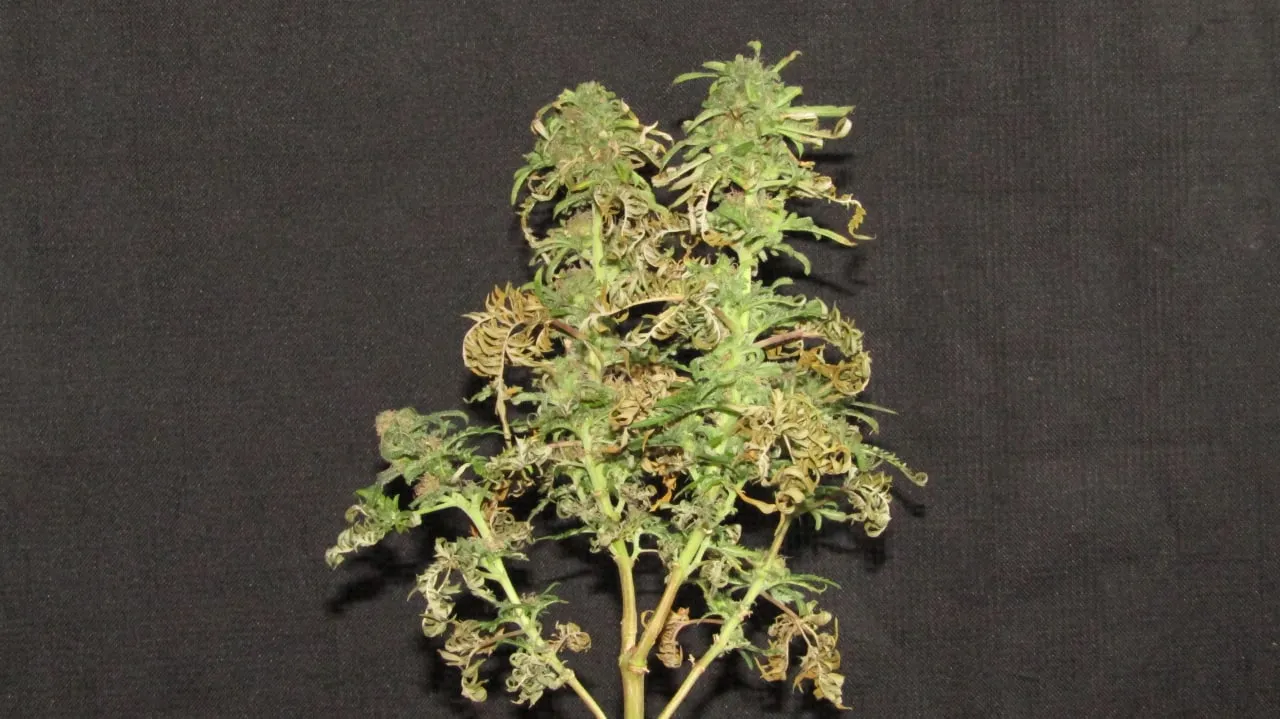
Freakshow IBL #8 continues returning to vegetative growth. DB#15 (M) and DB#16 (F) have been put together for a date. I do not plan to use FS#4 for now. I am waiting for DB#15’s anthers to open; then I will use him and discard the plant, as I do not plan to keep flowering males this season.
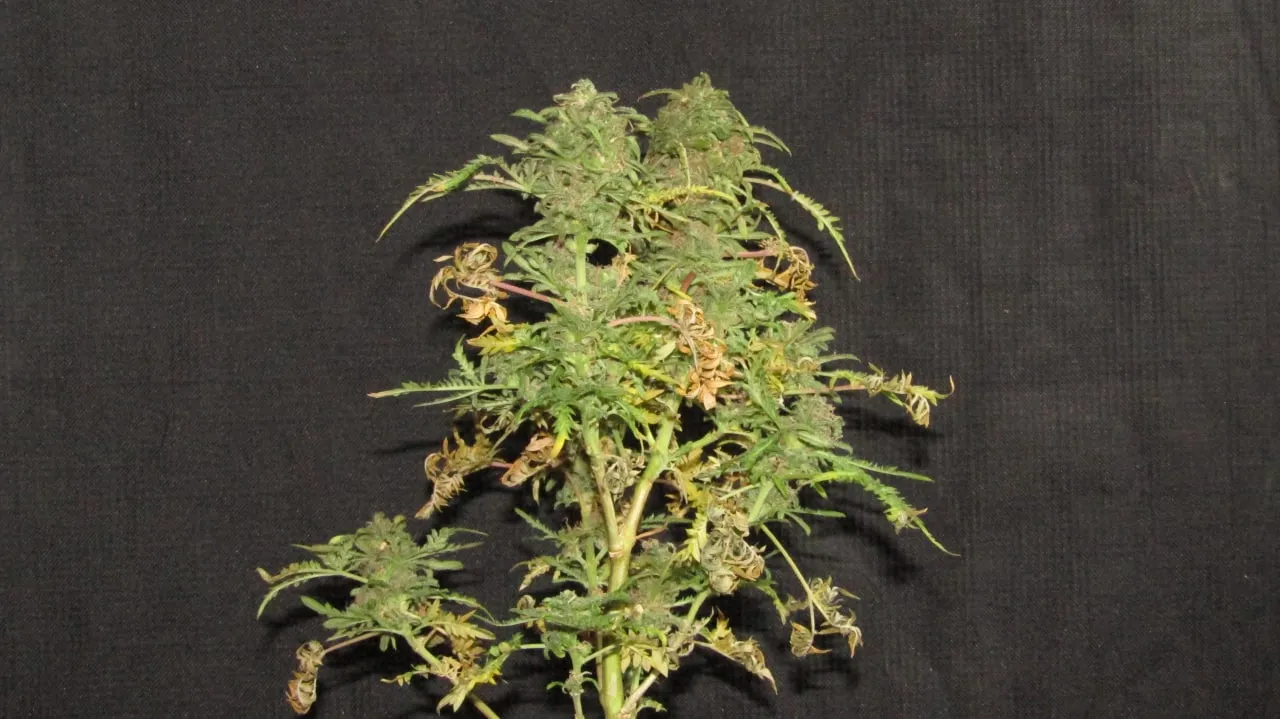
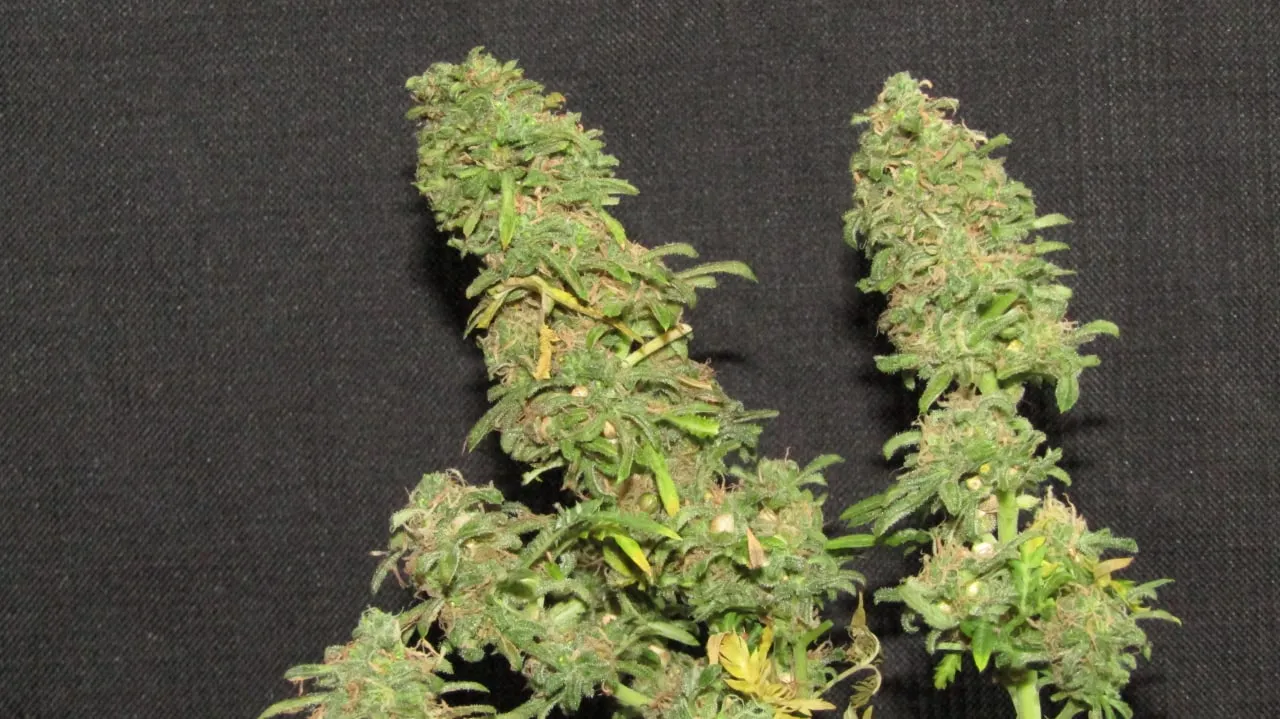
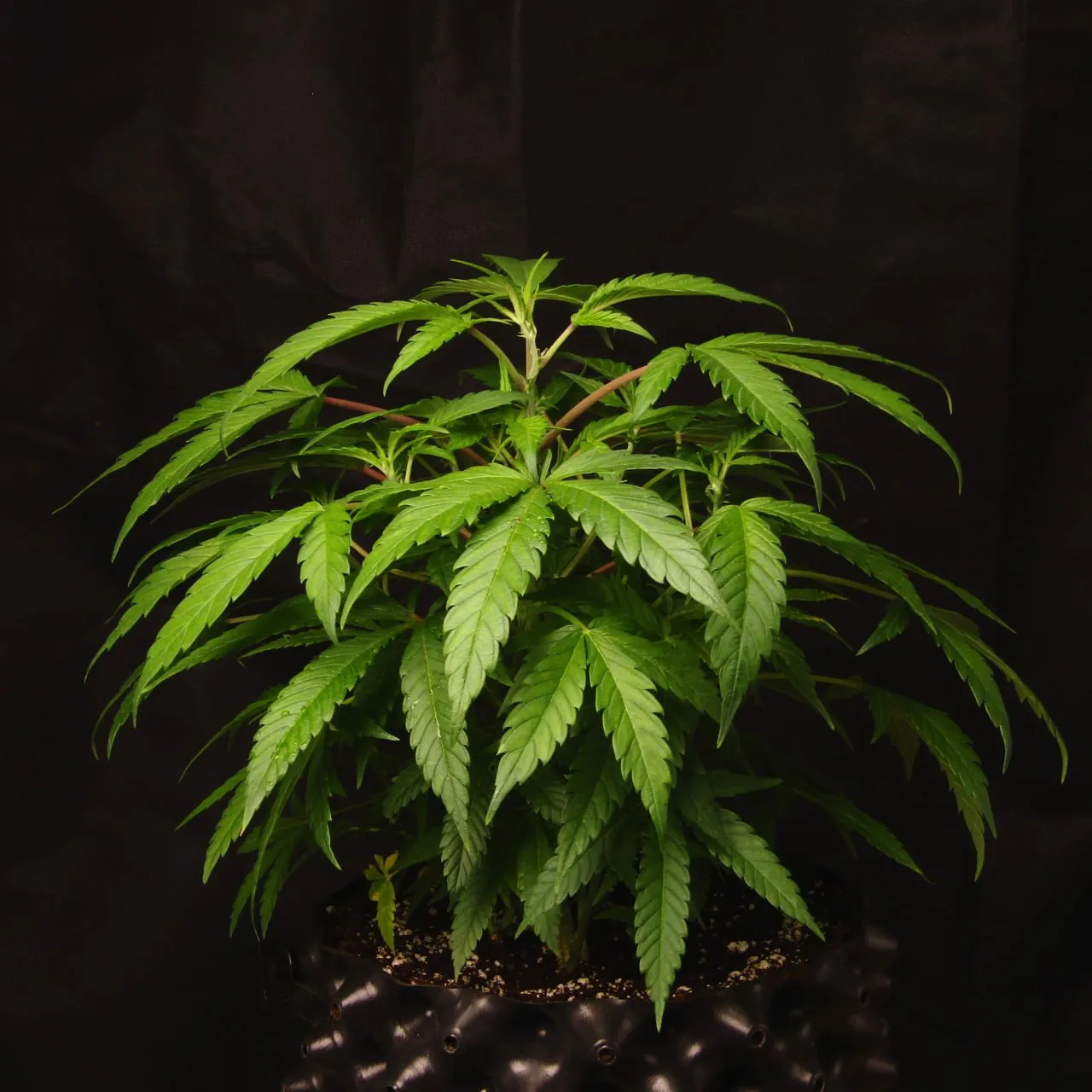
Only the clones preserving the genetics of the selected plants remain. A few photographs of my branchy favorite, Drunken Bastard #16.
12 August. Repeat pollination of DB#16
DB#15, male, and DB#16, female: I carried out a round of pollination.
September 30 - October 7, 2022. The third season: Drunken Bastard × Freakshow F1
The third season is officially open. Freakshow IBL and Drunken Bastard F4 from Mutant Farm belong to my personal seed collection, which I began building in the second season.
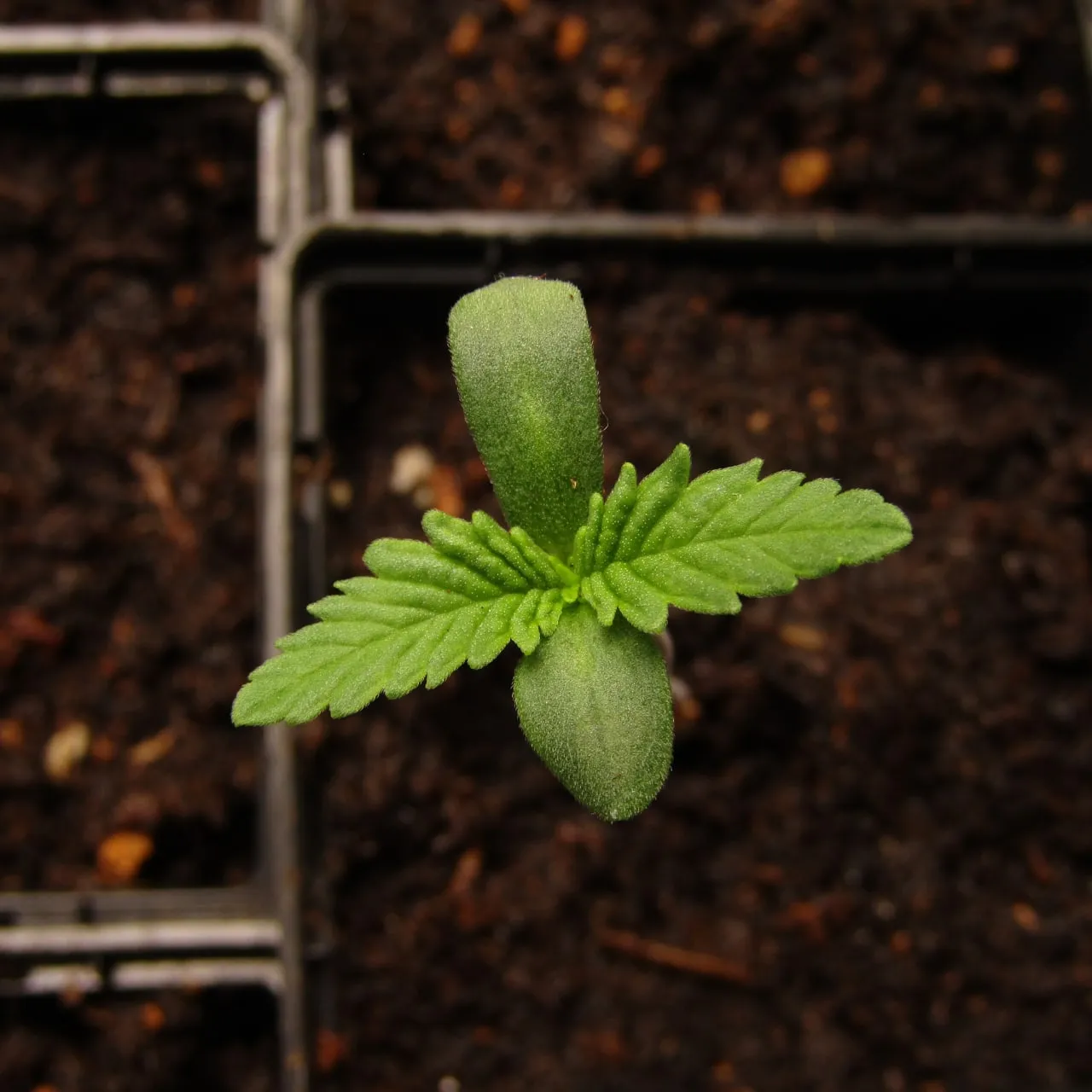
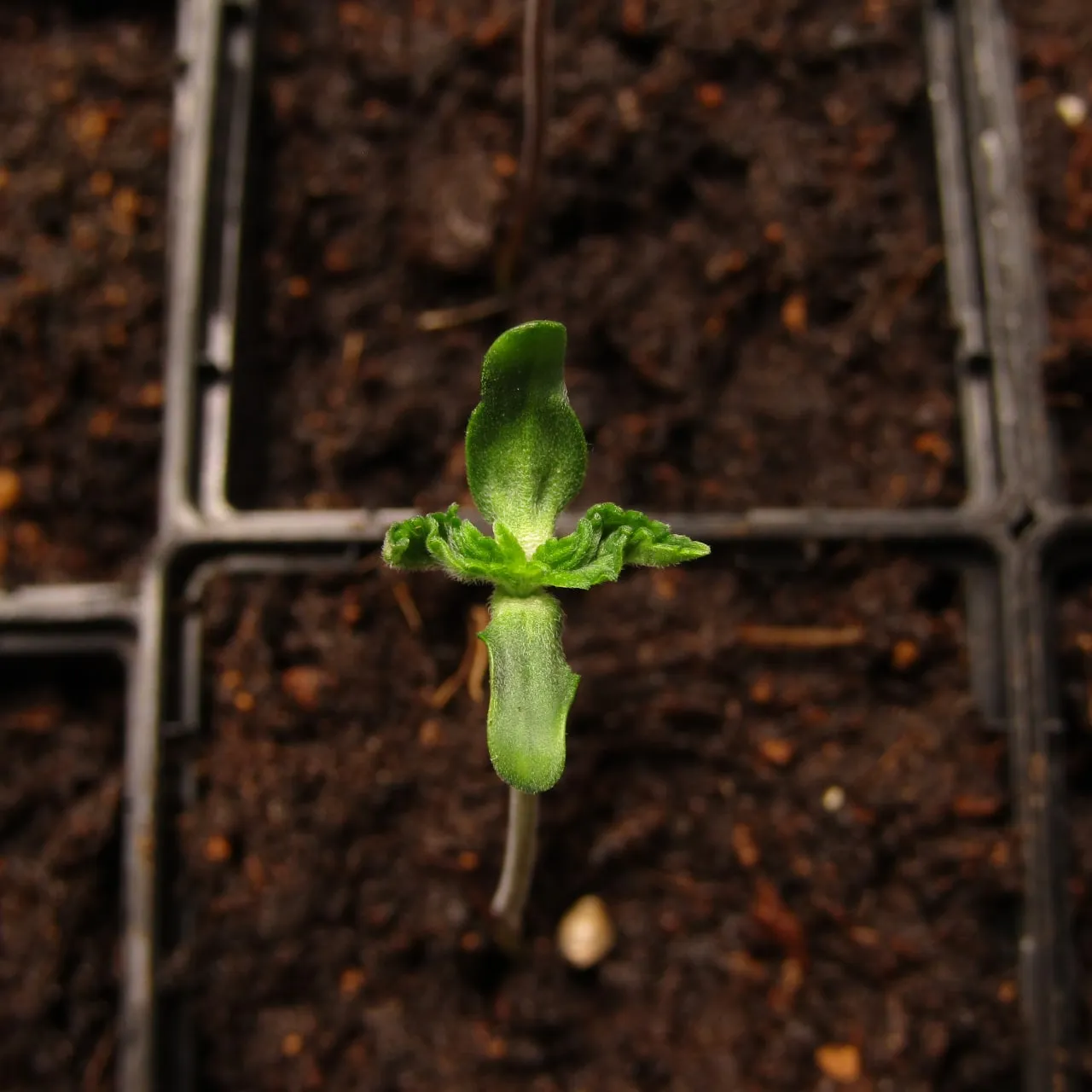
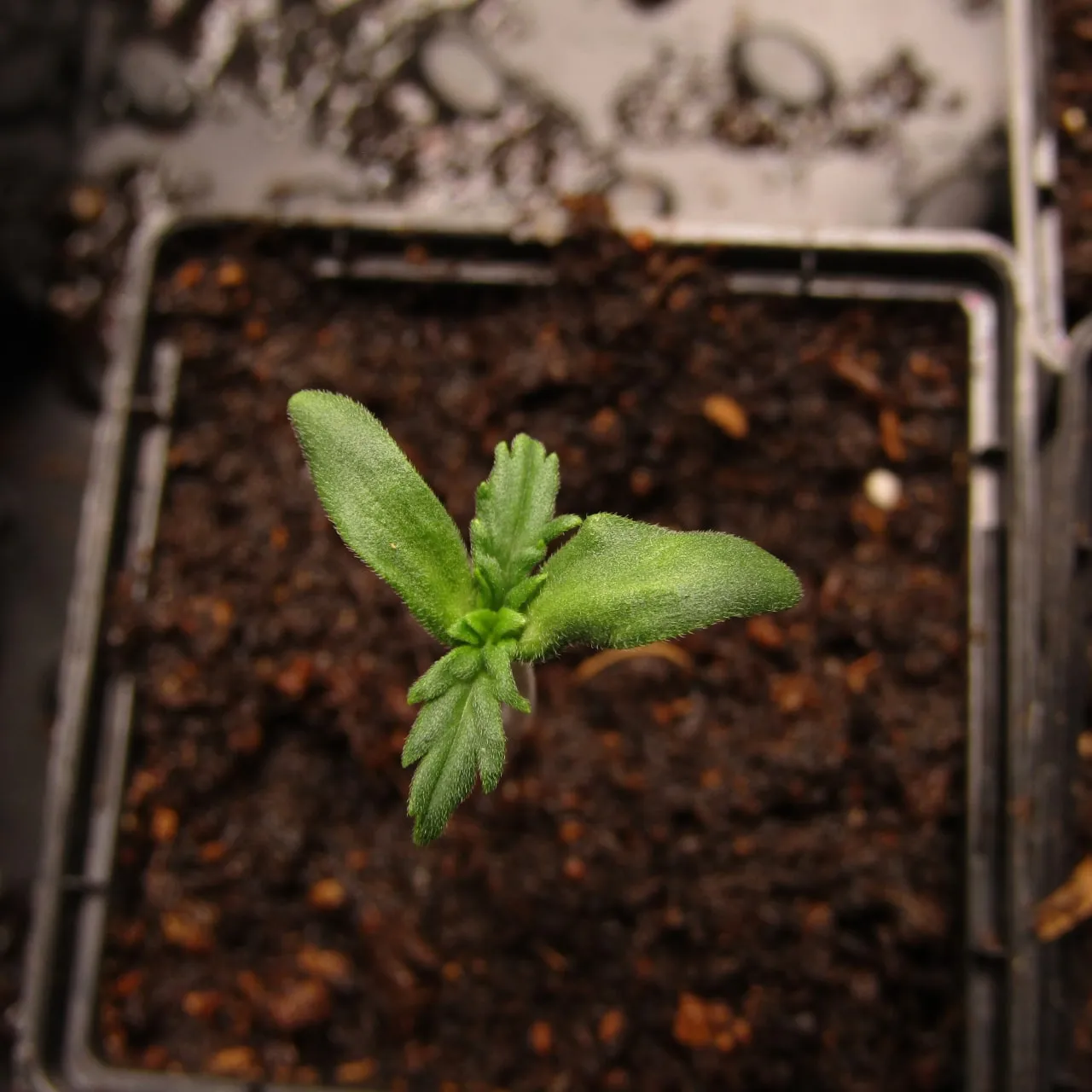
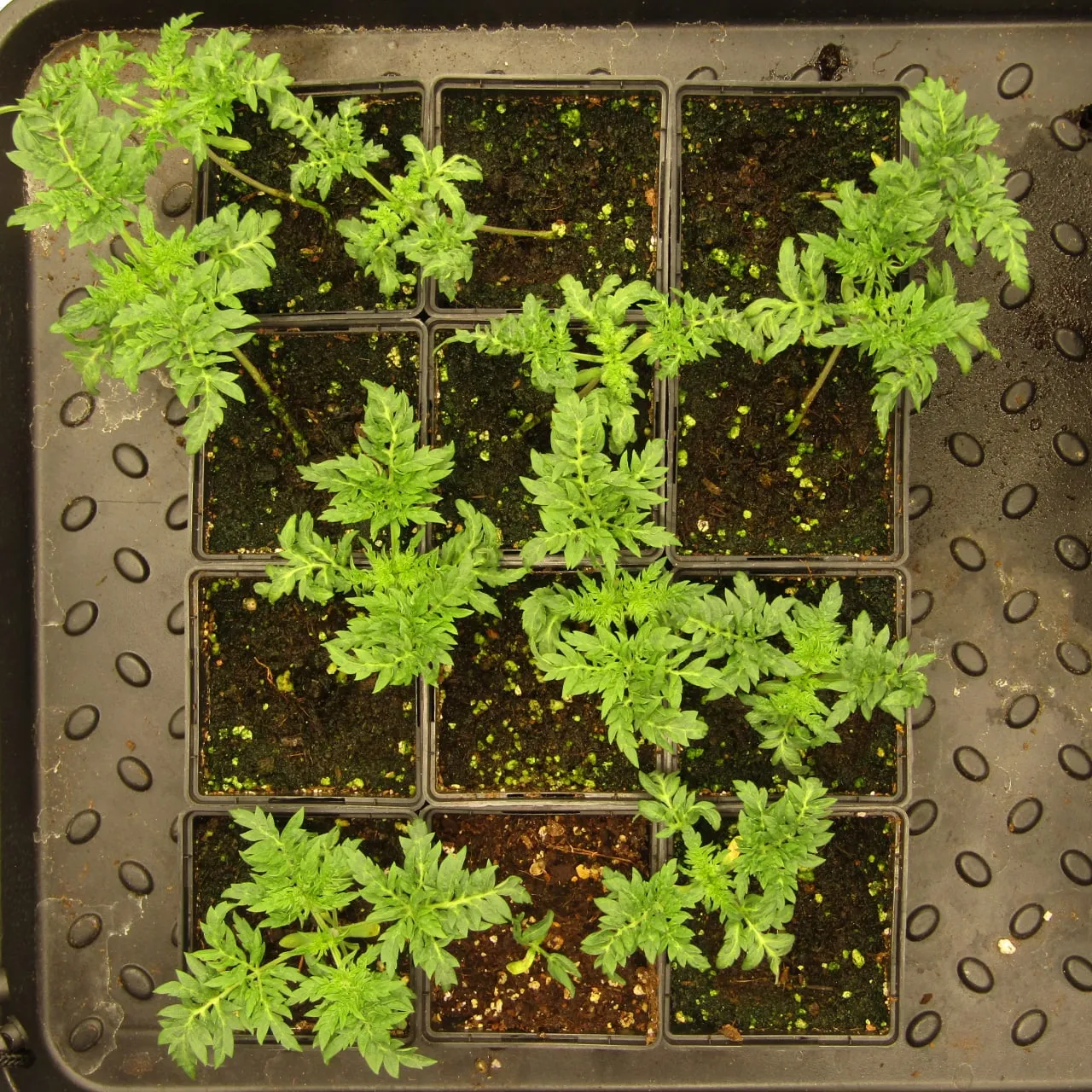
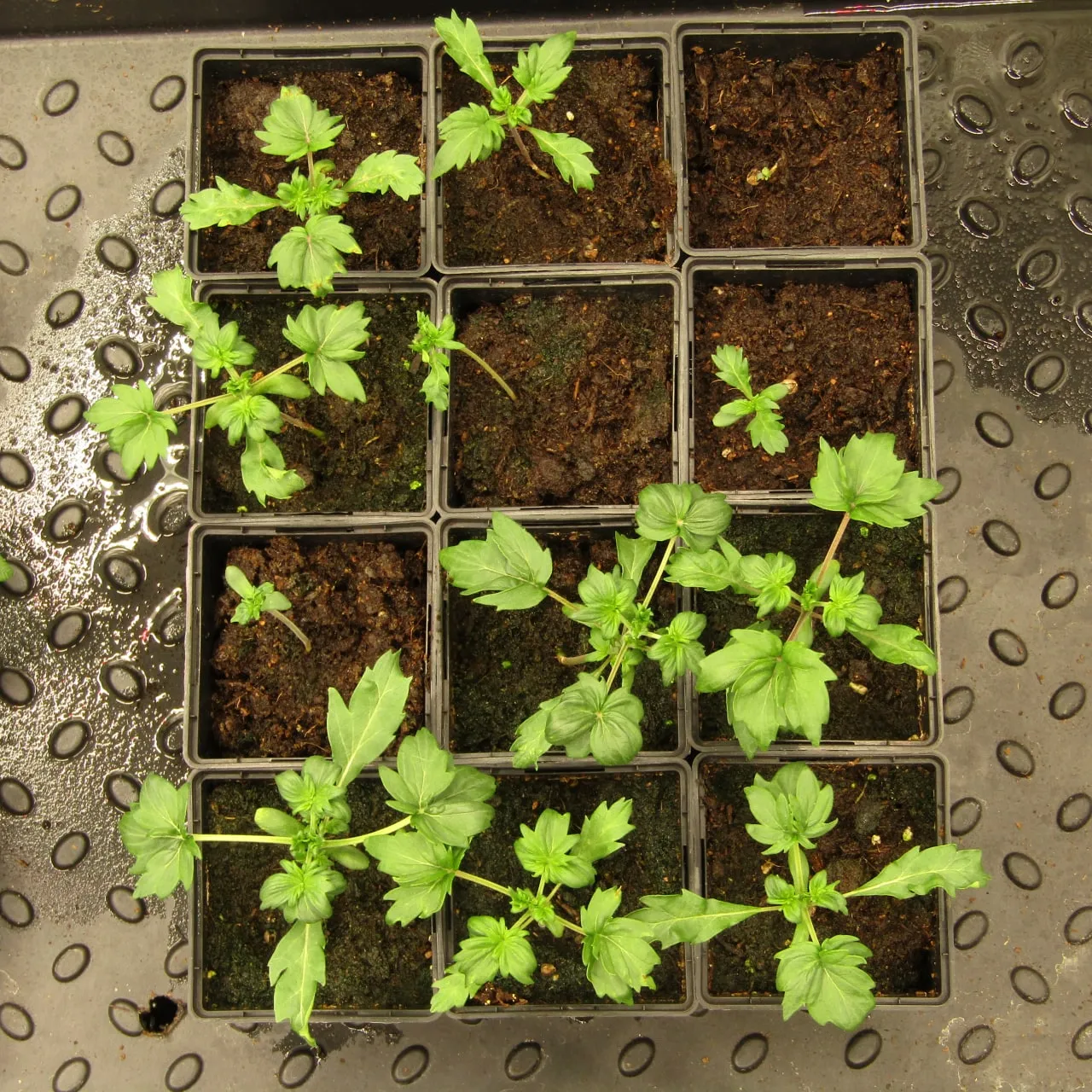
Freakshow: 12 out of 12 little weirdos have emerged. Drunken Bastard F4: 8 out of 12 have emerged.
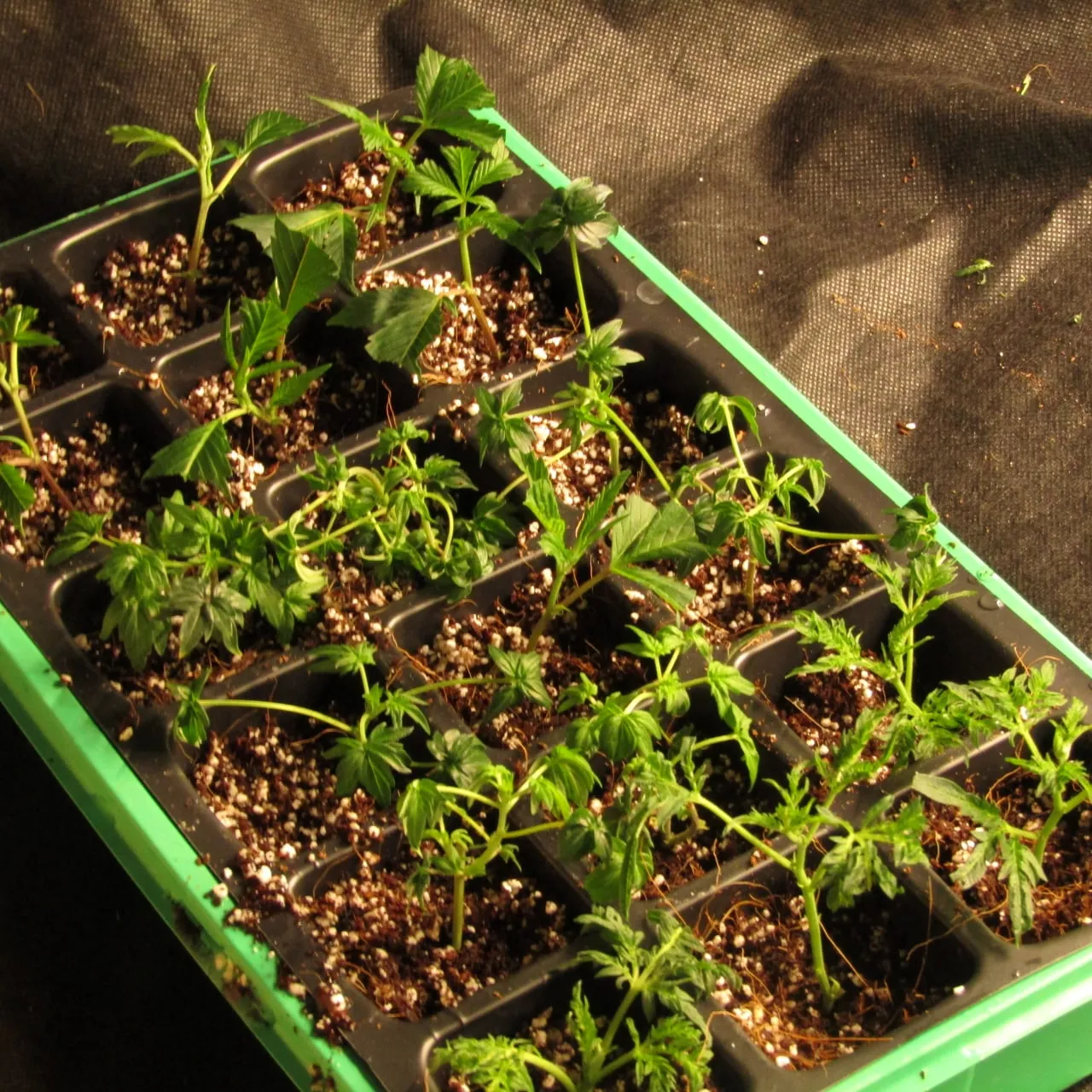
Drunken Bastard × Freakshow The first generation from a cross between two parents. F1 ↗: 15 out of 19 have emerged. Most plants show ordinary cannabis leaves; one is strongly dominated by Bastard, and some show slight distortions.
October 16–23. Leaves and the first elimination
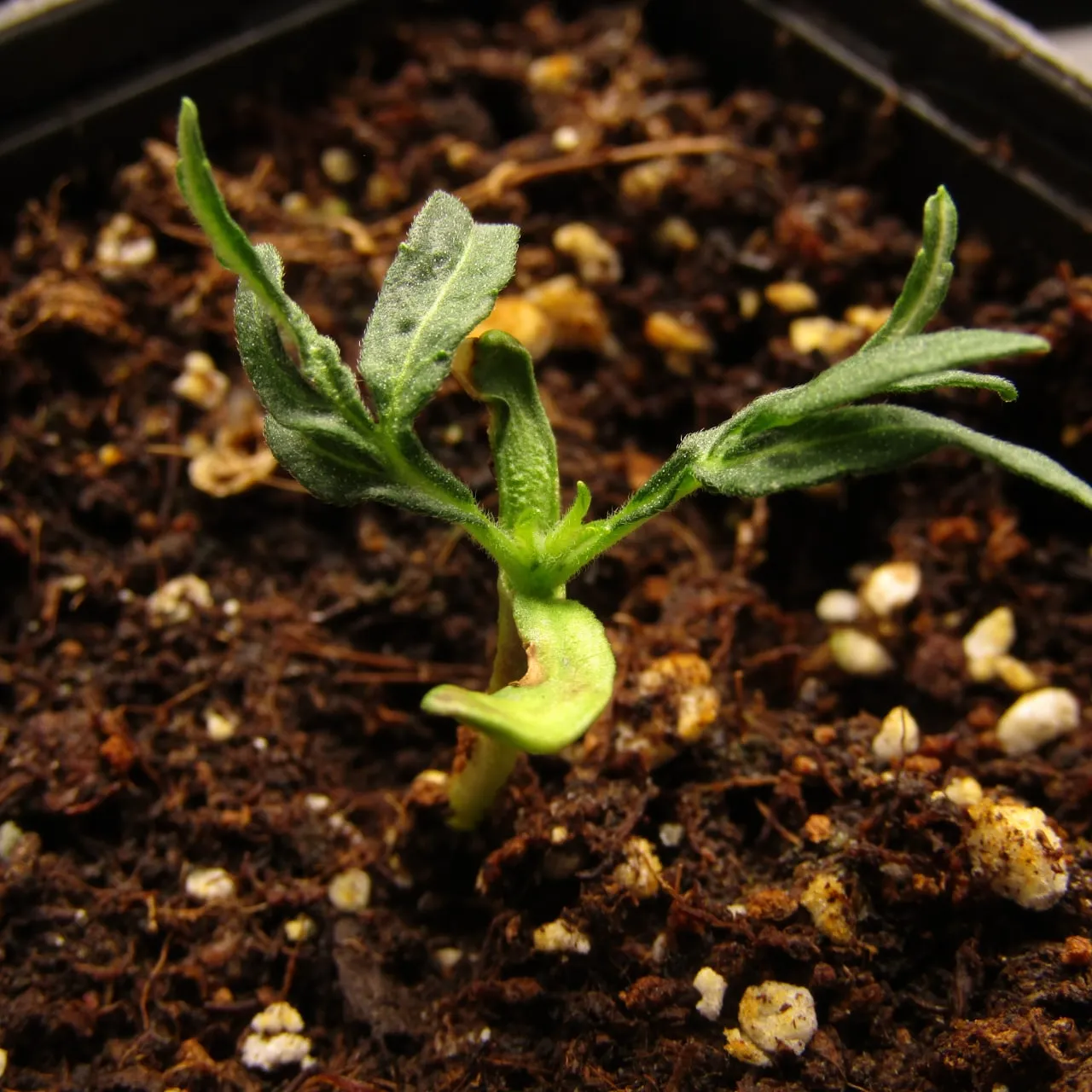
Freakshow: all plants show the Freakshow leaf mutation to varying degrees. I will describe the phenotypes after sexing. I am not eliminating anyone this week. FS#11 is the strangest one: slow growth and the most distorted first-leaf structure. I am curious how it will develop. In the second week of vegetative growth, FS#11 topped itself and is growing two colas.
Drunken Bastard F4: all plants show the ABC leaf mutation, with slight differences in some. DB#3 was the slowest to germinate and grow, so I am eliminating it.
Drunken Bastard × Freakshow: 19 out of 19 have emerged. 15 out of 17 plants show ordinary leaves without distortions, with barely noticeable leaf differences in some. DF#6 and DF#12 show the full ABC mutation. I think DB#15 pollen got in, since the mother was DB#16; we will see how they behave. DF#10 and DF#19 were slow to emerge, turned out weak, and were eliminated.
DF#13, which I think came from a stray pollination, behaves like a vine and sprawls.
October 24–31. The mother plant FS#8
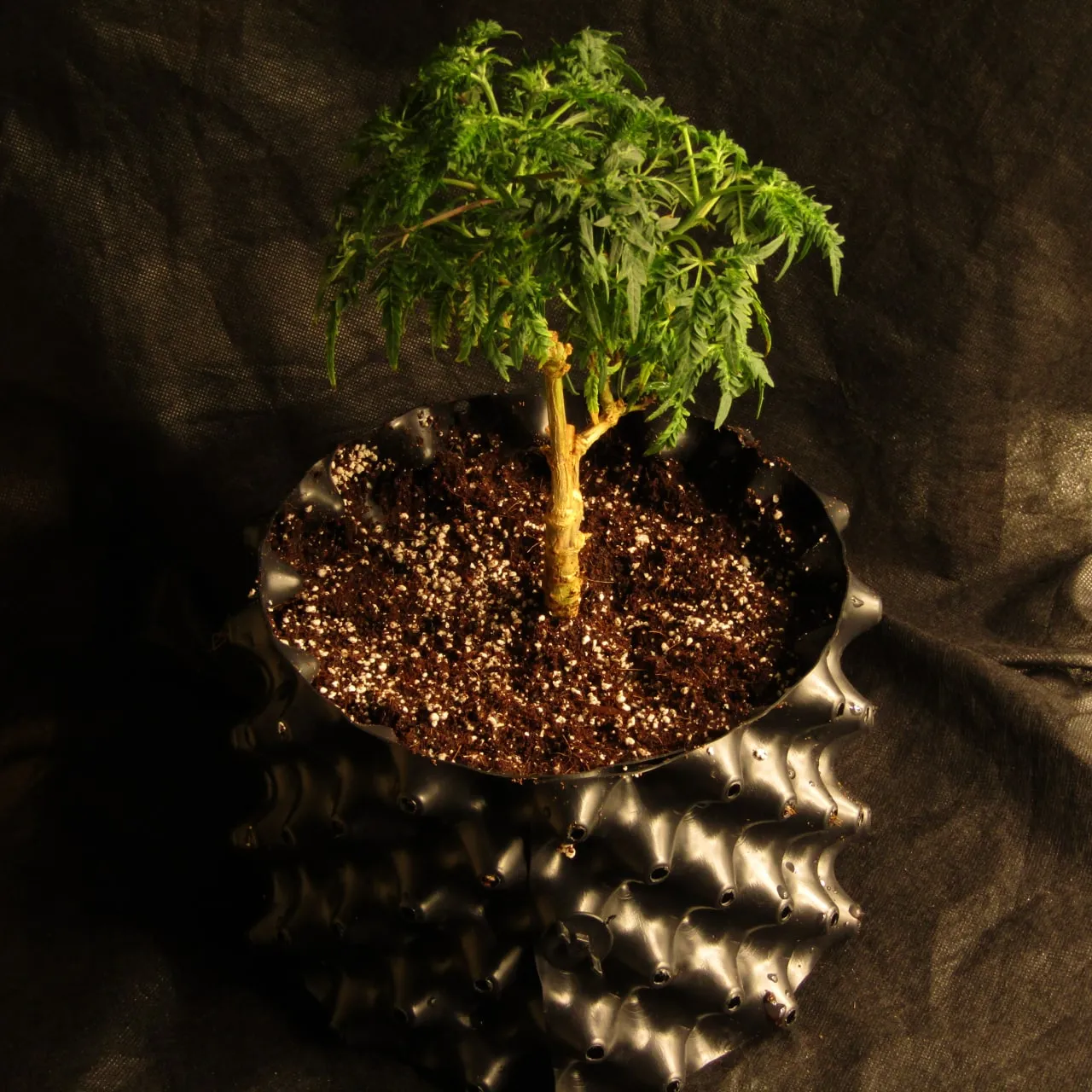
I went to cut clones from my big moms preserving the genetics. I am letting the mother plant Freakshow #8 build volume, so I can take clones from her for the seed production line. I was charmed by the Freakshow dynasty and could not walk past without taking a family photo.
November 4–6. F1 mutations and two Bastard phenotypes
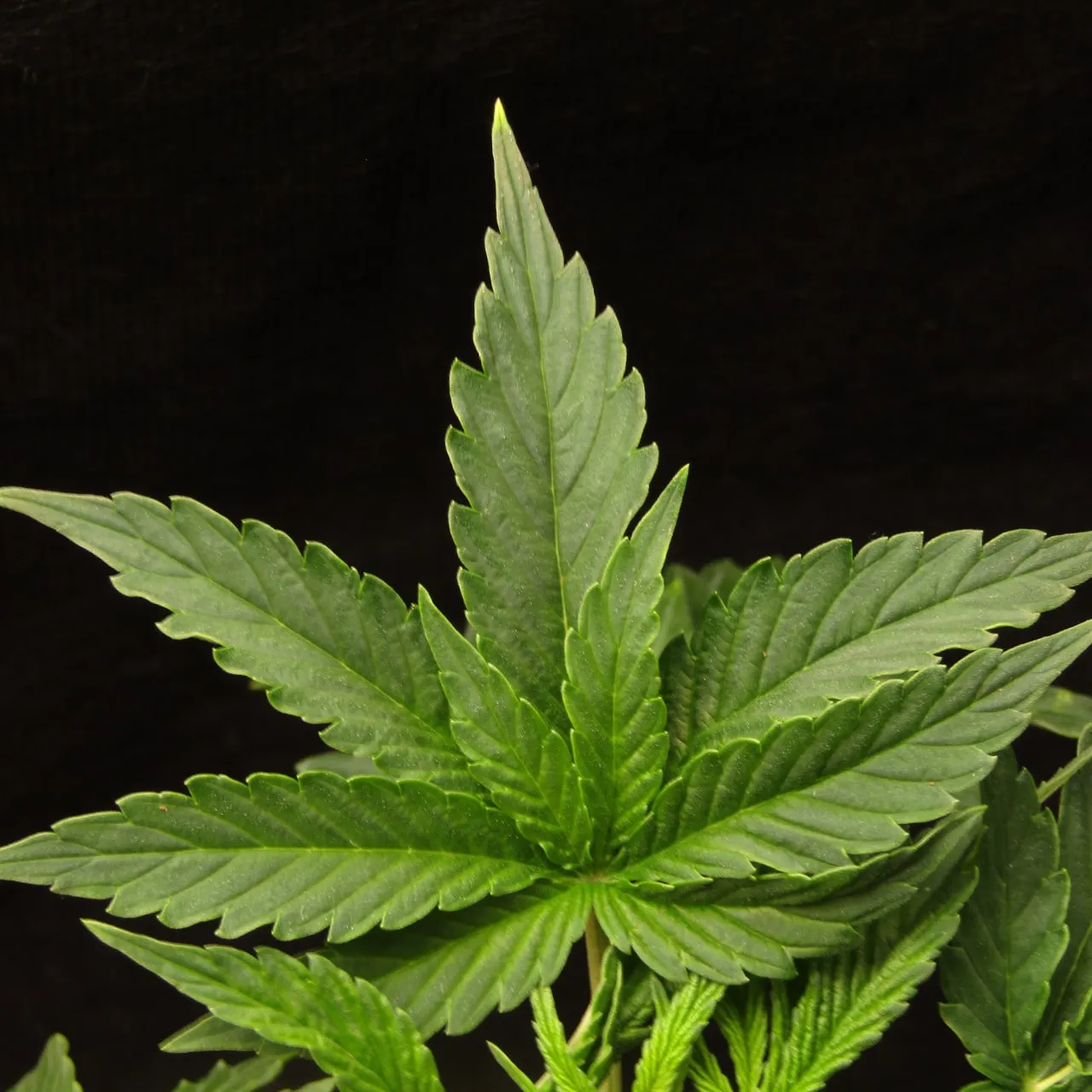
In the first generation, my Drunken Bastard F3 × Freakshow IBL hybrid did show small leaf mutations:
- Extra leaflets.
- Leaflets overlapping one another.
- Deep cuts in the serrations.
Most plants show mild mutations in leaf shape and framework to varying degrees. Some are forming sex characteristics that cannot yet be told apart.
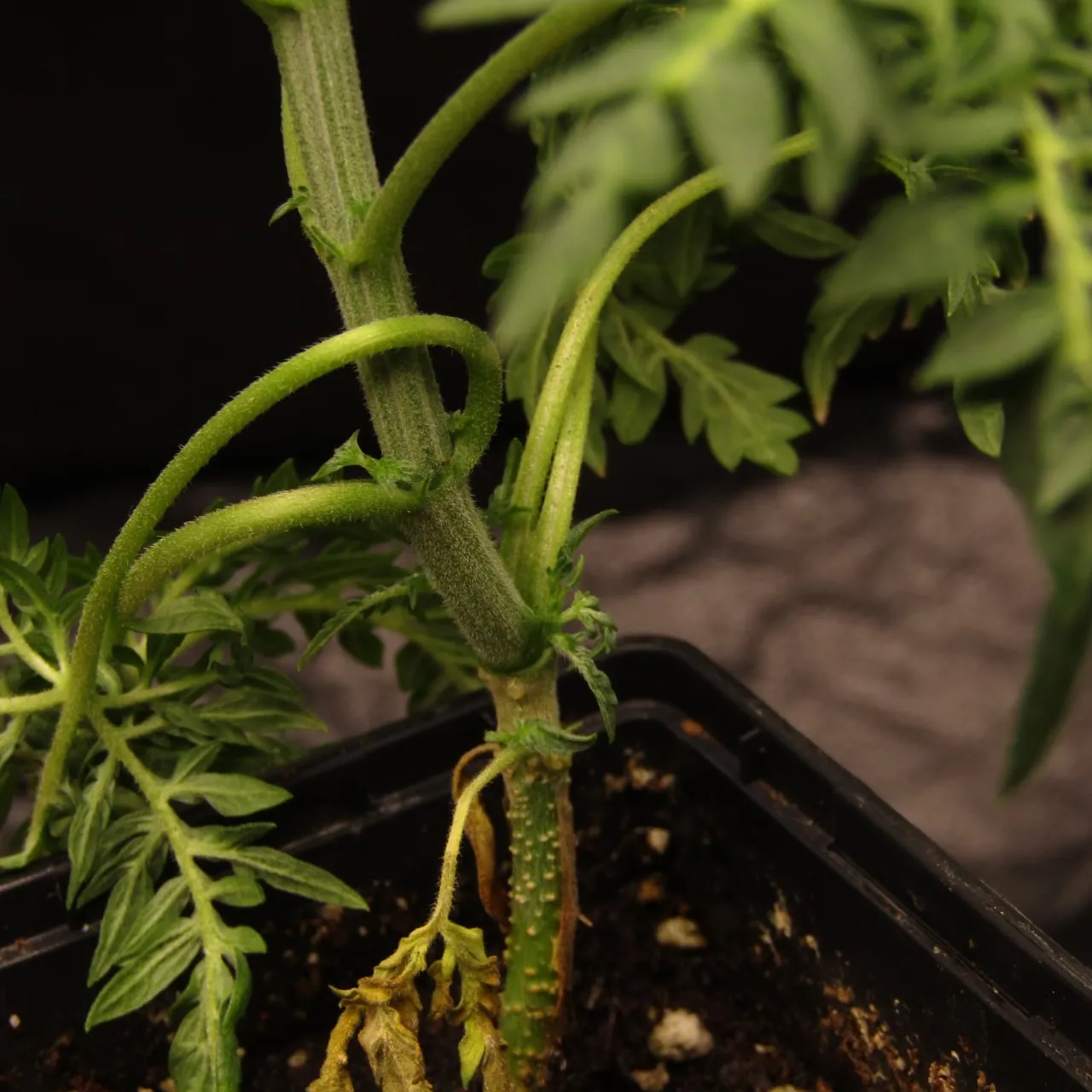
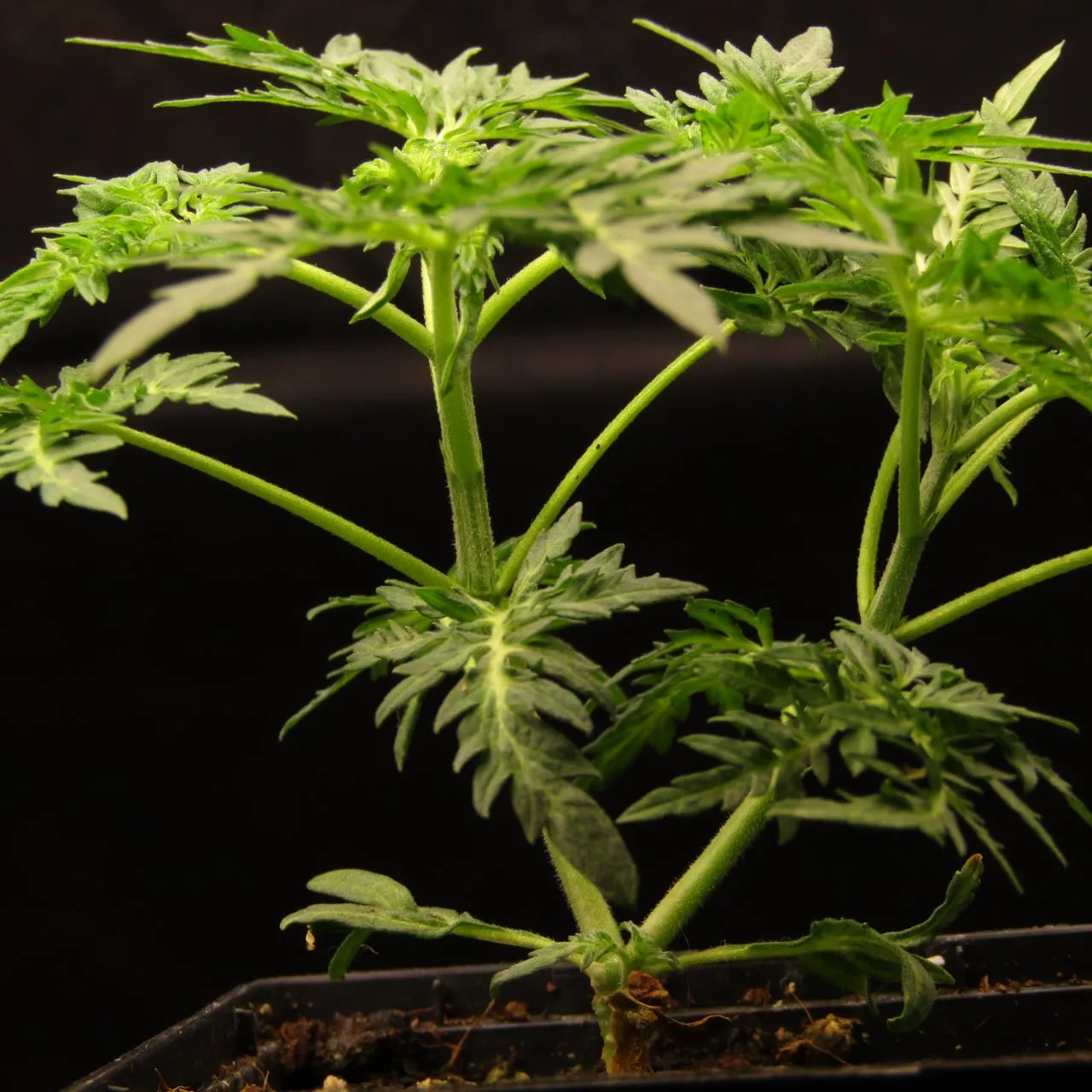
Freakshow: sex characteristics are only beginning to form and are barely visible. I will show a couple of funny mutations on two specimens. FS#3 has fasciation on the first tier: both leaves and both branching points sit on one side. FS#11 topped itself from the start. One cola has the proper structure of a main stem (opposite arrangement), with growth points at the same level. The second cola is like a side branch, with alternating growth points (alternate arrangement).
Drunken Bastard F4: several specimens show sex characteristics that can be recognized on close inspection. For now, I can divide the plants into 2 phenotypes with clearly different frameworks; let us call them “big stick” and “bushy tangle.” These guys are also quite friendly, and you are unlikely to separate them without trouble: they hold on to each other with their leaves with all their might.
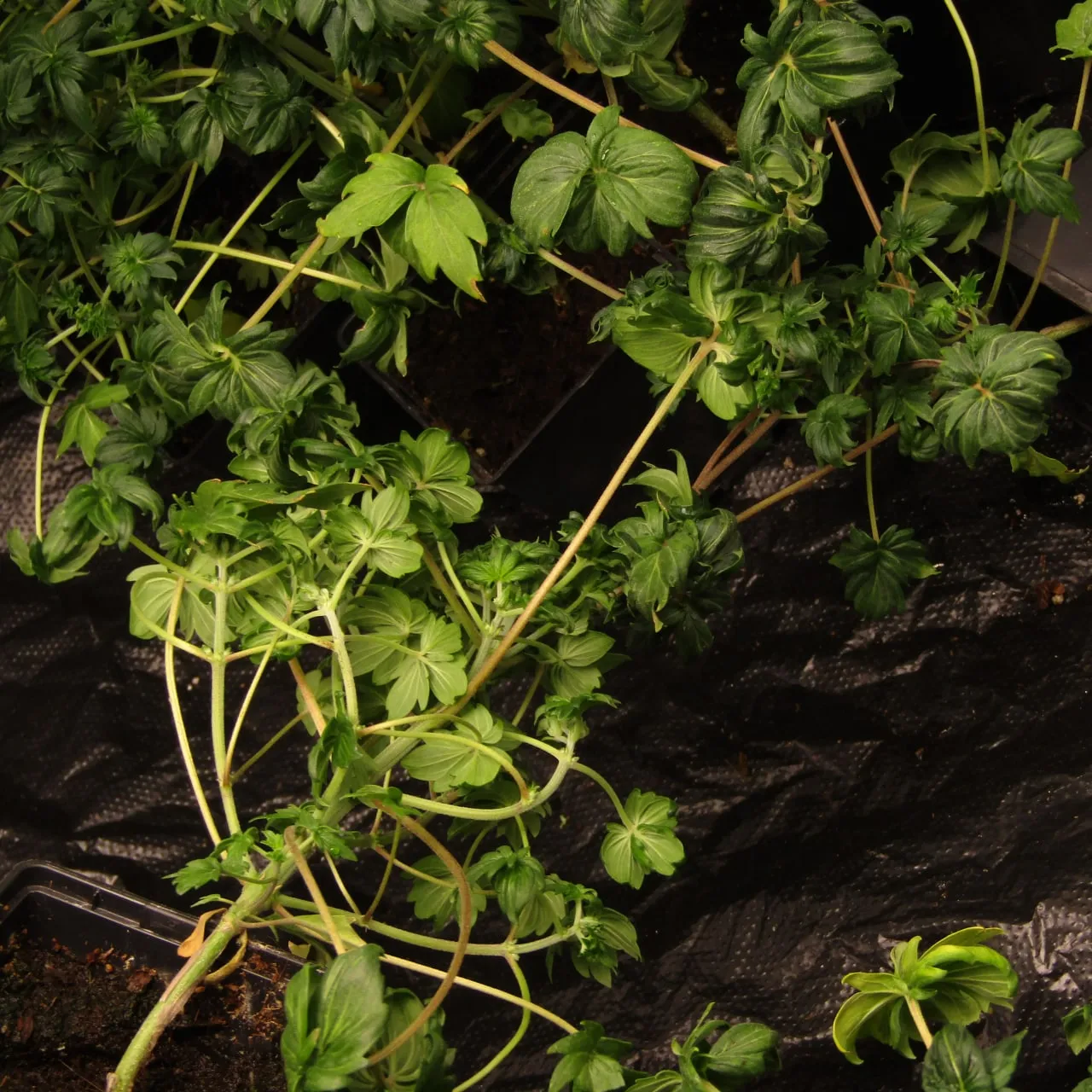
November 11–13. Sex and leaf shape
Freakshow: I am waiting for sex characteristics. Males dominate so far. The Freakshows have shown 2 clearly different leaf phenotypes. The dominant leaf type has leaflets overlapping one another from the base, resembling bird feathers. Within the phenotypes with this structure there are also different variants. Less common is the second main phenotype, with straight leaflets, a clear division of the leaf, and small leaflets at the leaflet tips.
Drunken Bastard F4: DB#2 was the first to show female sex characteristics, along with vigorous growth despite problems along the way. In framework she belongs to the phenotype I called “bushy tangle” last week, and she grows evenly upward and outward.
Drunken Bastard × Freakshow: I am waiting for sex characteristics. DF#18 has the most vigorous growth.
I sowed another batch of seeds from Jayma Mutant Research. ABC: I need a female with ABC leaves to breed with my male, but from another line, to add diversity to the genetics and avoid degradation in the following generations. The batch also has a mix of Bastards and crosses with them, where I may find a good specimen.
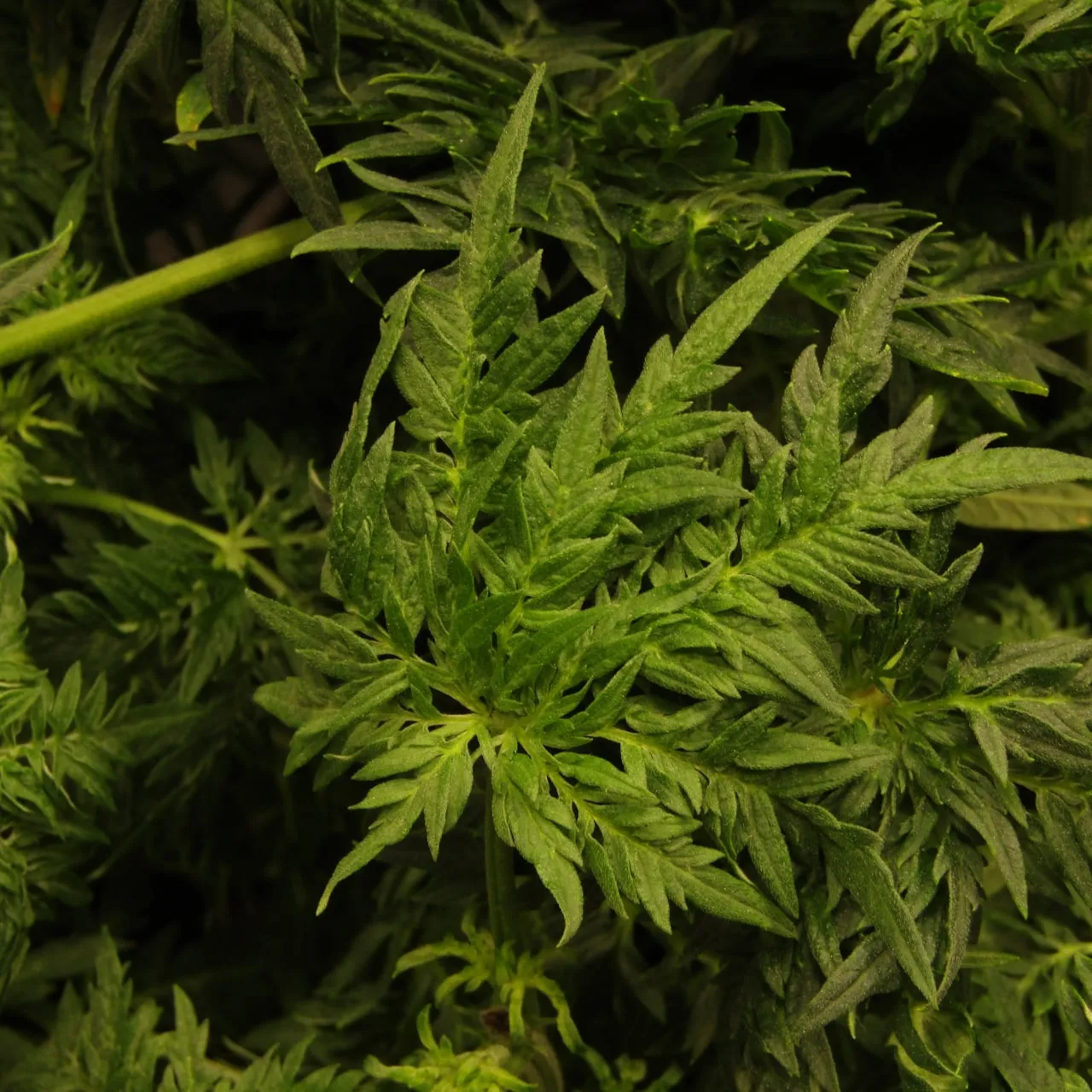
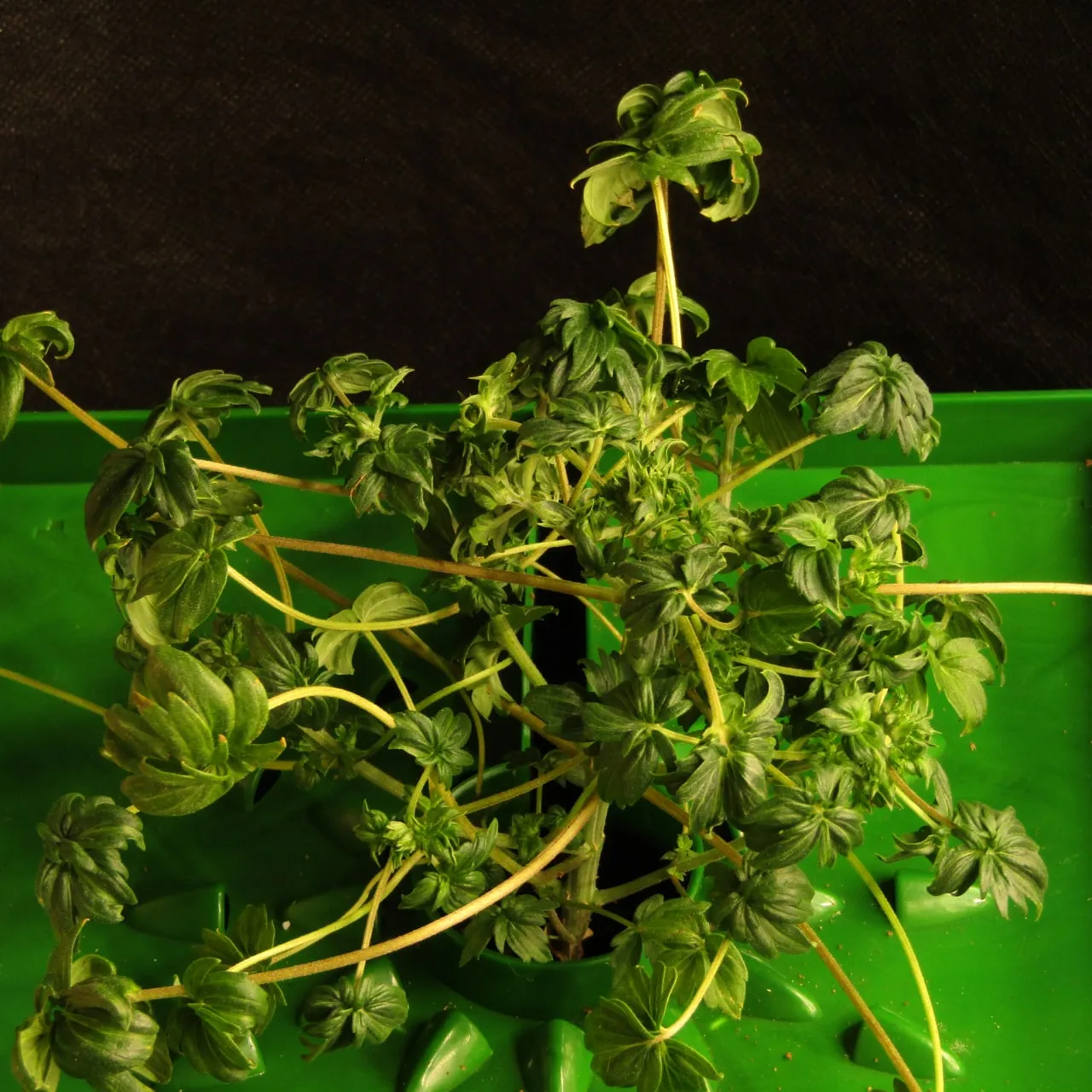
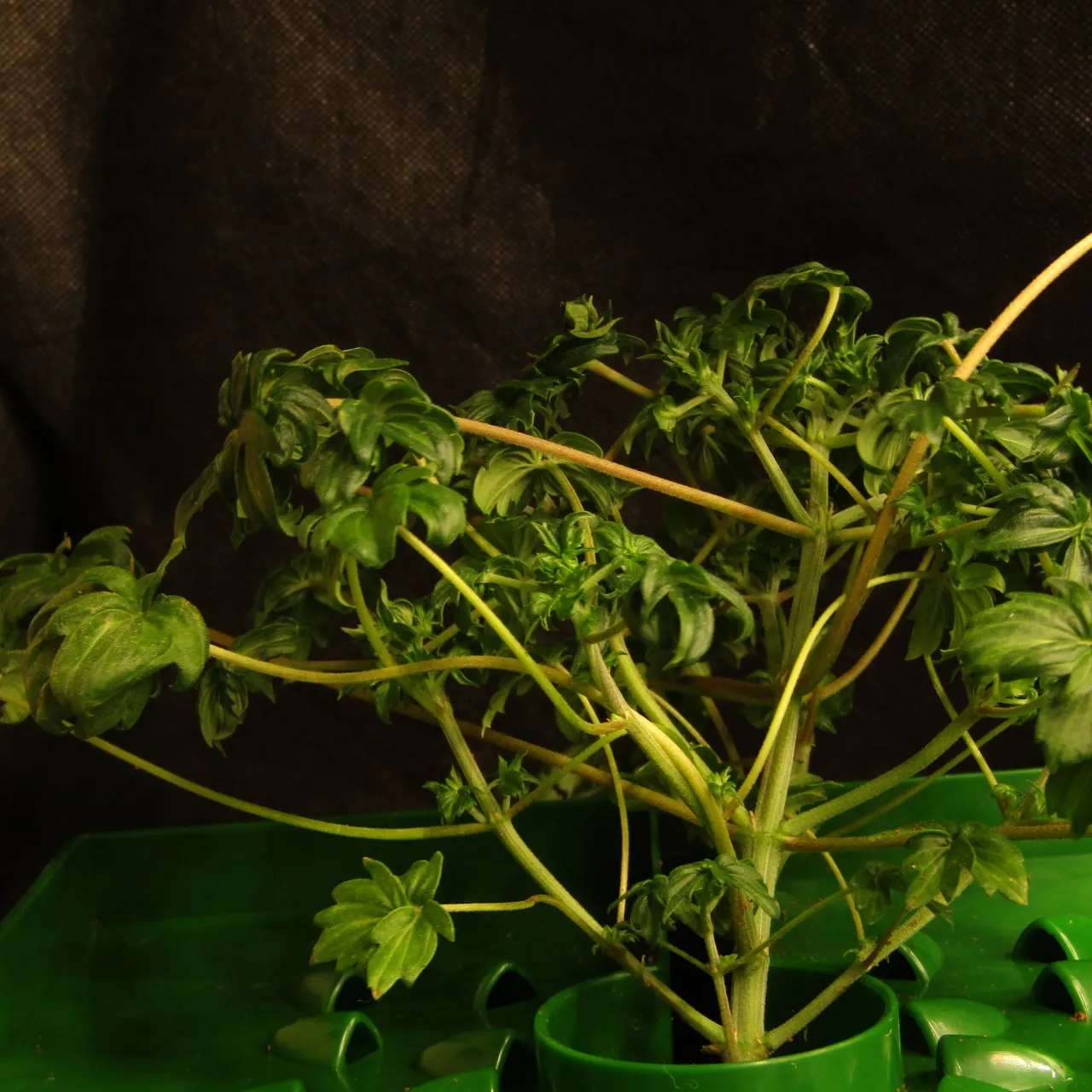
November 22–27. Selection by phenotype
Drunken Bastard × Freakshow: I ran a big game, selecting by phenotype. I eliminated plants that lack the characteristics I need or have ones I do not need. I divided DF into phenotypes, as far as a small sample allows. I assume Pheno 1 is dominant; 2 and 3 show recessive traits.
- #1, #4, #5, #7, #9, #11, #18: Pheno 1. Bushy and branchy, with a medium stem, medium internodes, and leaf mutations in the form of extra leaflets.
- #3, #13, #14, #15: Pheno 2. Vertical growth dominates, with poor branching, a medium-to-thick stem, medium internodes, and leaf mutations in the form of extra leaflets.
- #2, #17, #8: Pheno 3, eliminated. Vertical growth dominates, with almost no branching, a thin-to-medium stem, medium-to-long internodes, and leaf mutations in the form of extra leaflets.
Freakshow: FS#8 was the first to show female sex characteristics (I hope I am not mistaken). #8 also showed recessive traits: a leaf shape with straight leaflets and short internodes. She resembles her mother but is branchier. Most plants turned out male, and 8 of 12 showed the phenotype with “feather” leaves, medium-to-long internodes, and good branching; I eliminated them all. FS#9, FS#5, and FS#11 showed the mother’s trait of short internodes; their sex is not yet clear, so we wait.
Drunken Bastard F4: DB#2 is a super bushy plant with an aroma of blueberry garlic (or garlicky blueberry?). Sex is still hard to determine in most plants. Star-shaped paternal leaves with sharp corners, probably a recessive trait, appeared in 2 of 12. Among the rest, I eliminated all the males, keeping only one with the father’s phenotype, which I may or may not use, and a few females.
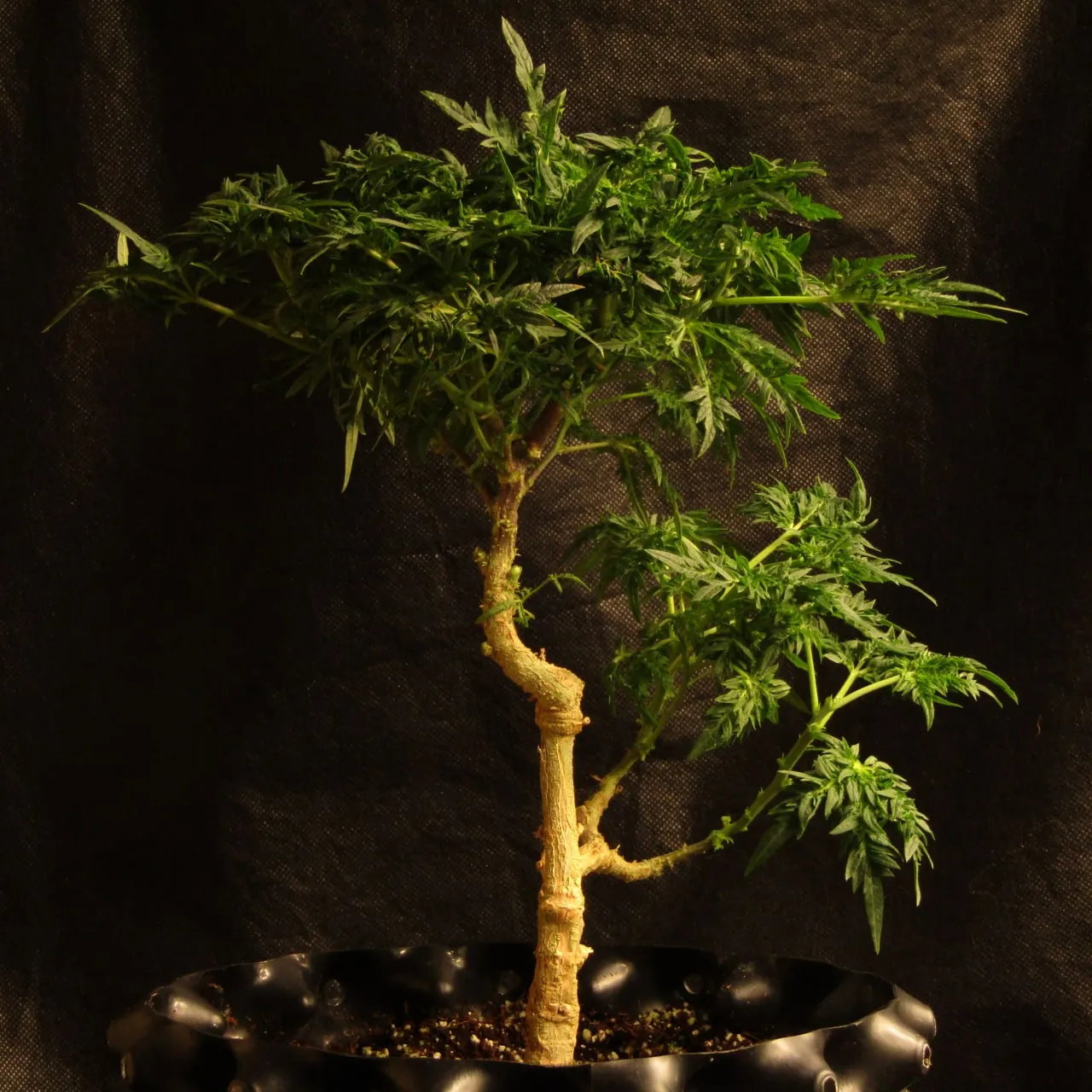
Freakshow #8 is the mother from the second season: she has carried offspring, gone through revegetation, and continues on her way. I gave my favorite bonsai some cosmetic pruning and took clones. I will send her into flower soon.
December 4–10. Switch to flowering
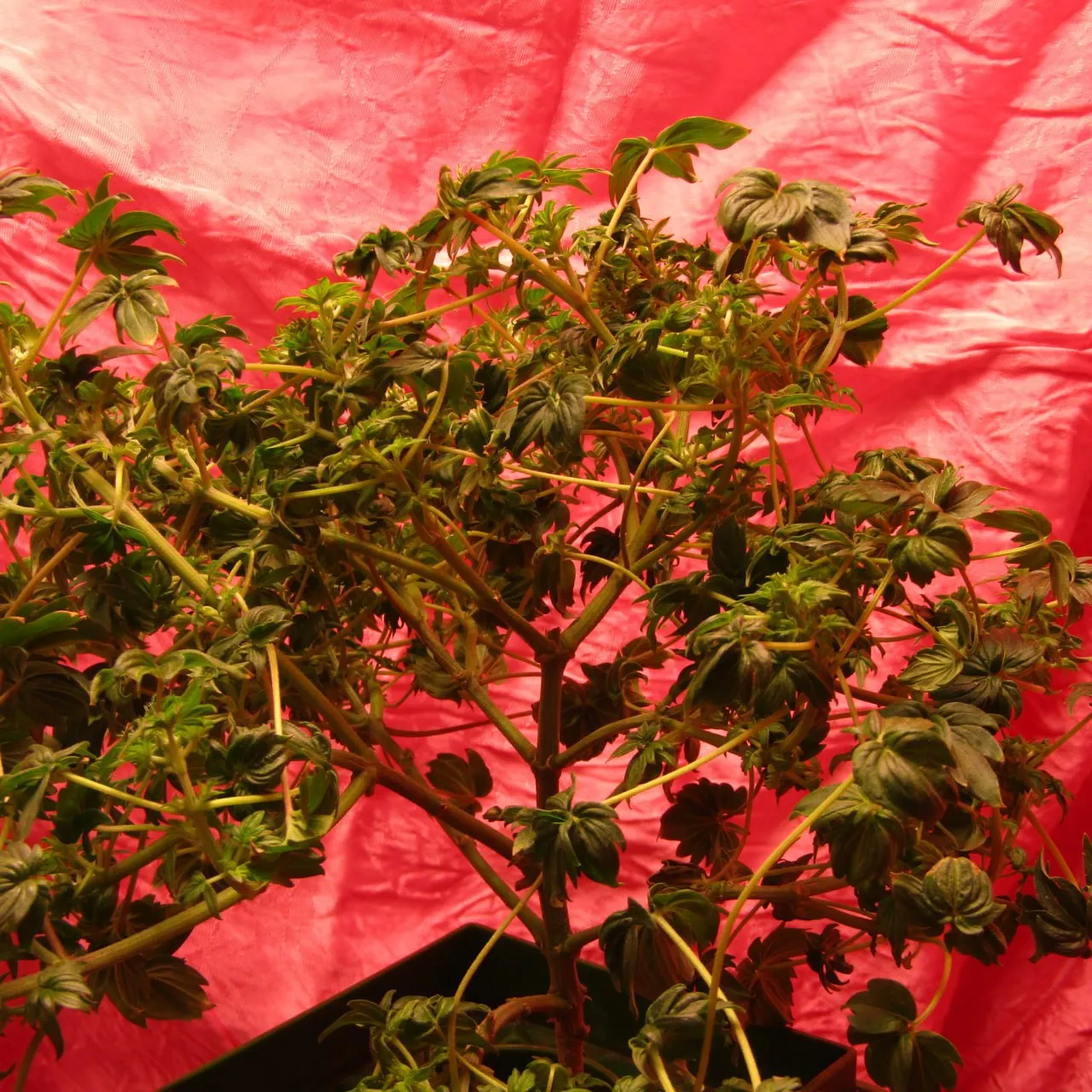
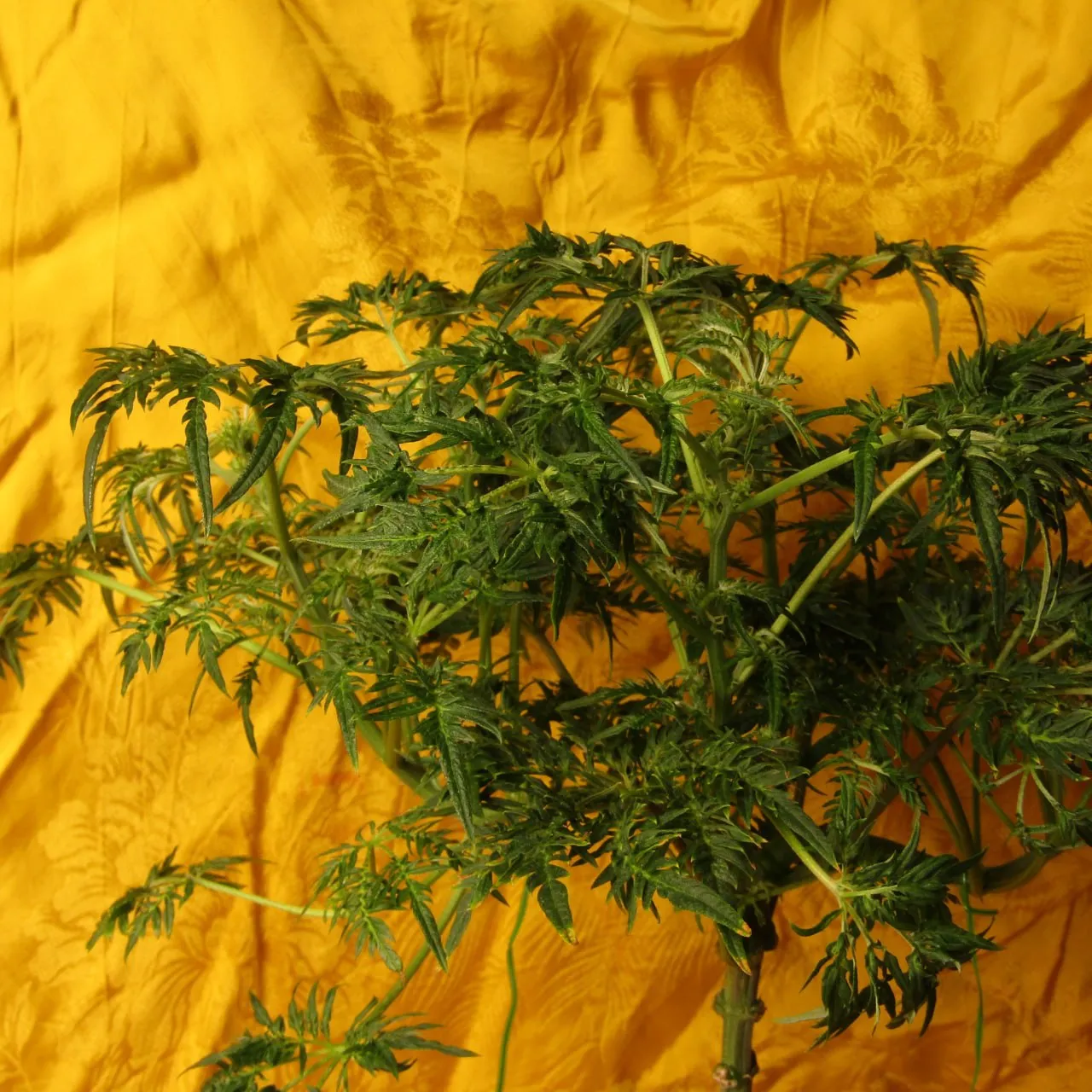
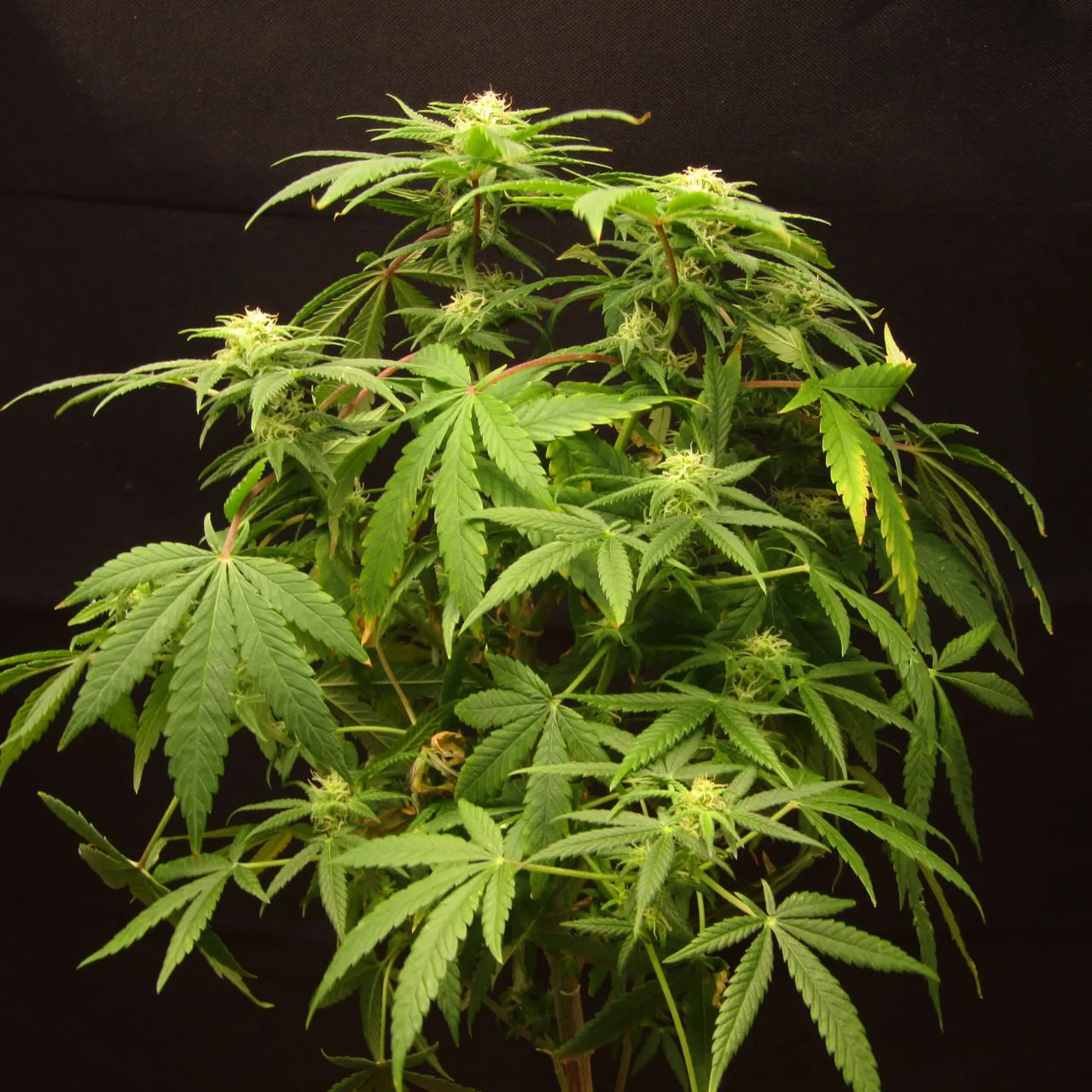
Drunken Bastard F4: DB#2 is a super bushy plant that spreads in every direction like ivy; her branches are 1.5–2 times longer than the main stem. I switched her to flowering. The aroma at this stage is blueberry-garlic.
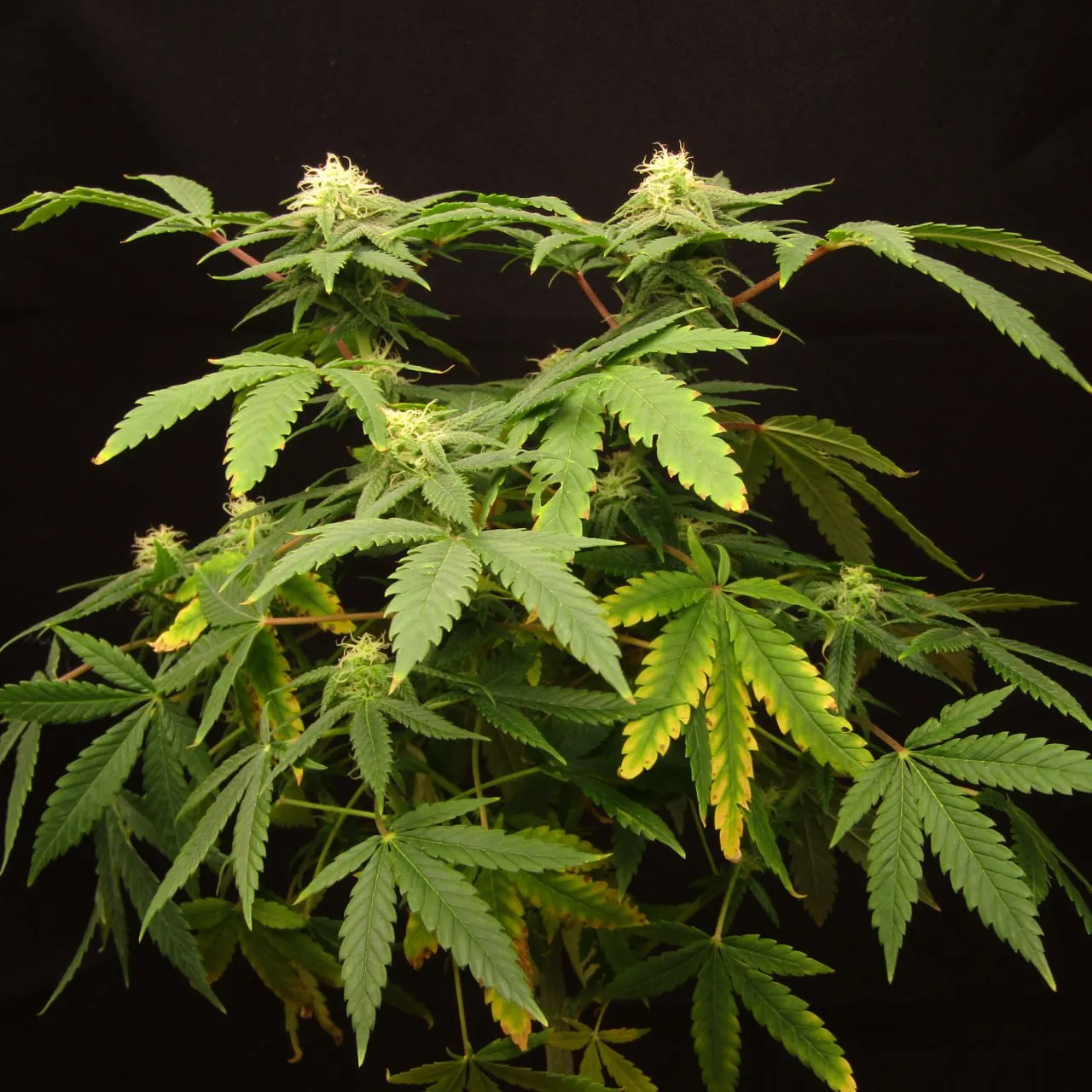
Freakshow: I switched FS#8 to flowering. The aroma at this stage is bright citrus, like orange Skittles.
Drunken Bastard × Freakshow: I switched the plants to flowering. I described them by aroma and chose plants for the next generation from Pheno 2: #13 and #15. In Pheno 1, I like #18 so far.
- DF#15: garlicky, slightly bitter, with blueberry notes.
- DF#13: sweet and sour, floral and blueberry.
- DF#18: sweet and sour, fruity and floral.
- DF#7: sour, slightly pungent, blueberry.
- DF#5: sour and sweet, fruity.
- DF#4: sweet, fruity, floral with a sour edge.
- DF#1: bright, sour, and pungent, with fruity and floral notes.
- DF#9: bright and sour, with hints of fruit.
- DF#14: sour and pungent, blueberry and fruit.
- DF#11: bright, sour, and pungent, with hints of blueberry and fruit.
December 19–27. The first flowers
Drunken Bastard × Freakshow: I took clones from the females. DF#18 shows the most vigorous growth.
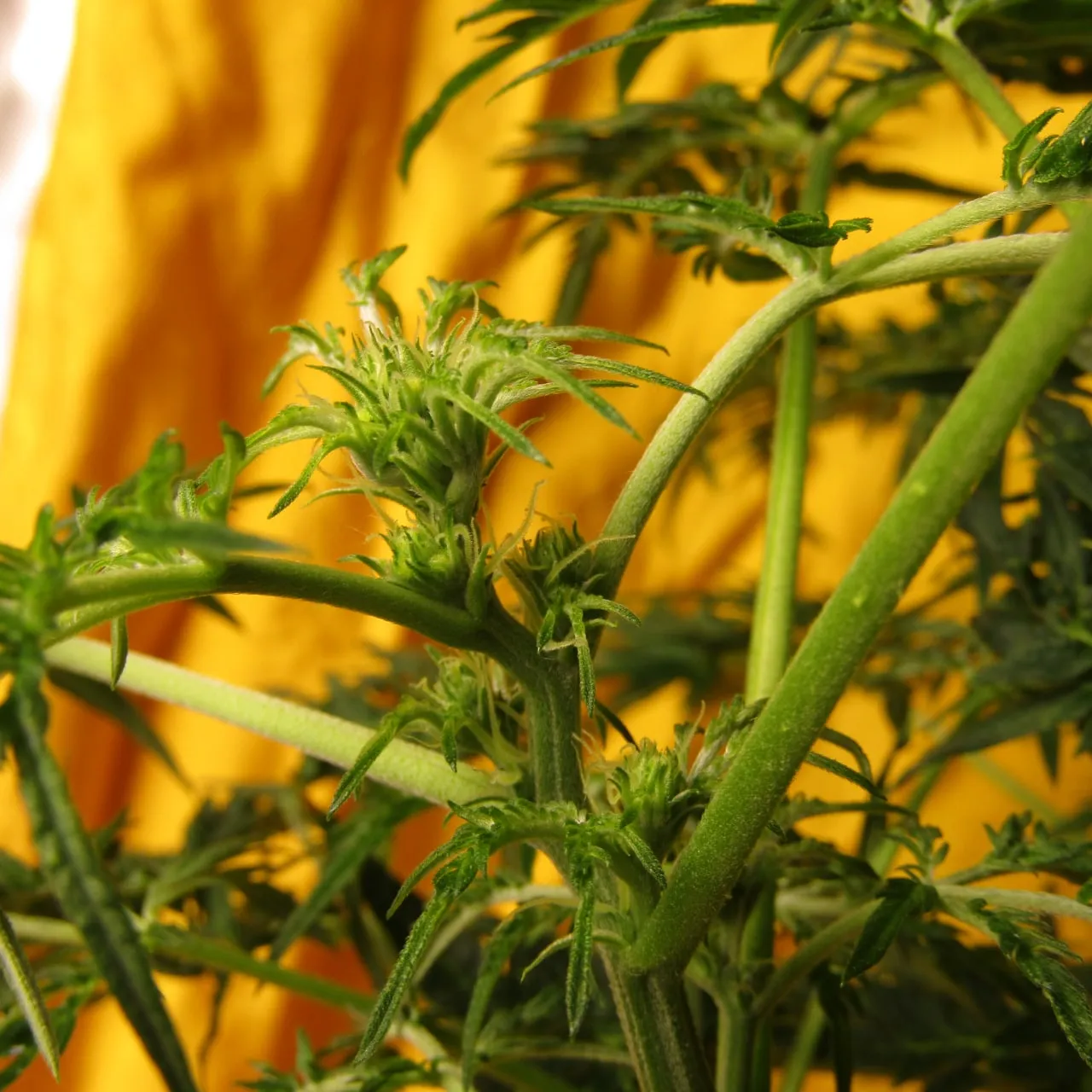
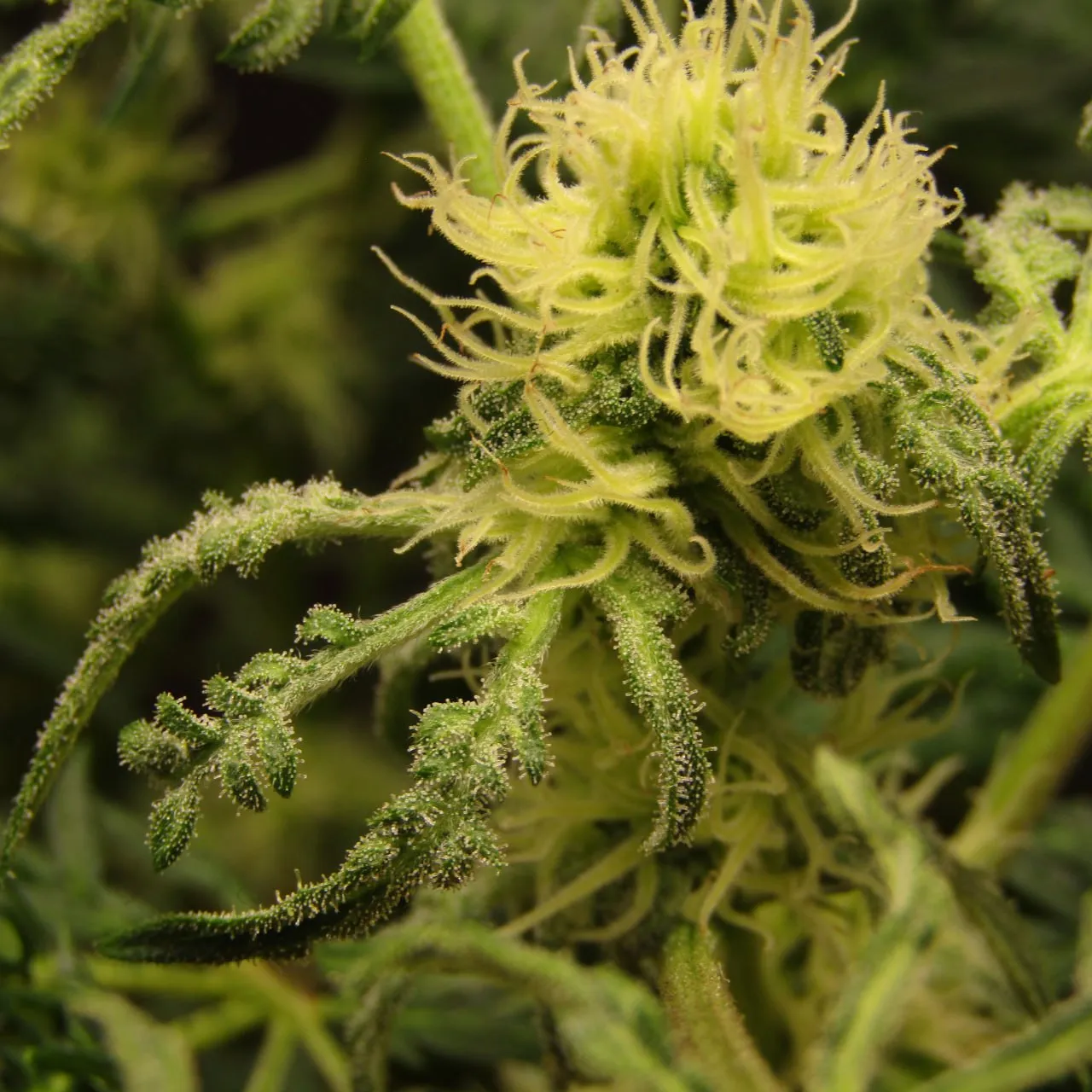
Freakshow: FS#8 has started to stretch, extending her branches outward. She is putting out dandelion-like pistils: Freakshow’s flower buds are as strange as its leaves.
Drunken Bastard F4: DB#2 is picking up speed, growing slightly larger but not yet in the active bulking stage; her sex characteristics have only become clearer. The plant is always half lying down. The stem and branches are soft and bend easily to the sides. She is starting to flower.
DB#11 shows the “ordinary” Bastard structure. She is the second female out of the 12 plants sown; the other 10 turned out male and were eliminated.
January 9, 2023. Flowers
Drunken Bastard × Freakshow: the flowers of these two specimens, DF#18 and DF#9, seem to me the most attractive so far in trichome coverage and volume. I switched the males to flowering and will soon choose the pollen donor.
Freakshow: FS#8’s leaves are dusted with a little sugar, and her flowers are swelling and smell sweetly of citrus. I gave her a couple of days of drought: the plant was not harmed and bravely endured it.
Drunken Bastard F4: DB#2 is covering herself with small, neat flowers. I absolutely loved this plant’s structure; after harvest, I will revegetate her and keep her in the collection.
January 17. A new round of pollination
I ran a new round of pollination. The donor is SWAG Ed Rosenthal Auto × ABC (A plant that starts flowering independently of the length of the day. autoflowering ↗). Lemon Alien #4 and Drunken Bastard F4 #11 received the pollen.
FS#8 is building flowers and getting covered in trichomes. DB#2 is gradually turning into a ball of flowers.
Drunken Bastard F3 #16, a clone of my Bastards’ mother, is waiting for Drunken Bastard F3 #15, a clone of their dad, to prepare his anthers, so they can breed more “bastards” again.
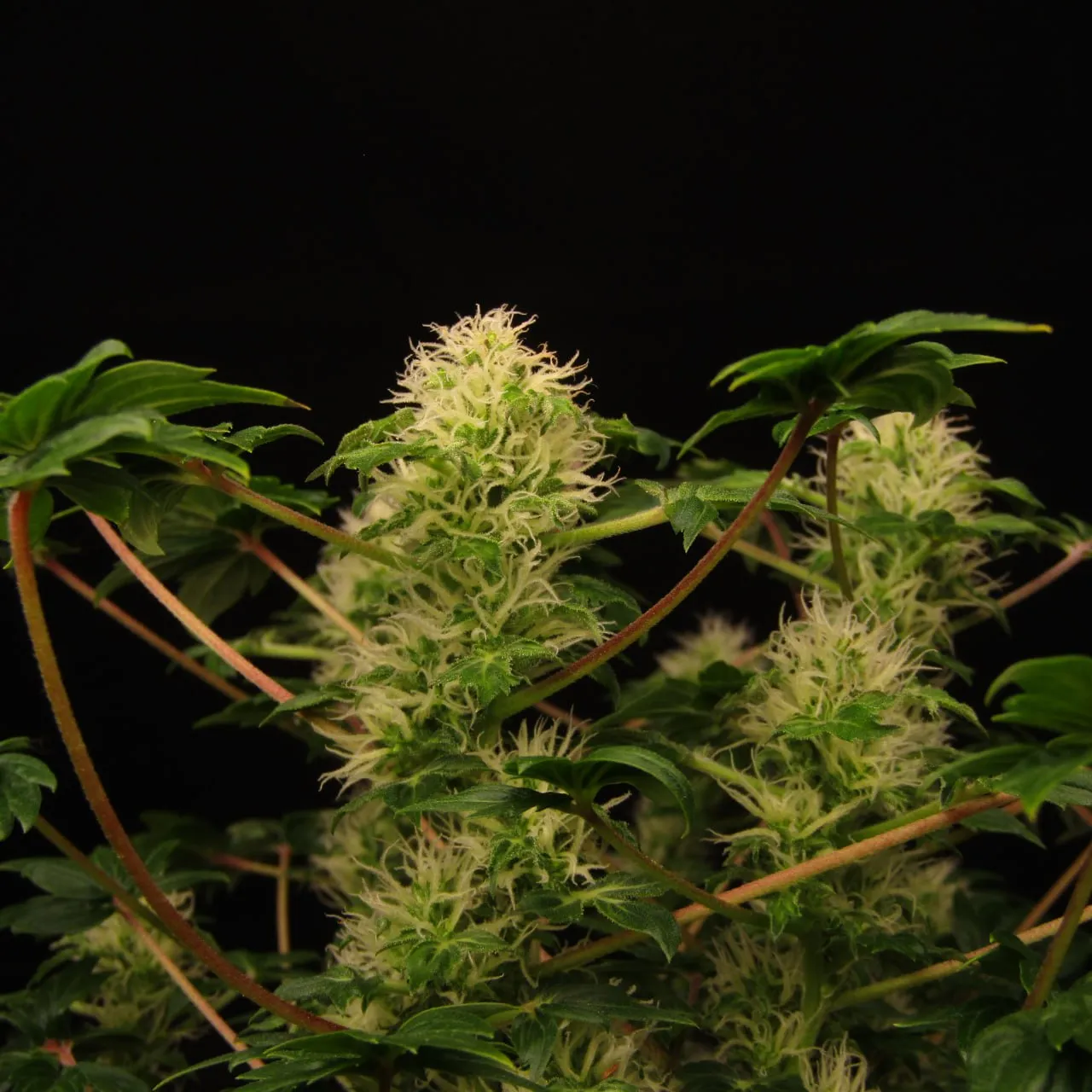
January 27–29. Purple and the DF pollinations
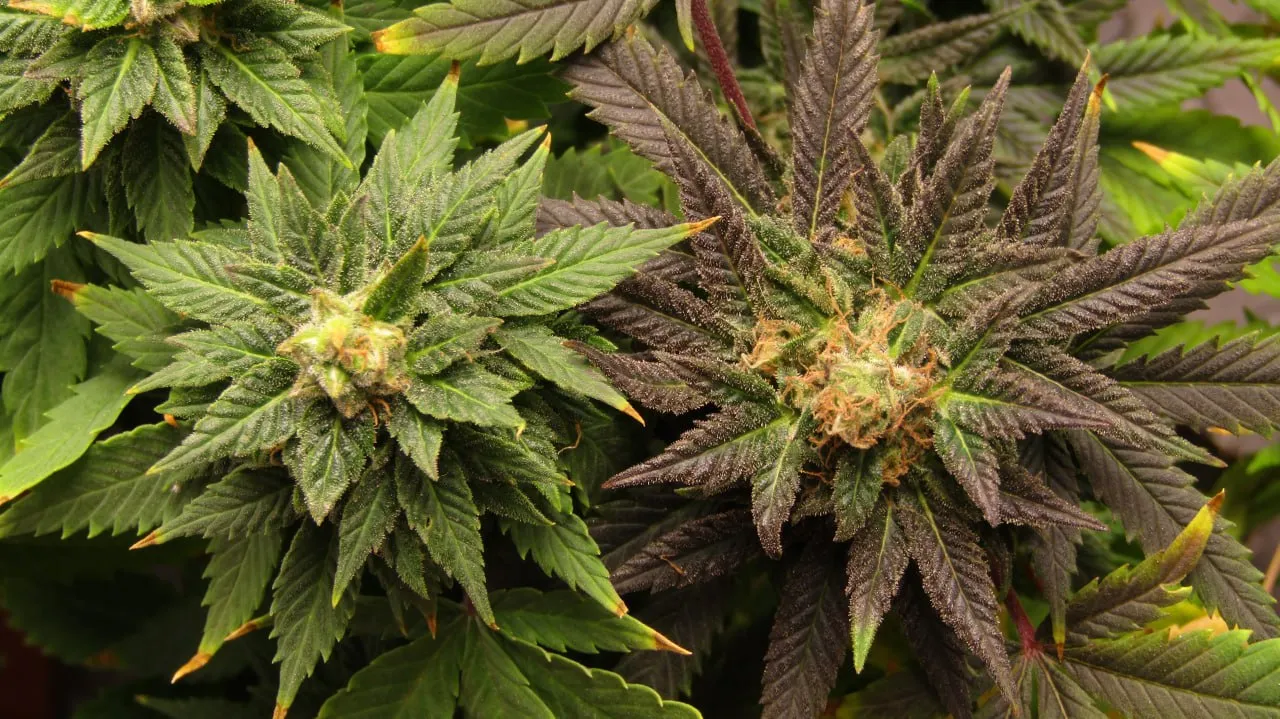
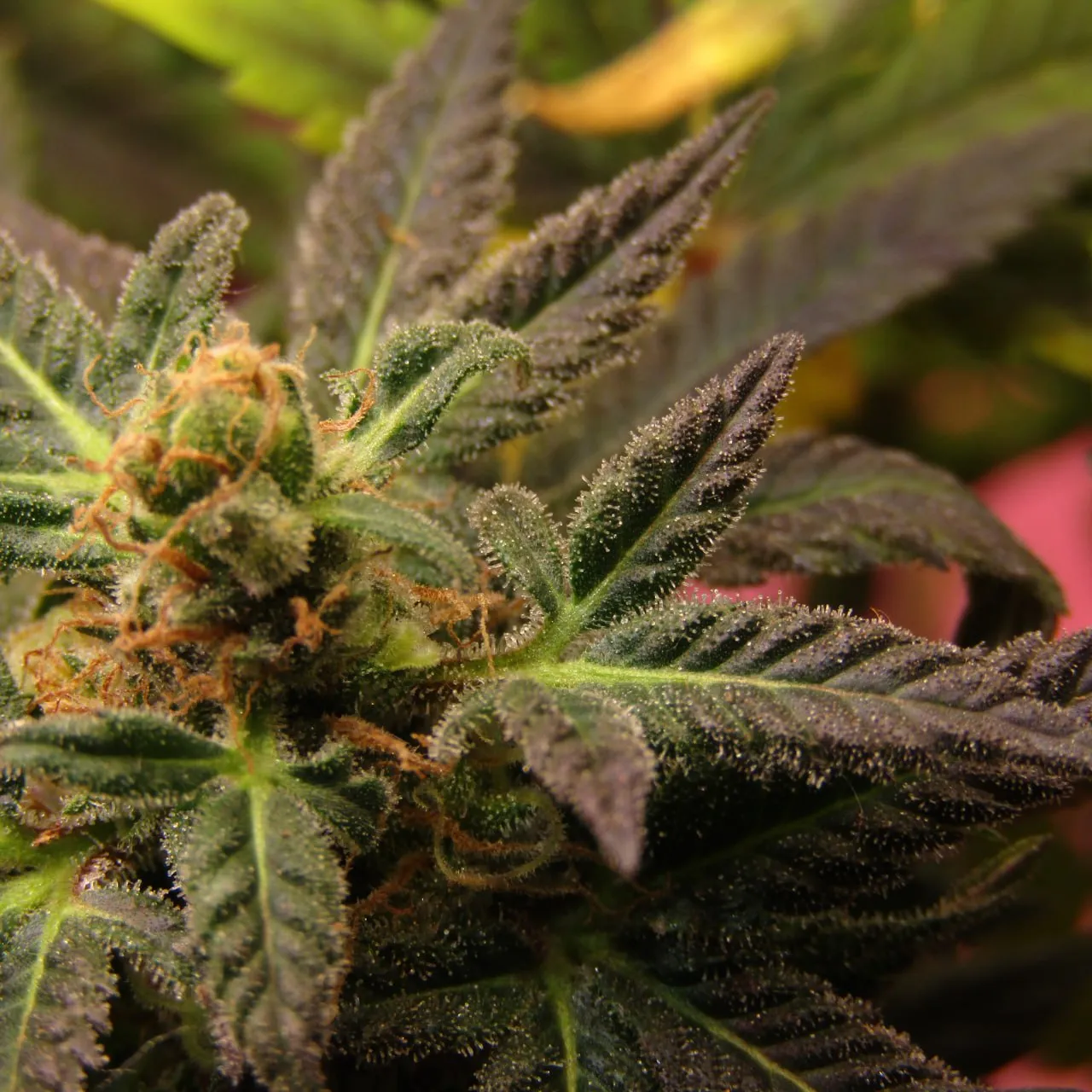
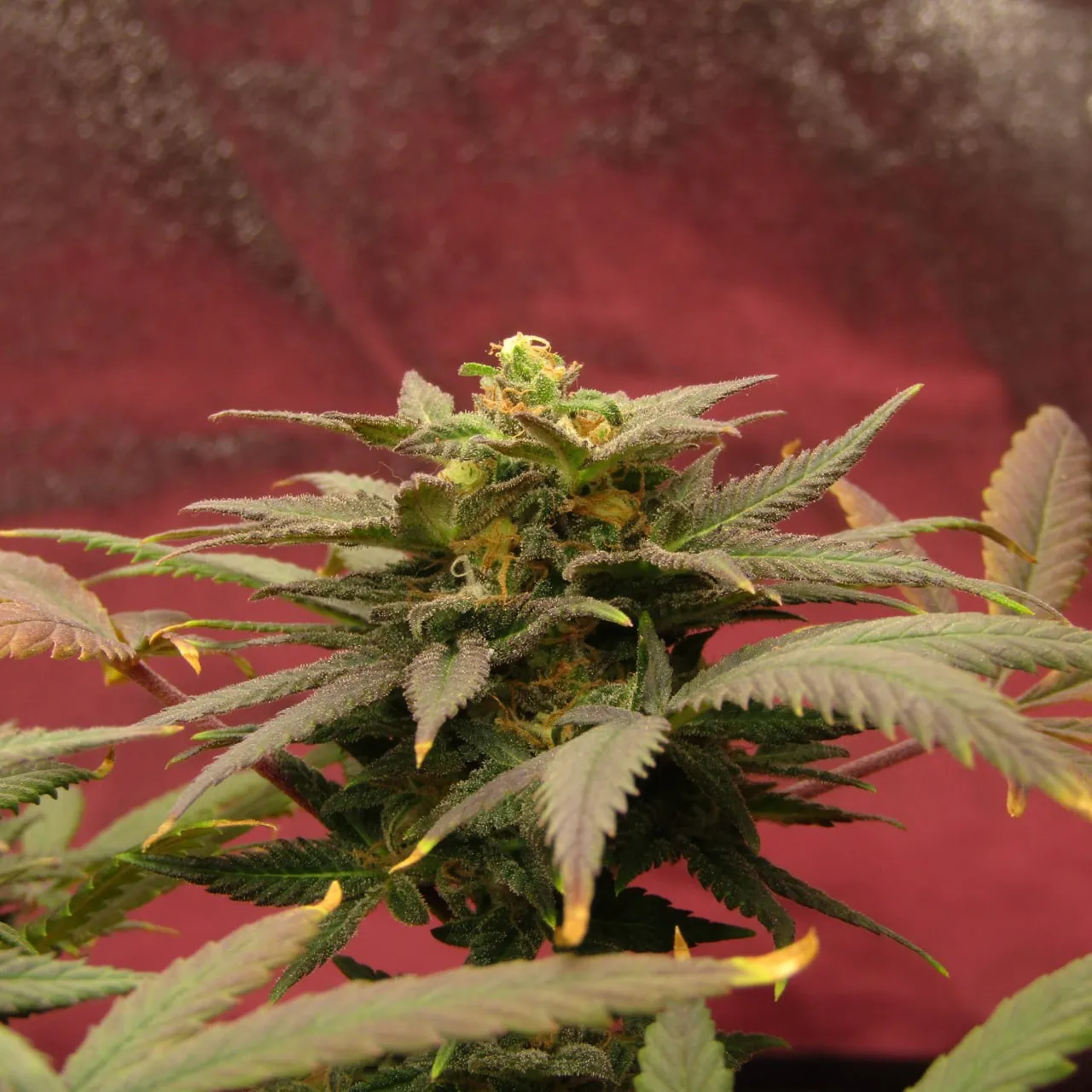
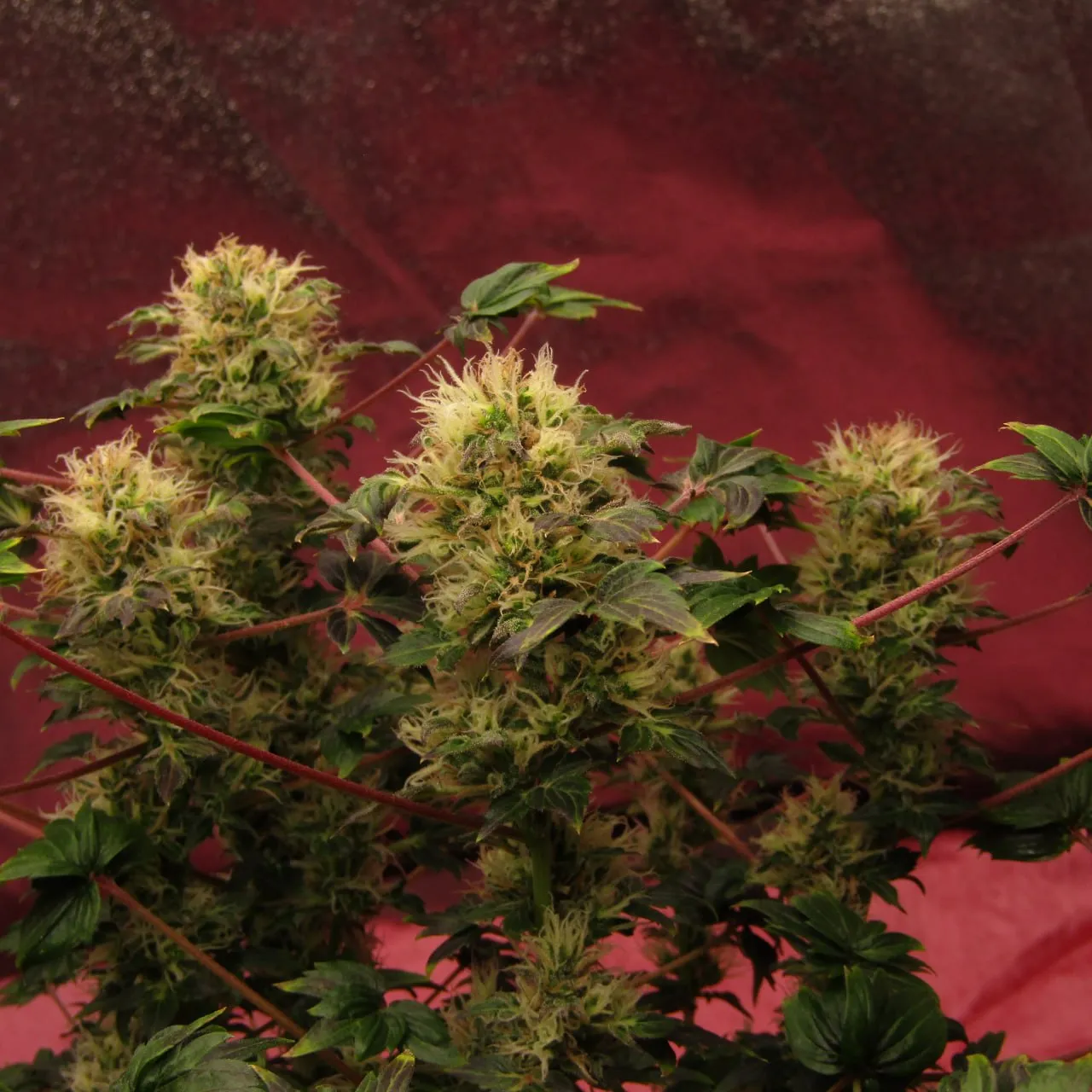
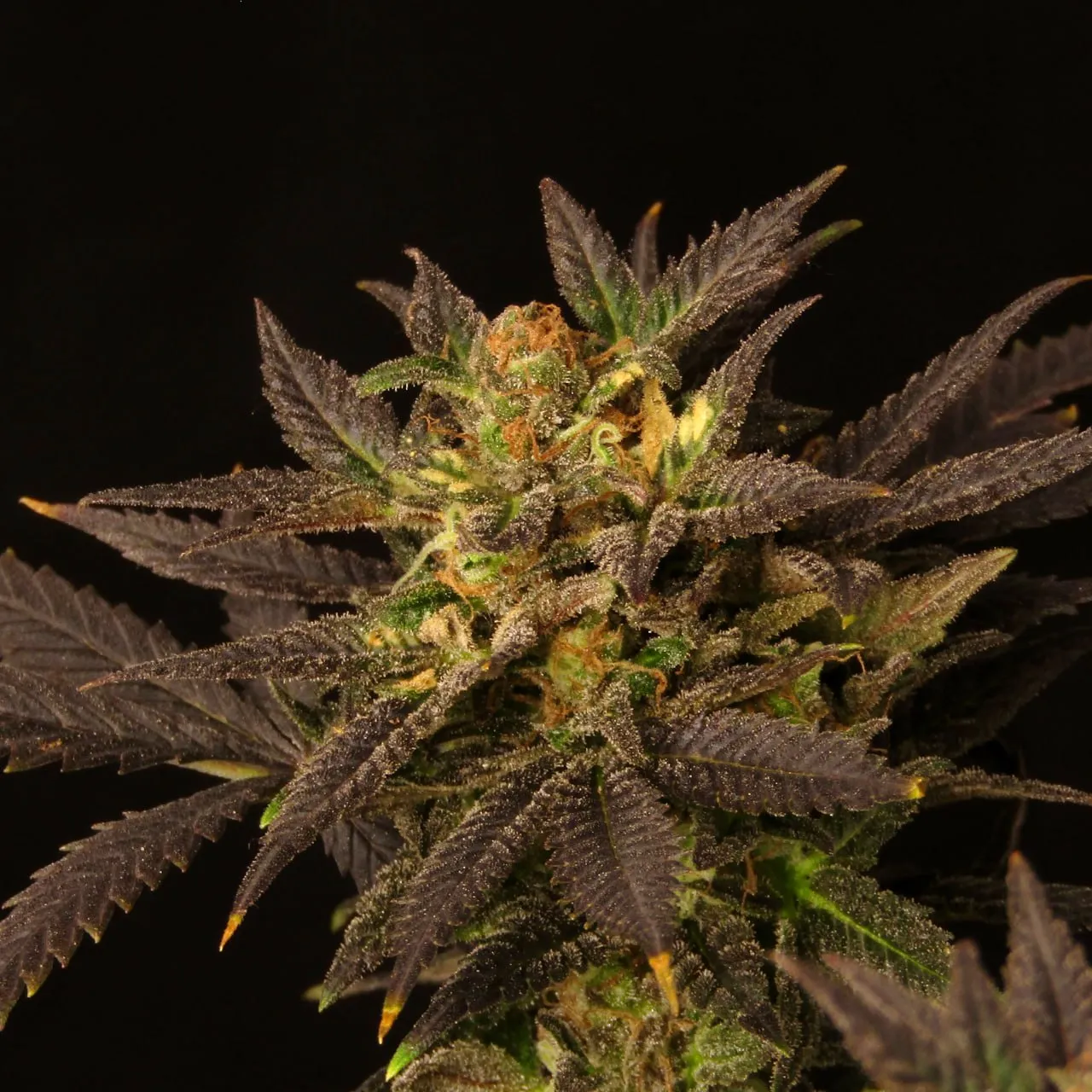
DF#9 (Drunken Bastard F3 #16 × Freakshow IBL #4): the flower has developed a rich, juicy purple. For comparison, here is a photo next to BR#12 (Drunken Bastard F3 #16 × Lowryder IBL); they grow in the same conditions. Of course, the cause is the cool air in my work area, where the temperature has been around 14–18 degrees for the last couple of weeks, but the predisposition to purple flowers is plain to see.
DF#14 and #11 have left the round because they produced the skinniest flowers. DF#13 received pollen from DF#15, a male of the same phenotype that flowered sooner than the other males. DF#18 and DF#9 are waiting for the males of their phenotype to flower. They are similar in build, but #9 forms slightly fuller and denser flowers.
DF#18 and DF#9 have been pollinated. DF#5 and DF#4 reached the final showdown among the males; I picked them as the most aromatic and vigorous. DF#5 became the pollen donor because he formed more flowers and, in the cold, showed a light purple covering them.
DF#9 has potentially good, juicy flowers with a sweet-and-sour berry aroma; at times I catch notes resembling fried beef(?). The leaves around the flowers show smooth extra leaflets, as if winking at an unusual morphology I might be lucky enough to find in the following generations. At around 16–18 degrees she takes on a rich purple color. I am preparing DF#9 clones for a new round.
DF#18 is slightly behind her sister in volume; the aroma is sweeter, berry-like, with a hint of flowers. Her clone will follow the same path.
The mother plant, Drunken Bastard F3 #16: I used to think the mother’s phenotype did not show purple in flower, but the low temperature proved otherwise. The flower structure is also very pleasing: dense, covering the whole cola with flowers. It became perfectly clear whom DF#9 got her purple from.
February 2–15. New tests
About a week ago I sowed around 50 Bastards and 30 Freakshows as an experiment: to check germination and perhaps find something interesting among the phenotypes.
The DF#9 and DF#18 clones are ready. I think I will wait another 1–2 weeks and then cut the plants: I pollinated them quite late, and the full-size plants grown from the clones will go to seed.
For seed: 3 clones of Drunken Bastard F3 #16, which will be pollinated by 3 males with ABC leaves from different strains, and 2 clones of my Drunken Bastard × Freakshow #9 and #18. I am continuing to test my Freakshows and Drunken Bastards, trying to find something interesting.
February 22. Harvest of the third-season FS#8
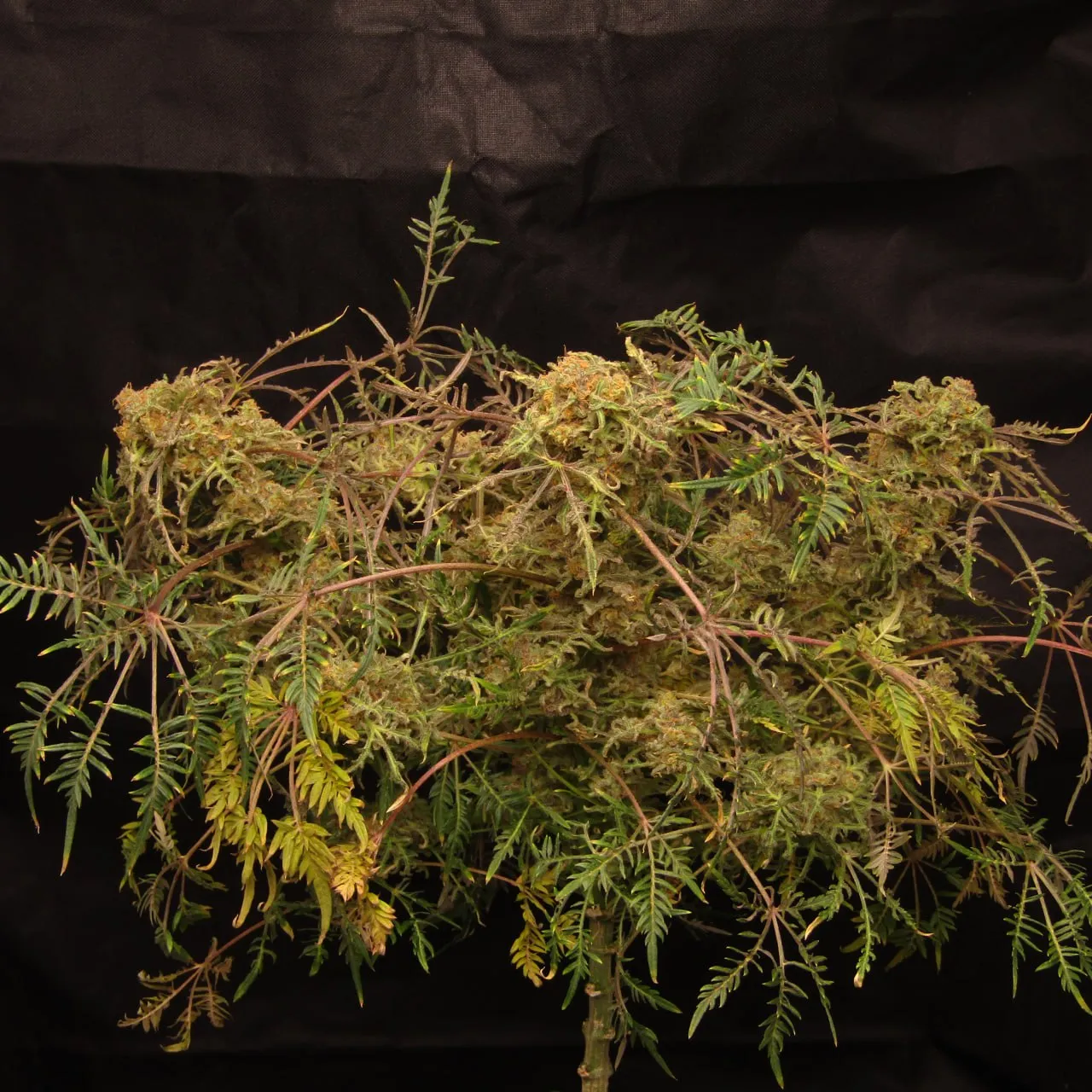
FS#8 turned out to be a beautiful plant, aromatic and with sugary leaves, with flowers tinged with purple, but the flower structure leaves much to be desired. Her 2 small sisters standing nearby gave the same result.
In the previous cycle, when I was choosing the parents, one of the females showed an identical structure. I lean toward this being a recessive trait that was heterozygous in the mother, since it did not show in her phenotype.
I now have another couple of dozen Freakshows sown to check for sure. I have also given seeds from other mother plants to several volunteers for testing. So I will confirm my theory soon; for now, the strain clearly needs further work.
The aroma is sweet, fruity, and floral, reminiscent of citrus and peach.
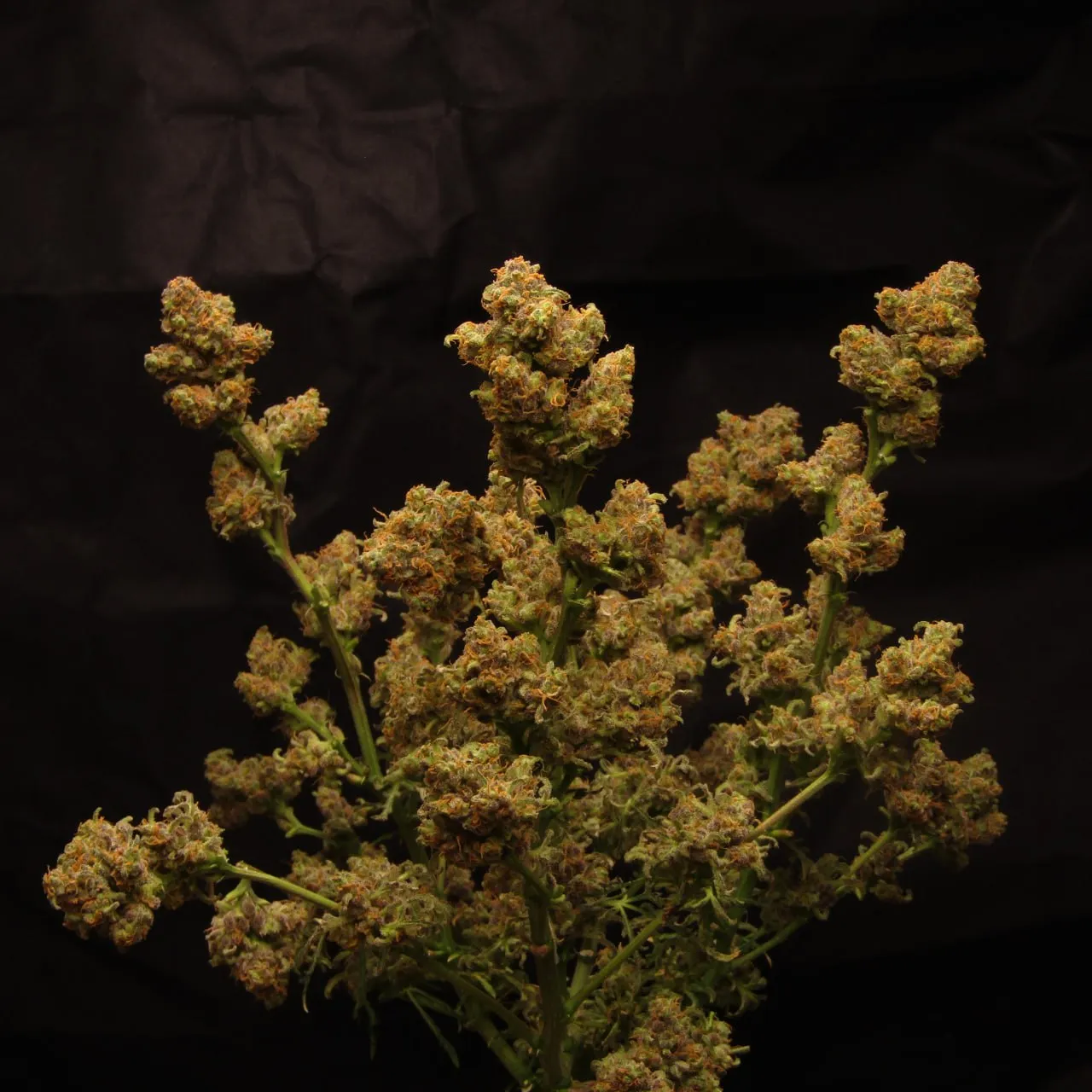
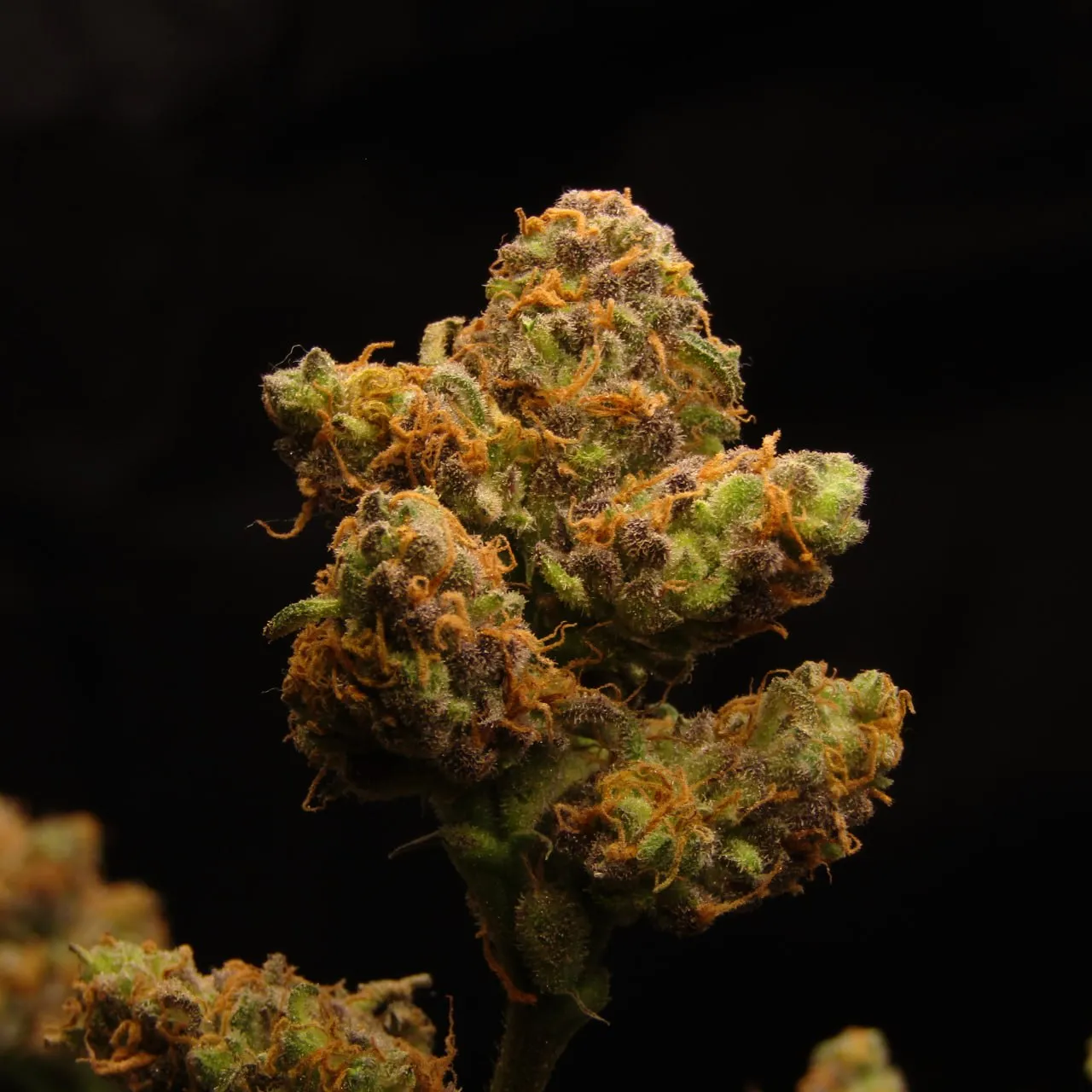
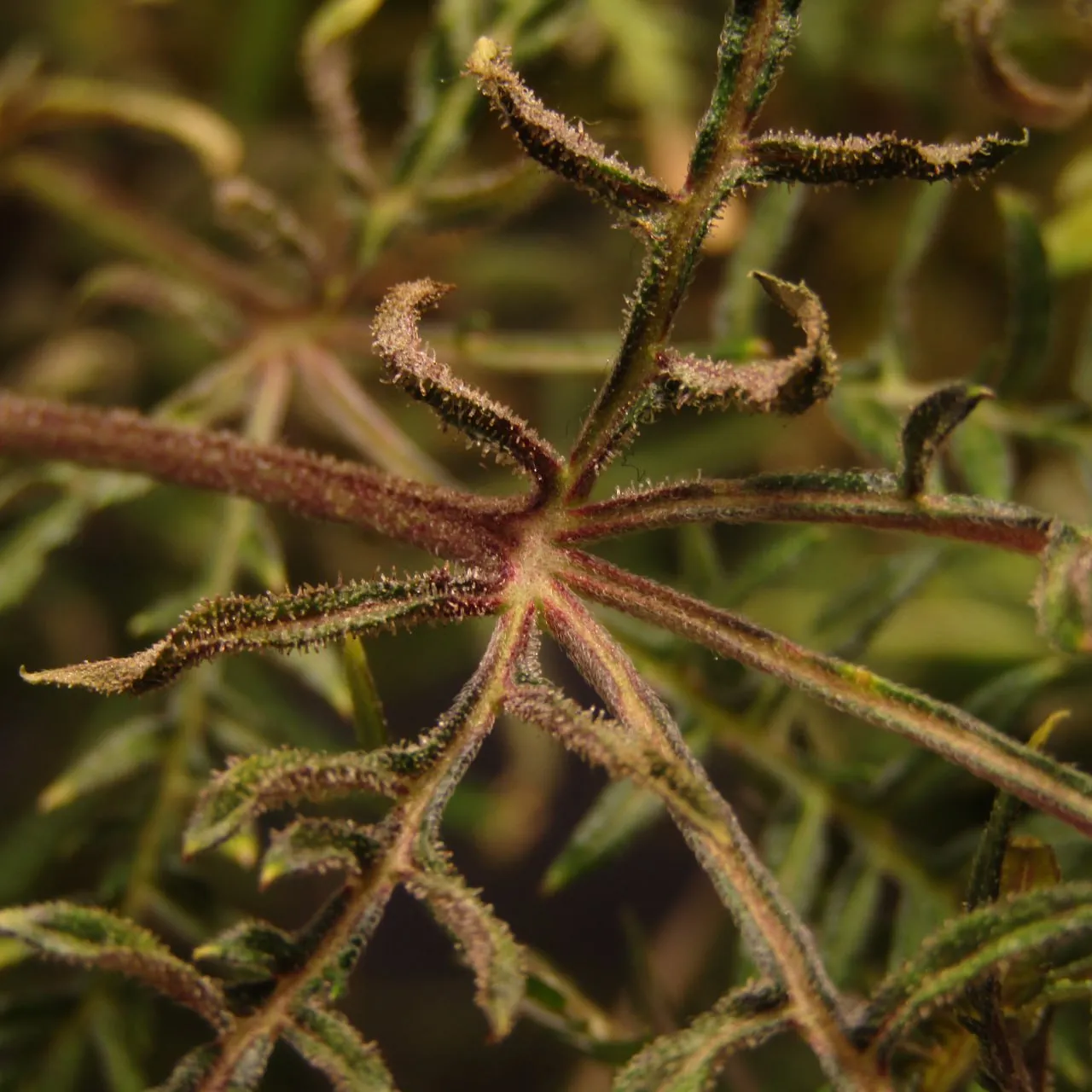
February 25. The Freakshow #8 bonsai
The Freakshow #8 bonsai is 11 months and 2 days from sowing. The plant has entered the wheel of samsara: a couple of weeks ago she finished her second flowering cycle and is going through her second revegetation. Under various stresses (overdosing, hunger, drought, and a disrupted light cycle), she showed no signs of hermaphroditism.
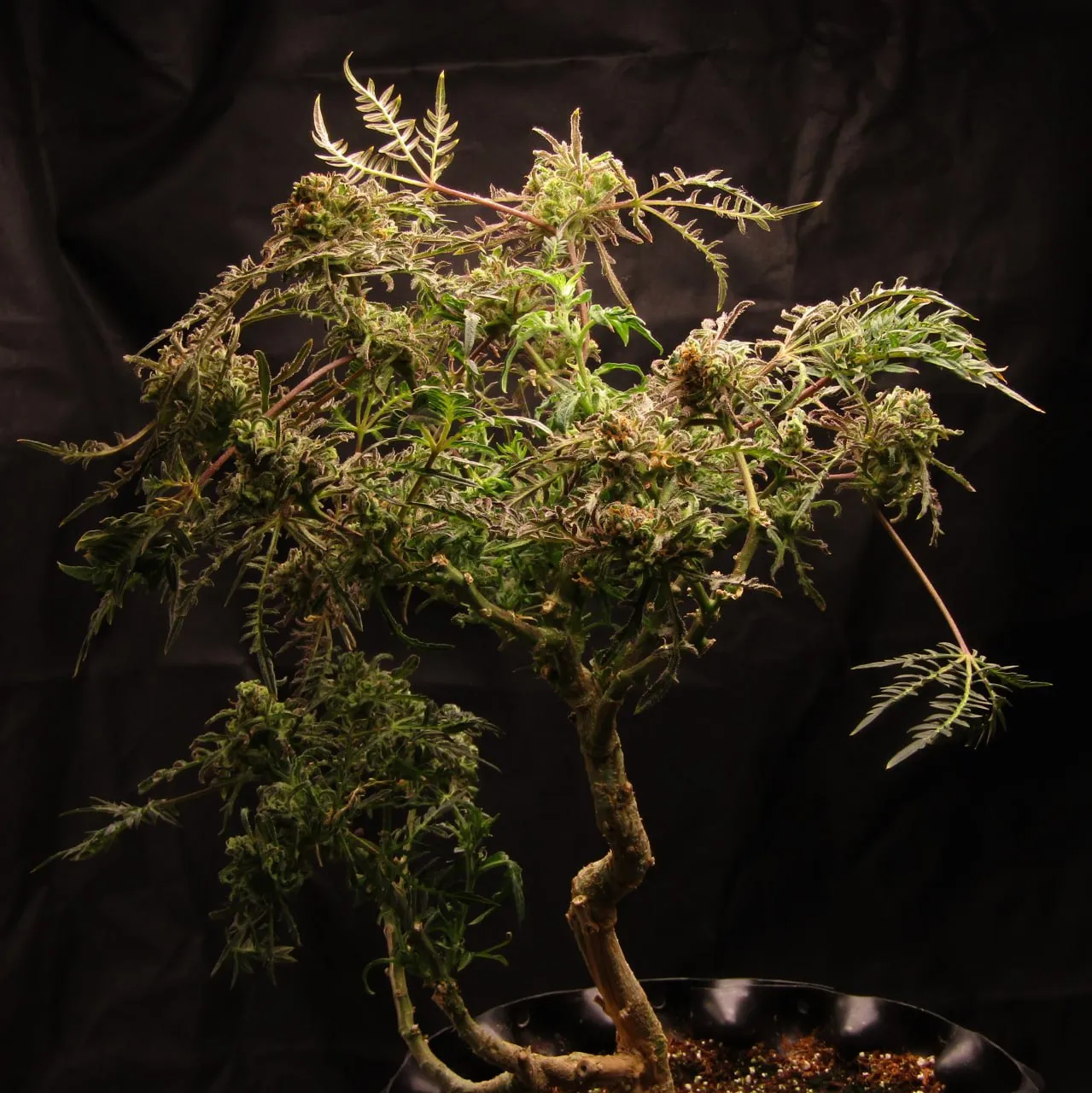
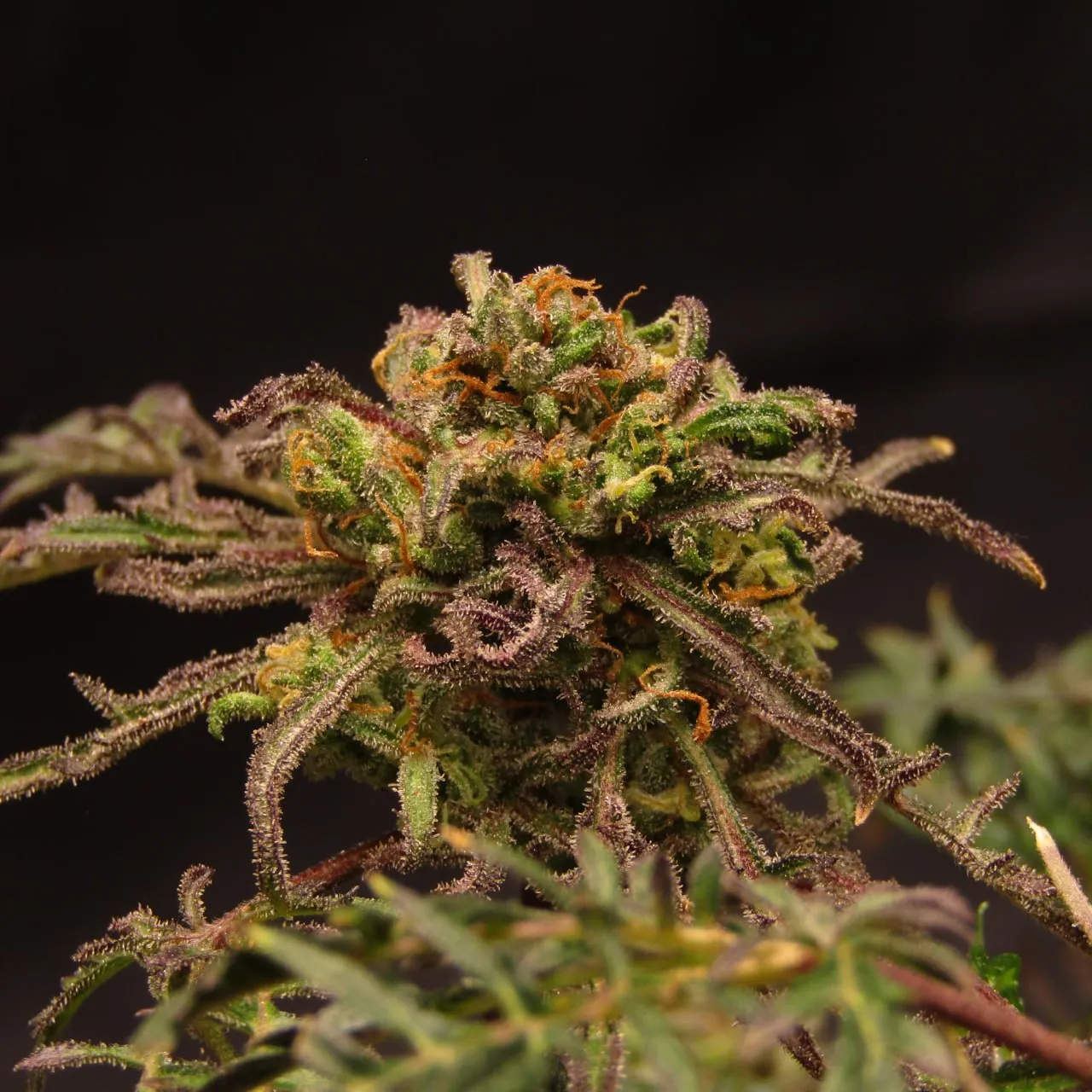
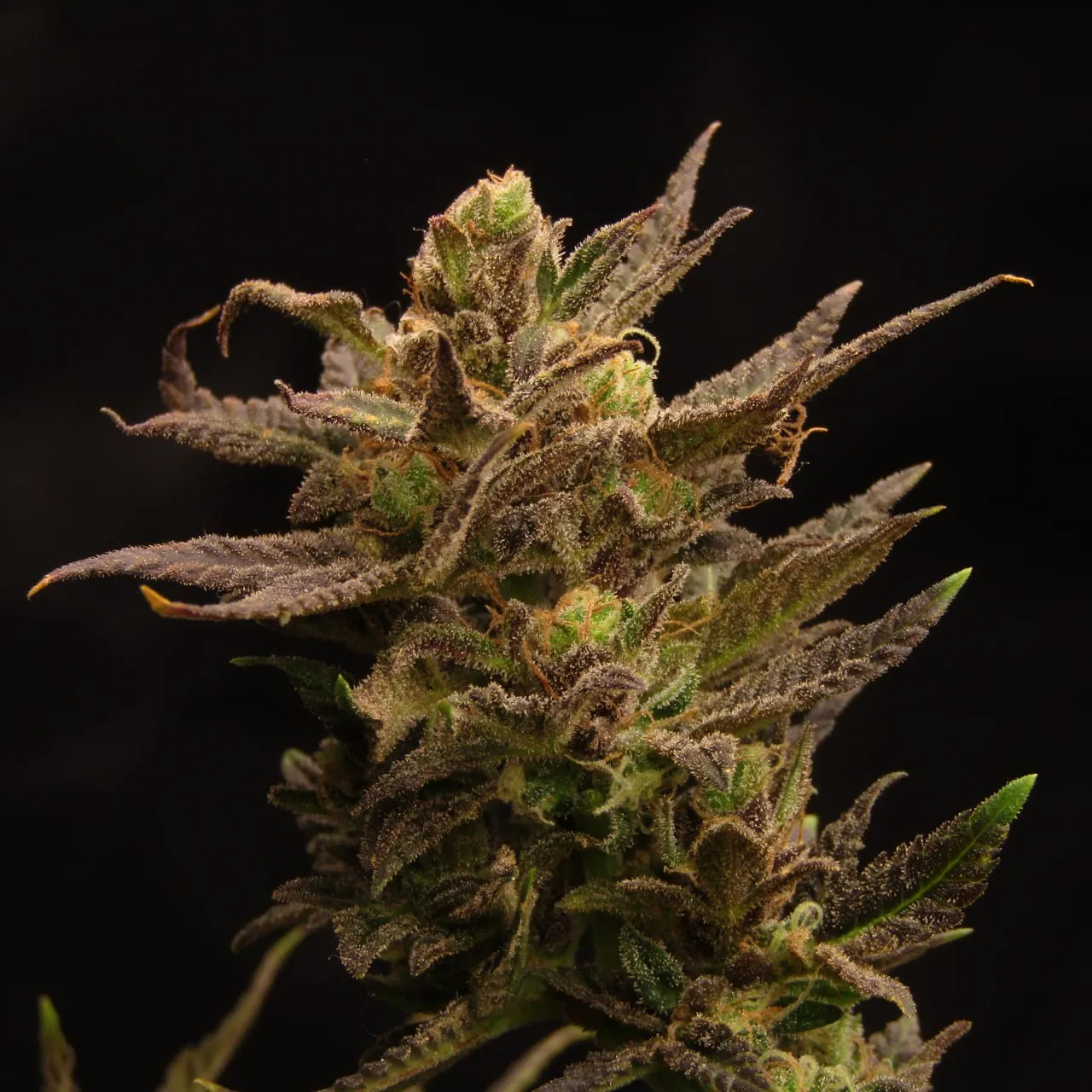
February 25. Drunken Bastard × Freakshow F1 #9 harvest (Pheno 1)
The best female among her sisters; I was especially drawn to her amazing coloring and terpene profile. She passed every stage of selection.
Structure: a well-branching plant, slightly squatter and wider than her sisters. Features: twisted leaves, extra leaflets, leaflets without serrations, extra growth points, and so on: everything inherent to the parent ABC and Freakshow genetics, but in a mild form. At 14–18 degrees she shows a purple color covering the leaves and partly spreading to the flowers.
Stress tests: during the cycle the plant was exposed to overdosing, hunger, insect attacks, drought, overwatering, and a disrupted light cycle, and showed no signs of hermaphroditism. Size: 35–38 cm. Aroma: spicy, floral and musky, slightly peppery, going deeper into spice, flowers, and blueberry notes.
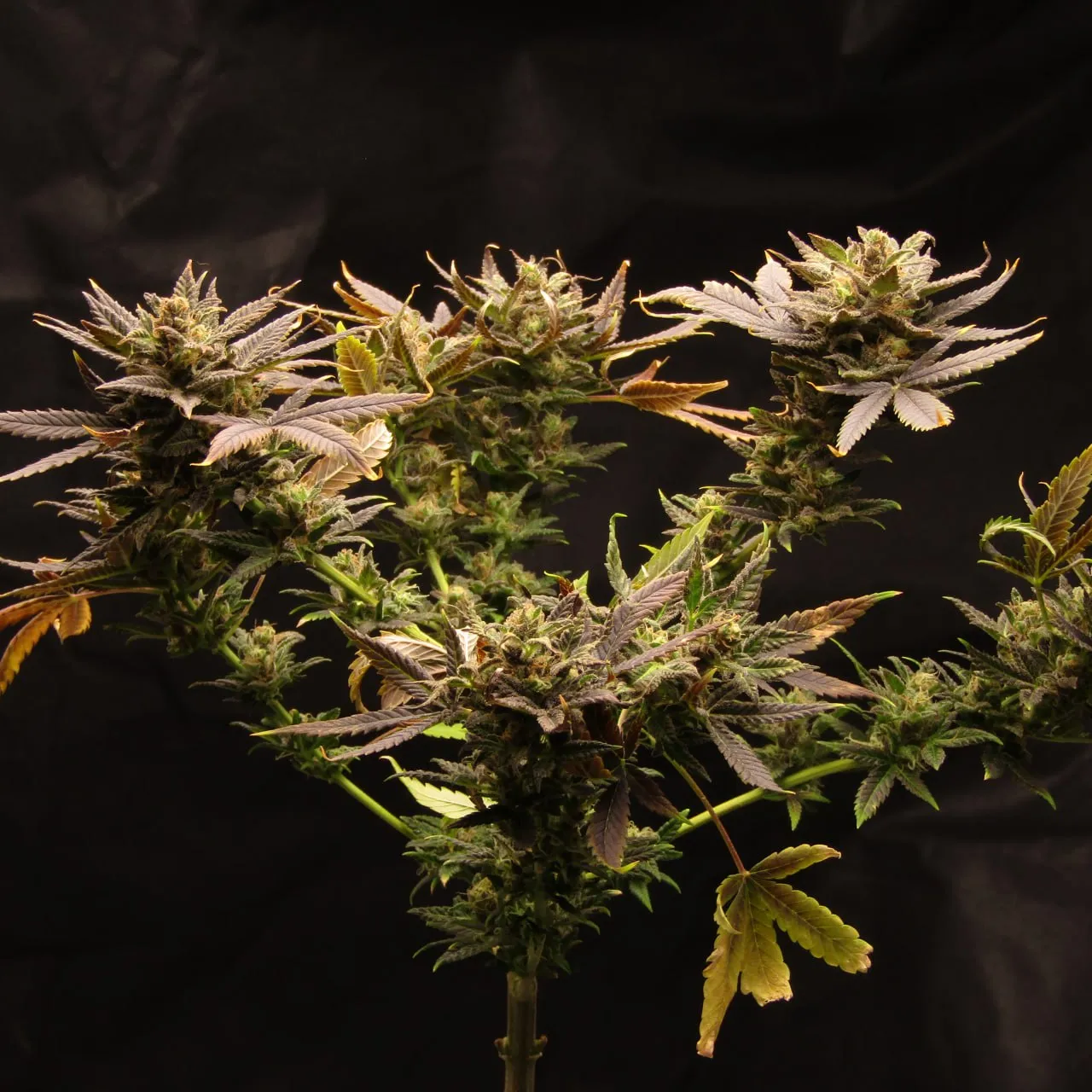
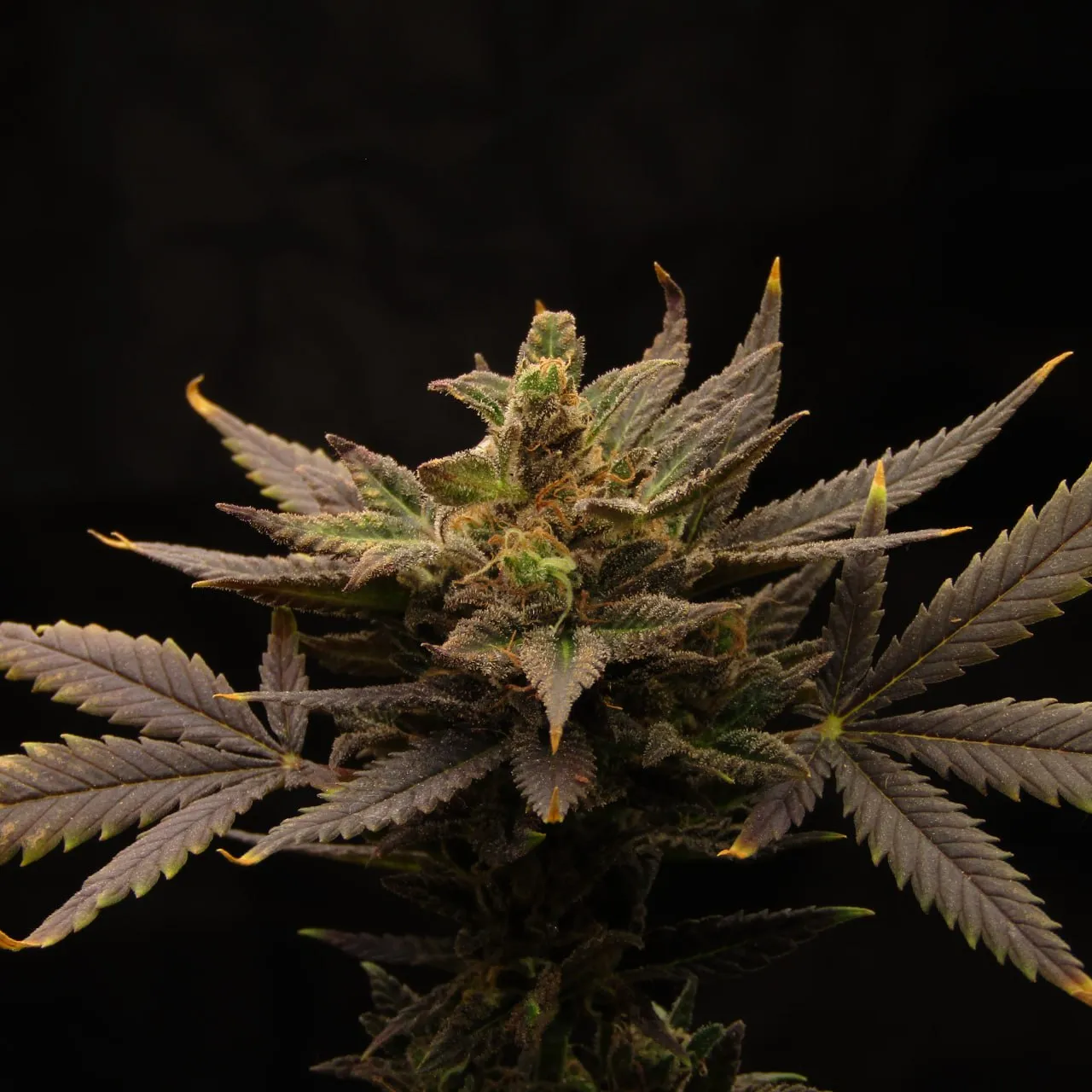
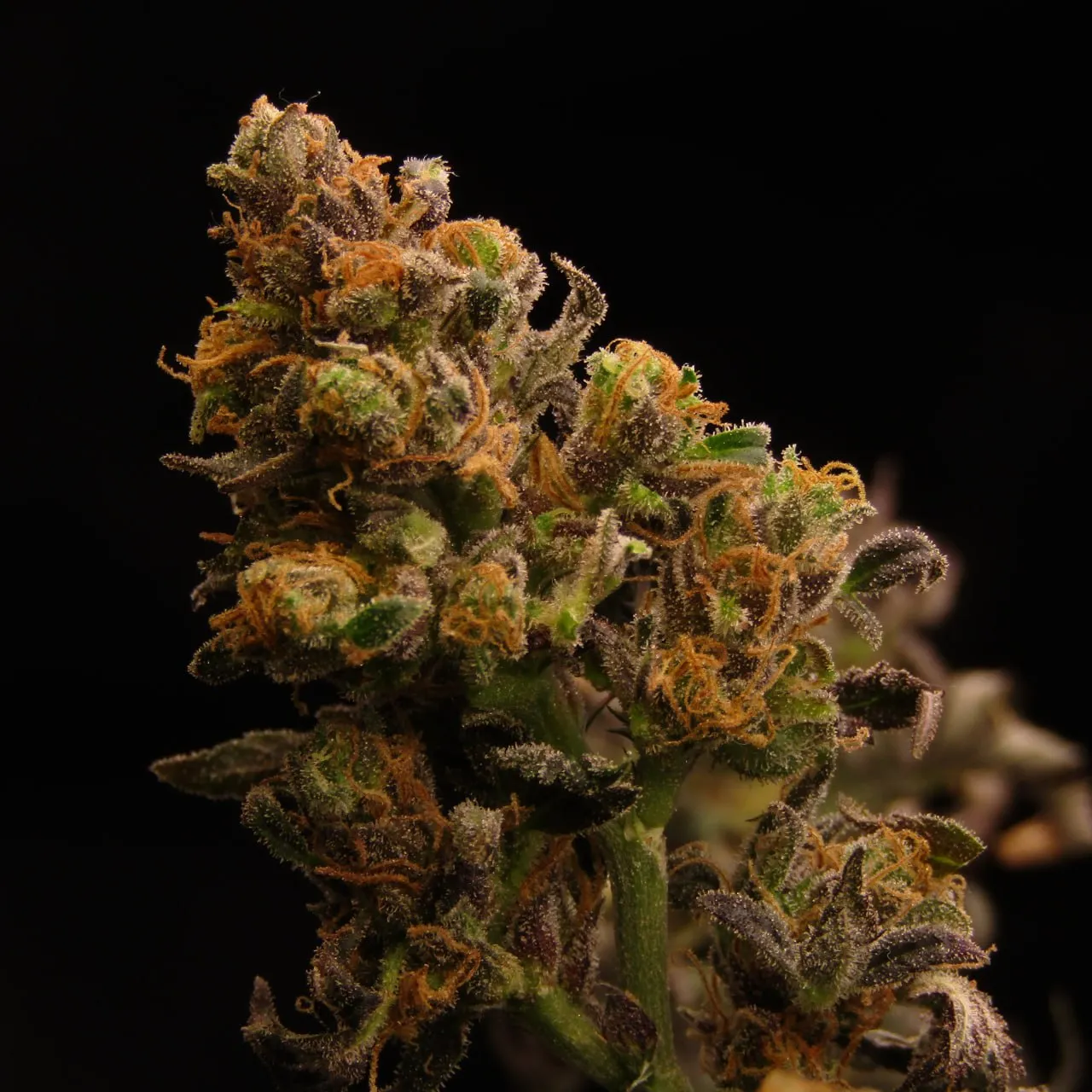
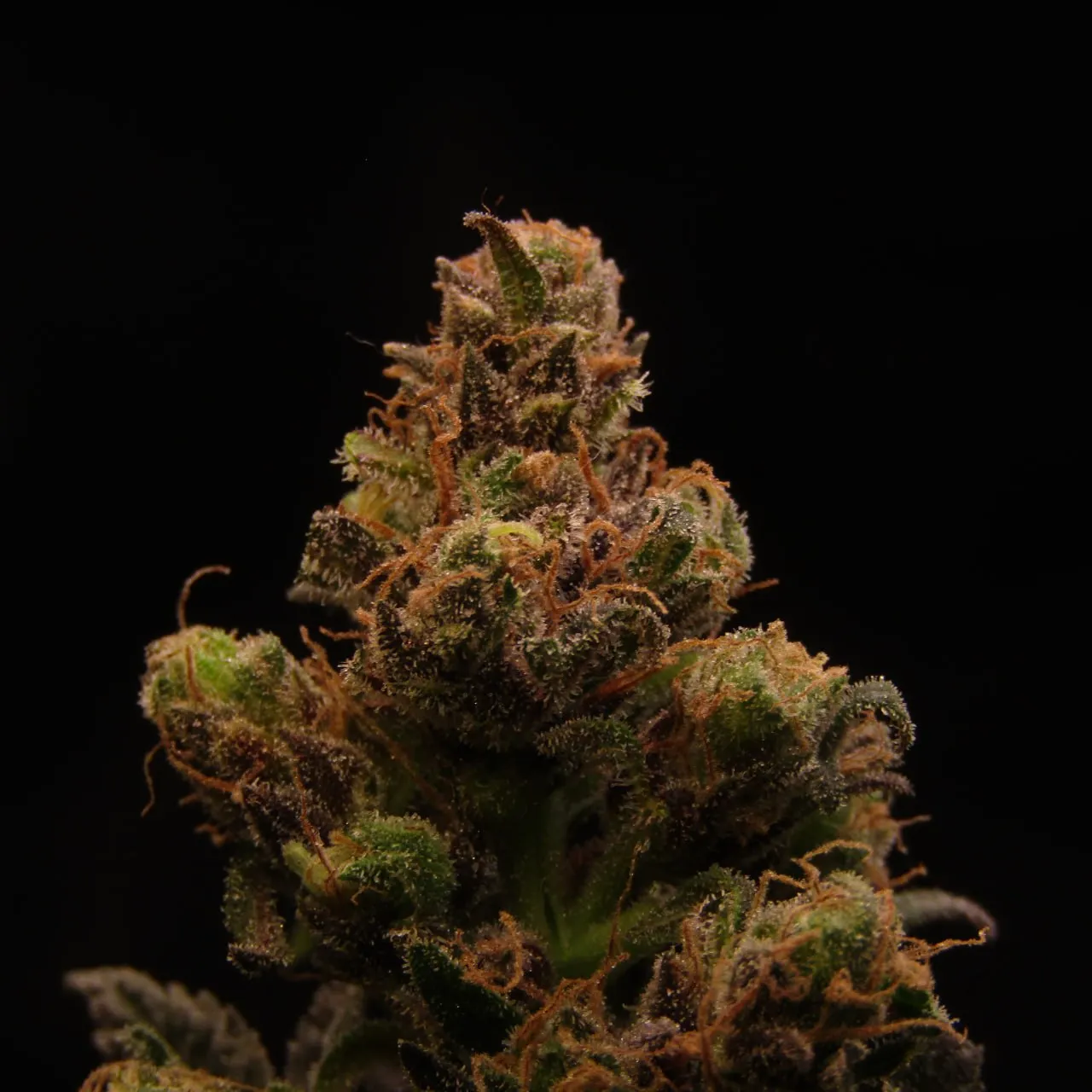
February 25. Drunken Bastard × Freakshow F1 #18 (Pheno 1)
The second plant suitable as a mother for The second generation of a cross, descended from F1 plants. Traits can separate into different combinations in this generation. F2 ↗: large and resilient, but she showed less purple and gave slightly smaller flowers.
Structure: a well-branching plant with predominantly vertical growth. Features: twisted leaves, extra leaflets, leaflets without serrations, extra growth points, and so on: everything inherent to the parent ABC and Freakshow genetics, but in a mild form. At 14–18 degrees she shows a purple color covering the leaves and partly spreading to the flowers. The tint appeared later than in DF#9 and to a lesser degree.
Stress tests: during the cycle the plant was exposed to overdosing, hunger, insect attacks, drought, overwatering, and a disrupted light cycle, and showed no signs of hermaphroditism. Size: 35–38 cm. Aroma: spicy, floral and musky, slightly peppery, with light pine notes.
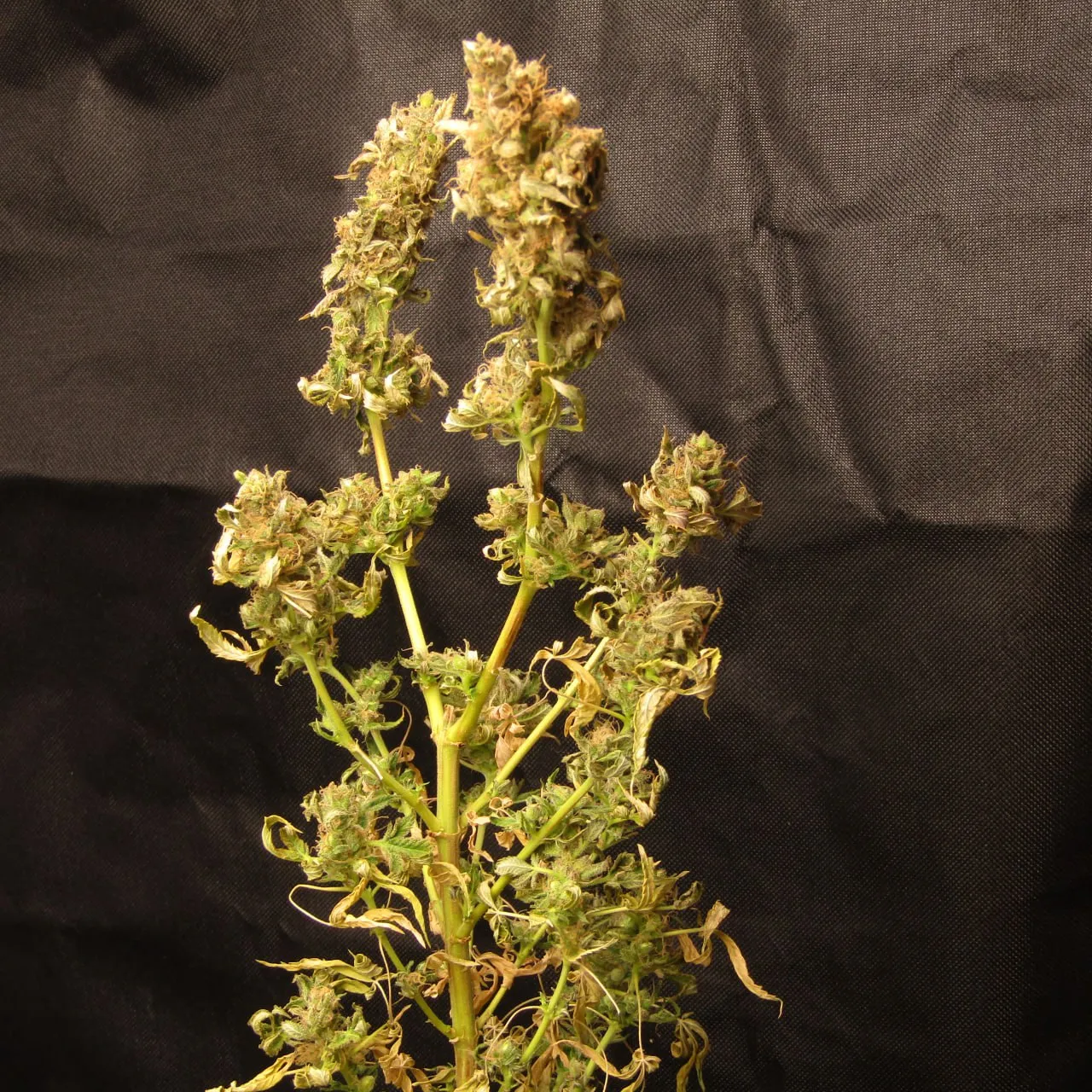
February 25. Drunken Bastard × Freakshow F1 #13 harvest (Pheno 2)
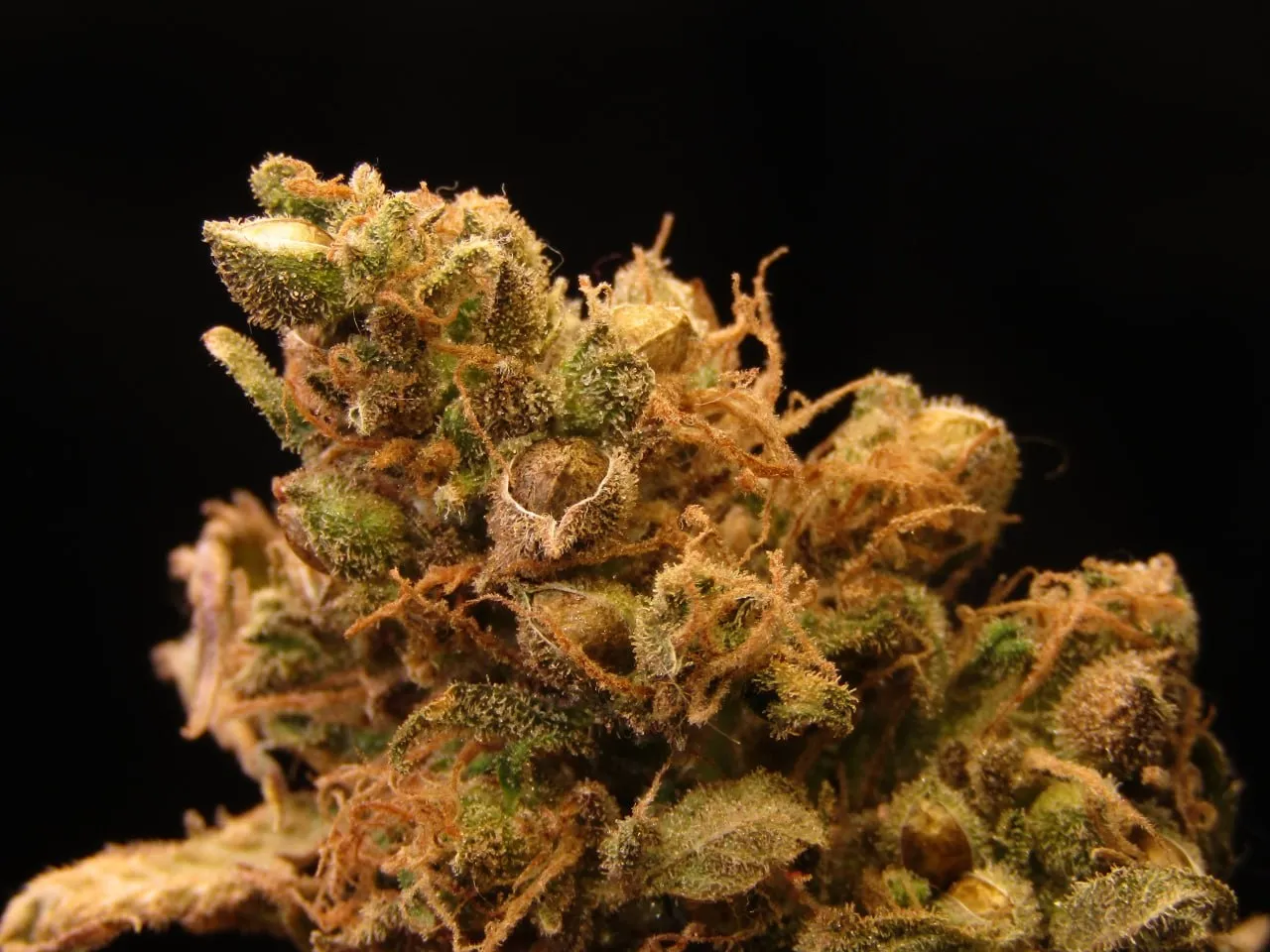
A representative of the second phenotype. I kept her to see what the F2 offspring will be like, and used a father from the same phenotype. Both flowered and were ready to cross earlier than the Pheno 1 plants. Seeds were obtained and will go into testing before her sisters’.
Structure: weakly branching, with slowly developing side shoots. Vertical growth dominates. Features: twisted leaves, extra leaflets, leaflets without serrations, extra growth points, and so on: everything inherent to the parent ABC and Freakshow genetics, but in a mild form. She showed no change in leaf or flower color under low temperatures.
Stress tests: during the cycle she was exposed to overdosing, hunger, insect attacks, drought, overwatering, and a disrupted light cycle, and showed no signs of hermaphroditism. Size: 35–38 cm. Aroma: spicy, floral and musky, slightly sour.
February 25. Results of the cycle
So the harvest is done; it is time to sum up and work out what to do next. The main result of the cycle is not flowers or seeds but information. I have learned about the genetics of the plants I used.
Over the last few months, I tested the first generation from my Drunken Bastard #16 × Freakshow #4 cross, drew conclusions about a couple of traits, and chose what are presumably the best parent plants to continue the work.
Among the 19 plants of the F1 generation, I found 3 different phenotypes: branching, moderately branching, and weakly branching plants. All the following conclusions are based solely on my small sample. Let me assume that branching is controlled by one gene with incomplete dominance, so the heterozygote is intermediate. Then BB is homozygous dominant (branching), Bb is heterozygous (moderately branching), and bb is homozygous recessive (weakly branching). If this holds, the expected split is BB 25%, Bb 50%, and bb 25%.
There are also plants whose flowers and leaves take on a purple tint at low temperatures. Let us assume this trait is recessive and shows only in homozygotes: pp is homozygous recessive (purple), Pp is heterozygous (not purple), and PP is homozygous dominant (not purple).
Alongside this cycle, I tested the Freakshow and Drunken Bastard parents by crossing them within their strains. Among the offspring sired by Freakshow #4, a small share of plants had weak branching (bb). Likewise, a small share of the offspring of the mother Drunken Bastard #16 showed a phenotype with rather skinny plants (bb). This fits the idea that both parents and their partners within the strain carry b, that is, they are heterozygous (Bb) for this trait, which is why 3 phenotypes appeared in the F1. Had one or both of them been homozygous dominant (BB), we would have got only BB, BB, Bb, and Bb, or BB, BB, BB, BB, with no weakly branching plants among them. The same applies to homozygous recessive (bb): 50% (Bb × bb = Bb, Bb, bb, bb) or 100% (bb × bb = bb, bb, bb, bb) would branch weakly. So under this model, there were no homozygotes for branching among the parents used for the tests.
Next, the purple color. I assume the mother, Drunken Bastard #16, has the homozygous recessive genotype pp: under the model the trait shows only in homozygotes, and at cold temperatures #16 gives purple leaves and flowers. But for some reason not all her offspring turned purple: DF#13, for example, stayed green until harvest. DF#9 and several of her sisters, however, are purple, so they got p from both parents (pp). Crossed with a green homozygous dominant father, we would not have seen this trait (PP × pp = Pp, Pp, Pp, Pp). With a homozygous recessive one (pp), all the plants would have turned purple under the current conditions (pp × pp = pp, pp, pp, pp). So the father, Freakshow #4, is most likely heterozygous, Pp (Pp × pp = Pp, Pp, pp, pp). That gives an expected 50% Pp (green) and 50% pp (purple). Color in the cold also depends on conditions, so this is a working hypothesis.
I assume DF#9 and DF#18 are BB-pp: branchy and purple.
Among the males, I chose DF#5, which was branchy and showed a light purple on his flowers and stems. I think he is BB-pp too, and later I will continue the search, fixing these traits. Whether my theories are right, someone knowledgeable will tell me, or we will see in the next cycle when I continue the work.
As for the leaves, the Freakshow and ABC morphologies are recessive traits controlled by different genes. That is why the first generation shows ordinary leaves: Freakshow #4 passed on a normal copy of the ABC gene, and Drunken Bastard #16 a normal copy of the Freakshow gene. We will look for diversity soon, in F2: if the two genes are inherited independently, expect roughly 9 ordinary : 3 Freakshow : 3 ABC : 1 with both traits.
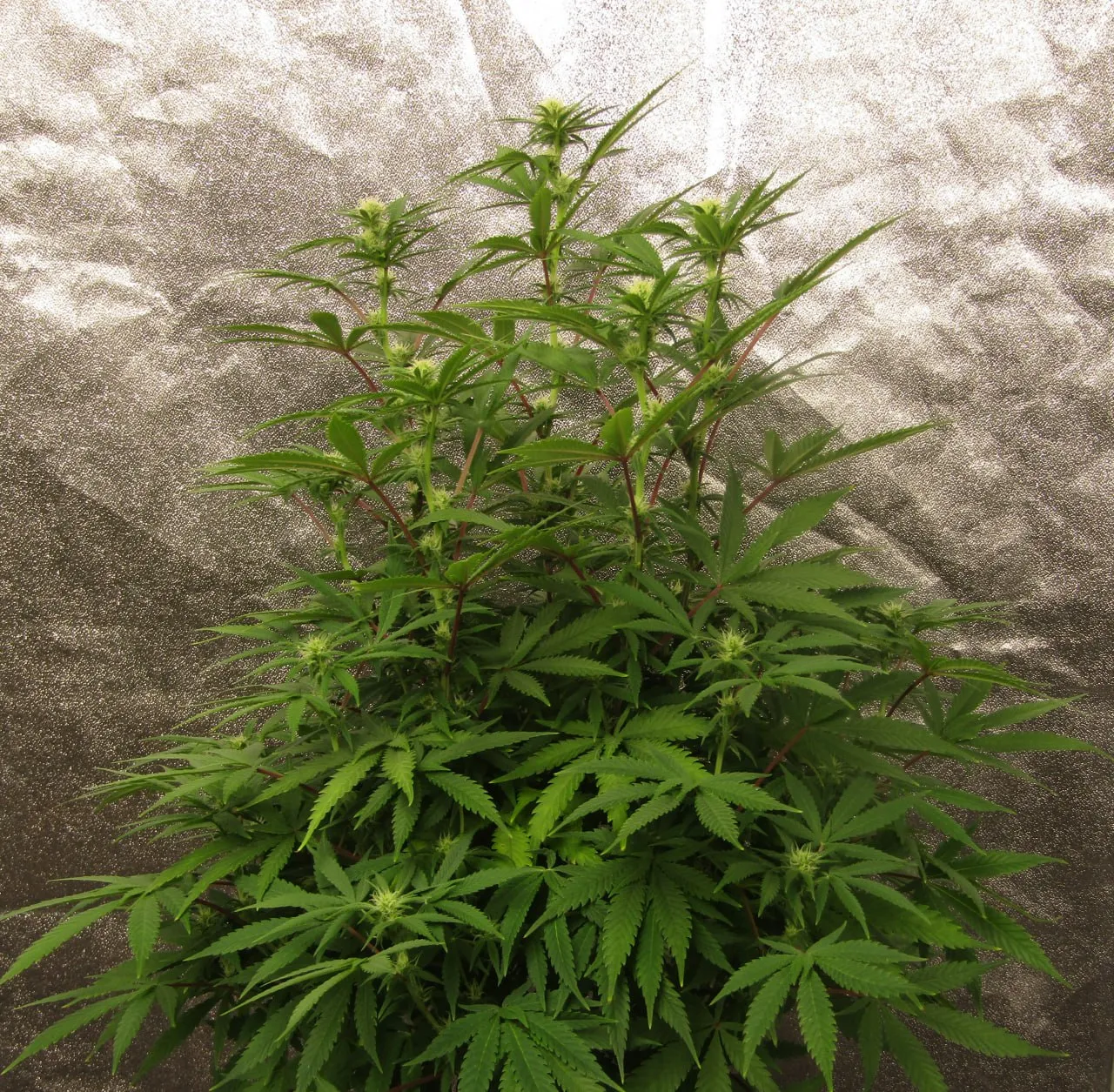
March 29. DF#9, the mother for F2
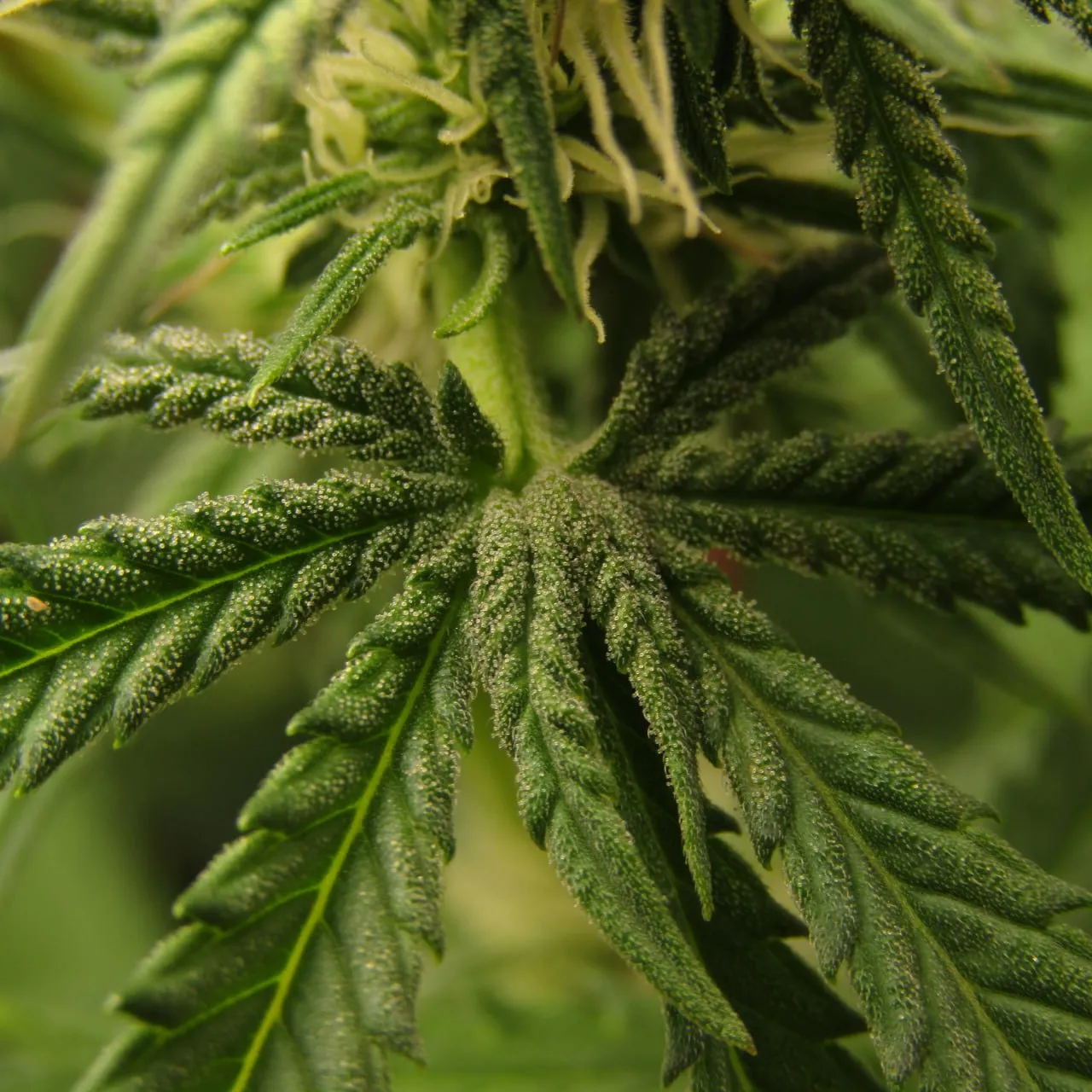
Drunken Bastard × Freakshow F1 #9, the mother for F2, about a month after the switch to flowering. Most of the plant’s leaves, up to 90% I think, have extra leaflets. The framework is super branchy, with colas striving to reach one level. #9 could have been bushier, but some branches went for clones. The internodes are short, the flowers densely cover the cola, and the small leaves near the flowers are covered in large trichomes. All in all, this girl makes me happy, and I cannot wait to see her offspring.
Sources
- DZAGI (forum login required)
- ICMag
- mutantfarmer on Telegram