
Lowryder: the autoflowering donor
Five regular Lowryders: from the first leaves to pollinating Freakshow and Drunken Bastard, harvesting LR#5 and testing seeds. Then Lowryders from my own seeds and Lowryder as the autoflowering donor in the 2023-2024 rounds.
May 10, 2022 - Dec 8, 2024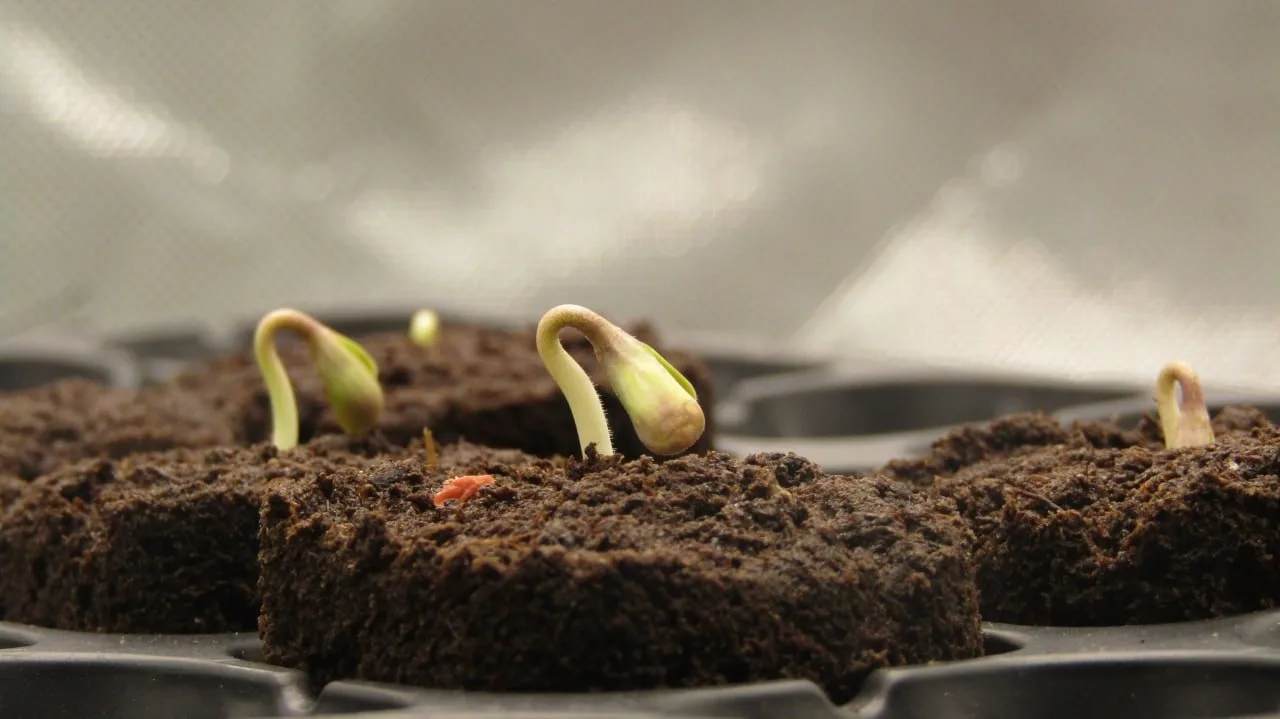
- Cross
- Lowryder; FS × LR; DB × LR
- Generation
- Lowryder IBL, first F1 hybrids
- Years
- 2022-2024
- Plants
- 5: 1 female, 4 males
May 10–15, 2022. The autoflowering donor
The aim of this report is to obtain Lowryder pollen and next-generation seeds for my future experiments. The strain is Lowryder A plant that starts flowering independently of the length of the day. Autoflower ↗ Regular seeds can produce both male and female plants. Regular ↗ from Doctor’s Choice. The seeds are regular autoflowering seeds.
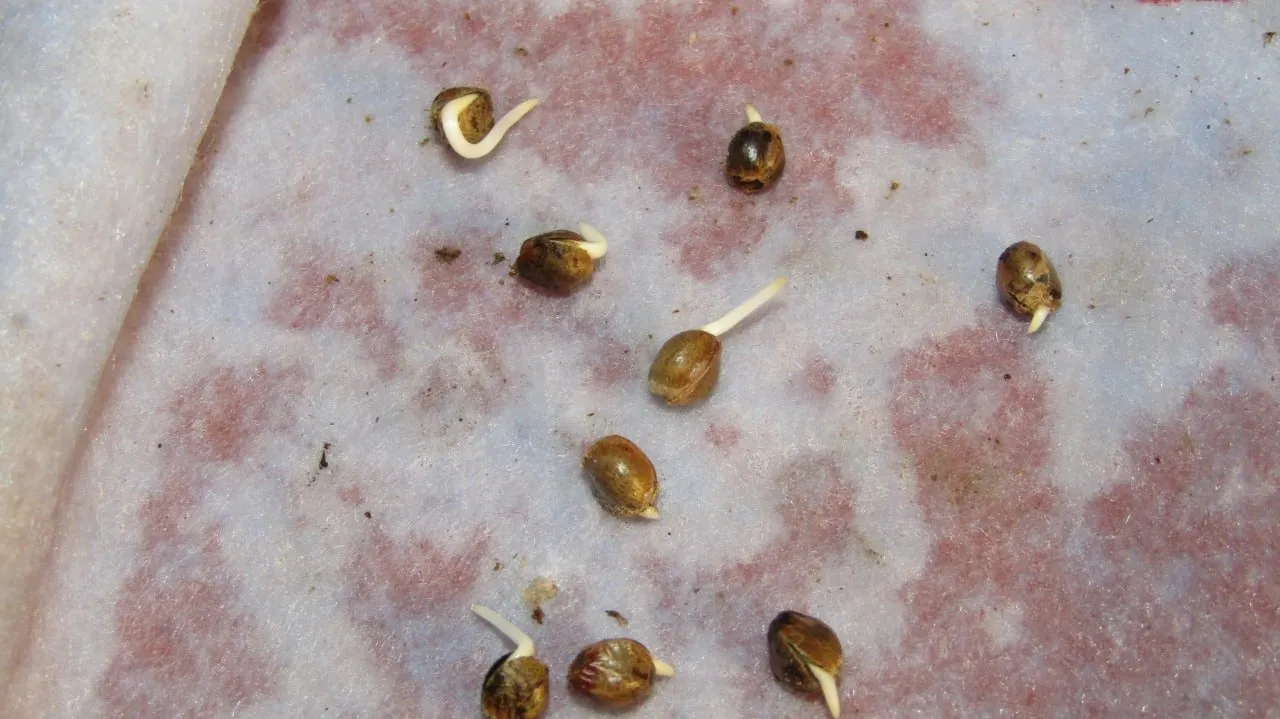
On May 14, all 5 out of 5 emerged. I numbered the specimens in the order they emerged.
May 16–22. Early observations
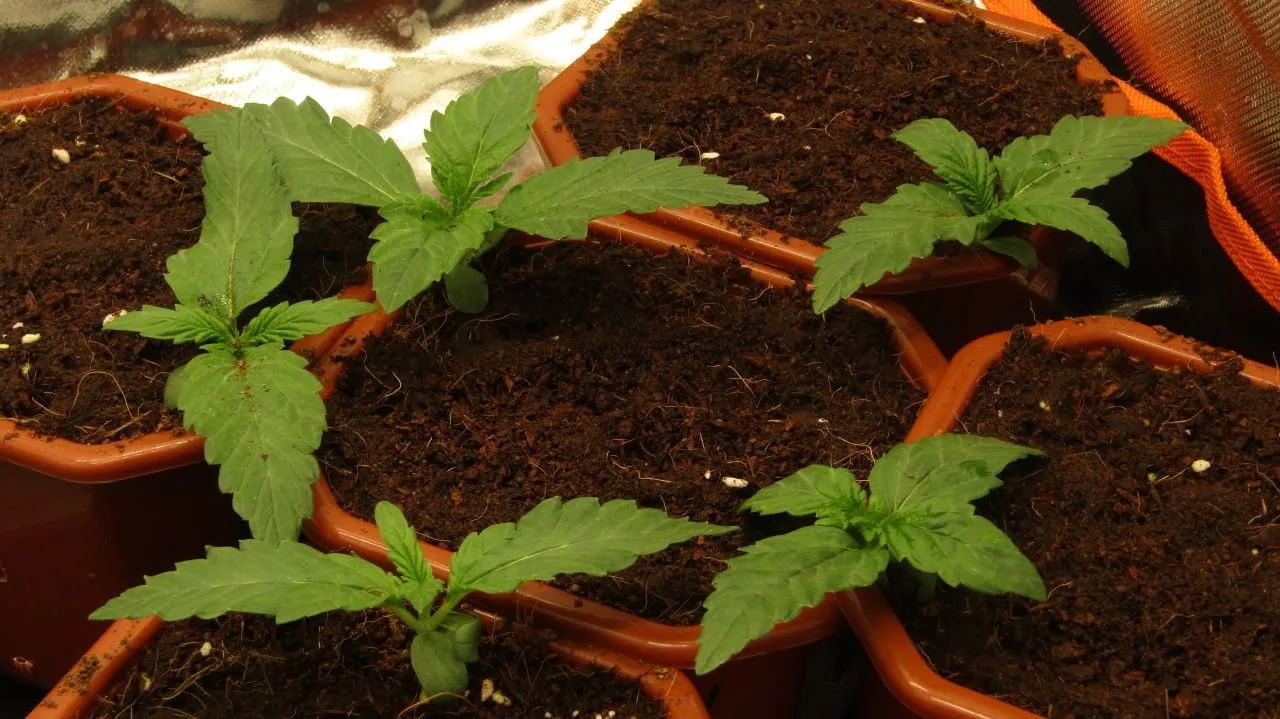
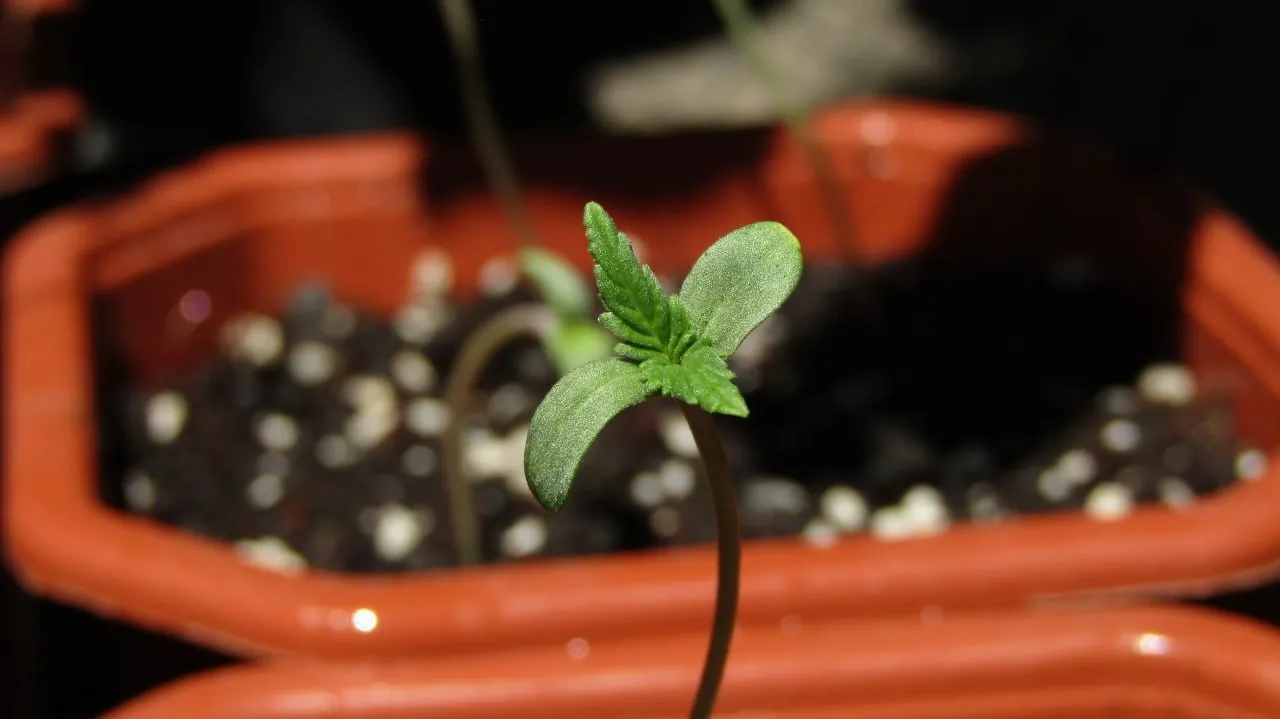
All the seedlings show vigorous, healthy growth without mutations, defects, or anomalies.
May 23–29. Phenotype selection
“Weekend The observable traits of a plant, such as its height, leaf shape or colour. phenotype ↗ selection”: inspections, records, and choices.
- Lowryder #1 has a slight anomaly: one leaf has 2 leaflets instead of 3. The leaves are large, broad, and spreading, resembling indica leaves. The internodes are medium in length.
- Lowryder #2 has large, broad, spreading leaves resembling indica leaves. The internodes are medium in length.
- Lowryder #3 has large, broad, spreading leaves resembling indica leaves. The internodes are short.
- Lowryder #4 has large, spreading leaves that are more elongated than those of the other specimens. The internodes are short.
- Lowryder #5 has large, spreading, slightly elongated leaves. The internodes are short.
May 30 - June 5. Four males and one female
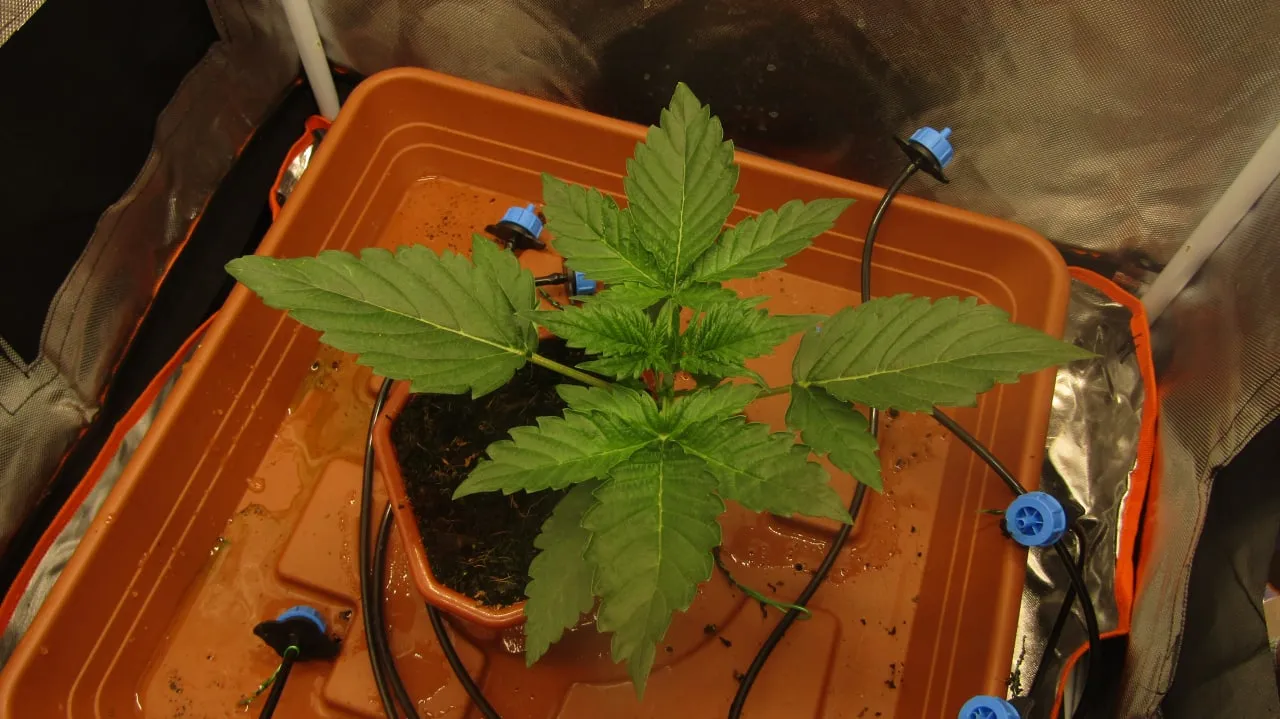
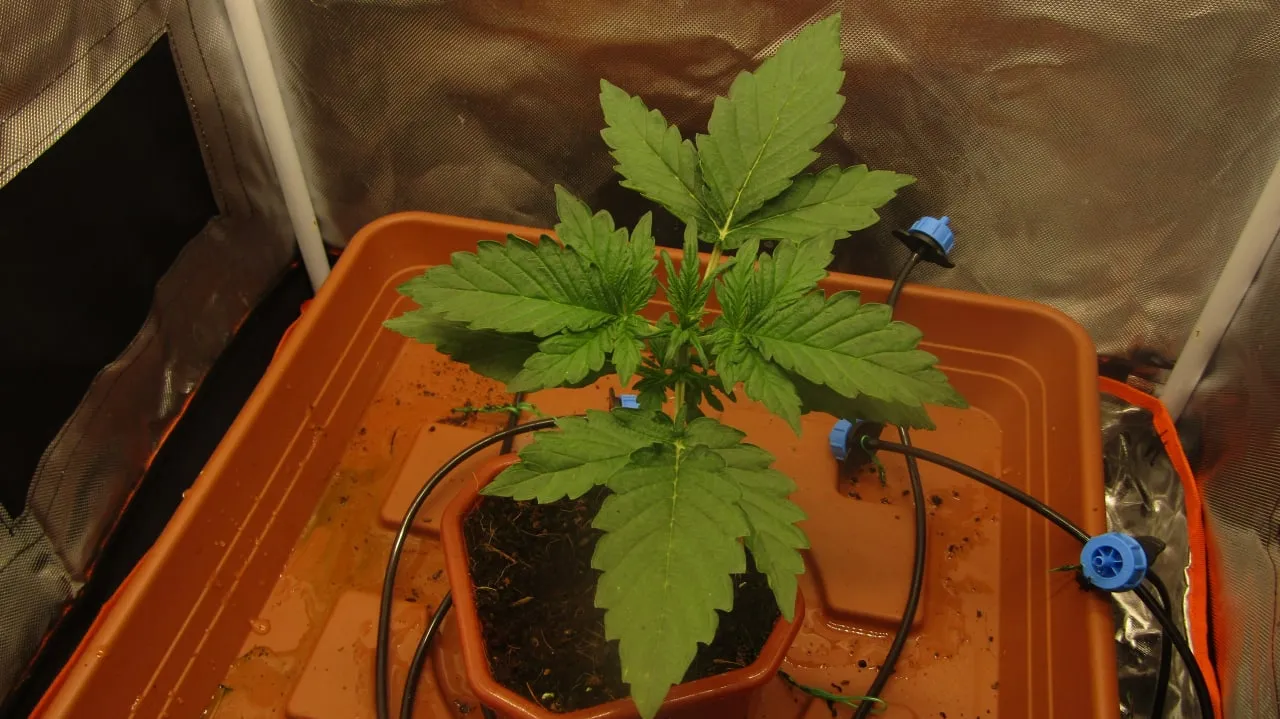
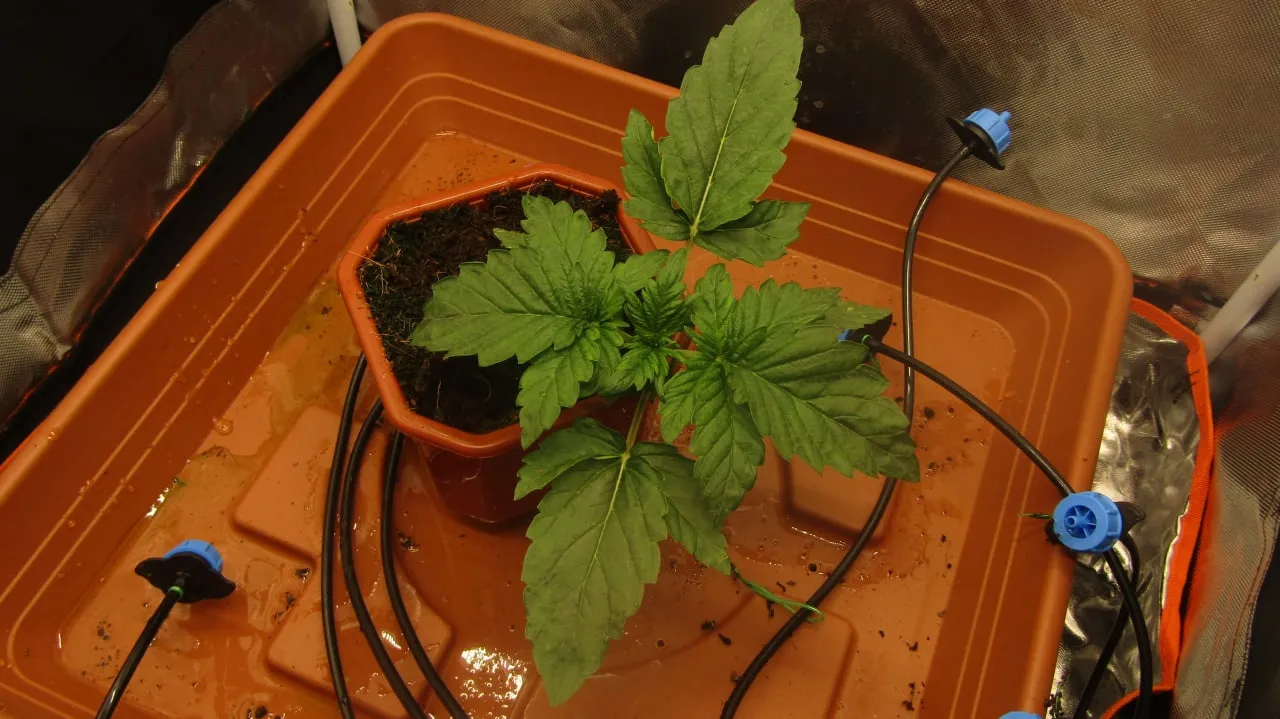
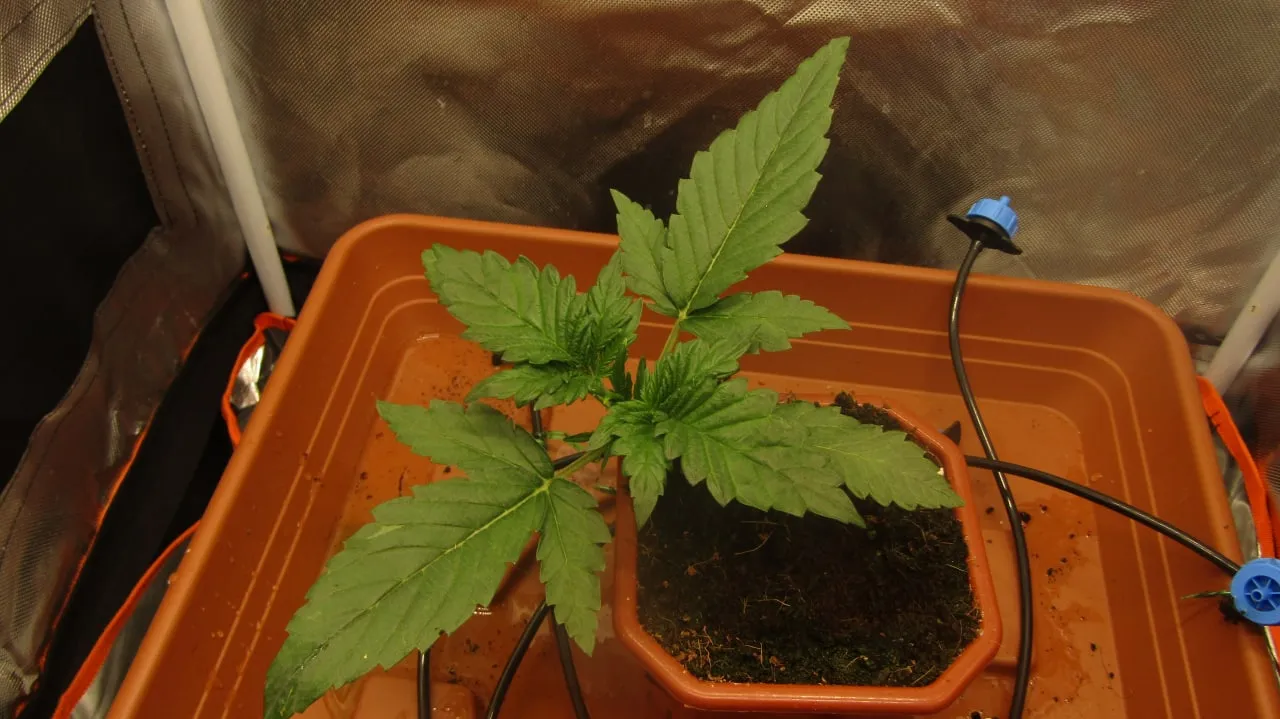
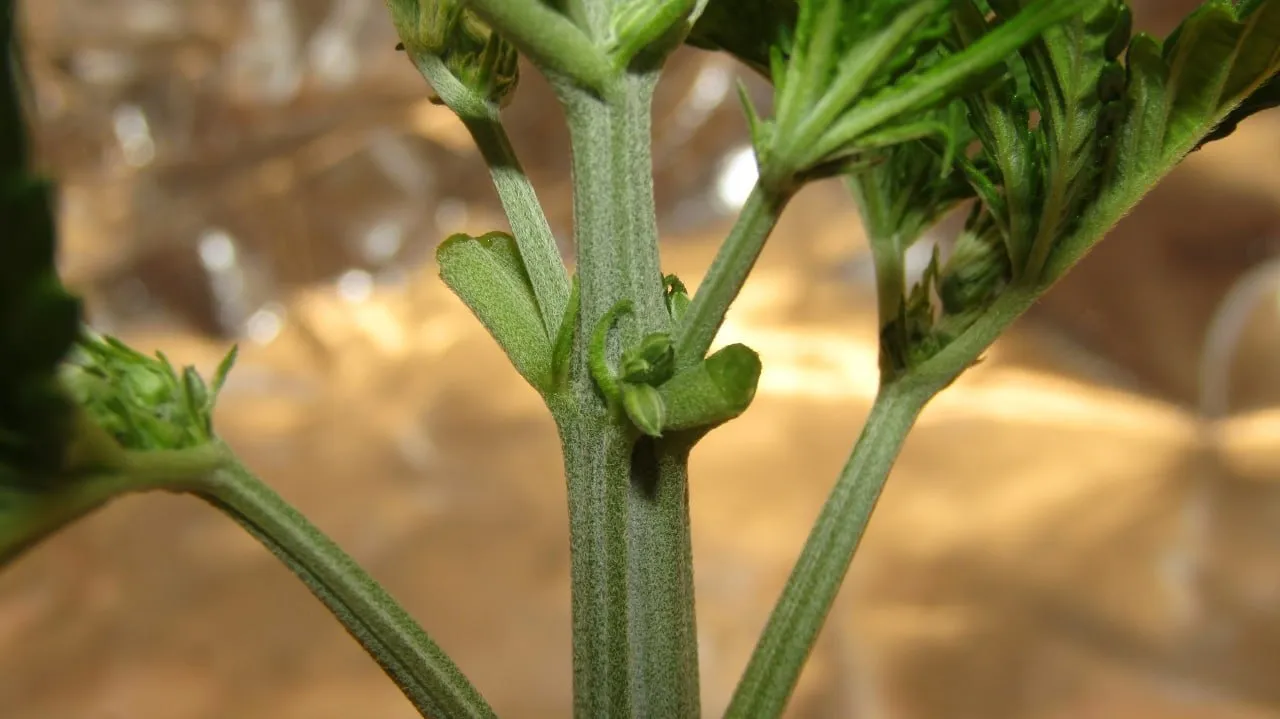
On June 2, the Lowryders showed signs of sex: 3 of the 5 are definitely males, 1 is a female, and 1 is uncertain; I lean toward male. By the end of the week, all of them showed clear signs of sex.
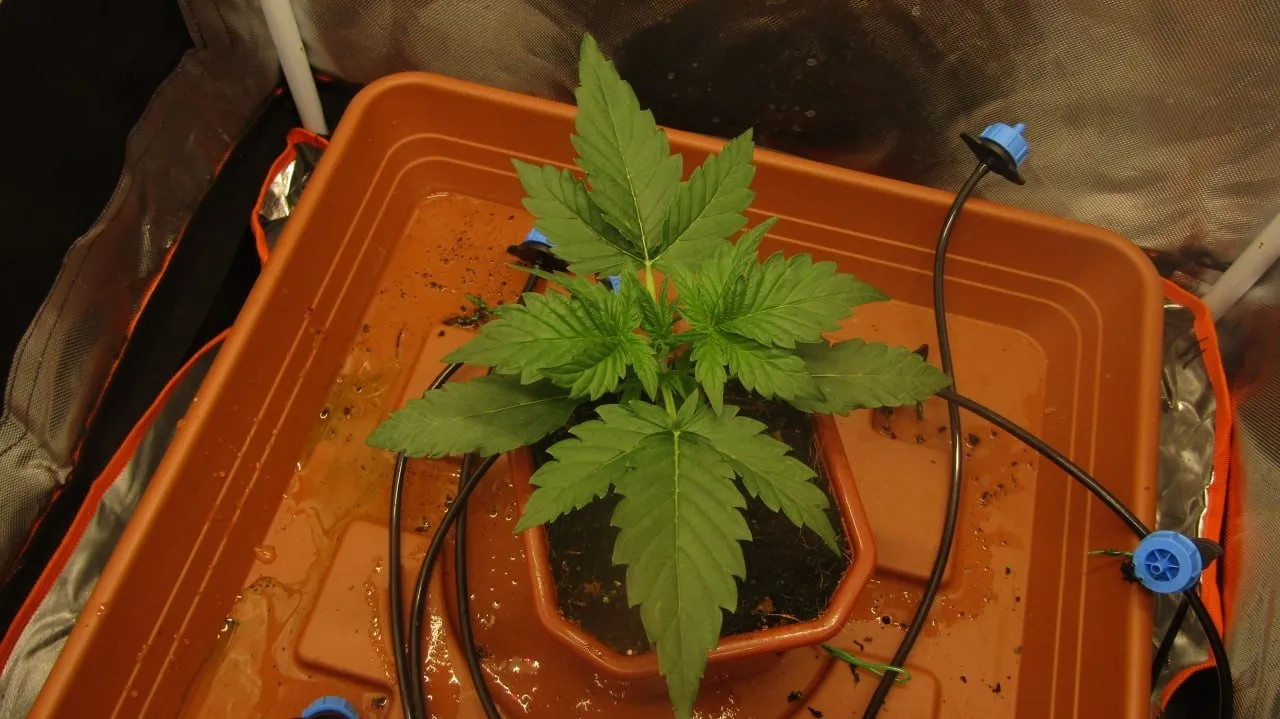
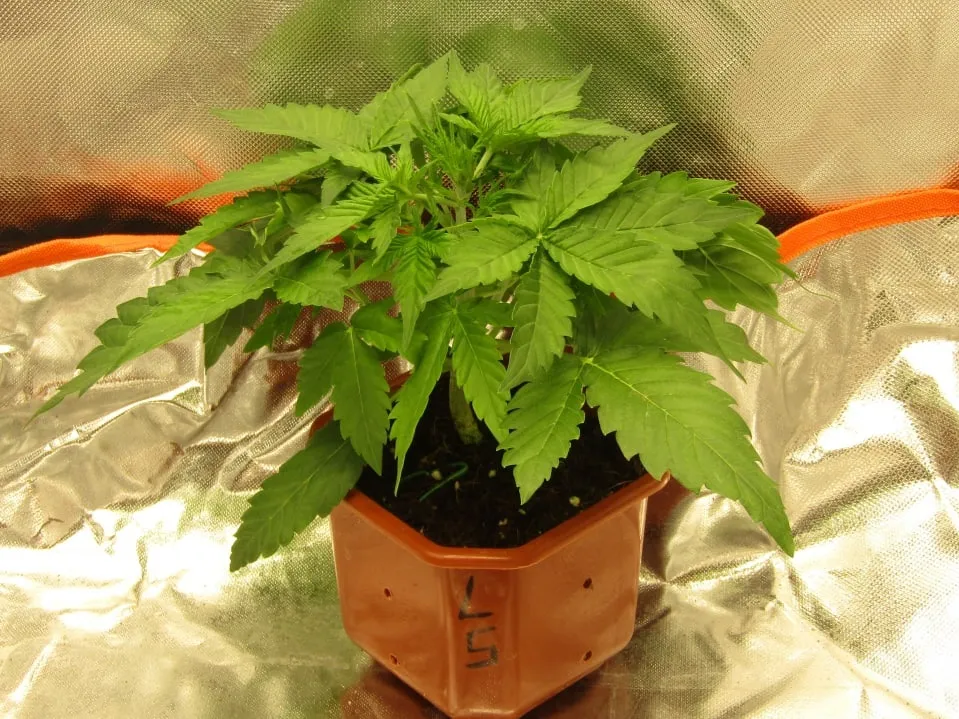
This round gave me 4 males and 1 female. LR#5 is the only female, medium in height, developing her sixth node, with medium-to-short internodes.
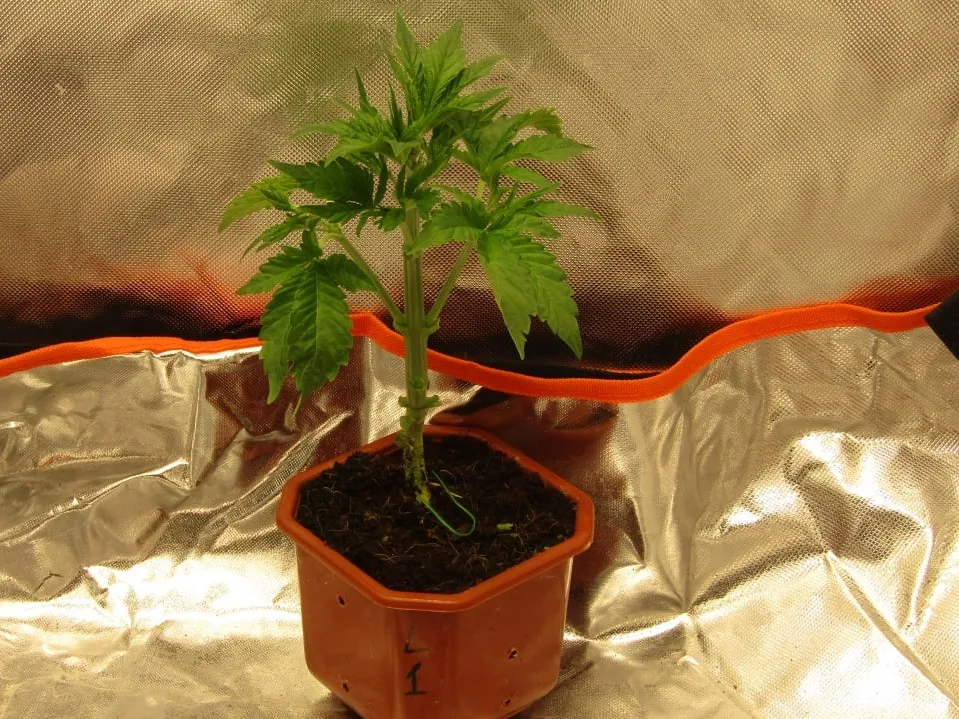
LR#1 and LR#2 are tall and vigorous, developing their seventh node, with long internodes. LR#3 and LR#4 are medium in height and grow more slowly, developing their sixth node, with medium internodes.
I cut the lower 2 nodes and removed the large fan leaves from all the males, so they would take up less space and slow down a little: I have no need for large male plants, I only need a little pollen.
June 6–12. Anthers
On June 8, the Drunken Bastard and Freakshow clones for the cross with Lowryder went into flowering.
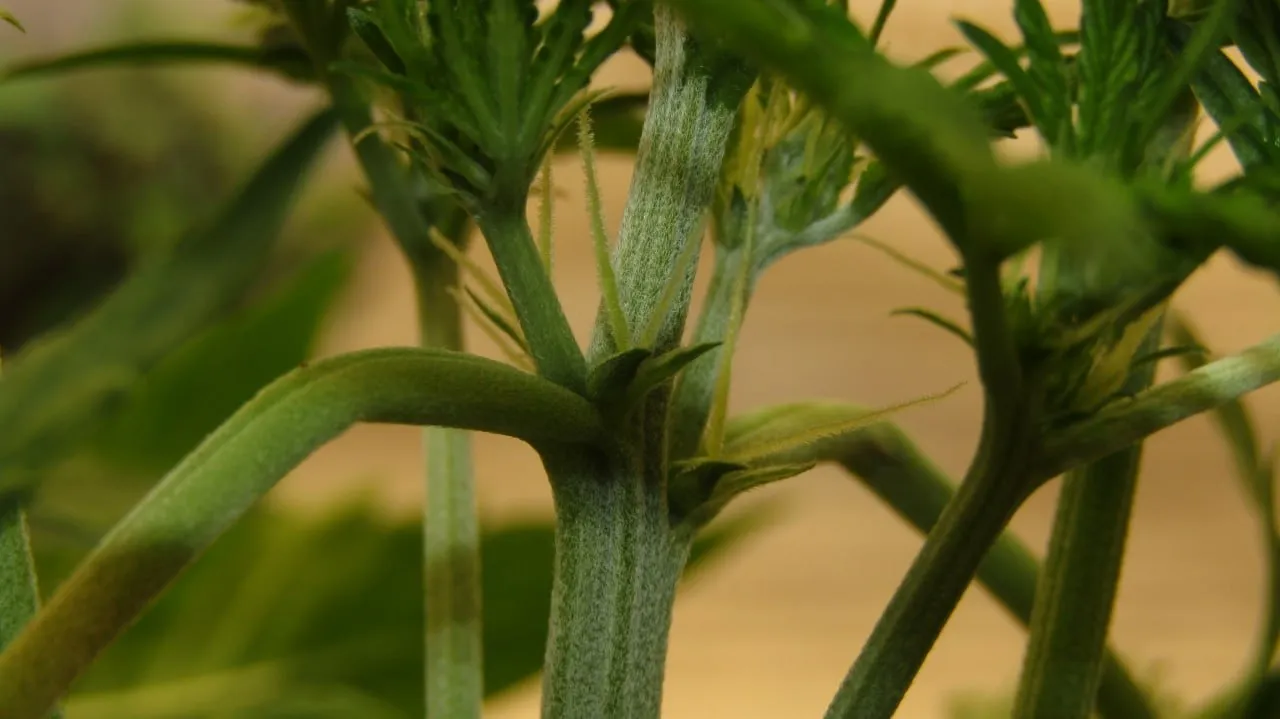
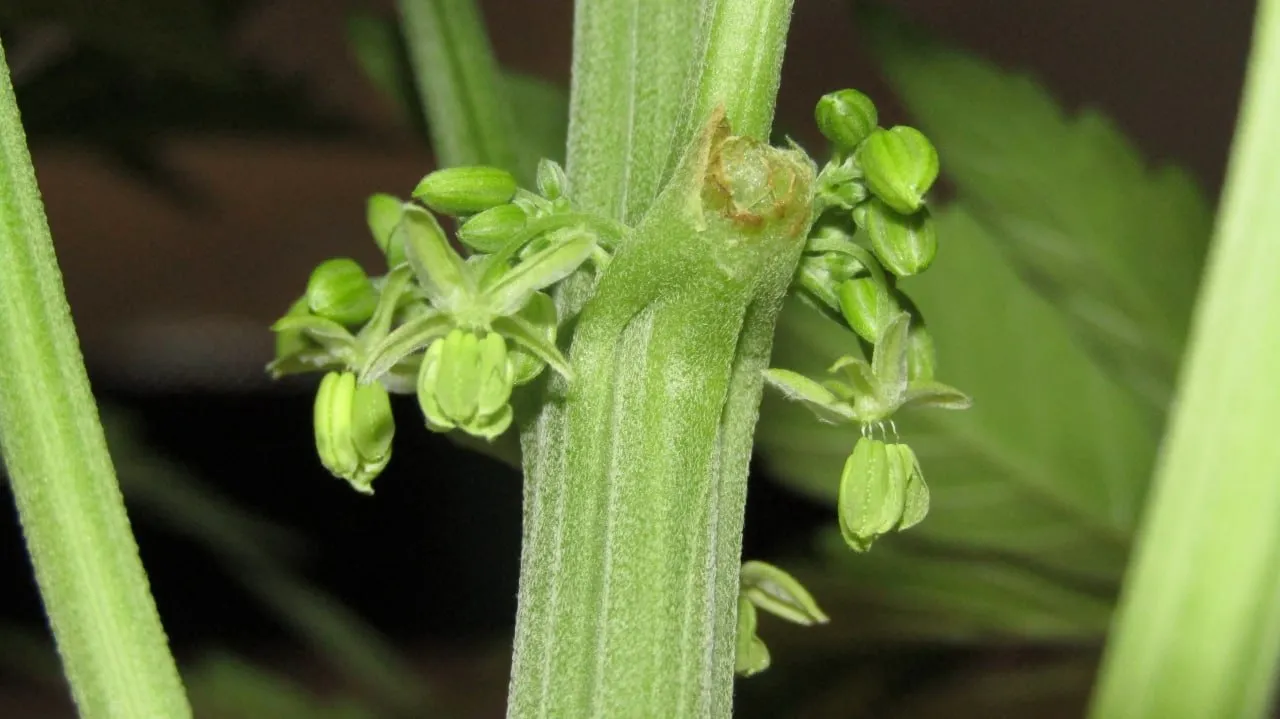
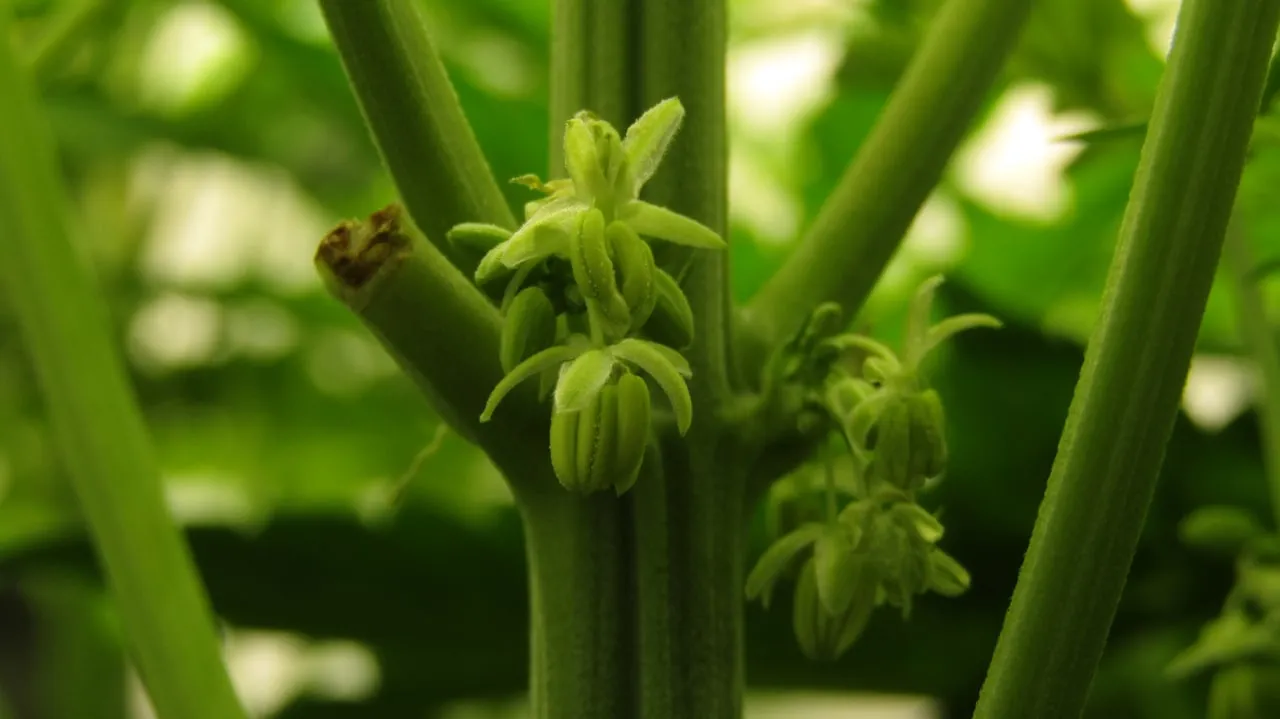
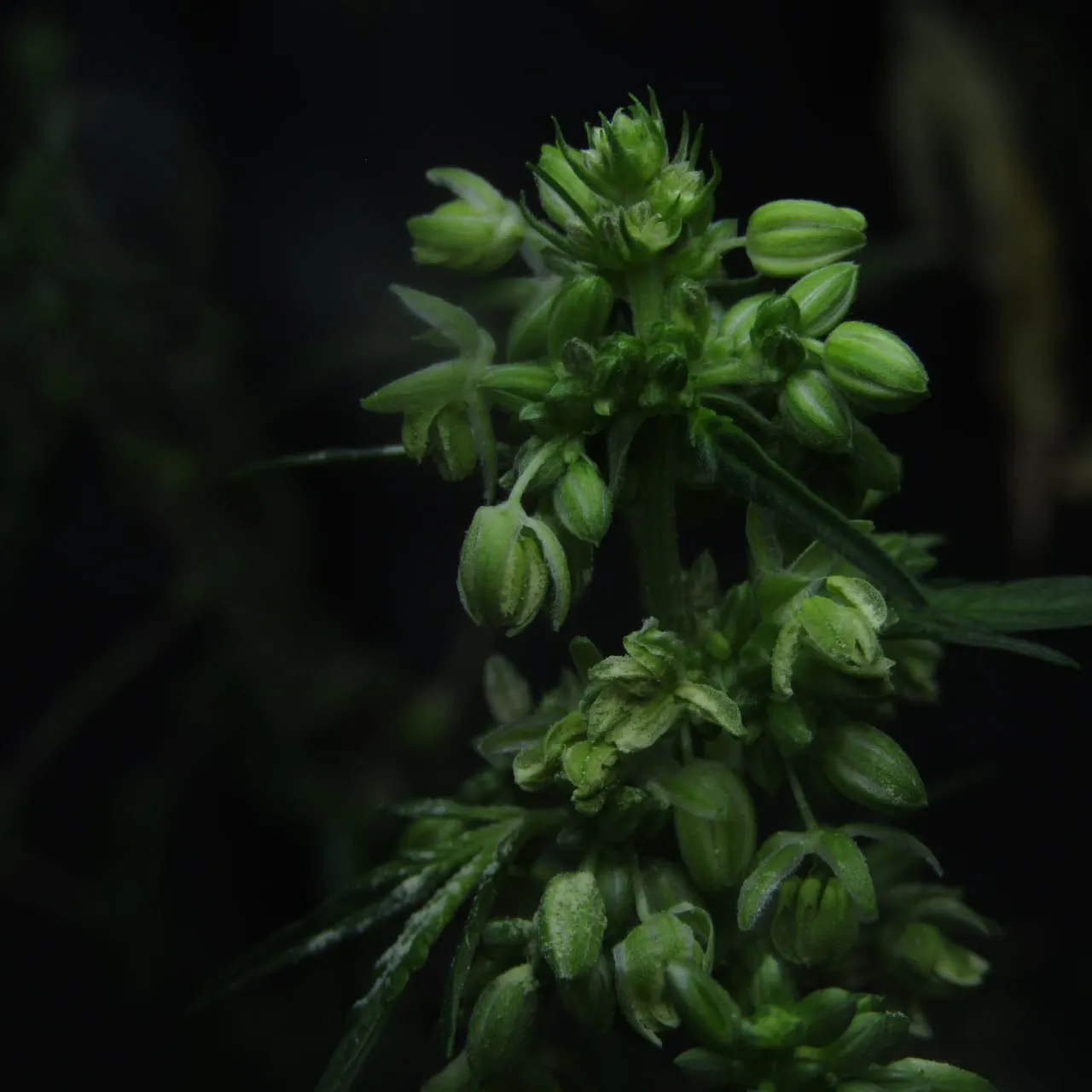
On one male’s fan leaf, the ninth leaflet emerged from an unexpected point; it looks slightly unusual. The males have longer internodes than the female and block the light from the beauty in the center. All the males have developed plenty of anthers, and the lower ones have begun opening.
June 13–19. Pollination
The males were different: some grew taller and more vigorously, with long internodes; others stayed smaller but produced more anthers. I liked every one of them, so I did not eliminate any. I think this will let me run another round with a larger Lowryder population, find something even more special, and make a new hybrid with an unusual strain.
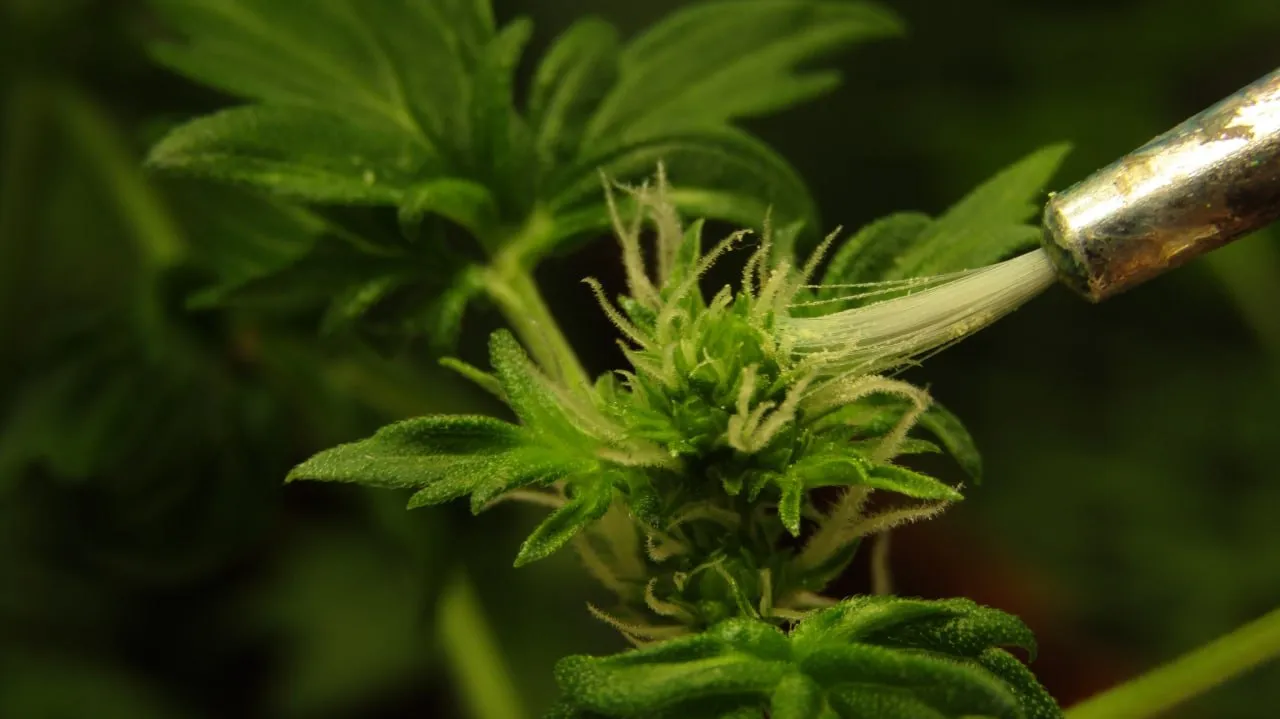
Another round of pollination took place:
- Drunken Bastard F3 #16 × Lowryder Inbred Line: a line selected over generations to reproduce particular traits consistently. IBL ↗ Boyzzz.
- Freakshow #8 × Lowryder IBL Boyzzz.
- Lowryder #5 × Lowryder IBL Boyzzz.
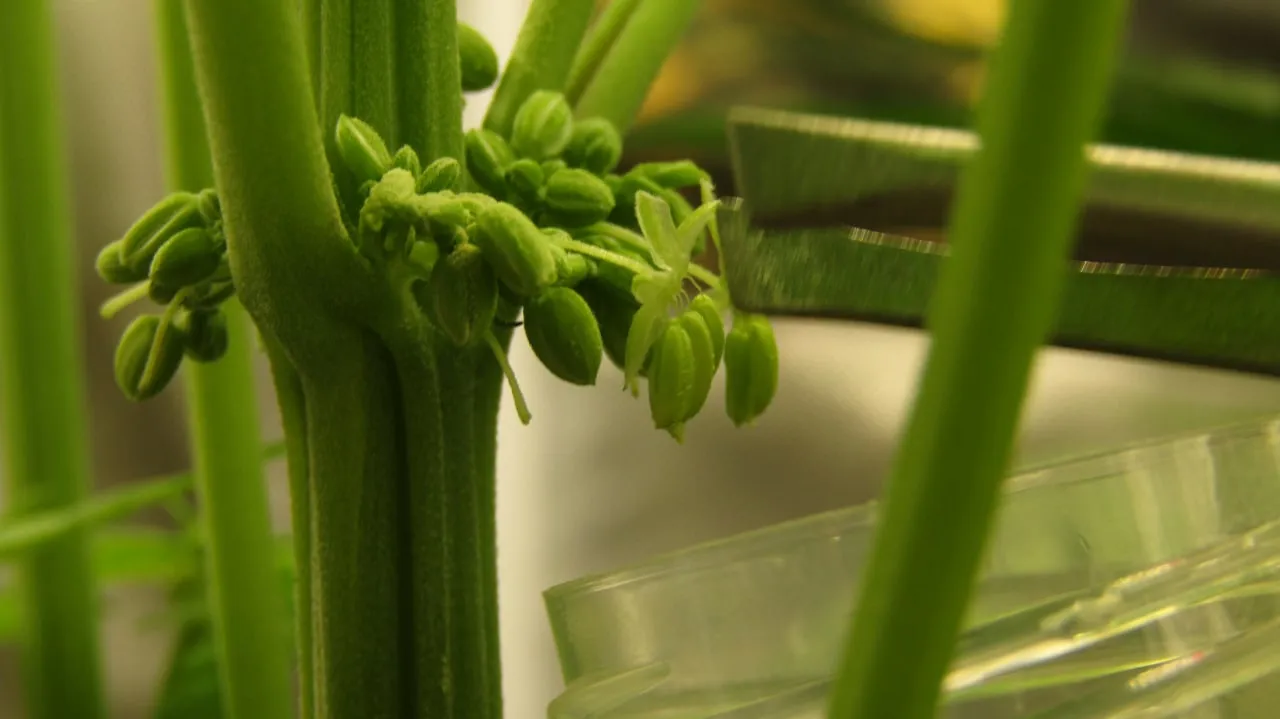
Boyzzz refers to 4 male plants. I collected pollen from the open anthers of all the males into a container and brushed it onto the females. The pollen, without plant material, went into the freezer for storage, and the males were discarded. This is my first experience storing pollen. According to experienced growers, it can be kept this way for up to a year and a half.
After pollination I messed up, to put it mildly. On the morning of June 15 I found signs of root burn on LR#5’s leaves. By June 19 the yellowed tops were turning green again, and the leaf problems were not progressing. The cost of the mistake - minus 1 week of healthy growth plus recovery time.
June 20 - July 3. Observations after pollination
During the week I took the plant out of its pot to assess the damage. The situation is not fatal, but it is quite dismal. The roots have a cream tint and look unhealthy, but there is no bad smell or slime, and the plant itself is not wilting. The leaves are slow to regain their green color. The flower calyxes look healthy and have a healthy color.
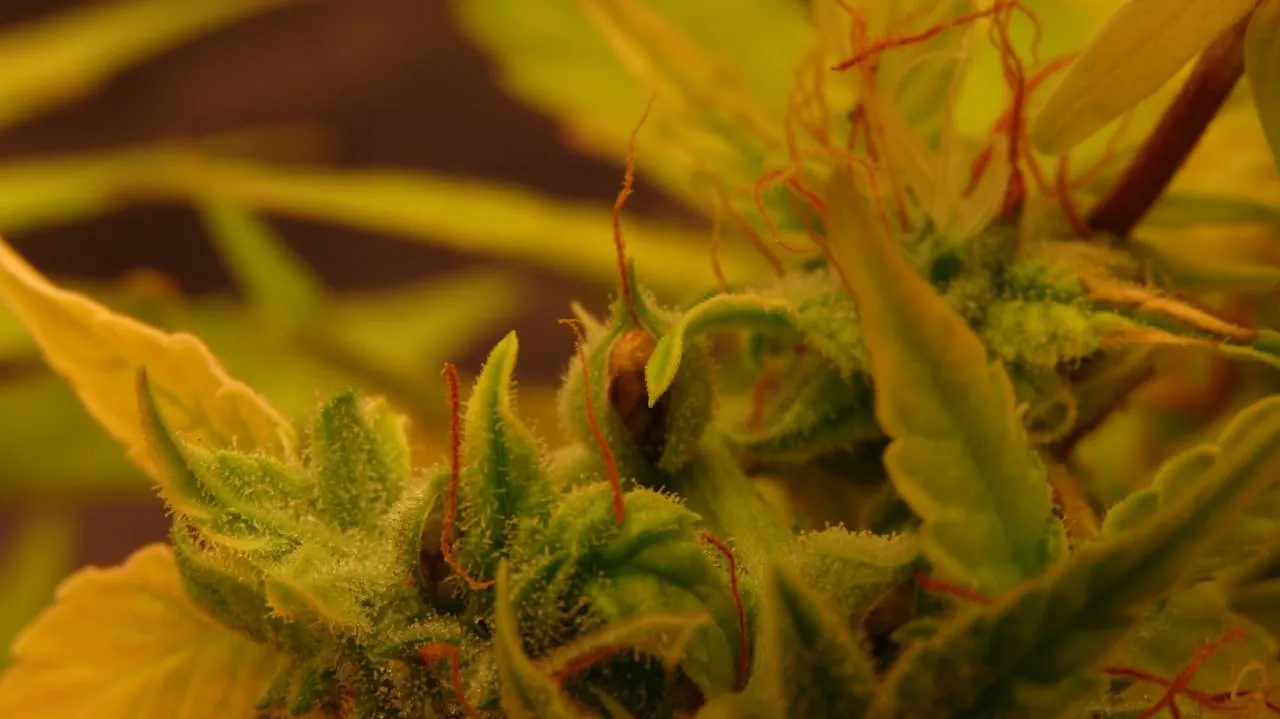
Despite all the problems, LR#5 has an enormous will to live. She forms compact, dense flowers with a citrus aroma and hints of lemon and pineapple. The future offspring are visible inside.
July 6–11. Seed collection and LR#5 harvest
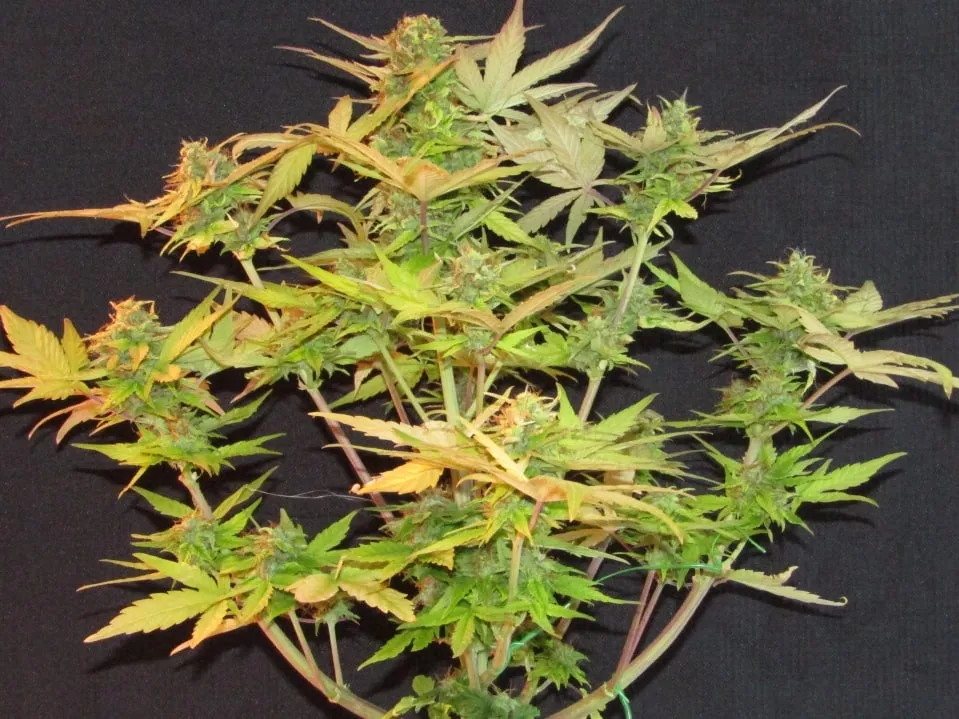
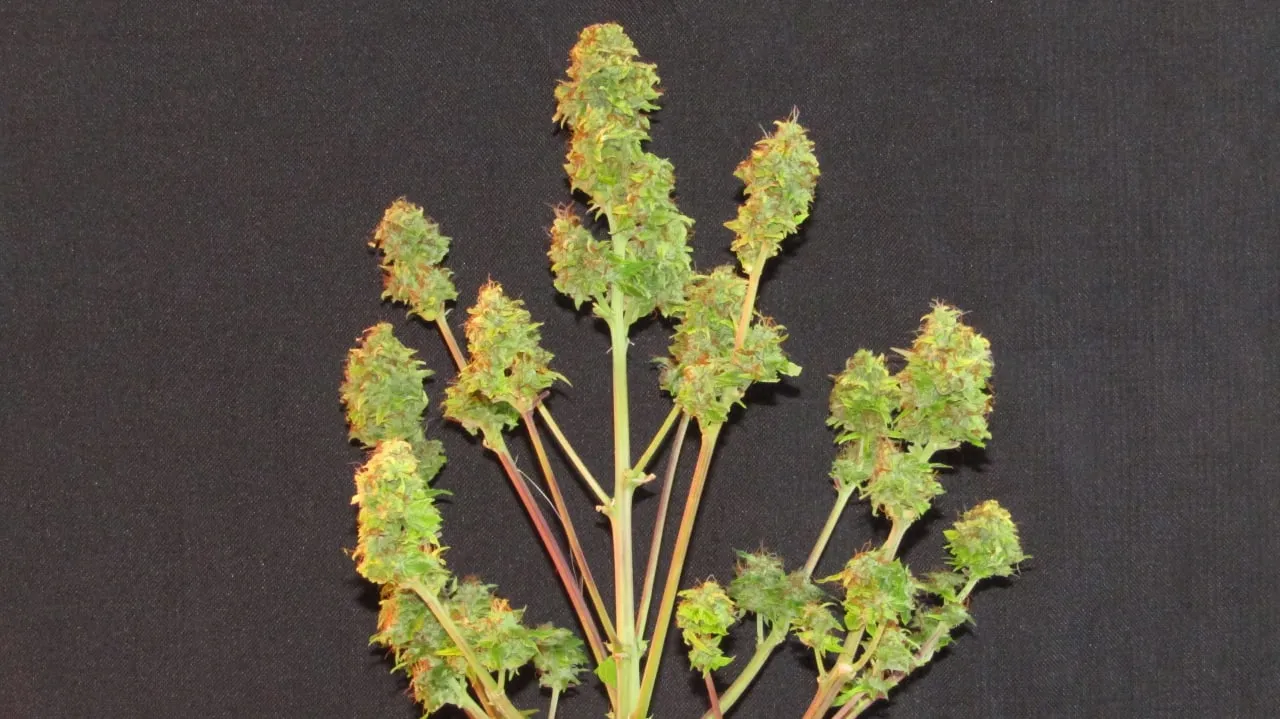
On July 6, I noticed seeds falling from LR#5 during inspection and collected them. Specimen #5 was pollinated by 4 males for reproduction within the strain and greater phenotype diversity. Despite all the difficulties, the plant showed resilience and a will to live. The burns after pollination left the plant in poorer overall condition and reduced the harvest, since she could not show her full potential. And judging by the wonderful aroma and the ability to form heavy flowers, Lowryder has plenty of it. From start to finish, she matches the parameters and characteristics described by the Doctor’s Choice seedbank. She is compact, with a short life cycle and an exotic bittersweet aroma.
Vegetative phase: 22 days. Flowering: 36 days. Pollination to seeds: 25 days. Height: 35 cm. Sex: female, with no signs of hermaphroditism.
At harvest, the aroma is sweet and fruity, reminiscent of a tropical mango and passion-fruit mix or mixed-fruit juice, with tart earthy notes. The plant is stocky and branchy, with medium-to-short internodes and substantial branches bearing closely spaced flowers. The leaves are large and spreading; their leaflet shape resembles an indica-dominant hybrid. They are deep green, slightly dark.
Emergence: May 14. Sex shown: June 2. Flowering: June 4. Pollination: June 15. Harvest: July 11.
July 11–19. Seed collection and selection
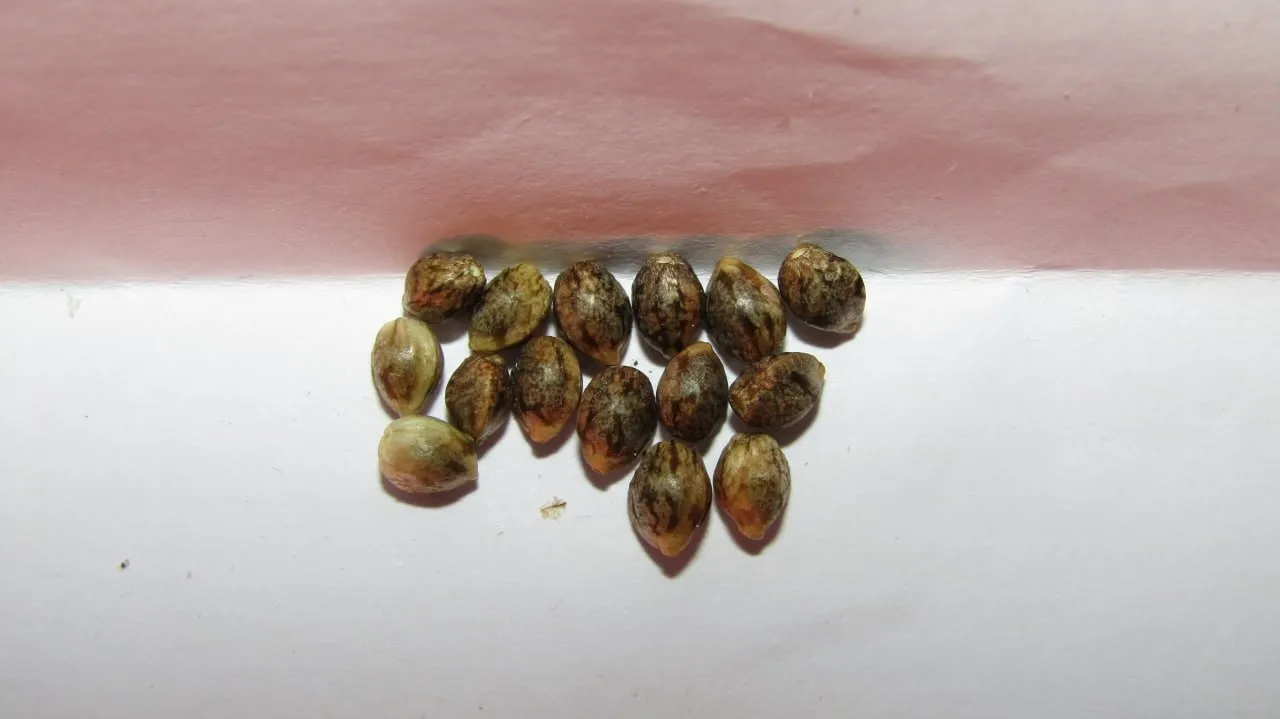
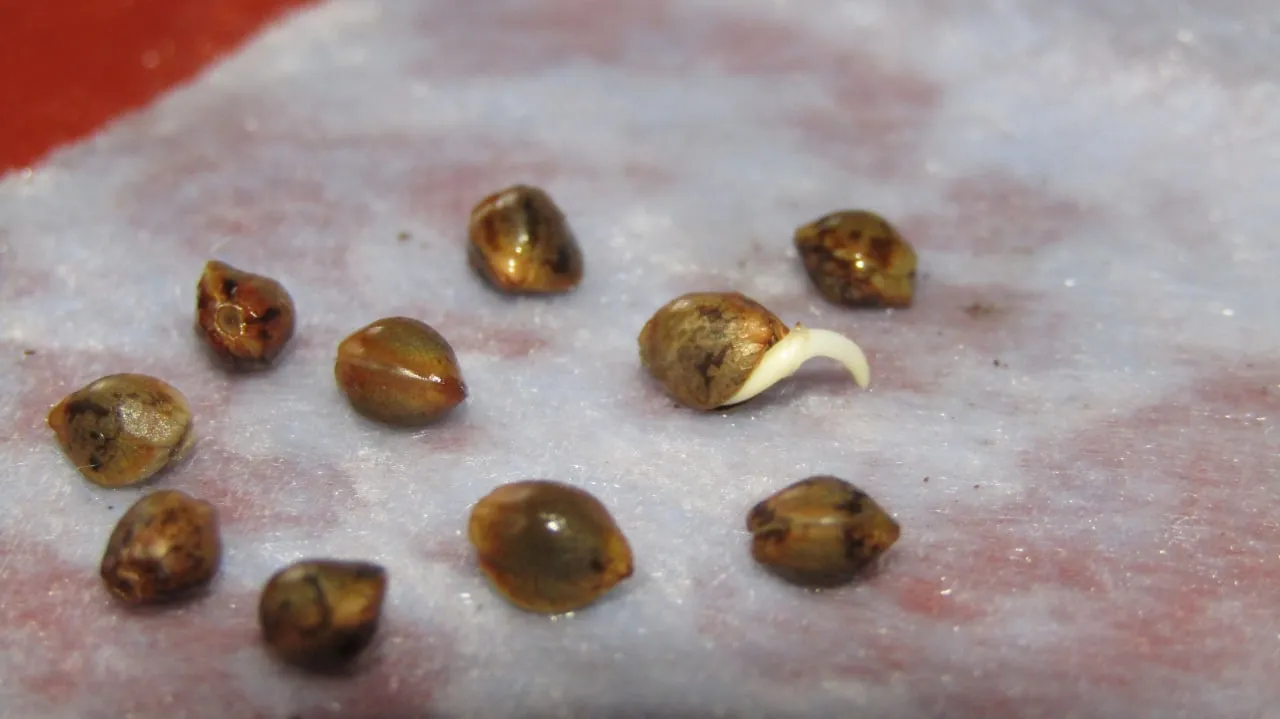
In 3 days the buds had dried enough to make collecting the seeds comfortable. Since I had pollinated every flower on LR#5, most of the calyxes were filled with firm seeds, richly dark in color and clearly patterned. I picked out mature seeds of the right shape and color and tested them by squeezing between my fingers: ready, viable seeds hold up under pressure, while empty and unripe ones burst. The seeds that passed this first test went into a sealed container and into the fridge for 1.5-2 weeks before the germination test.
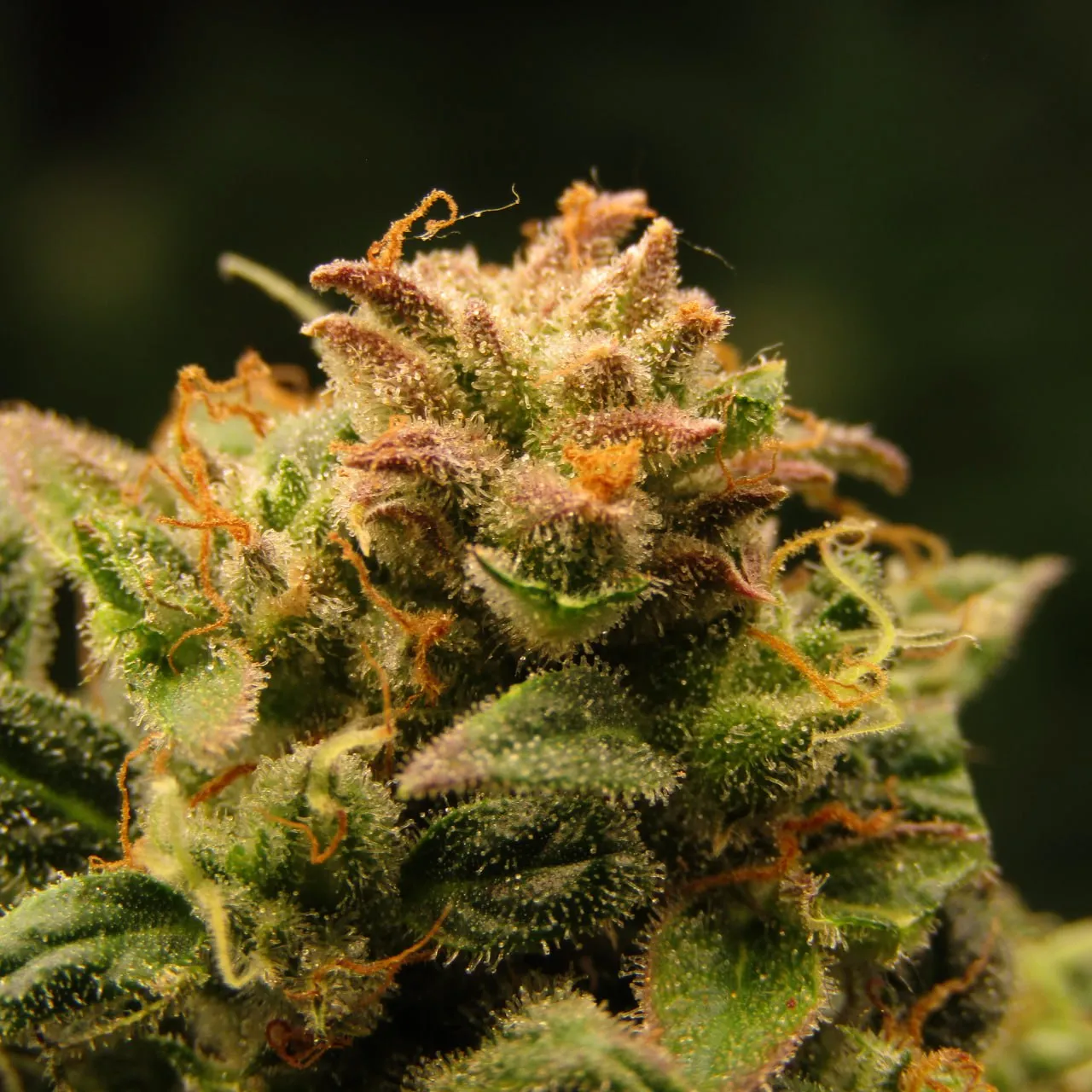
On July 19, the bud is evenly covered with trichomes: most are cloudy, a small share has turned amber, and the fewest remain clear. It gives off a sweet fruity aroma with notes of spice, passion fruit, and melon.
August 6–13. Germination test
On August 6, 1 seed sprouted; the other 9 had not opened. On August 9, germination was 10/10. On August 12, 7 of the 10 rooted seeds reached the seedling stage. The other 3 had not come up yet for one simple reason: I dropped the pot. Update: on August 13, 10/10 had sprouted. I consider my Lowryder germination test successfully completed.
I am glad the experiment worked despite the difficulties along the way. I can now use Lowryder genetics to create new hybrids. Thank you to everyone who followed the cycle. Special thanks to Doctor’s Choice for the genetic material and feedback when questions or difficulties arose.
August 29. Sex of the test plants
The test Lowryders began showing their sex, with male signs appearing first. I pulled 2 of the 10 plants and discarded them.
October 2022 - January 2023. Lowryders from my own seeds
On October 8, I sowed another 10 Lowryder autoreg seeds. I will remove the males along the way.
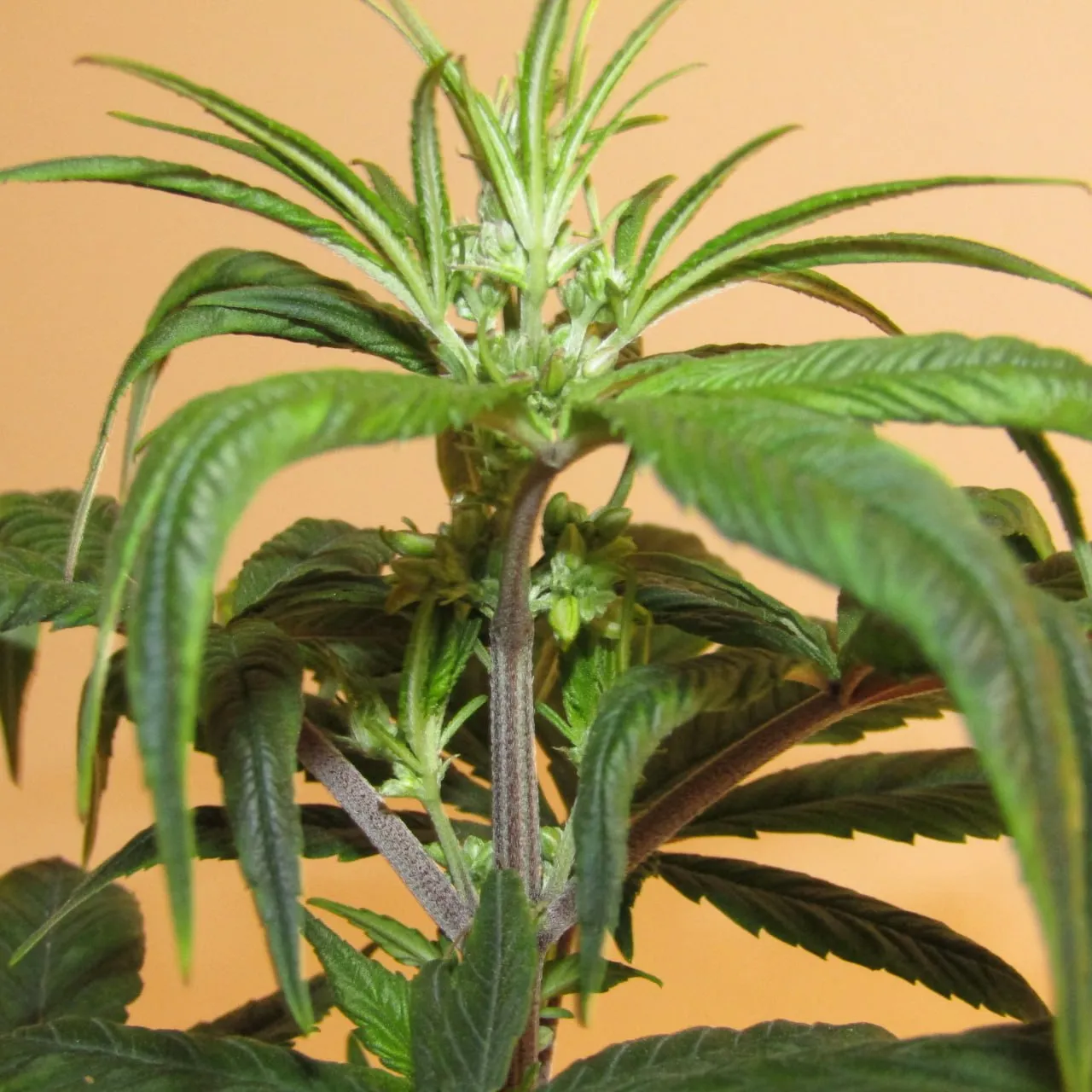
December 20: Lowryders from the seeds I got in this report. December 27: Lowryder is aromatic and sugary, harvest soon.
On January 9, one of the SWAG plants was flowering on its own. I talked to the breeder I got the seeds from, and it turned out to be a Swag Ed Rosenthal auto × ABC hybrid. I realized what an opportunity this was and immediately started germinating Lowryders to make an autoflowering cross. When the males start shedding pollen, I will keep it in the freezer until needed.
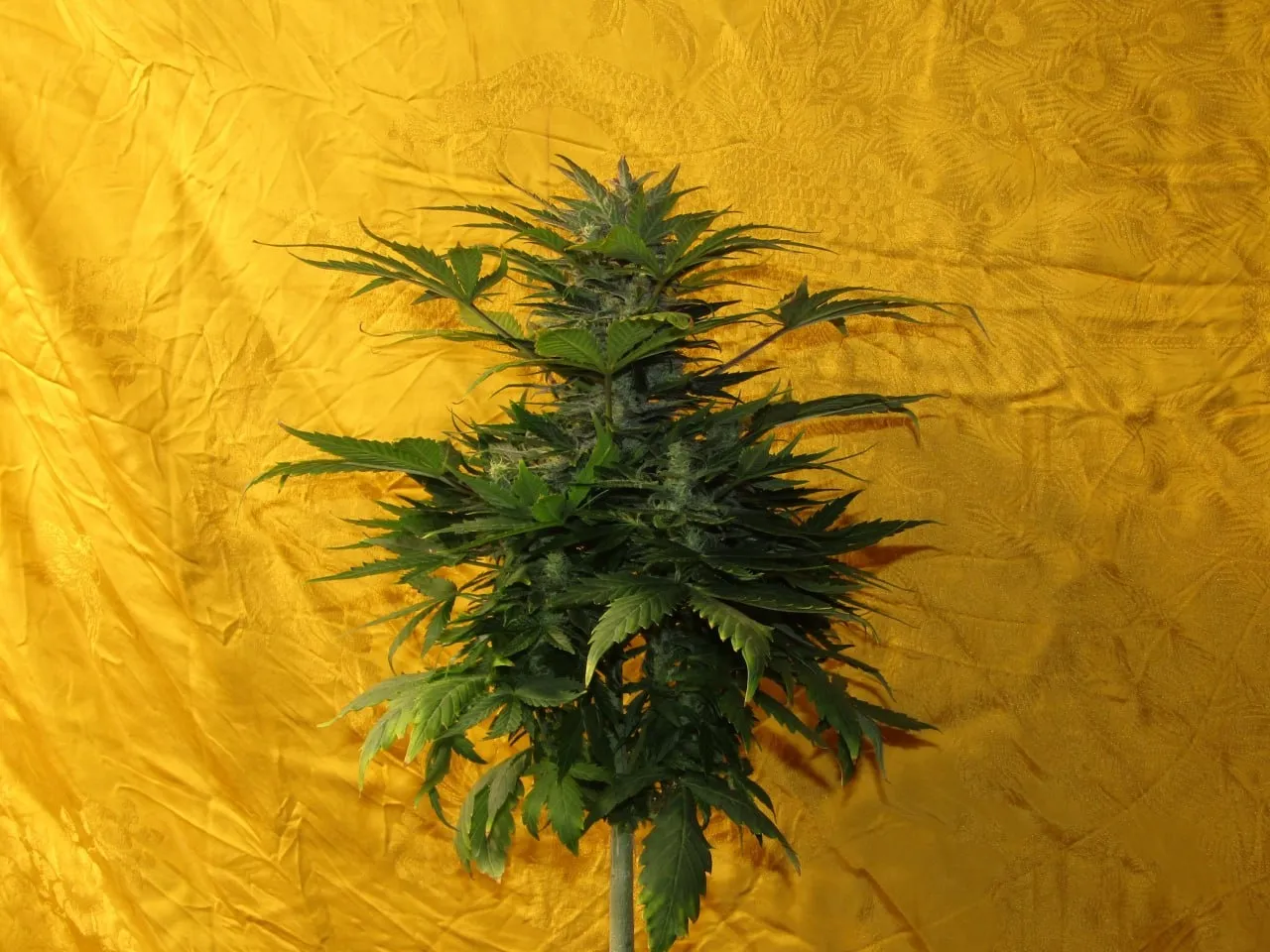
Result of the cycle, January 21: one Lowryder was cut for New Year, one for Christmas. The aroma is like the mother’s, reminiscent of a sweet fruity tropical mix.
July - September 2023. The second round
On July 14, Lowryder regular IBL from Doctor’s Choice went back to work for the next round. We use its genetics to get autoflowering crosses:
- ABC Cra.Cro (Jayma Mutant Research) × Lowryder.
- SWAG Berry (KalySeeds) × Lowryder.
- AD17 Berry (KalySeeds) × Lowryder.
- Freakshow (7East Genetics) × Lowryder.
- Drunken Bastard F4, my selection from DB F3 by 7East Genetics, × Lowryder.
On August 5, I put Lowryder to work to pollinate the mutants, and as a backup, and maybe for a cross with Lowryder, I added Siberian Ruderalis.
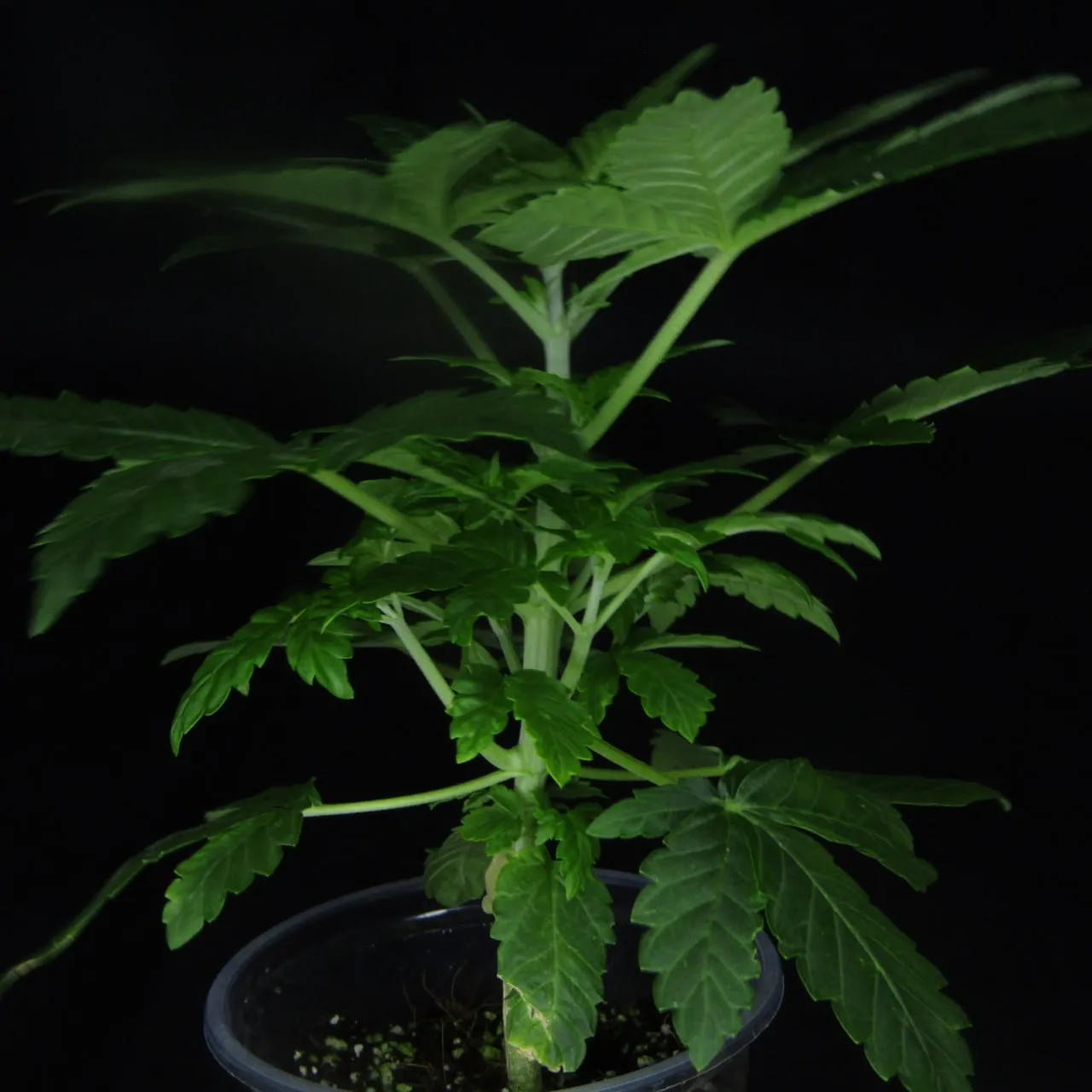
August 26, regular Lowryders: all 5 seeds sprouted, 1 seed rotted, and one produced a crooked plant. The other 3 plants are growing great and look identical.
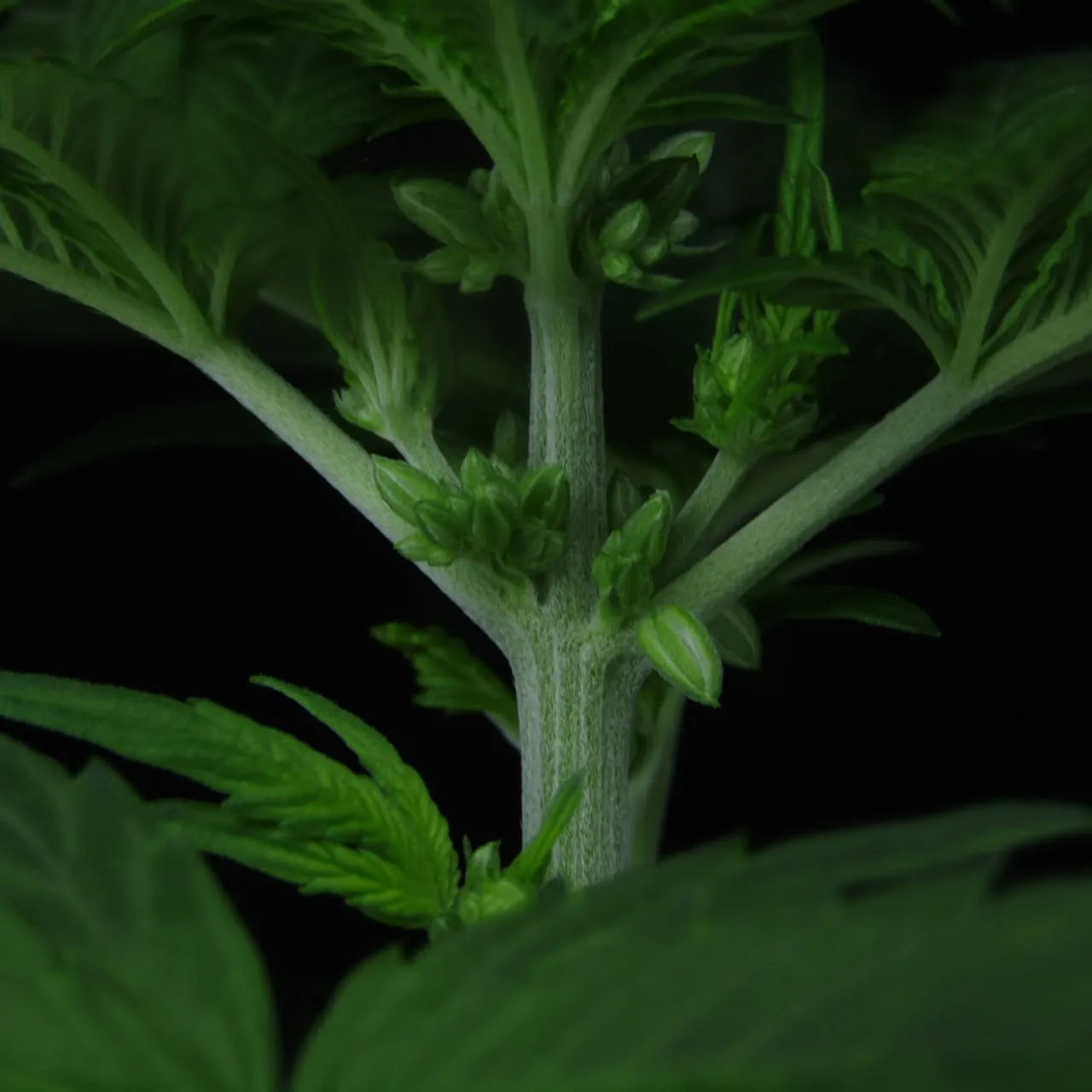
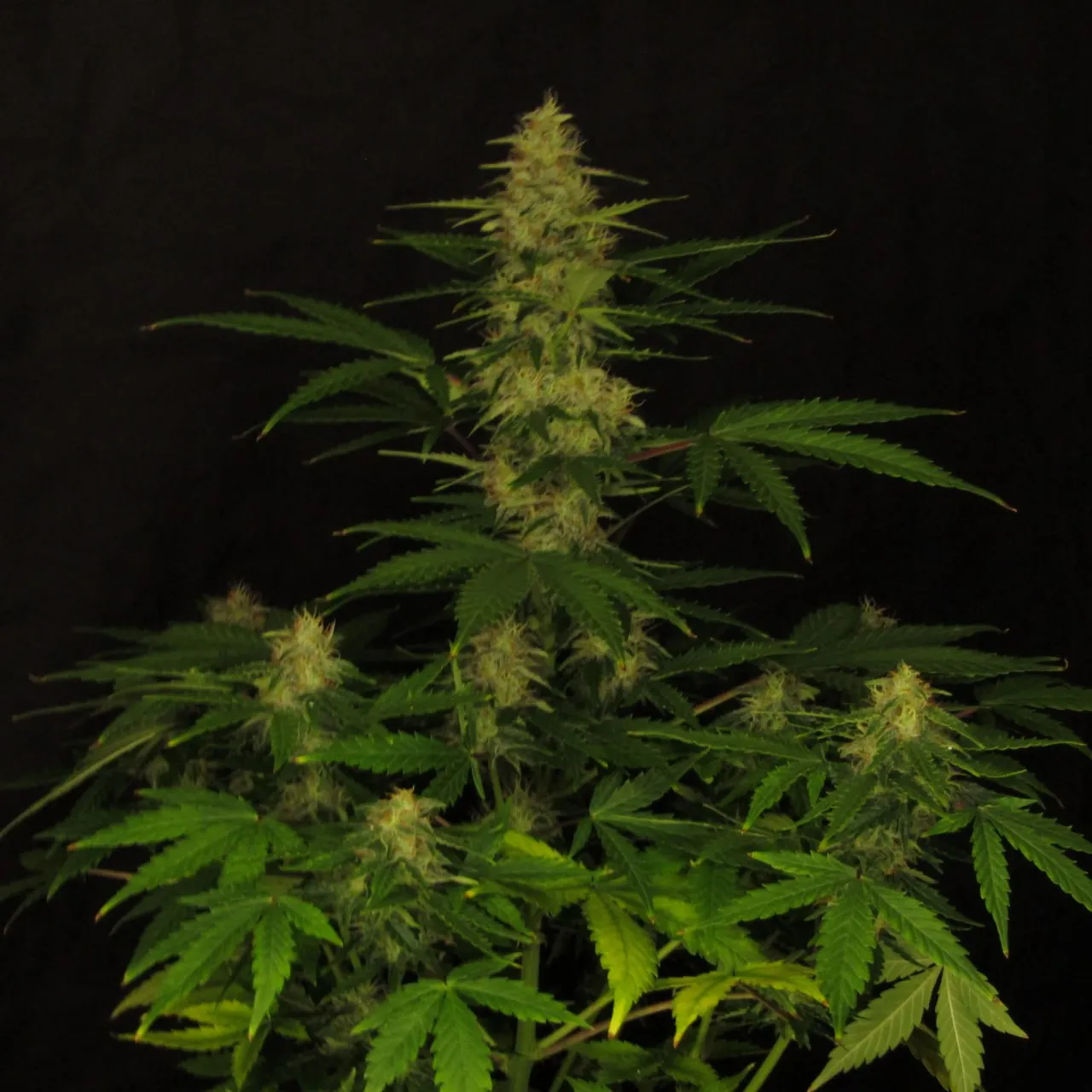
September 2: the regular Lowryder gave two good ladies and one strong male. The male is a nice short plant densely covered with anthers. They are about to open, and I am getting ready to collect. The girls are identical to him, sturdy and branchy.
September 15: Lowryder IBL is one more father ready for duty. This weekend I will collect his pollen and discard the plant.
Over the last 1.5 weeks I ran every possible pollination round with Lowryder and Drunken Bastard × Lowryder; on September 23 I finished a couple more and discarded the males. With Lowryder, this round should give us:
- (Drunken Bastard × Lowryder The second generation of a cross, descended from F1 plants. Traits can separate into different combinations in this generation. F2 ↗#3) × Lowryder.
- Lowryder × (Drunken Bastard × Lowryder F2#3).
- AD17 Berry × Lowryder.
- SWAG Berry × Lowryder.
- Siberian Ruderalis × Lowryder.
October 2023. SWAG Berry × Lowryder
Every grower should, at some point in life, read an article about Lowryder, watch an interview about Lowryder, and grow Lowryder. Looks like I hit bingo, having also made a cross with Lowryder.
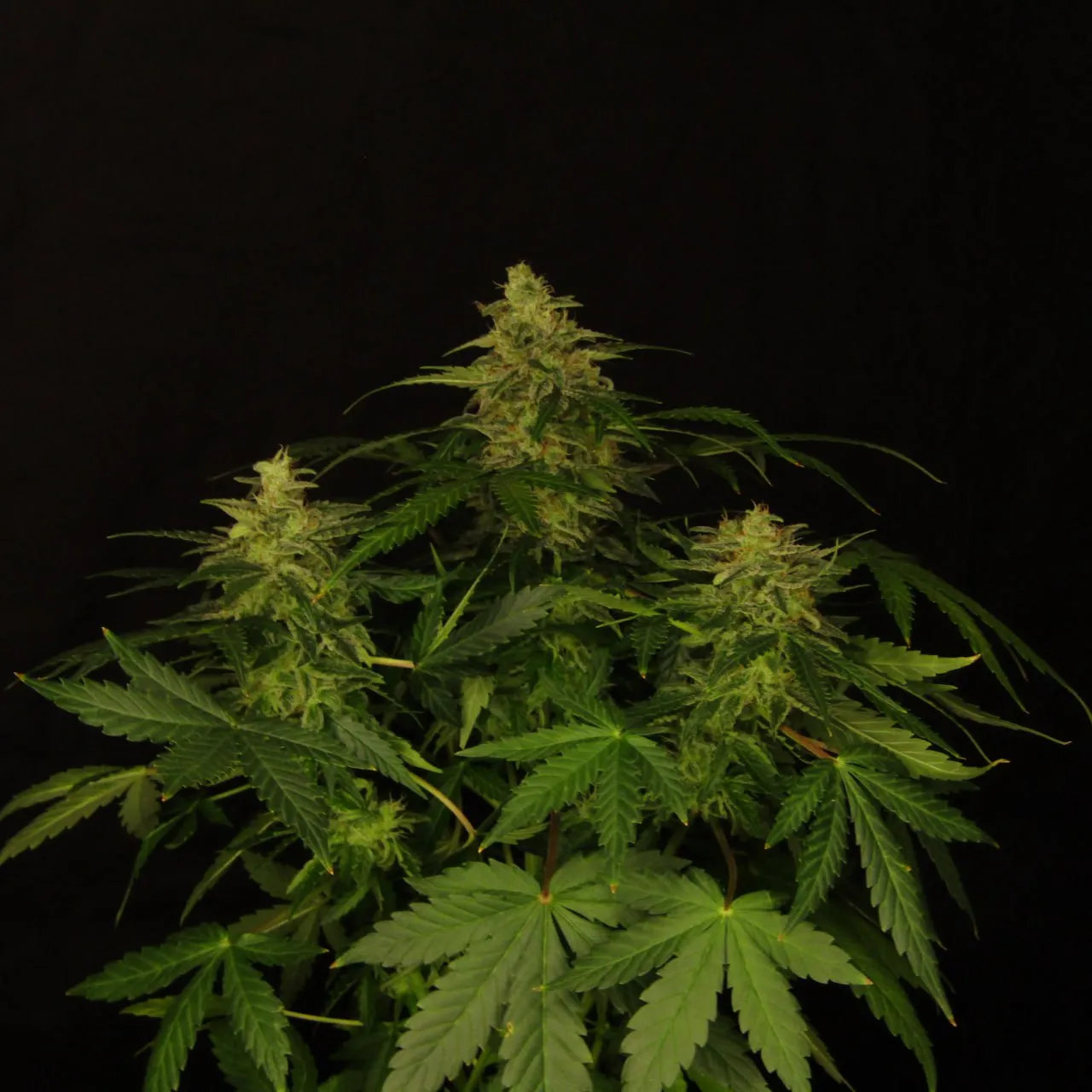
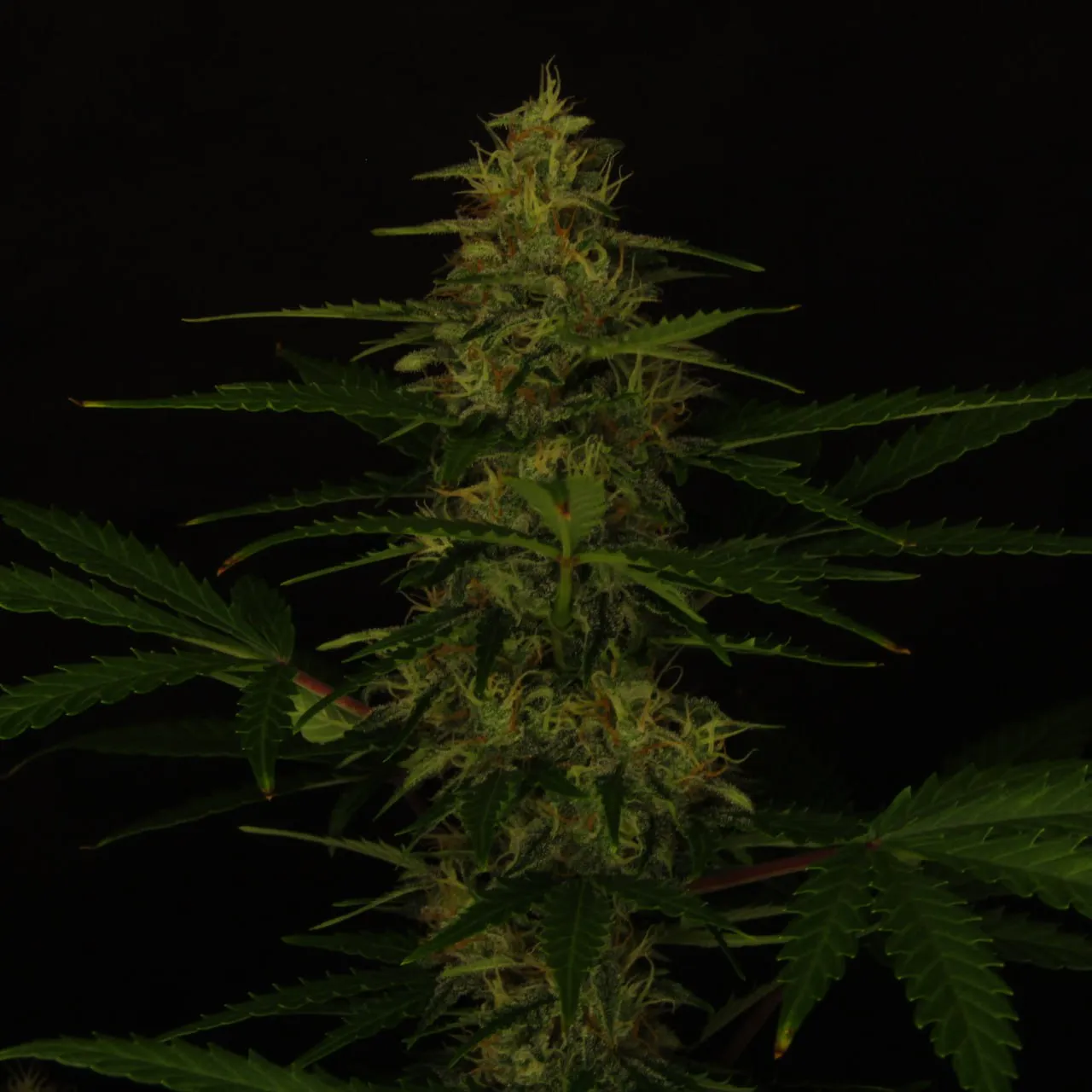
October 19: SWAG Berry Violetta pollinated by Lowryder. The mother carries flowers with a purple stem and the same shade on the buds at room temperature. I think that if she is cooled, she will show dense purple across the whole plant. She gives off a blueberry bubblegum aroma. During the cycle I noticed slight variegation on a couple of leaves, and today during inspection I found a pinkish-white albino calyx and a bright mottled leaf on the same bud. From Lowryder, the offspring will take on autoflowering.
So there will be a bingo of A trait that can be inherited without being expressed in a cross. Autoflowering is an example in the Lowryder story. recessive ↗ traits: autoflowering, variegation, purple and pink buds, and a blueberry bubblegum aroma. This means that in F2 it will be possible to dig up plenty of combinations in search of great phenotypes.
September - December 2024. The third round
September 29: during inspection I found hermaphrodites, among them one Lowryder male. It was discarded.
November 5: I put Lowryder from Doctor’s Choice to soak. I will pollinate the KalySeeds strains I selected over these 2 months with Siberian Ruderalis and Lowryder.
December 8: the autos are about 3 weeks old, and sexual maturation has begun. The Lowryders have shown their sex; I kept two male plants for a A backcross: crossing a descendant with one of its parents to preserve or reinforce that parent's traits. backcross ↗ with Freakshow.
Sources
- DZAGI (forum login required)
- ICMag
- mutantfarmer on Telegram