
Freaky Ryder F1: the first cross
Nine plants from the first Freakshow × Lowryder cross: selecting FR#2 and FR#6, pollination, F2 seed harvest and a test cross with Bastard Ryder.
Sep 30, 2022 - Jun 24, 2023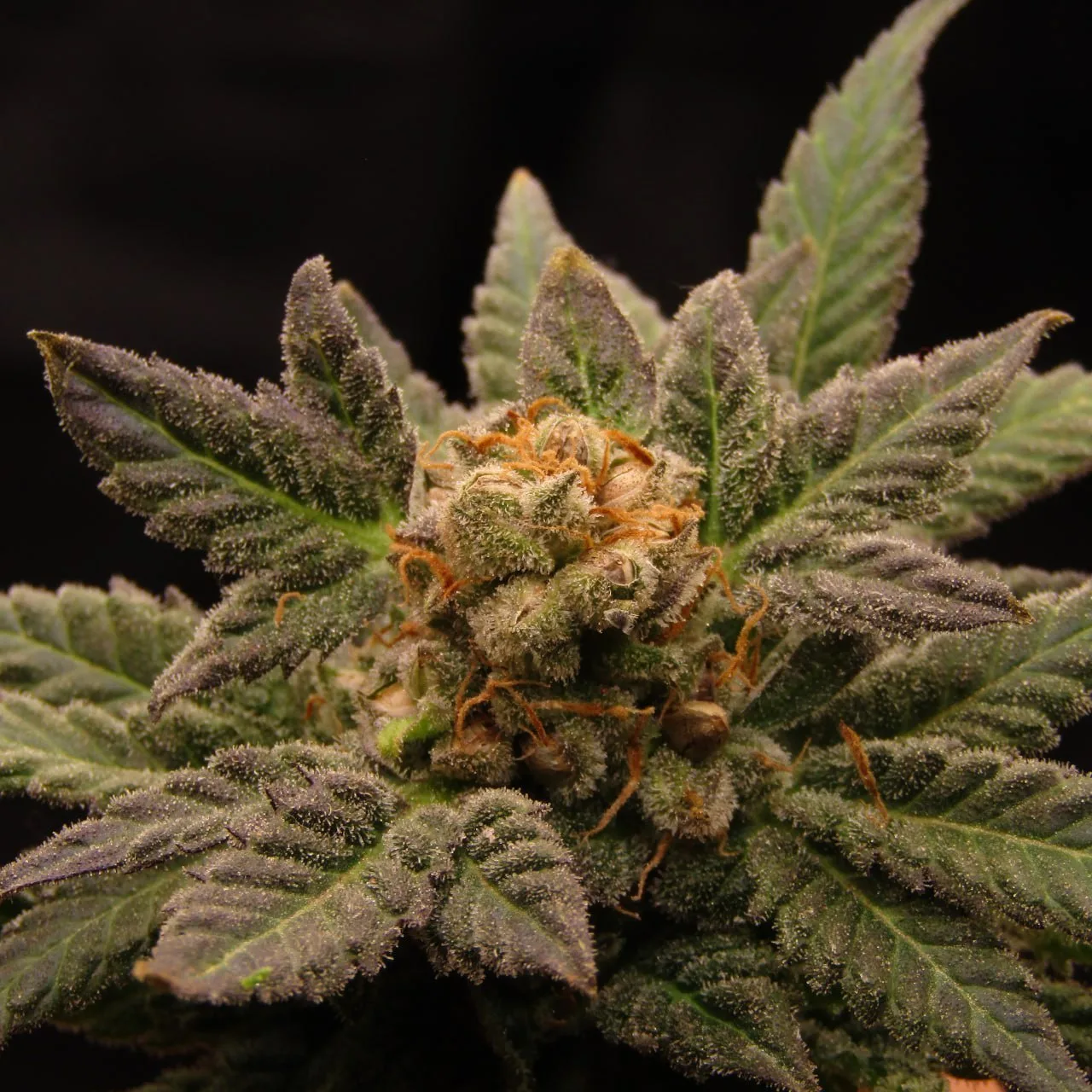
- Cross
- Freakshow IBL × Lowryder IBL
- Generation
- F1 → F2 seeds
- Years
- 2022-2023
- Seedlings
- 9 of 9
September 30 - October 7, 2022. The first cross
Hi, friends! The growerstuffer project is starting a new season. Since I have a few more strains this time, I decided to give them separate reports.
This report covers Freaky Ryder The first generation from a cross between two parents. F1 ↗ from Mutant Farm. I produced this hybrid by crossing Freakshow Inbred Line: a line selected over generations to reproduce particular traits consistently. IBL ↗ #8 (7East Genetics) × Lowryder IBL (Doctor’s Choice). It is part of my personal seed collection, which I started putting together in the second season.
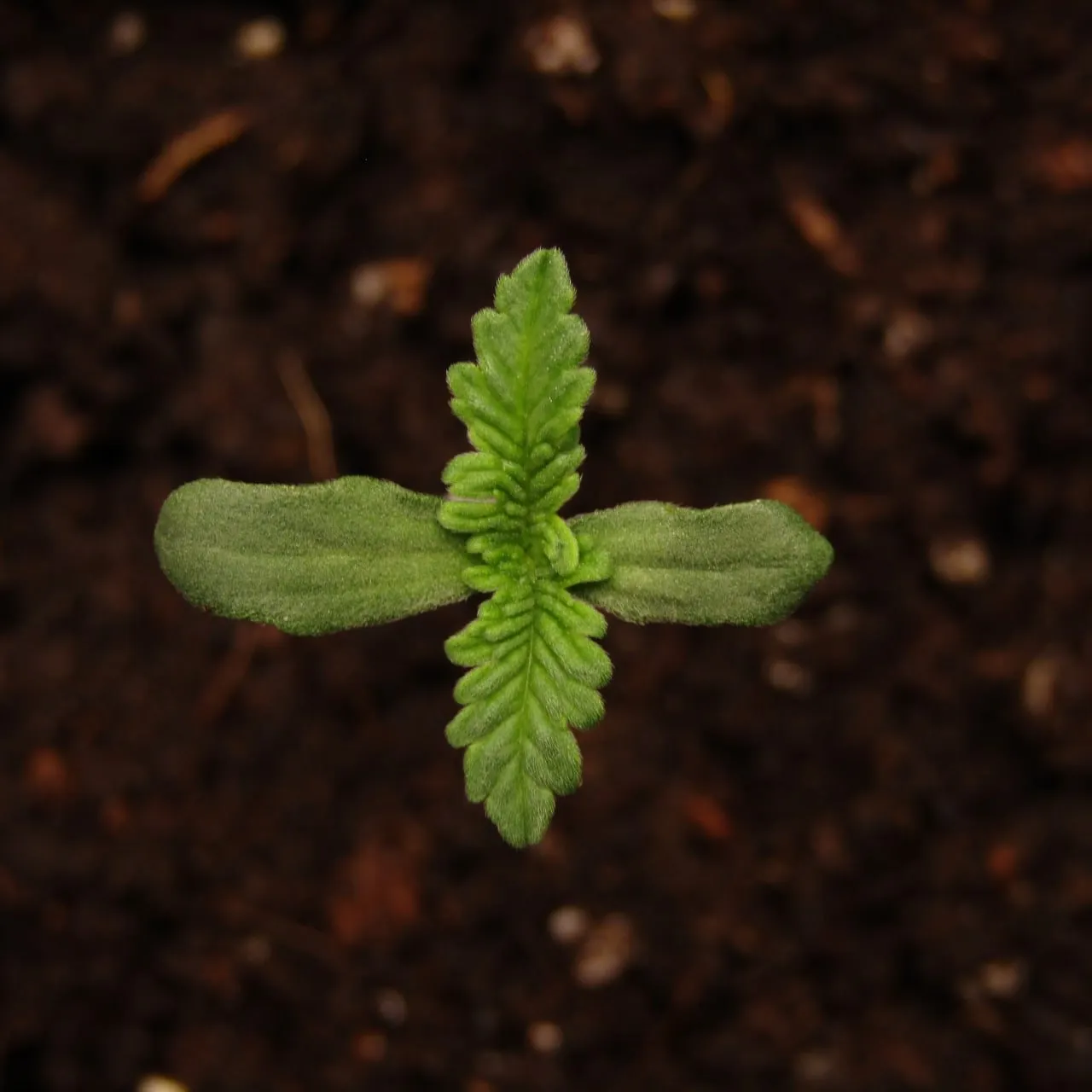
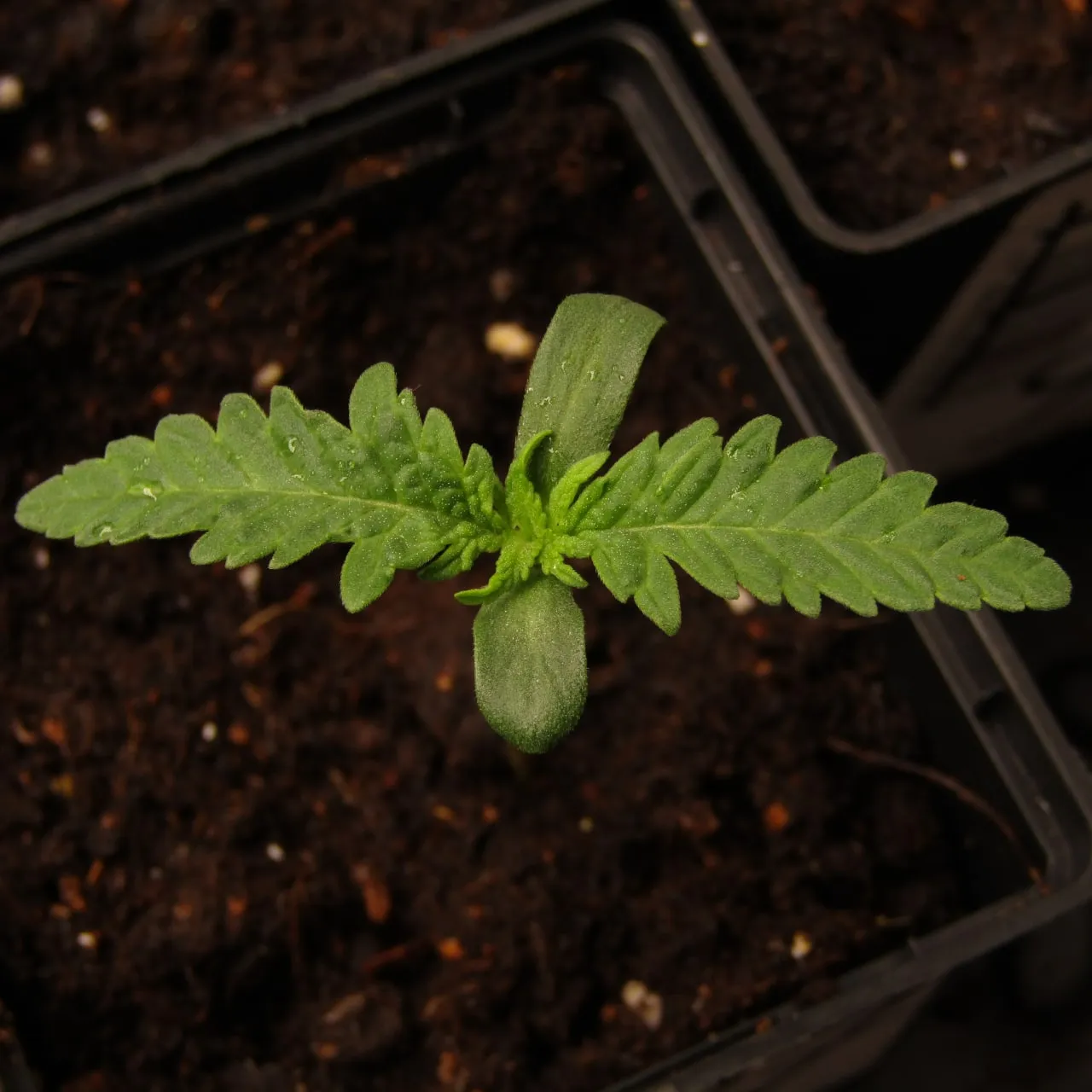
All 9 out of 9 germinated. The Freakshow genes are already making themselves known in the first generation.
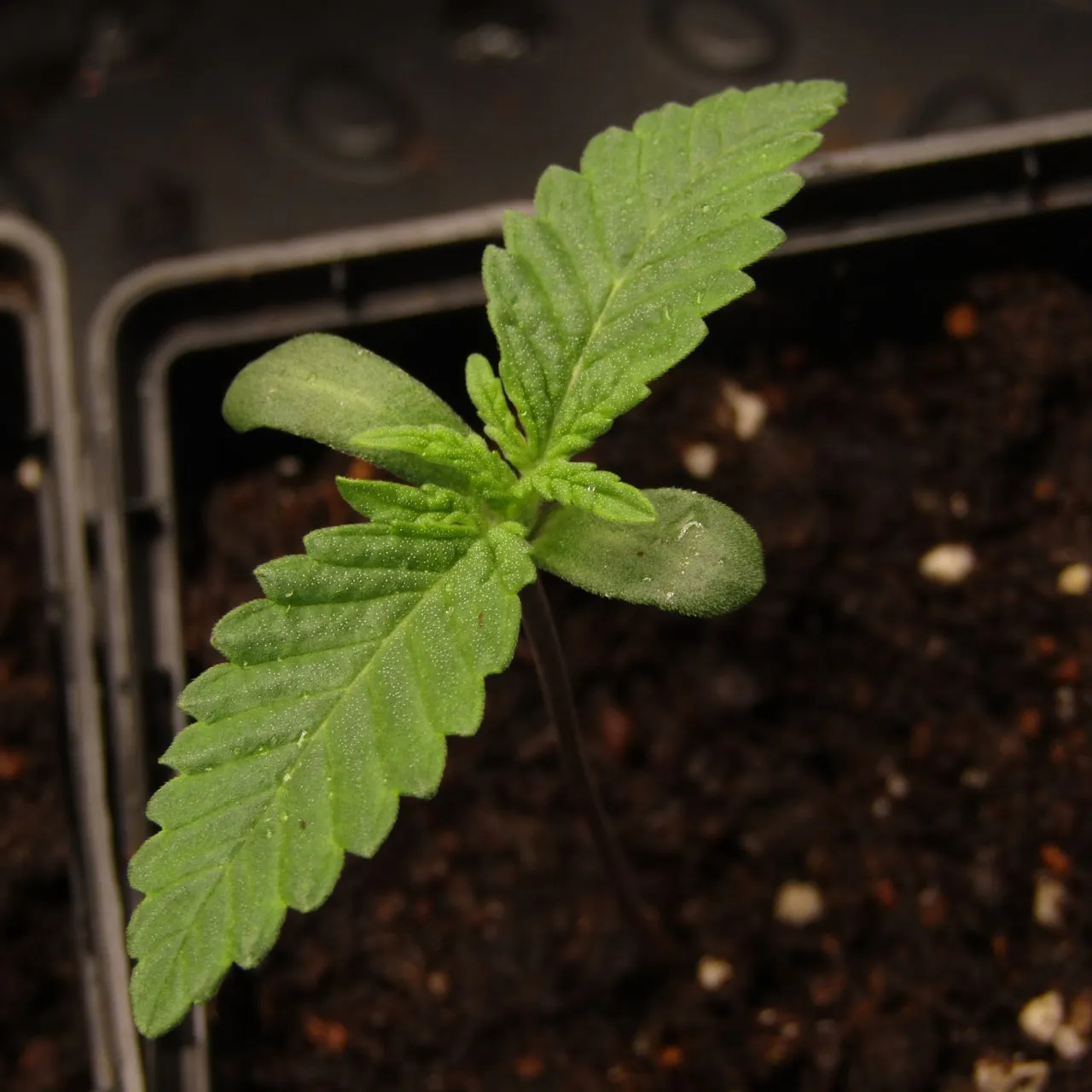
Week 1. Leaf shape
Most show a slight Freakshow leaf mutation, which makes me very happy because it makes my work easier. Leaf mutations are A trait that can be inherited without being expressed in a cross. Autoflowering is an example in the Lowryder story. recessive ↗, as is A plant that starts flowering independently of the length of the day. autoflowering ↗, so they usually begin to show in the second generation. I will describe the The observable traits of a plant, such as its height, leaf shape or colour. phenotypes ↗ after the plants show their sex. I am not eliminating any of them.
An interesting observation: compared with a strain without Freakshow morphology, Freaky Ryder has 2–3 leaflets on its first leaves instead of 1. At the second node, it has 5–6 instead of the usual 3. The comparison is between DC Kush and Freaky Ryder F1 #1.
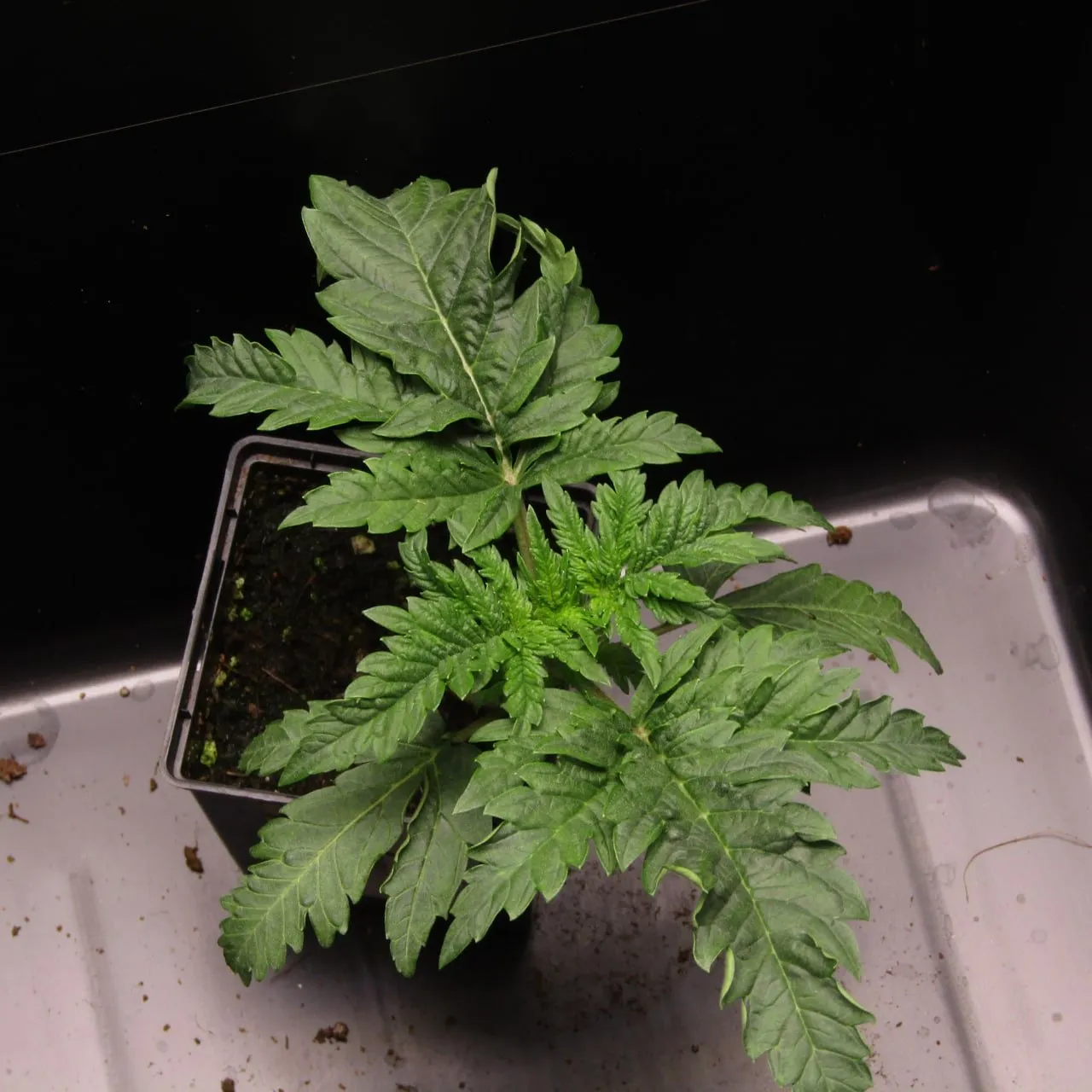
Weeks 2–3. Observations
The aphid attack I mentioned earlier did not cause significant damage or affect growth. The plants are growing vigorously.
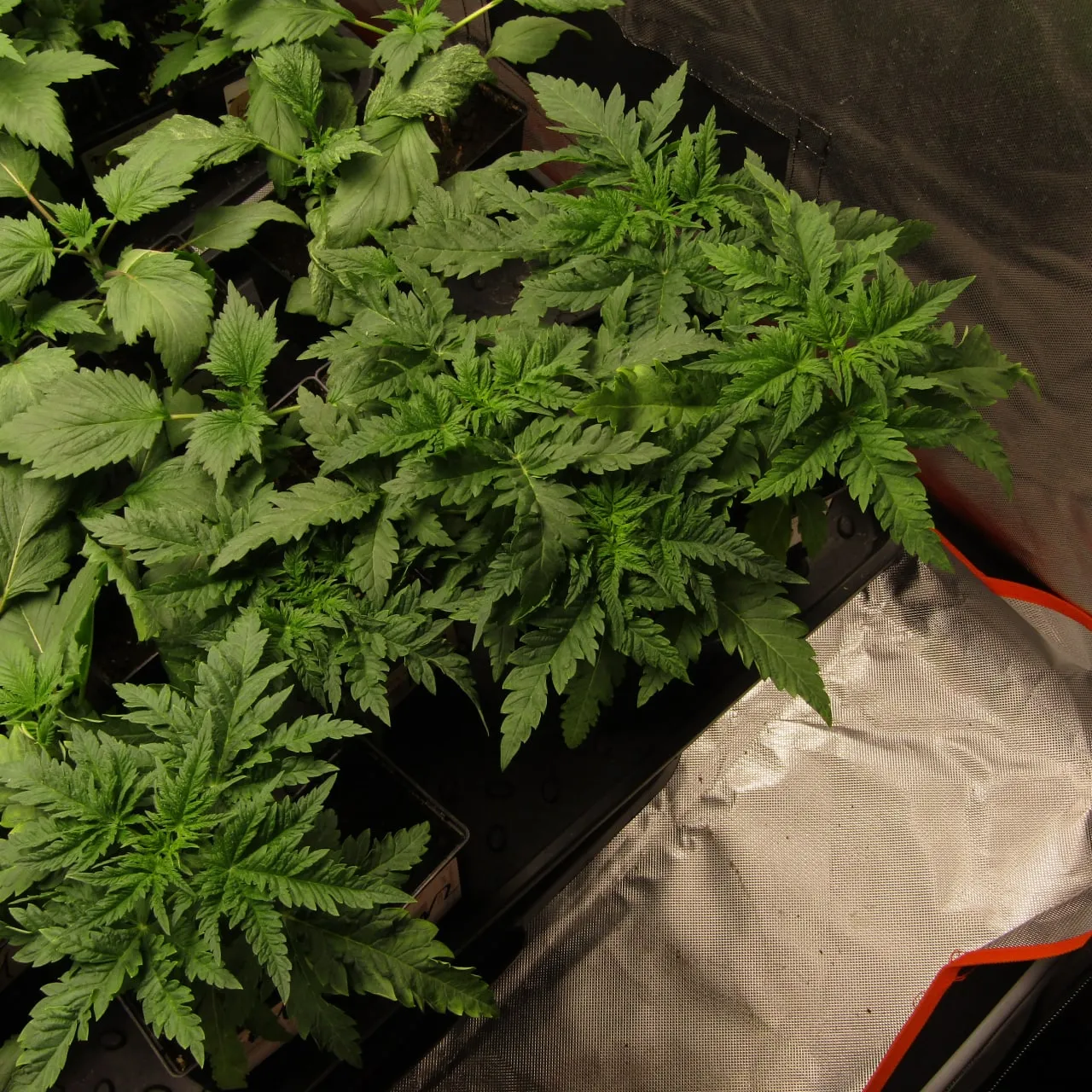
Week 4. Sex and preliminary selection
Several plants are already showing clear sex characteristics: anthers are forming. Most of the plants with the most altered leaf morphology are males. A couple are still unclear.
FR#2 was the first to show female sex characteristics, as well as the most vigorous growth despite the problems along the way. I provisionally chose her as my female candidate for breeding.
I think I will confirm breeder happyevil’s theory over the next week.
In his F1, 24 plants gave 9 males and 15 females: every male had cut, fluffy, multi-level leaves, every female had an ordinary, classic leaf.
FR#1 and FR#7 are both males and show the most pronounced changes in leaf structure in their generation. Soon I will send them off to produce pollen.
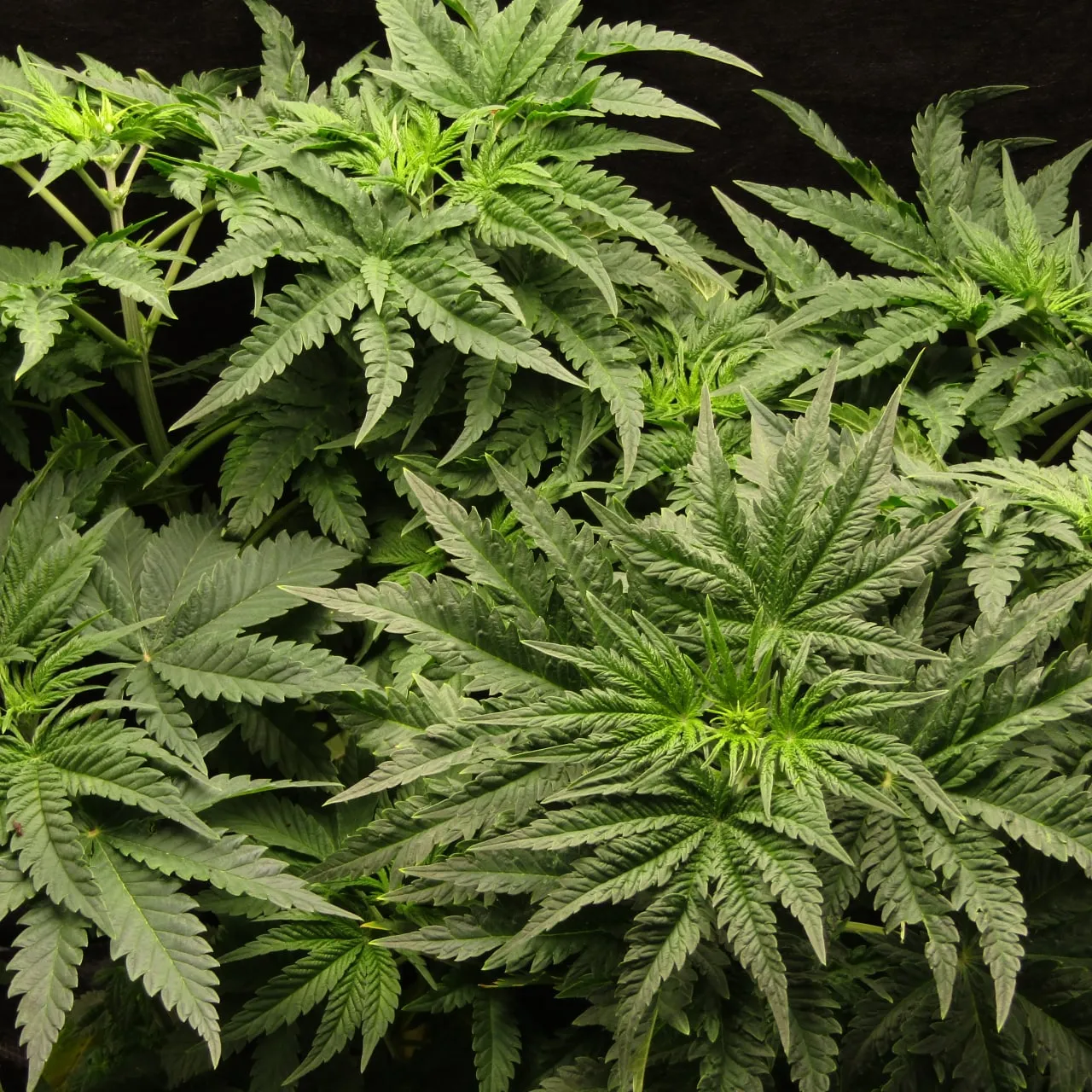
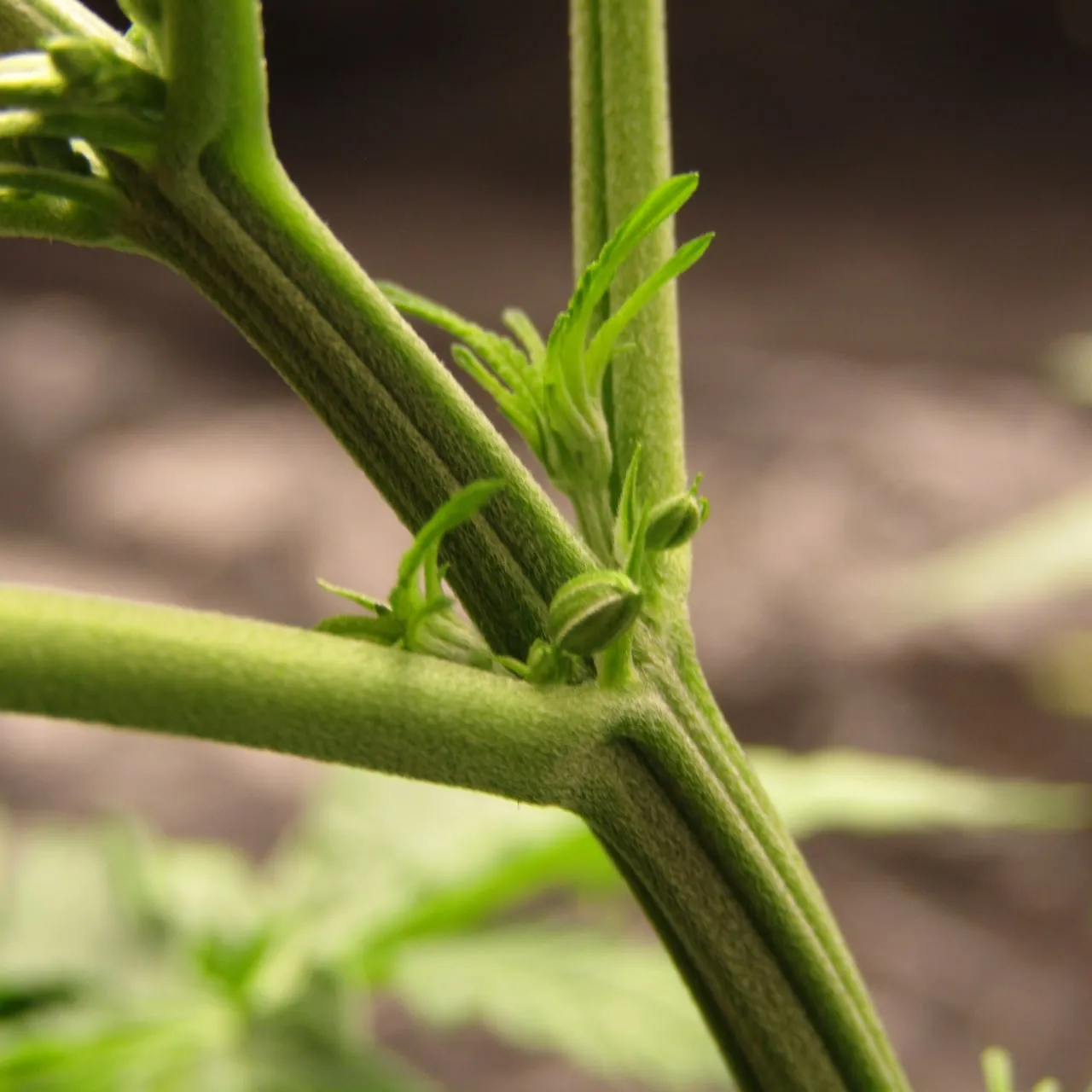
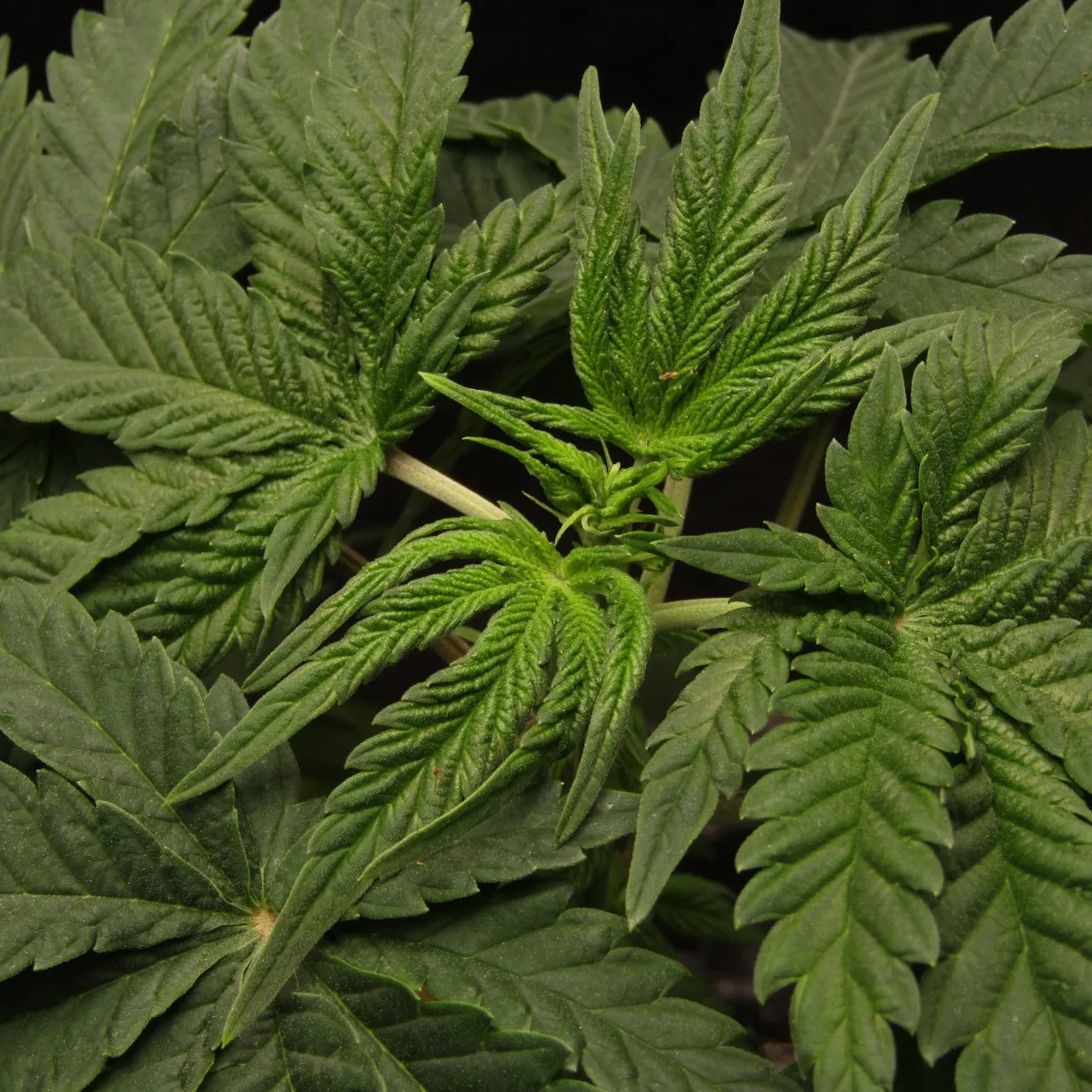
Week 5. Morphology
The FR#2 lady is slowly putting on mass. Her stem petioles are showing anthocyanin coloration. So far, the only FS trait in her leaf morphology is deeper serration along the leaf edges. Next, the males will be sent off to produce pollen. I will describe the phenotypes in time.
Almost all the male plants have pronounced changes in leaf structure.
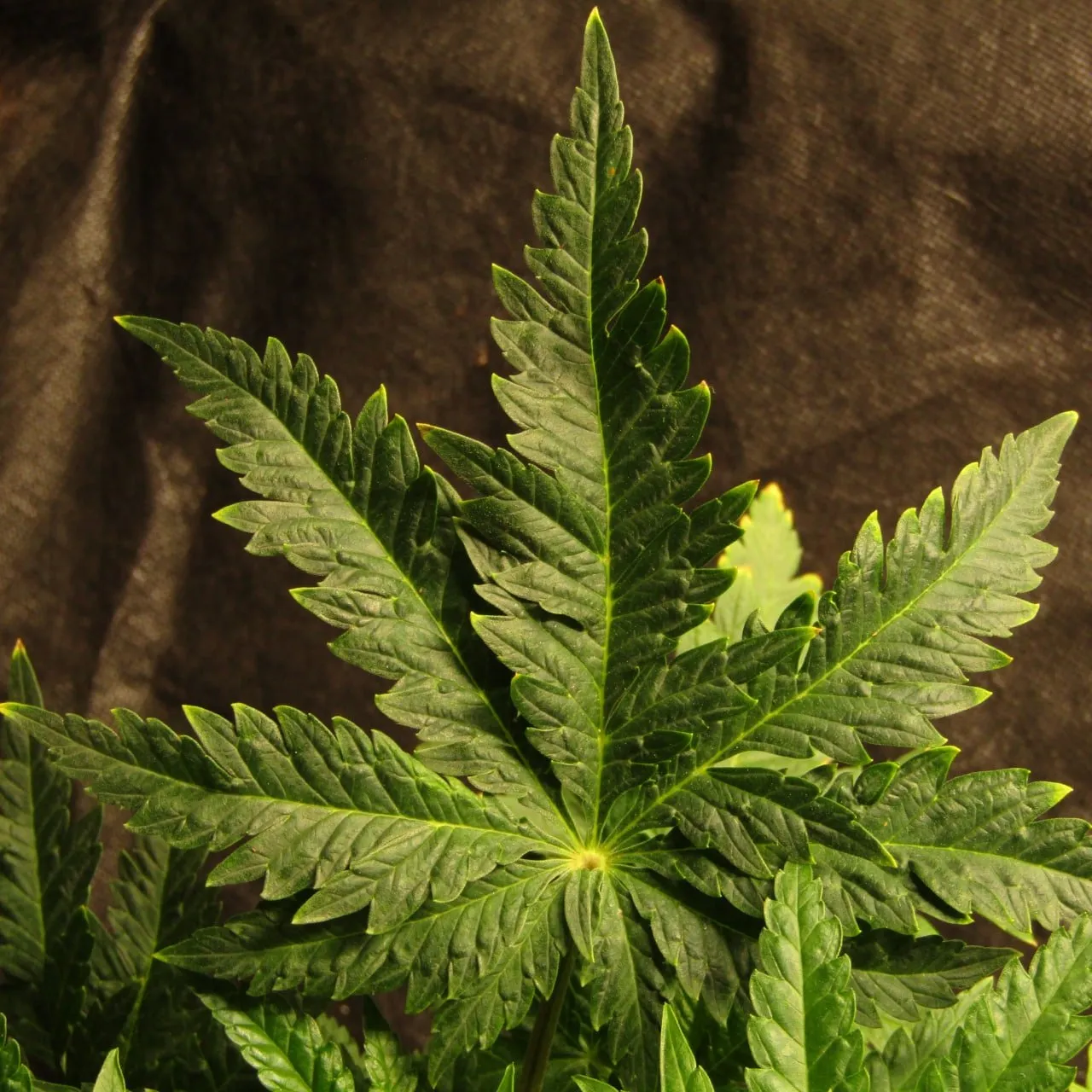
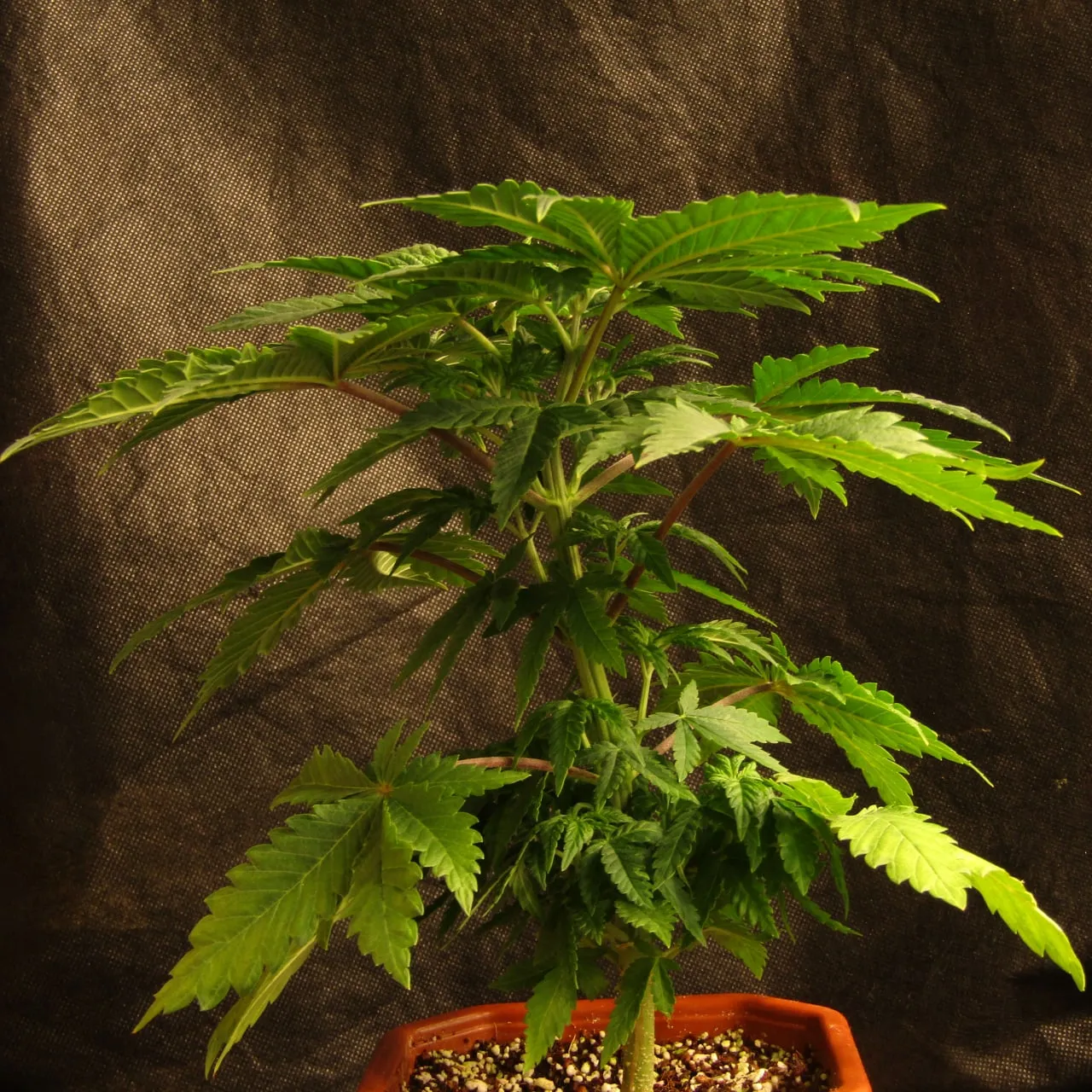
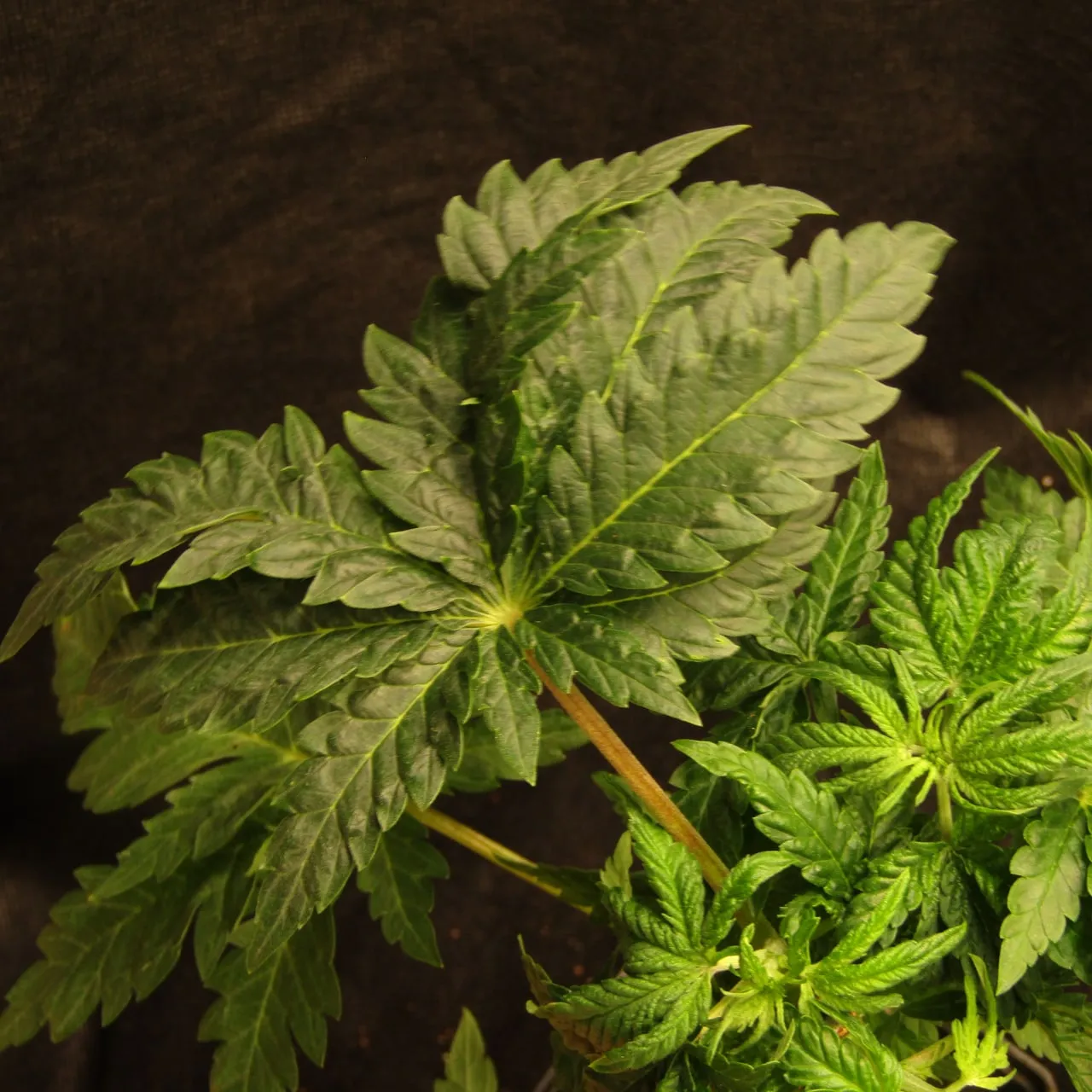
Weeks 6–8. Candidate FR#8
FR#2 has picked a male partner: FR#8. Among the males, he shows more Freakshow morphology, has a strong resinous stem, and matches the female in structure: short internodes and substantial branches.
During weeks 7–8, I did not intervene or take photographs.
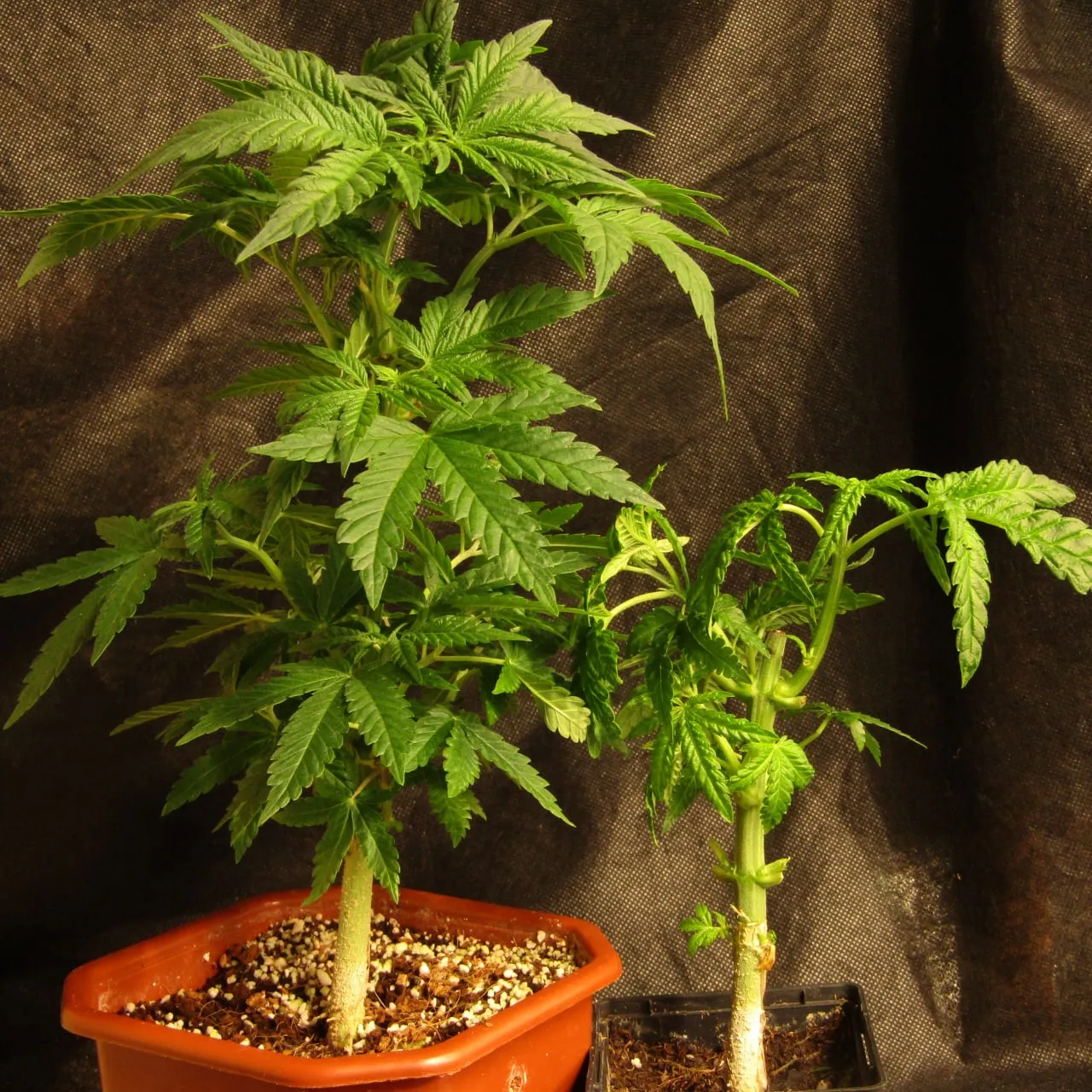
Weeks 9–10. Transition to flowering
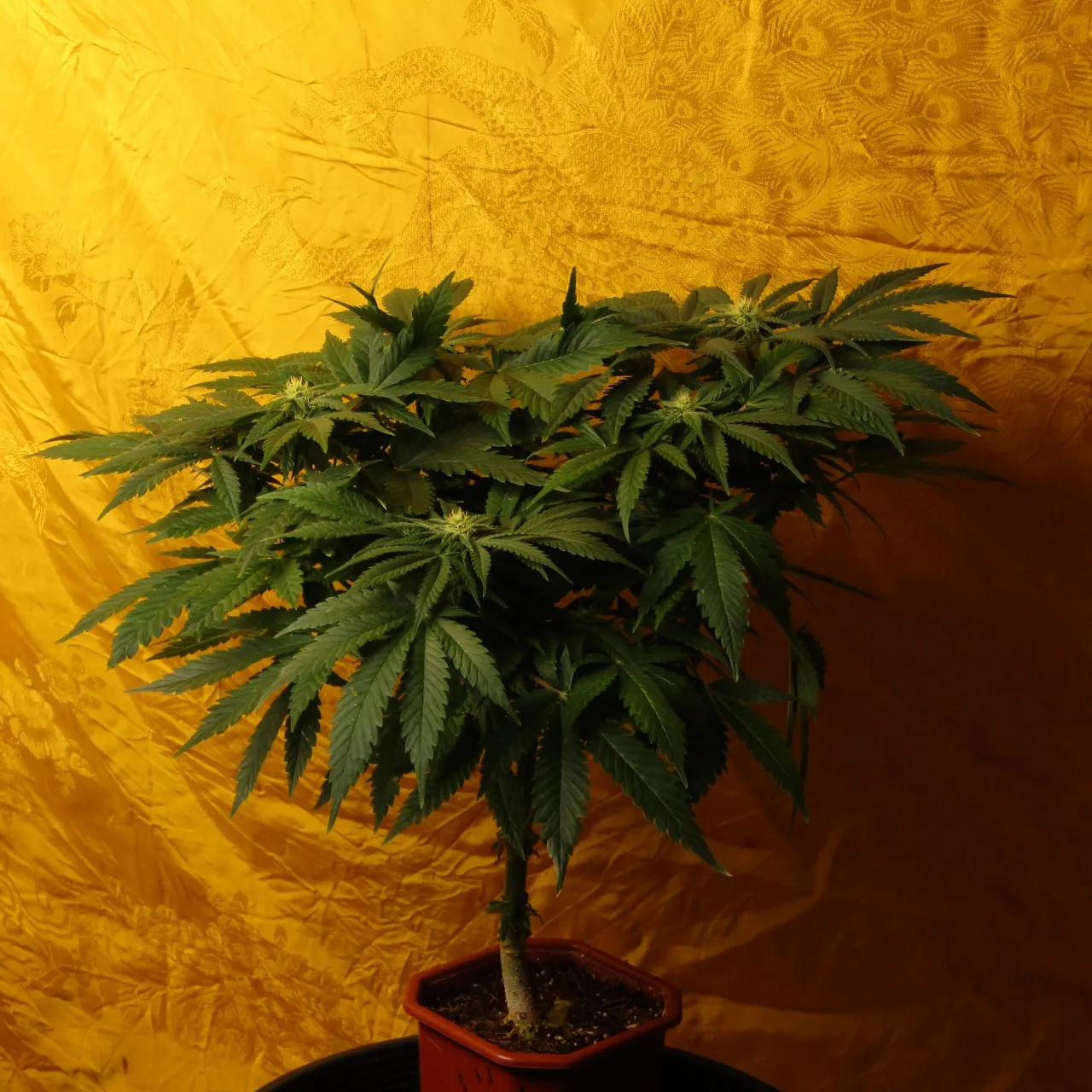
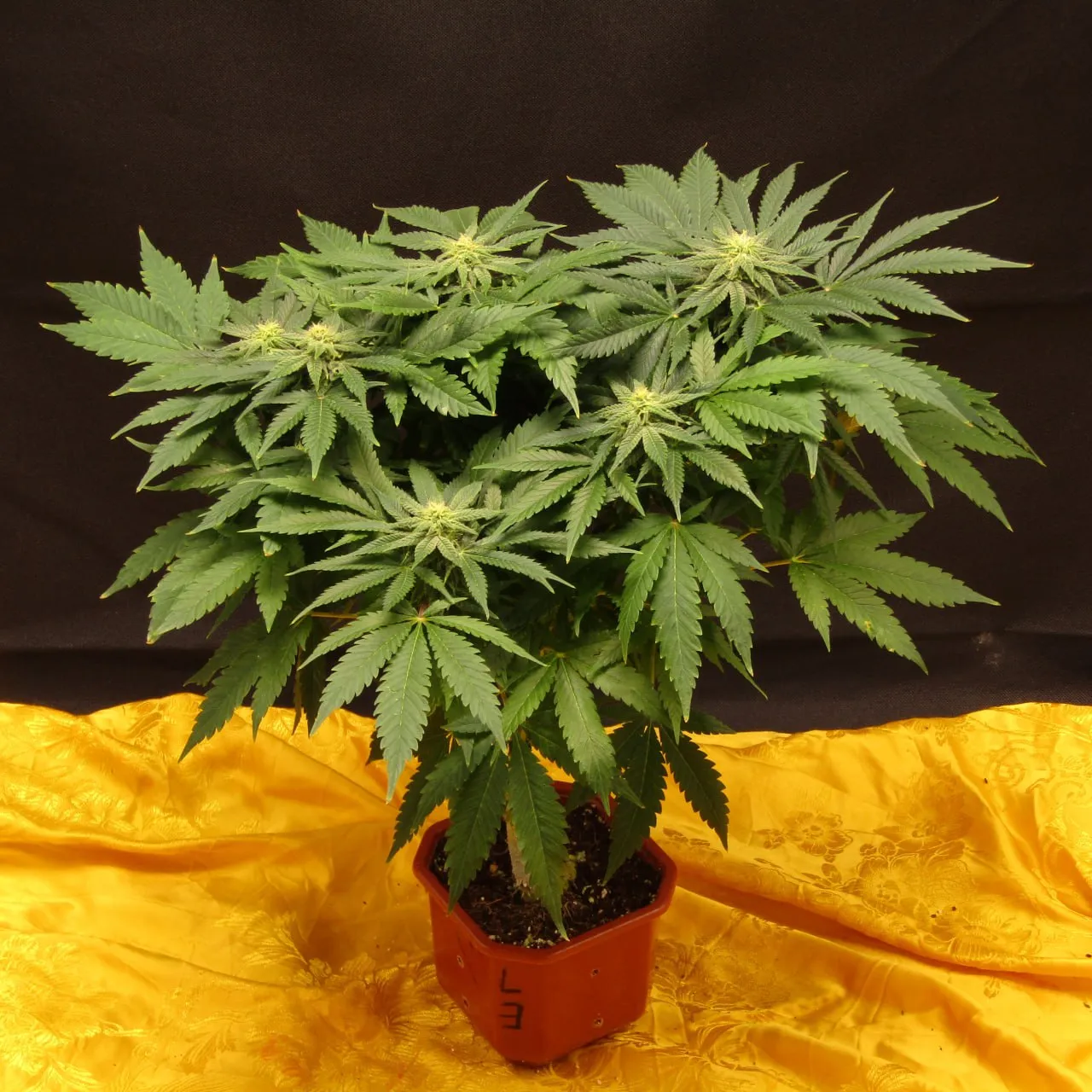
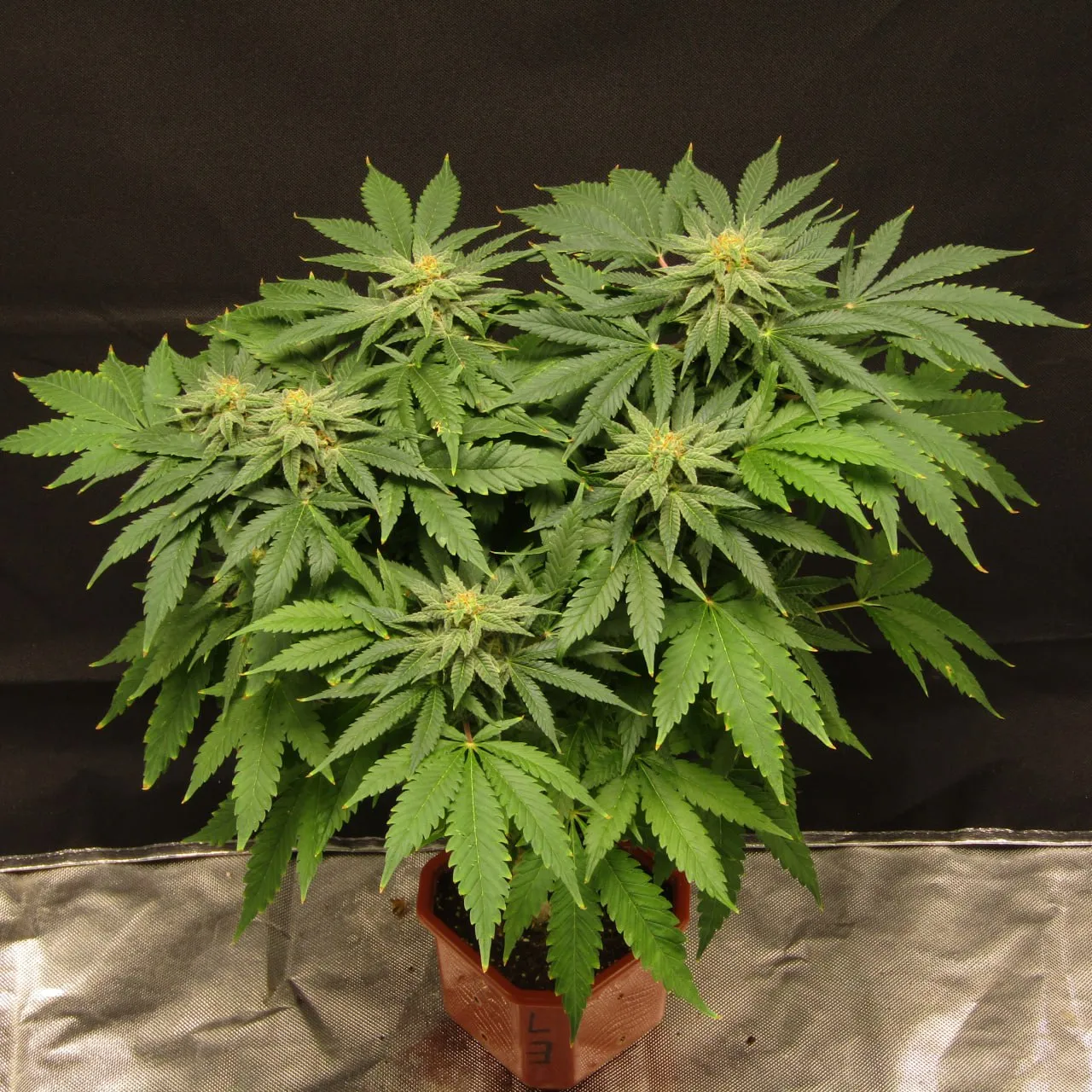
I switched FR#2 to flowering. When rubbed, the stem smells sour, citrusy, and gassy. Structurally, she branches well and has short internodes.
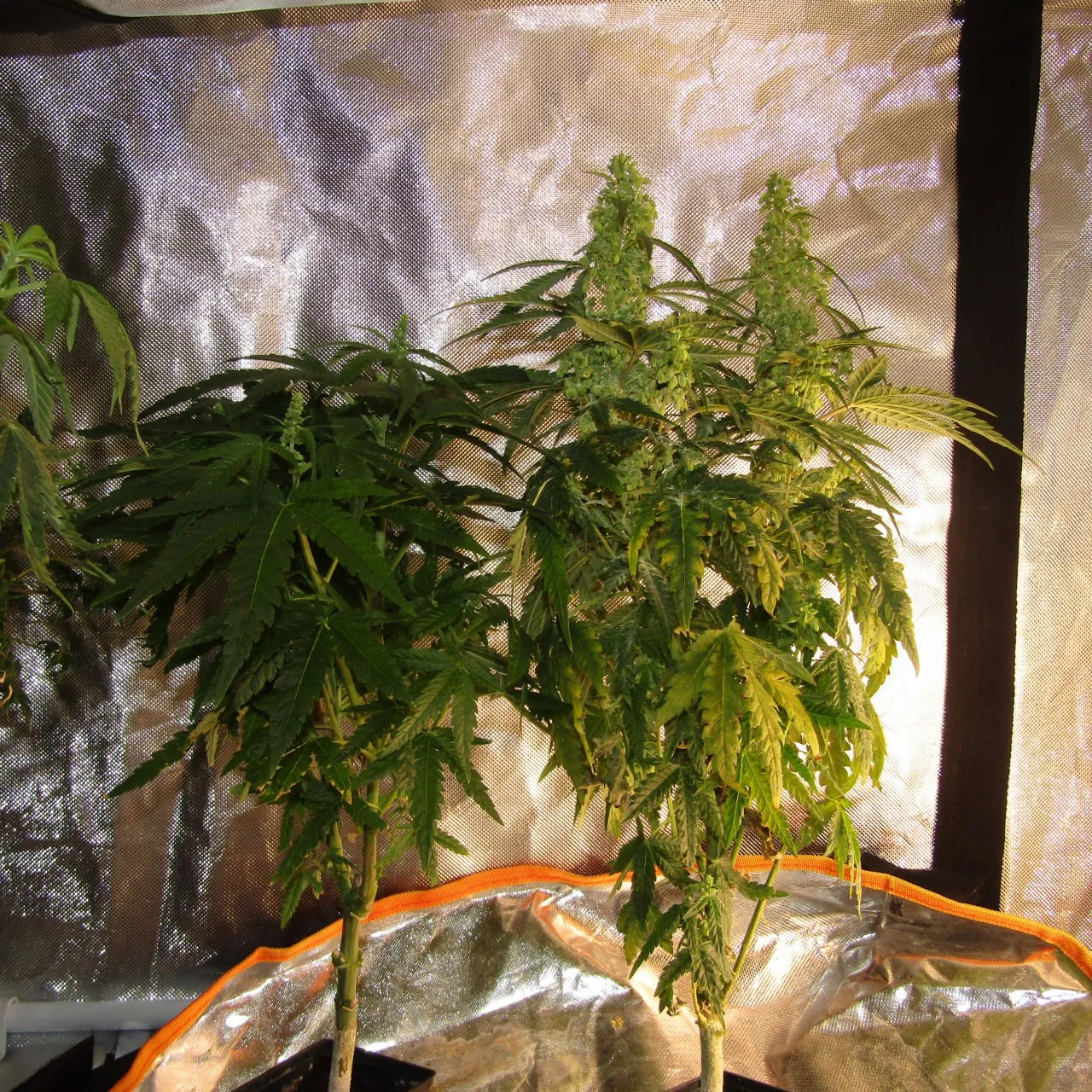
I have kept the males, FR#6 and FR#8, in the vegetative phase for now. In a couple of weeks I will switch them to flowering as well, for pollen. When rubbed, their stems smell grassy, hash-like, citrusy, and slightly sour. Both have medium-to-short internodes.
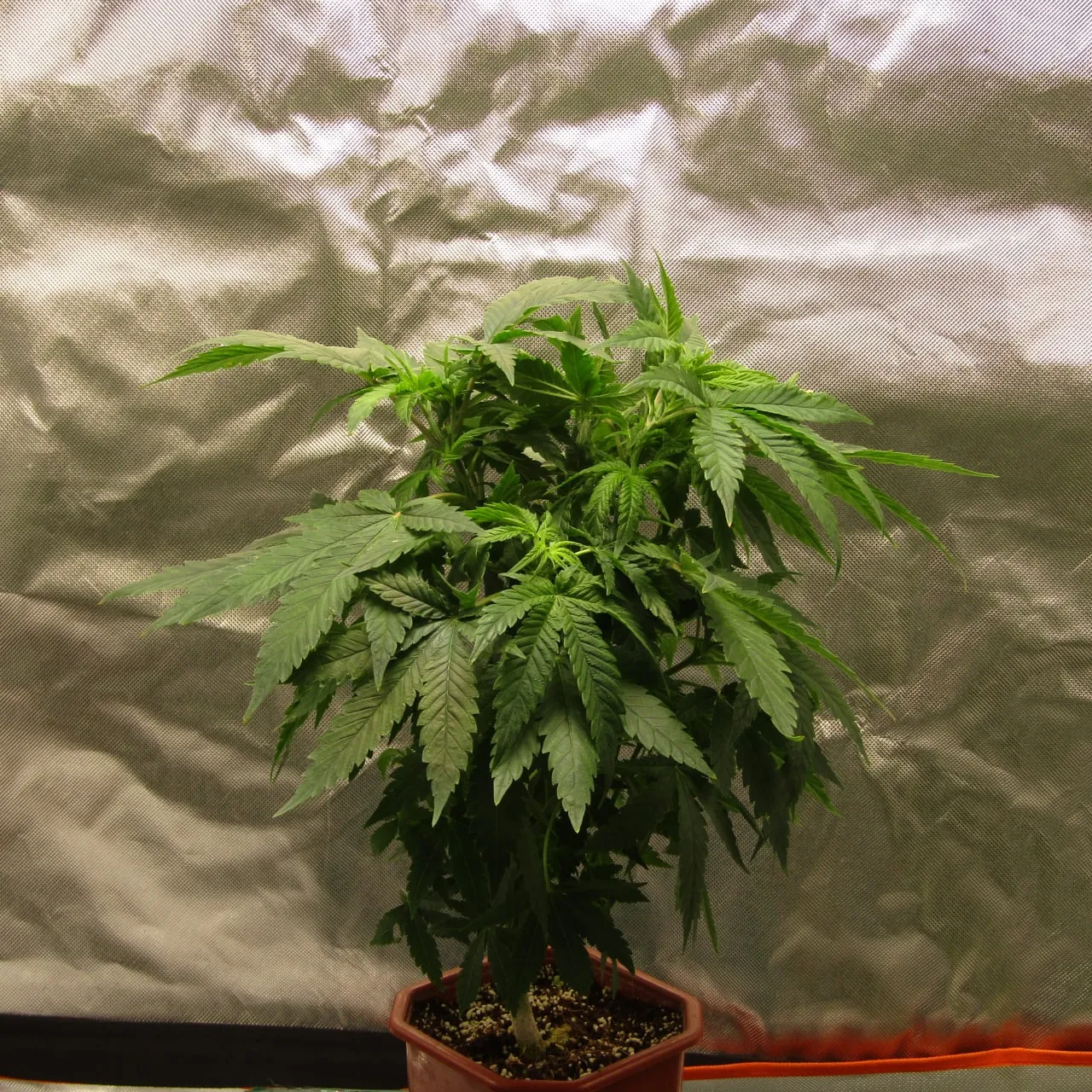
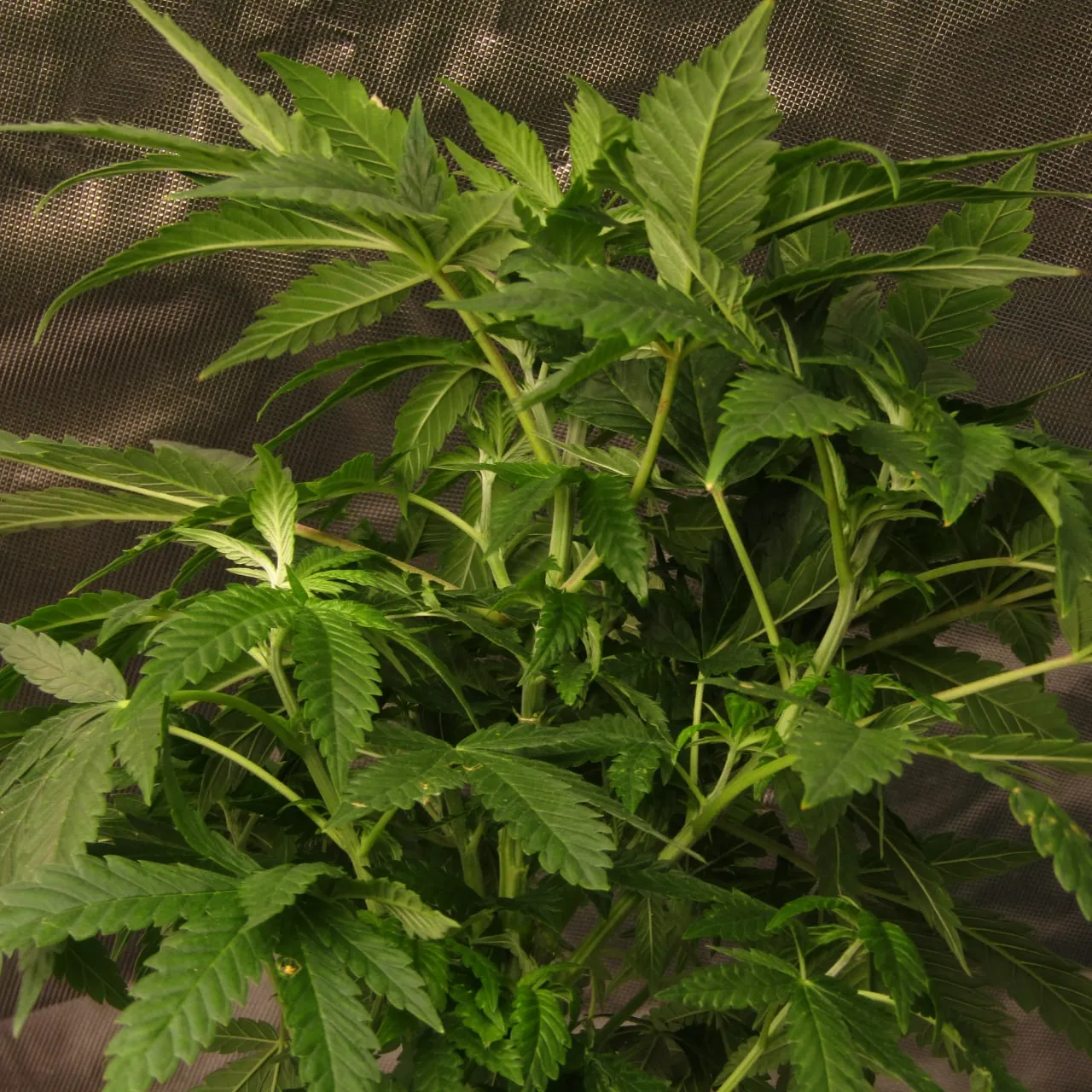
Weeks 11–12. Waiting for pollen
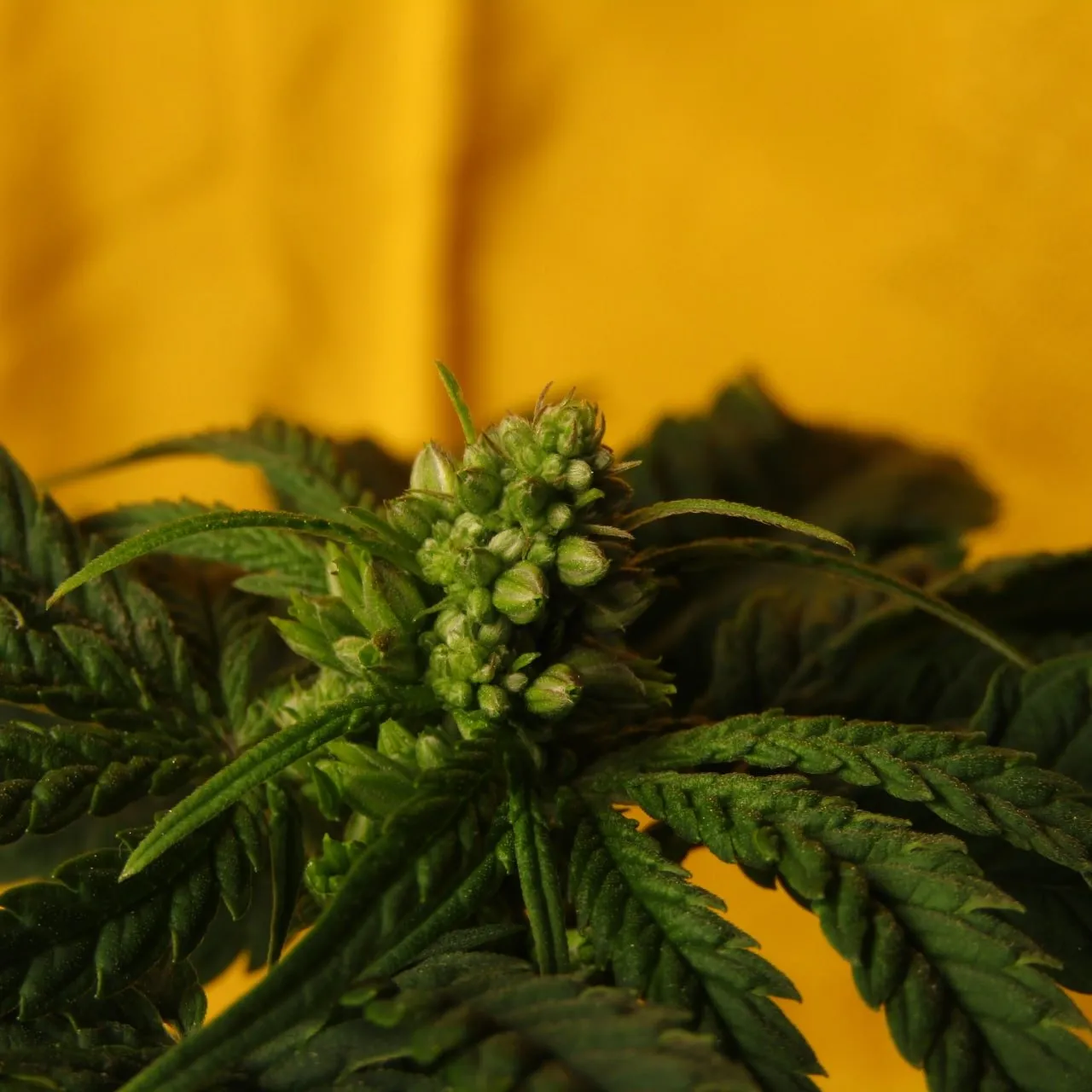
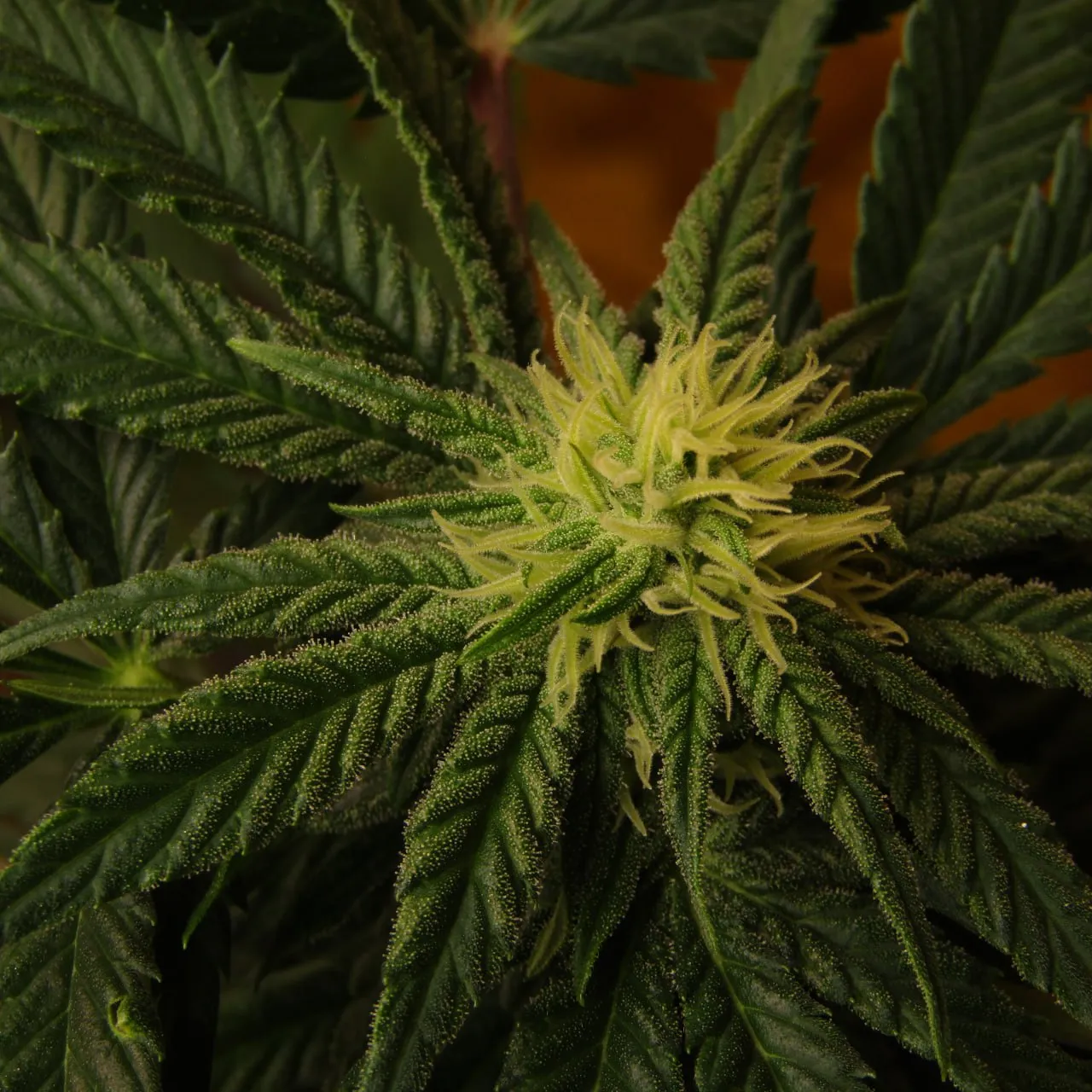
The plant is already forming flowers and will soon be ready for pollination. FR#6 has developed plenty of flowers and will soon shed pollen. I will collect some because I have not yet made the final choice of male. I am waiting to see how the second male, FR#8, performs; I switched him to flowering later because I was growing out his branches to take a clone.
FR#2 is doing beautifully and becoming covered in resin. I am waiting for FR#8 to show what he can do.
Week 13. Pollen donor FR#6
FR#2 has finally been pollinated and is now carrying the next generation. FR#6 beat his brother to the role of pollen donor.
FR#8 turned out to be almost identical to number 6, but at the start of flowering he seemed to have fewer anthers. Since number 6 was already shedding pollen, I decided to use him.
After pollination, I put the males back into vegetative growth. I gave the plants a couple of days of drought; they were barely affected and bravely got through it.
Weeks 14–18. Seed maturation
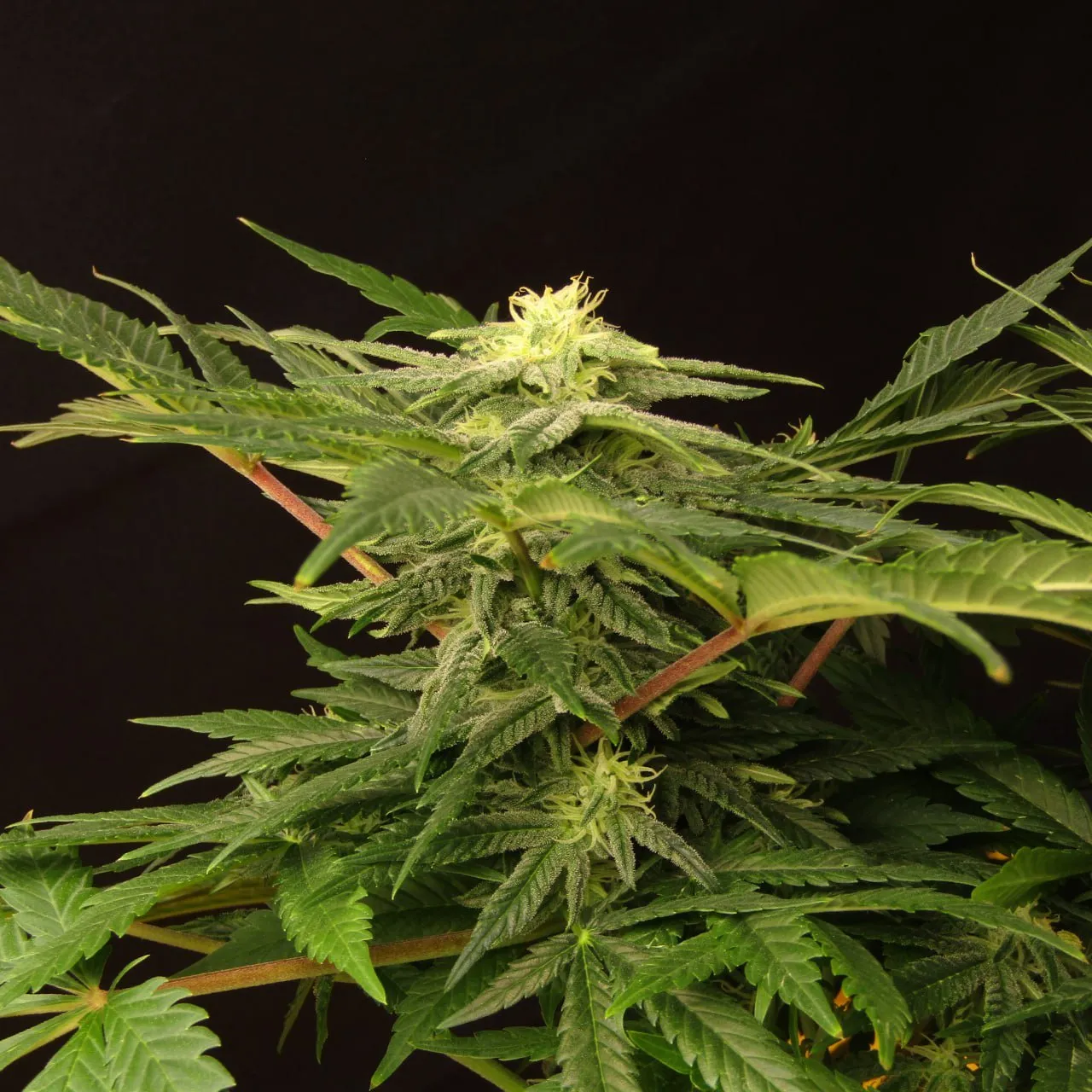
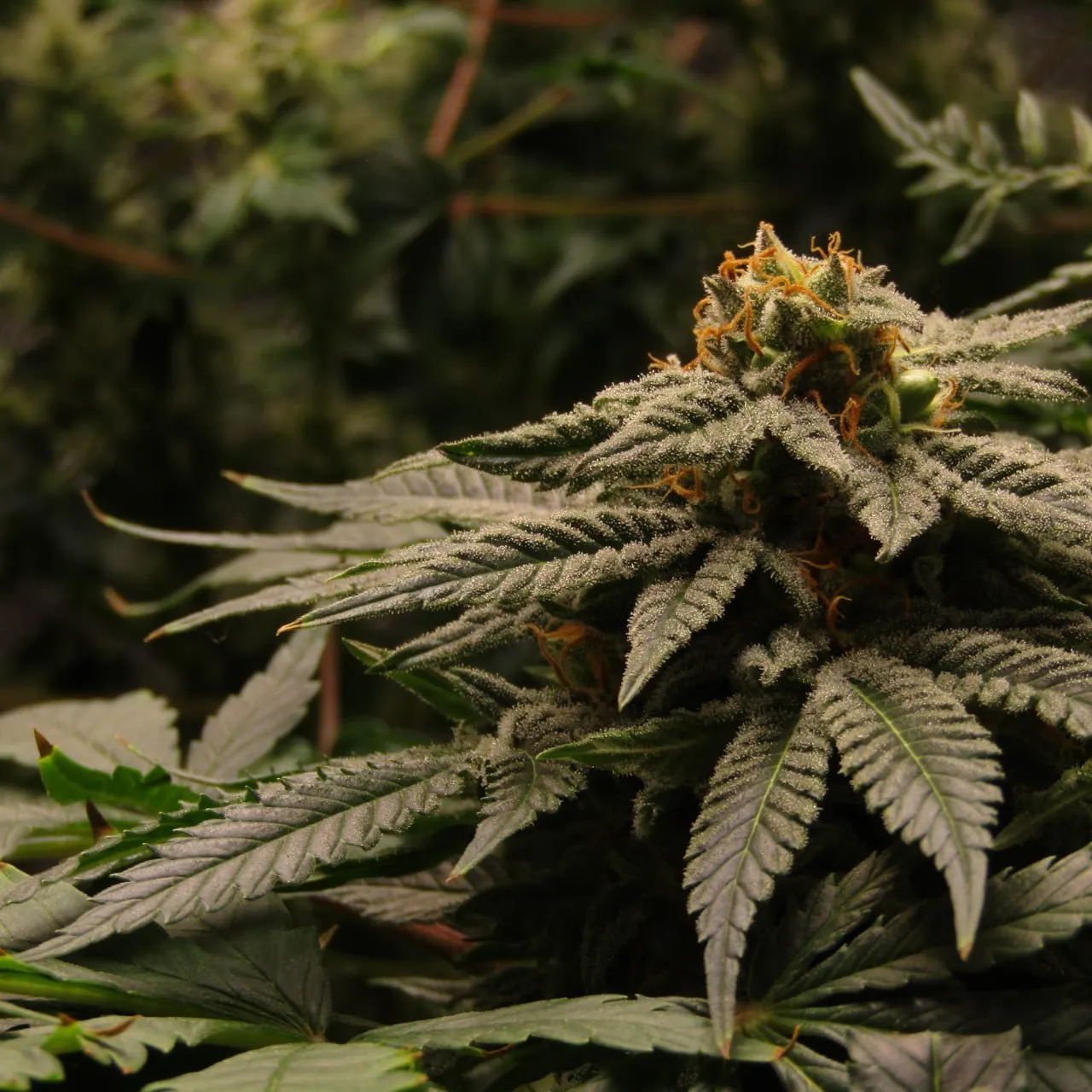
FR#2 is lush, aromatic, and resinous. I am waiting for the offspring.
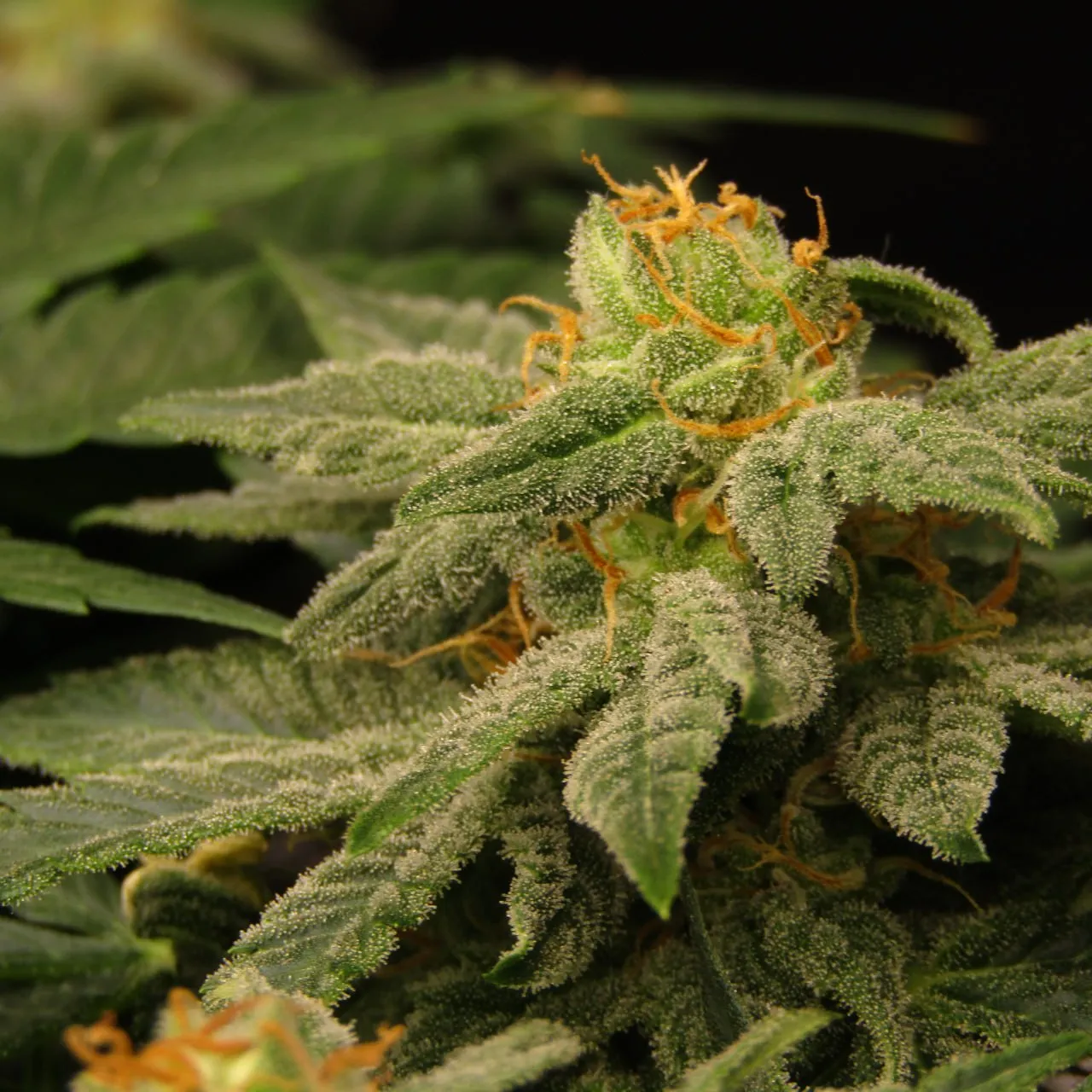
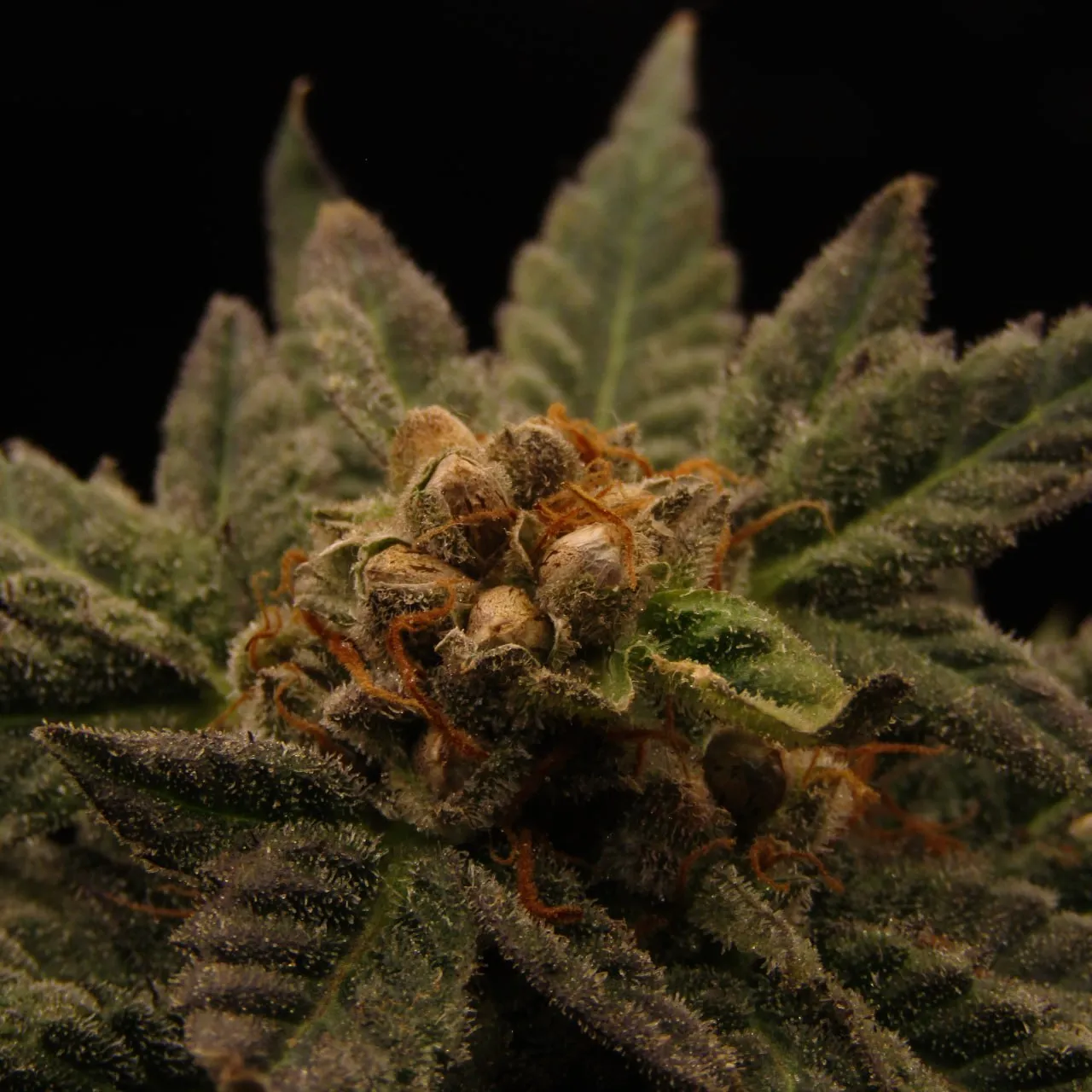
In week 15, she formed good-sized seeds that will soon begin to mature. In week 17, I left her alone and waited for ripening. In week 18, 11 days have passed since the previous post. The seeds at the tops are already maturing; I think the lower parts need a couple of weeks.
Harvest. FR#2
I found a patch of mold on FR#2’s largest flower. I harvested all the flower sections with mature seeds. I separated the seeds right away and set them to dry. I then gave the plant another couple of weeks and successfully collected a second batch of offspring.
Alongside the seed plant, I kept a clone to assess its aroma and structure. FR#2 turned out stocky, with short internodes. The flowers are closely spaced and generously covered in trichomes. The aroma is sweet, slightly sour, floral, and citrusy, with pepper notes.
The sample passed stress tests: the clone went through drought, overwatering, deficiency, overdosing and a disrupted light cycle.
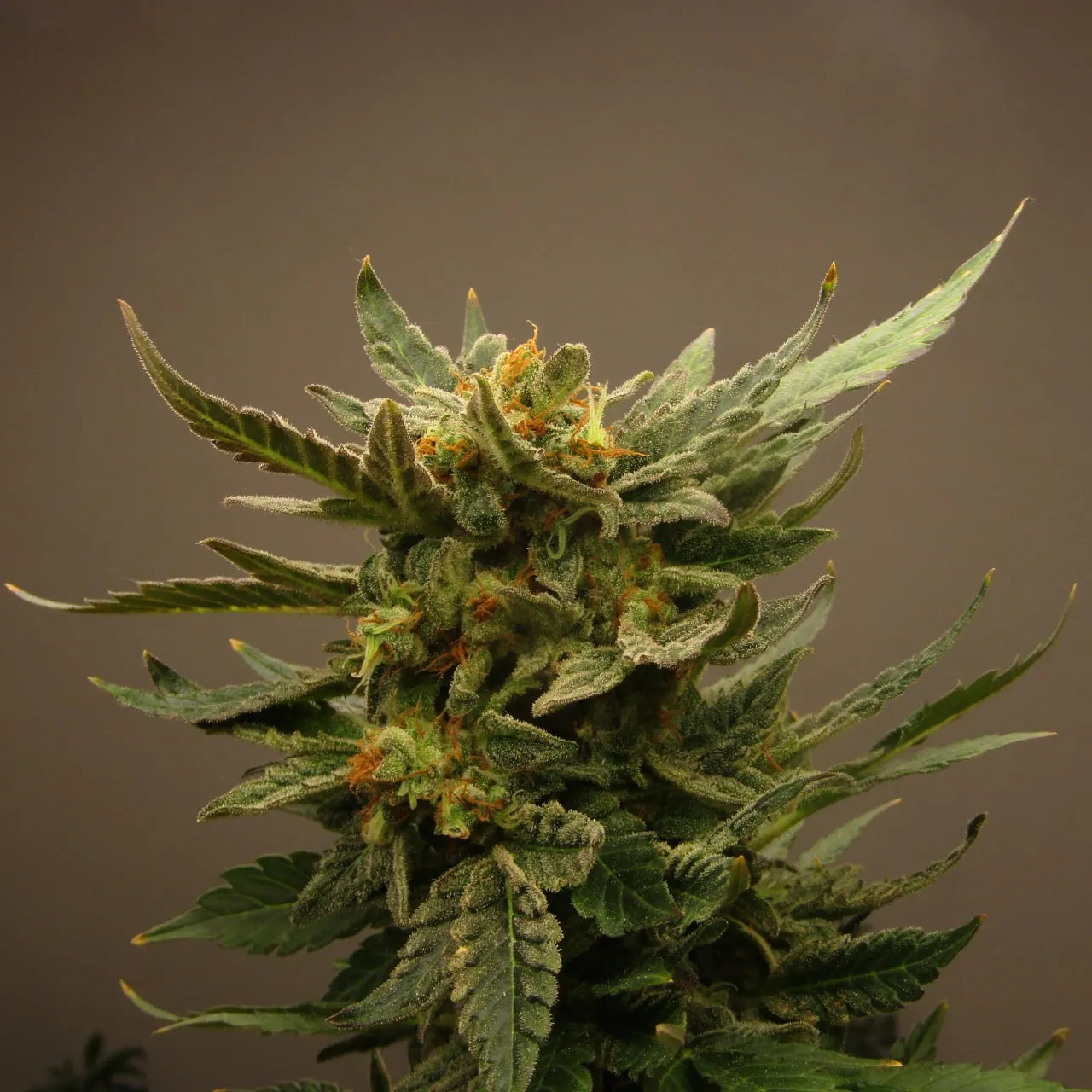
April 8, 2023. FR#6 revegetation and a clone anomaly
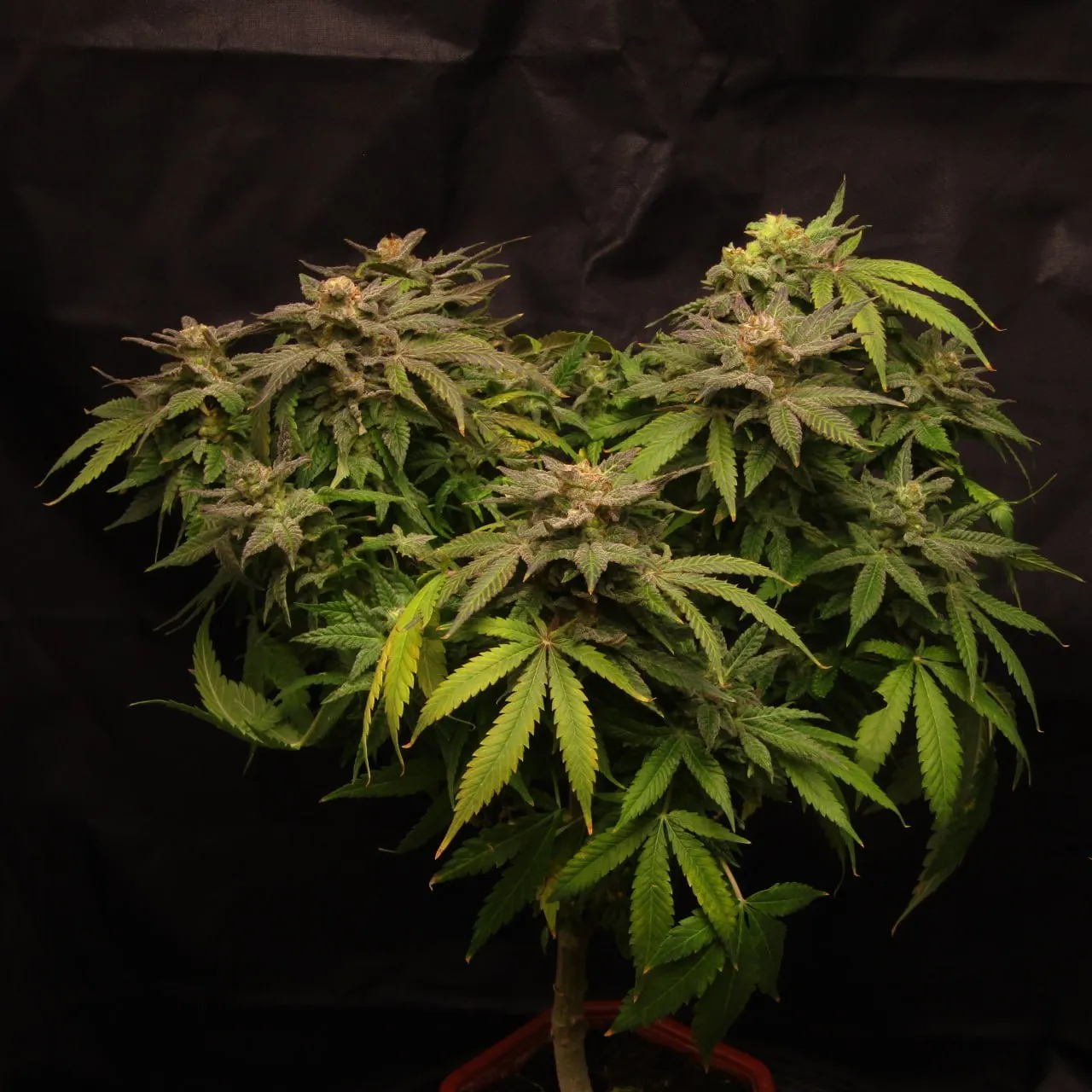
The male pollen donor, FR#6, successfully returned to vegetative growth.
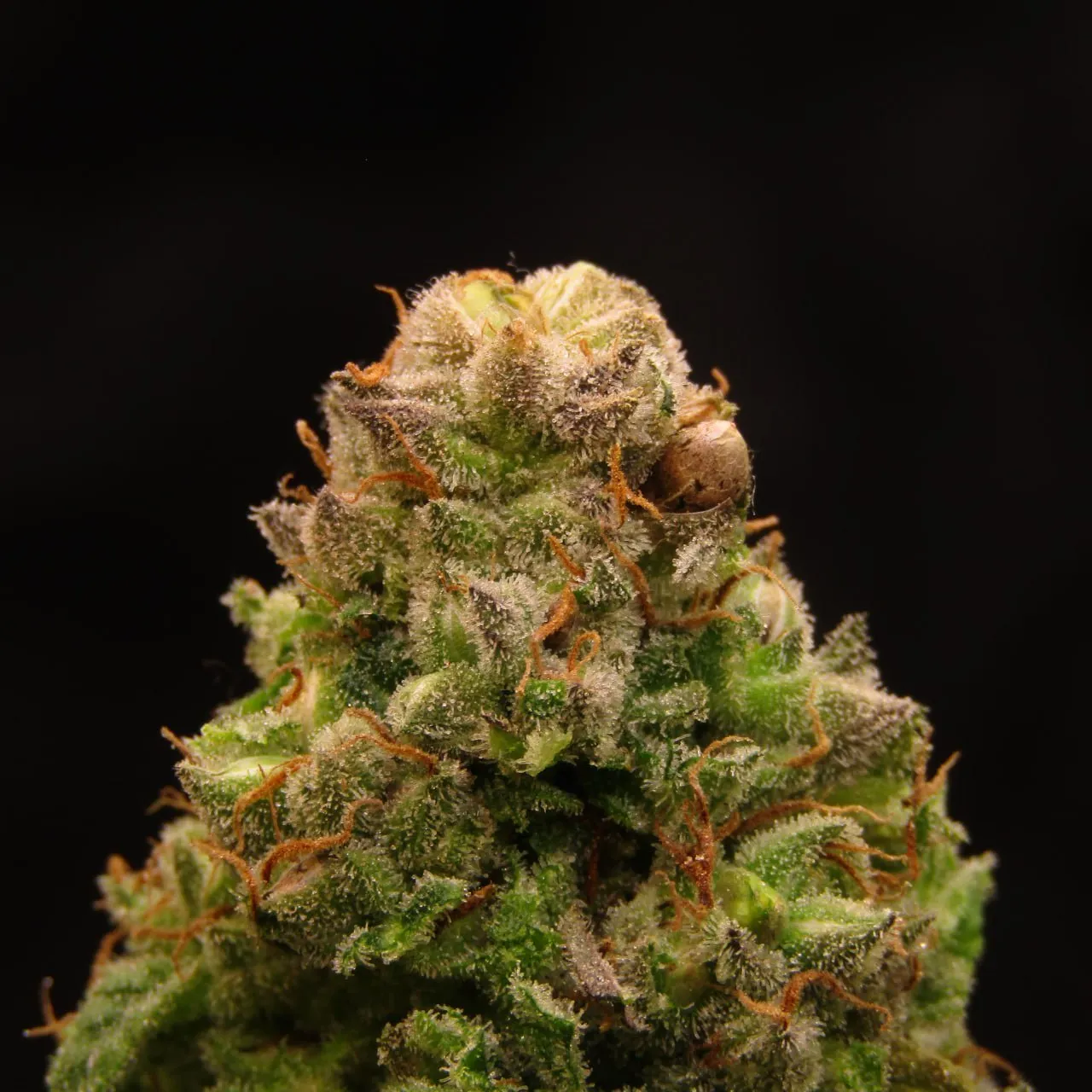
I found an odd anomaly in a Freaky Ryder F1 clone. One cola reached a dead end: a cluster of calyxes appeared at the tip instead of a growing point.
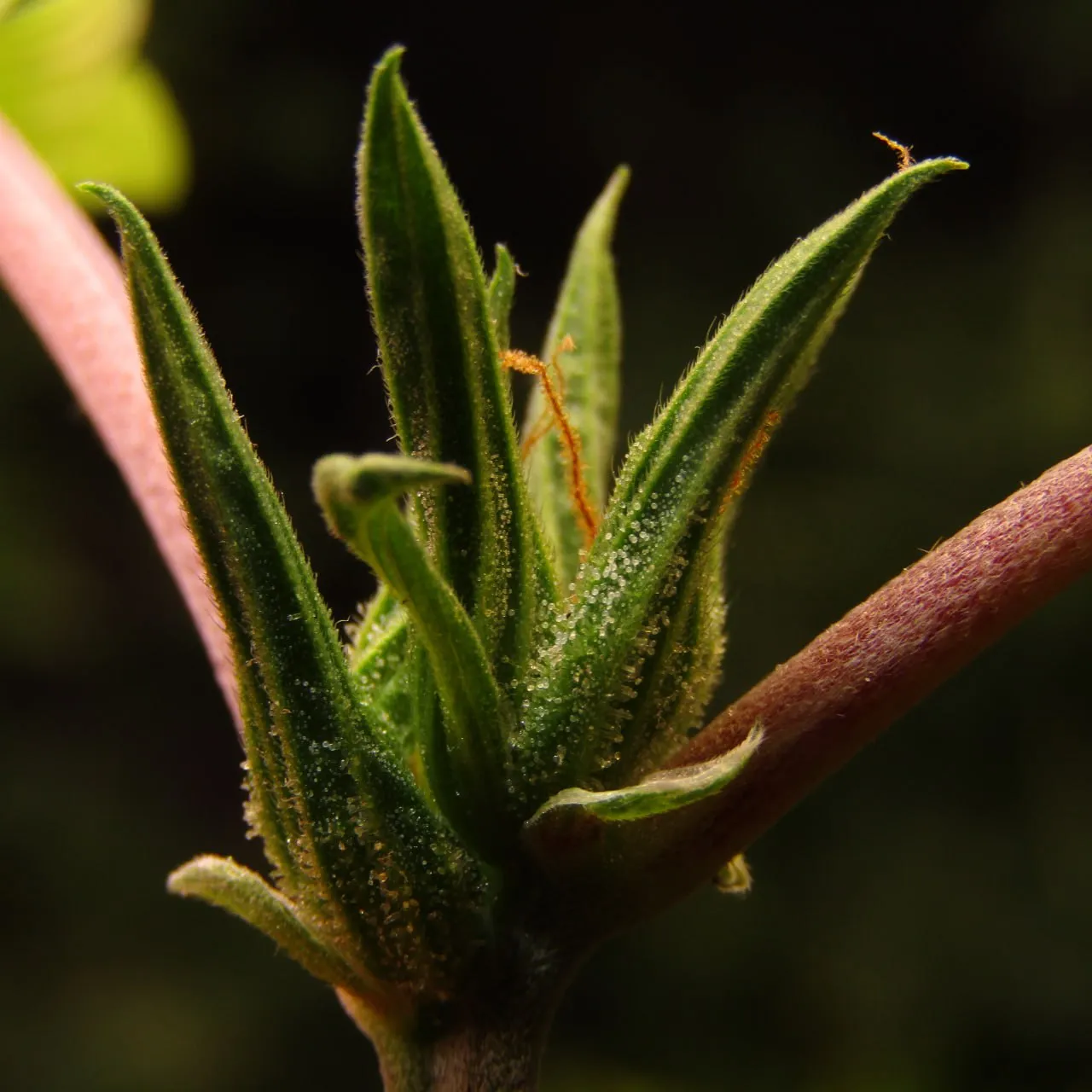
April 29 - June 24, 2023. Freaky Ryder × Bastard Ryder
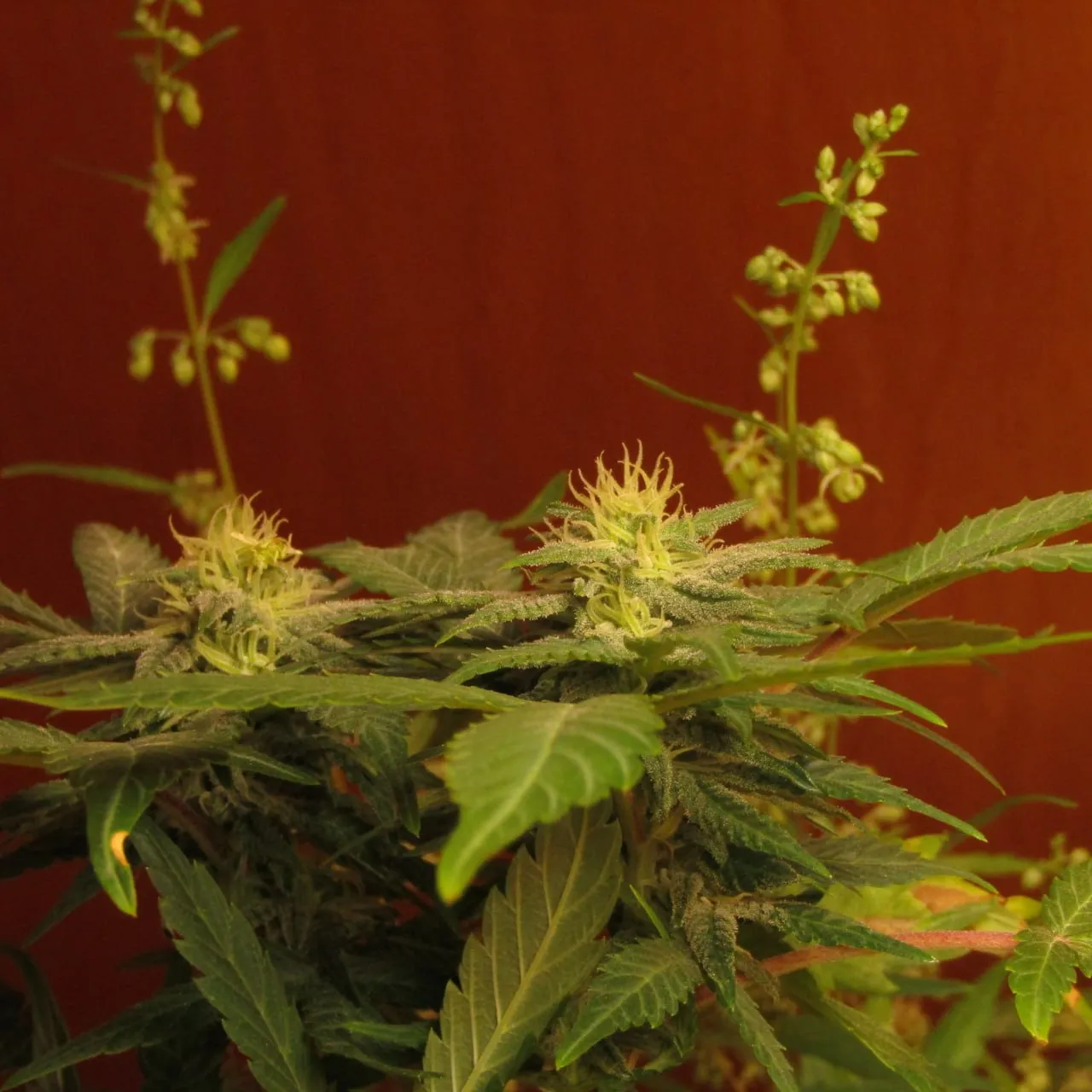
For testing and out of curiosity, I pollinated the female FR F1 #2 with the male BR F1 #6. She is now carrying the offspring of (Freakshow × Lowryder) × (Drunken Bastard × Lowryder).
The harvest of the last 3 seed-bearing plants is approaching: Drunken Bastard × Duck, (Drunken Bastard × Lowryder) × (Freakshow × Lowryder) and ABC Cra.Cro × ABC Cra.Cro.
Sources
- DZAGI (forum login required)
- ICMag
- mutantfarmer on Telegram