
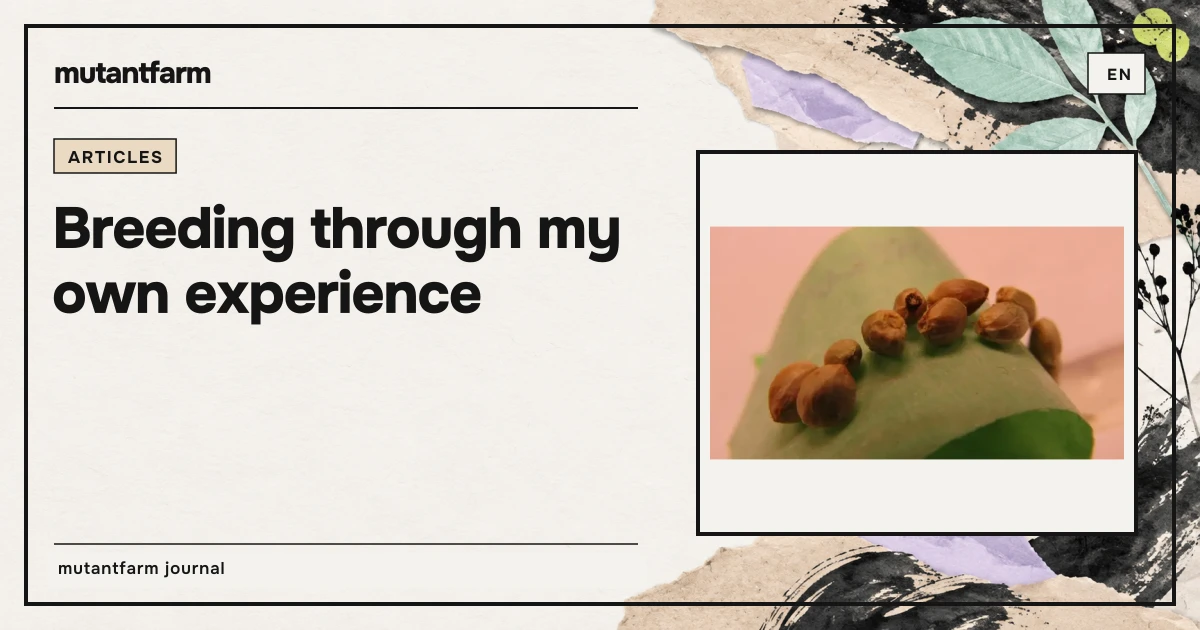
Hey, brother! How are you doing? You and I often talk about cannabis genetics. Now and then, we discuss a breeder or a cool strain story. But one question remains: how do you actually breed your own strain, just like that, all done—because it’s simple, right? Not quite, bro. That’s only how it looks at first. Like cultivation, breeding is a science with subtleties, patterns, and depths that still need exploring.
I decided to put together a little reading for you: an introduction to practical breeding through my own experience. I don’t have much experience. I’ve only been studying the subject for 2 years, and I’ve been going through the whole journey here with you on DZAGI. But I can already draw some useful conclusions. I’ll gladly share them. Let’s go.
Where to start
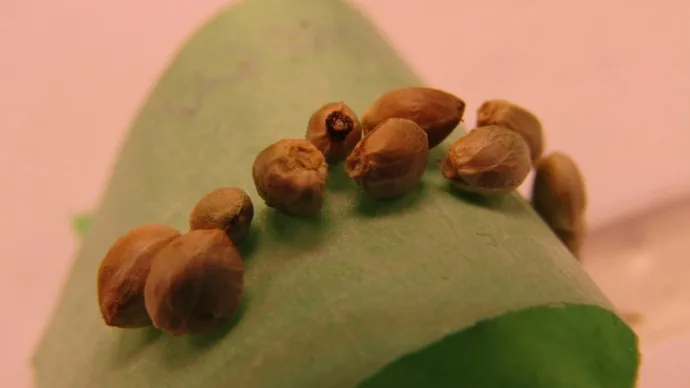
Let’s imagine you’ve learned to grow plants and decided to go further. First comes theory. As you’ve gathered from reading Growpedia, putting a seed in the ground and getting a perfect bud is possible only with good preparation or extraordinary luck. The same goes for getting your own seeds. You can pollinate everything in sight, and sooner or later you might get lucky with a good cross. But that’s playing blind. Take control of your next move and follow the results.
Start by studying the laws breeding is based on. Everyone takes in information in the format that suits them, and plenty of skilled breeders have thoughtfully passed their knowledge to us in different forms. You can learn genetics from scratch through school videos and textbooks, YouTube channels, college courses, research papers, and so on. Near the end of this article, before the conclusion, I’ve collected some subject-specific resources to help you understand it comfortably.
Equipment
Let’s imagine you’ve studied the theory and want to move on to practice. I’ll show you how to organize a workspace using my own search for the ideal setup as an example. It all depends on your wishes, plans, and possibilities. I’m an experimenter myself, always looking for the ideal configuration.
We’ll only be talking about organizing space.
Which working compartments need to be set up first:
- A clone and seedling area—you can use the same space for both.
- A vegetative area—a place to inspect plants for selection into flowering. This can be combined with item 1.
- A flowering area for females—where your girls will bloom and await their mission.
- A flowering area for males—a separate space as far from your girls as possible. This is needed to prevent accidental pollination if you have several male plants.
A carbon filter is essential in every flowering area. Work in the different flowering areas always follows a set order. All windows in the room must be closed to avoid air currents spreading pollen.
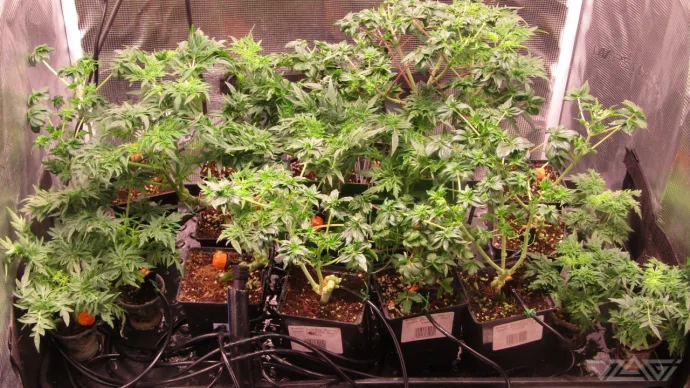
I’m not working on seed production right now, only breeding. There’s therefore no need to keep large plants: selection and examination of different traits can be done on a miniature scale.
First setup. Here, I intended to work with 2 strains.
I keep the boys until the first anthers open, then collect the pollen and dispose of the plants.
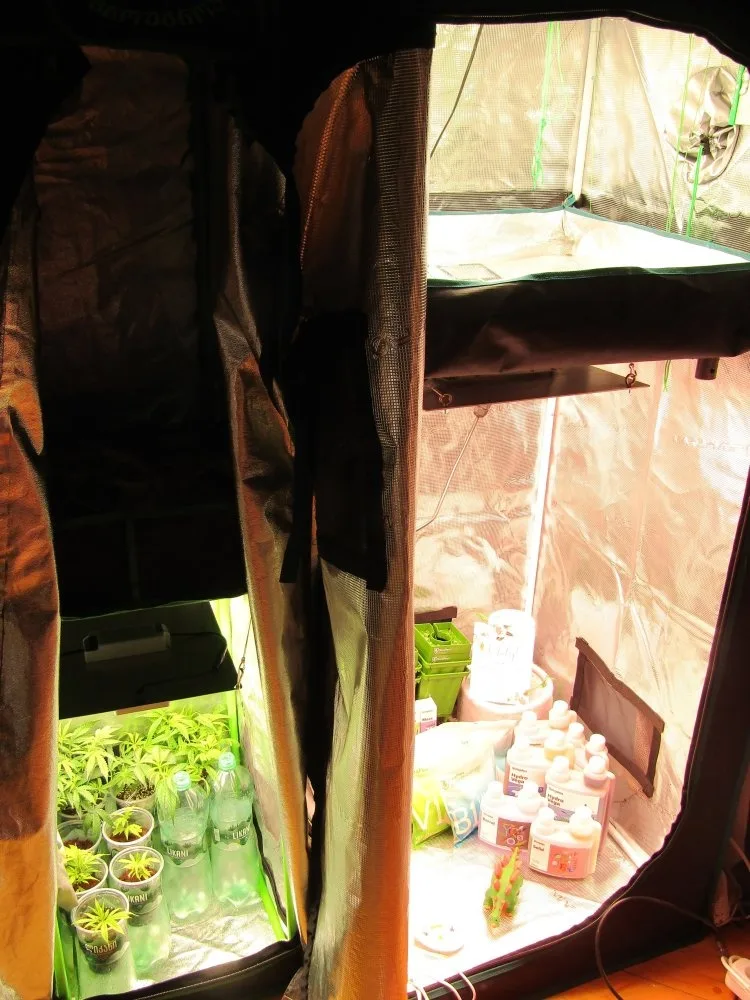
Second setup. I decided to add another 3 strains and realized I needed more separate compartments to reduce the risk of accidental pollination.
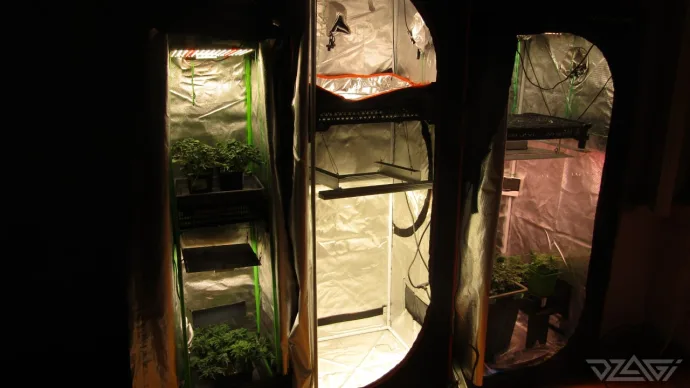
Third setup. I’m working with 5 strains.
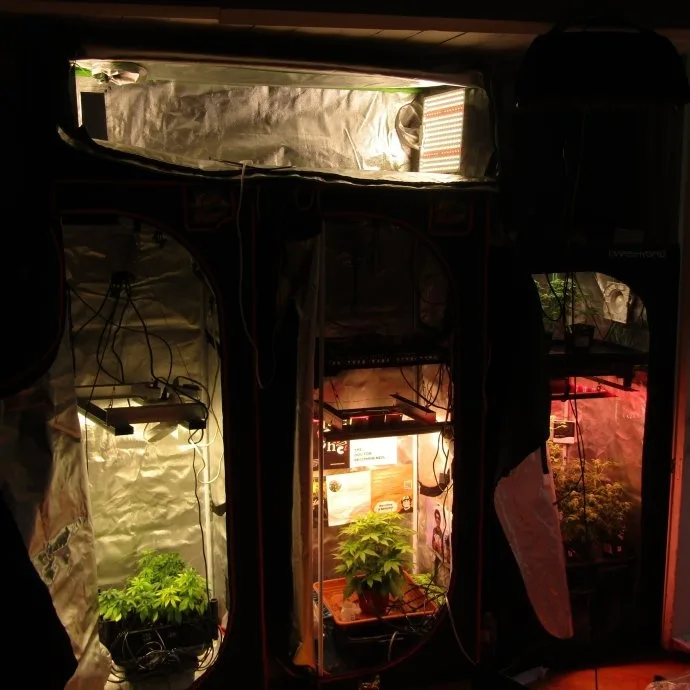
Fourth setup. I finished the previous cycles and switched to 3 tents, each 1 m², without dividing them into levels. The male plants have a separate tent, but in the same room.
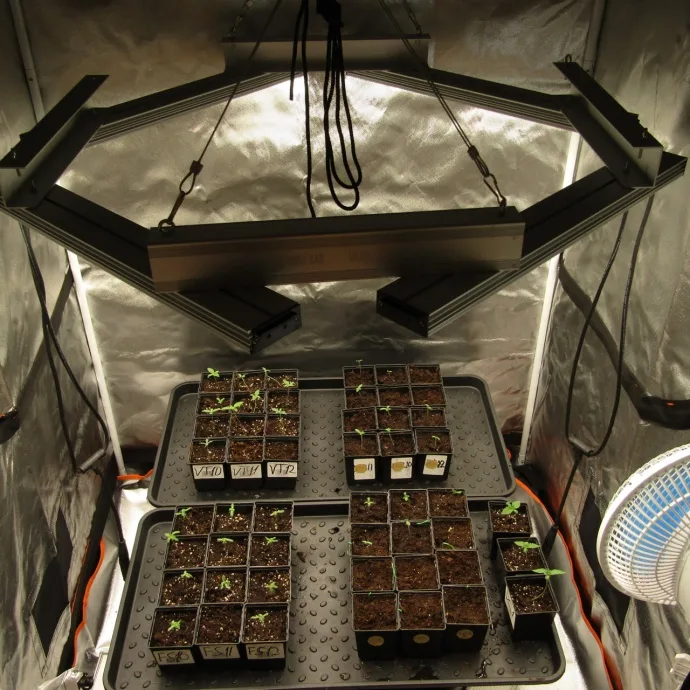
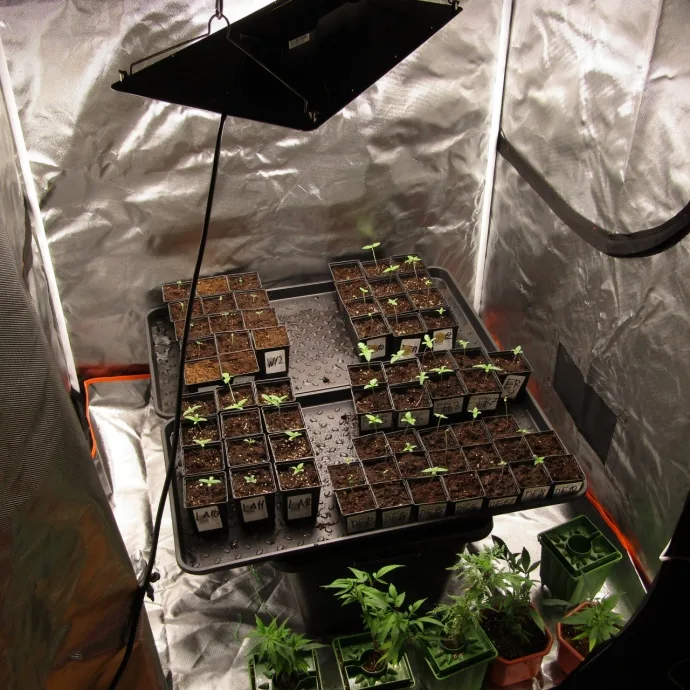
Fifth setup. I put together an optimal, convenient system. The new version uses approximately 3.49 m² of floor space, but because of its levels, the working area is 5.49 m².
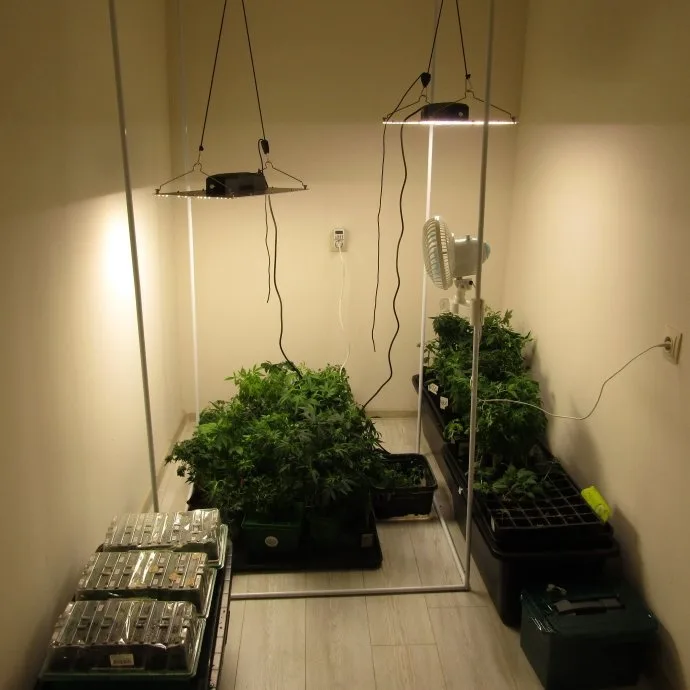
On the right is a 1 m² area for testing large plants. Beside it, two horizontal areas consist of one-meter tents turned on their sides, doubling the space. The upper one is for clones, vegetative growth, and hot peppers. The lower one is for flowering. Flowering males go into a separate tent.
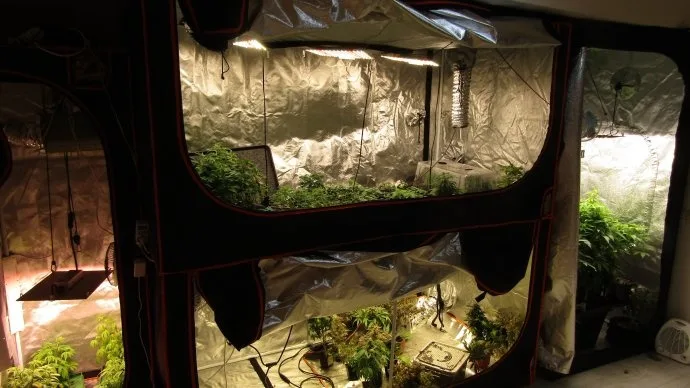
Sixth setup. Flowering In photoperiod plants, the change to flowering depends on the length of the day. photoperiod ↗ plants use 1 m² in the next room. Male A plant that starts flowering independently of the length of the day. autoflower ↗ and photoperiod plants go into a 70x70 tent on another floor for flowering.
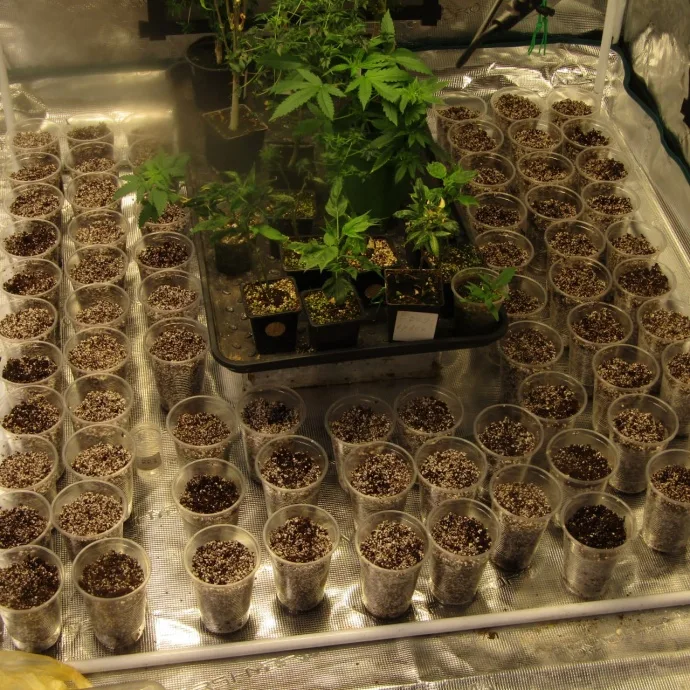
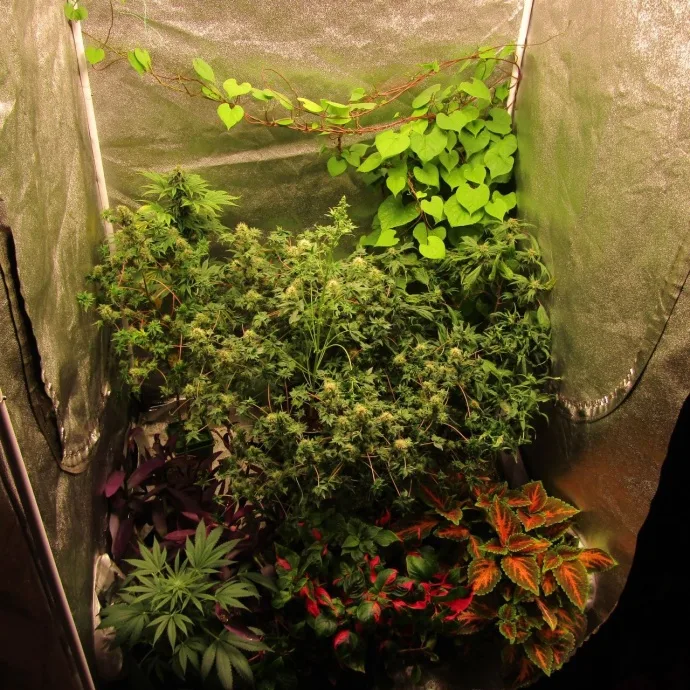
Seventh setup. I’m tired of working with a large area now. At the end of the previous cycle, I decided the fifth setup had been optimal and returned to it.
Choosing genetics
We’ve figured out where and how to work. Now let’s decide what to work with. Everything depends on your goals. Whether you want an enormous, frosty, reddish-purple bud or a classic, undemanding, compact plant without an obvious smell, the choice is yours. I think it’s something you should work out yourself by studying relevant resources. Watch and read more, and you’ll find your path. I’ll give you a general outline of where to look for a gene pool.
A private breeder
On social media, forums, or even through a distant acquaintance, you can easily exchange or acquire genetics. There are far fewer people passionate about breeding than there are growers. But our creation can be stored and passed along in most countries. So there aren’t any particular difficulties here.
Pros:
- You can find rare strains: personally collected landraces, heirloom strains that families have worked on for generations, and simply a wide variety of hybrids.
- It’s often cheaper than buying from the big players.
- You can get support and advice, if the breeder has time.
- You’re supporting a small business.
Cons:
- Less quality control and lower standards.
- You need to study the breeder’s work history and look for reviews.
- You may run into a scam or just a seedmaker who indiscriminately copies other people’s strains instead of developing their own.
Seed companies
These may be major brands or small teams. Examples include Doctor’s Choice, Barney’s Farm, Humboldt Seed Company, InHouse, and others.
Pros:
- Quality control. A lower risk of getting unstable material, though the risk isn’t zero here either.
- No scams.
- Strain reviews and reports on growers’ resources.
- You can get feedback and support from the producer’s team.
Cons:
- You get support from managers instead of directly from the breeder.
- A more modest lineup, mainly popular strains, which narrows the scope for experimentation.
Personal recommendations
Now let’s imagine you’ve gained a reasonable understanding of the subject, chosen genetics, got your equipment, and are ready to begin. Next come the finer points and personal preferences. I’ll give you some basic but important recommendations.
Start keeping records: Get a notebook, write a report, start a blog on a Telegram channel, or make a spreadsheet. I use all these options except the notebook. My handwriting is terrible. That way, if you make a mistake or forget something, you can return to the history and perhaps even correct your work.
| Leaf shape (veg) | Frame (stocky / stretchy, branching) | Cola structure (veg) | Cola structure (flower) | Flower colour | Aroma | Growth in veg | Growth in flower | Aroma at harvest |
|---|---|---|---|---|---|---|---|---|
| 16.04 Regular FS-shaped leaves, no distortions. | 16.04 Stocky, weakly branching. | 1.05 Short internodes, massive. | The main colas barely grow side shoots and simply turn into one solid flower. | Green, the leaves have a slight purple tint. | 1.05 On its own it has a barely noticeable "grassy" smell. The stem and leaf petioles have earthy-diesel notes, quite aromatic. 23.05 Citrus, pine and earthy-honey notes. | 1.05 Healthy growth and leaf colour. | 22.05 Develops less actively than the other plants. | A tart, deep fruity-citrus aroma reminiscent of sour green apple with orange and Skittles candy. |
| 16.04 Regular FS-shaped leaves, no distortions. | 16.04 Stretchy, branching. | 1.05 Long internodes, long and thin. | 1.05 Almost no smell on its own. The stem and petioles have earthy-pepper notes. | 1.05 Healthy growth and leaf colour. | 22.05 Resinous stem, the most active male. Smells of pepper, peach and lemon. Produces anthers in abundance. |
Work with a large sample: The more plants you can grow and examine in a cycle, the better your chances of finding the combination of traits you want and, consequently, doing better work.
Plan your cycle timing: Again, this reduces the chance of uncontrolled pollination. If you intend to work actively with different strains, calculate when to plant them and move them into flowering. With autoflowering strains, I sow a month after the previous cycle begins. That allows me to keep a continuous flow going.
Run stress tests: Nobody is immune to intersex traits, since they are part of the evolutionary mechanism allowing your little plants to survive in the wild. But you should reduce the chances of their expression. So select carefully. If your plants are photoperiod types, take clones, move them into flowering, and start the ordeal. With autoflowers, you’ll have to do without clones and test the main specimens or their brothers and sisters. If you don’t get herms, perfect. Keep going.
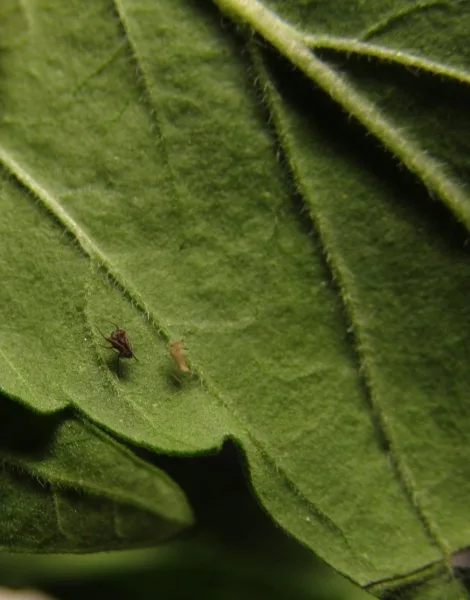
Keep things clean: Pests and mold are my frequent scourge. Another attack and treatment with protective products can stress the plants, extend the cycle, or stop them from expressing their potential altogether, which matters when selecting the best plants. Mold in the final flowering stages can even destroy seeds maturing in the flowers. Stay alert!
Watch experienced people: Grab a browser translator and read reports on foreign-language resources, Instagram pages, and YouTube channels. Study how breeders work, their style, what they select, their tricks, and the mistakes they make. This will help you avoid your own mistakes and find new ideas.
Assess your product: Before sharing your seeds with anyone, test them. First of all, test each batch’s germination yourself. Testing the plants for The observable traits of a plant, such as its height, leaf shape or colour. phenotypes ↗, intersex traits, and so on should also be left to you, your friends, or a trusted team of testers willing to spend time trying them out. Only when you’re confident in your product can you put it on the market.
Homework
Below are links to the resources I began with to satisfy my interest in breeding. Most of the material is in English. For videos, I recommend Yandex’s browser-based AI translation and voiceover, or the automatic subtitle translation built into YouTube’s player. For text, use DeepL or your browser’s basic translator.
Read some books
- “The Cannabis Breeder’s Bible” by Greg Green. Available in Russian.
- “Cannabis Breeding: The Art and Science of Crafting Distinctive Cultivars” by James Loud. So far, only an English-language version exists.
Explore breeders’ forum sections
- Dzagi.club—Strains, Genetics, Breeding
- ICMag.com—Cannabis Strains and Breeding
- OverGrow.com—Breeder’s Lab
- Autoflower.org—Autoflower Breeding
Watch on YouTube
- Doctor’s Choice—educational breeding material where Sasha Joint Doctor shares recommendations.
- Khalifa Genetics—also educational material, from Alladin, the breeder and founder.
- Humboldt Seed Company—phenohunting and careful work from Nathaniel Pennington and his team.
- Future Cannabis Project—a podcast project featuring leading industry specialists, including excellent breeders.
- The Ganjier—a project teaching cannabis sommeliers, led by Kevin Jodrey, which will help you better understand flavor and aroma parameters.
Browse strain information in databases
- SeedFinder.eu—a large strain database where you can study strains for your work and trace their family trees.
- Leafly.com—similar to the previous resource, but geared toward consumers, for exploring reviews and strain parameters.
Will you give it a try?
Time to wrap up, man! A few years ago, I never would have thought breeding would interest me. It all happened by chance, by intuition. Nobody is ready for this from the start. But anyone can take the first step and give it a try. So, bro, if there’s a little passion in you ready to take you to the next level, go for it. There are plenty of untried combinations, unexplored materials, and paths for development around us. Who knows? Maybe you’ll create the next strain to win growers’ hearts around the world.
One last reminder: if you have questions about the subject, put them in the DZAGI thread, and we’ll try to figure them out. If you’re experienced, give me feedback on my article or share your own perspective. Either way, good luck, peace, and prosperity to you, my friend!