
The first A plant with three sets of chromosomes; in cannabis, 3n=30. triploids ↗︎ in industrial hemp were described in 2020, and in 2022-2024 companies working with THC strains announced triploid seeds. Sellers promise seedless plants even near stray pollen, higher yields and more THC. Trials support the first claim with a qualification: there are far fewer seeds, but not zero. They have not shown a general increase in yield or THC.
How many chromosomes
Ordinary cannabis has two sets of chromosomes, 20 in total. Such a plant is called a A plant with two sets of chromosomes; in cannabis, 2n=20. diploid ↗︎ and written as 2n=20. A triploid has three sets, 30 chromosomes; a A plant with four sets of chromosomes; in cannabis, 4n=40. tetraploid ↗︎ has four, 40. Plants with three or more sets are called A plant with three or more sets of chromosomes. polyploids ↗︎. Crawford et al., 2021
Is it a mutation?
In genetics, a change in the number of chromosome sets is classified as a genome mutation. These plants occasionally occur on their own; for commercial production, they are obtained through treatment and crossing.
The mutations mutant.farm covers are of a different kind. Freakshow, ABC, Duck, SWAG, variegated leaves and fasciation change a particular trait: it is visible on the plant and passed to offspring. Studies of polyploid cannabis describe other changes: leaf and cell size, and the number of stomata.
Appearance cannot reveal ploidy
On forums, a flat stem, whorled leaf arrangement or three cotyledons are often called signs of polyploidy. These features cannot establish chromosome number; it is determined in a laboratory. This question is covered in detail in the article on fasciation.
Plant size does not help either. In the comparison by Fernandes and colleagues, the heights of plants with different numbers of sets overlapped. Fernandes et al., 2023
How triploid seeds are produced
First, a tetraploid is obtained. Seedlings or tissues are treated with substances that double the chromosome set; in cannabis studies, these are colchicine and oryzalin. The proportion of successful plants varies greatly between experiments. Some plants turn out to be mixoploids, with cells of different ploidies, so tetraploid parents undergo prolonged checks. Parsons et al., 2019, Kurtz et al., 2024
The tetraploid plant is then pollinated with pollen from an ordinary diploid. This produces seeds with three sets of chromosomes. NCSU Extension, 2021 The reverse cross, with a diploid mother and pollen from a tetraploid, does not work: in Crawford and colleagues’ experiment, it produced no filled seeds. Crawford et al., 2021, Kurtz et al., 2024
Oregon CBD produced its varieties this way: it doubled the chromosomes of CBD and CBG maternal lines and crossed them with an A plant that starts flowering independently of the length of the day. autoflowering ↗︎ pollen donor. Cornell University, 2022
A line is not maintained from the triploid itself: it produces almost no seeds, so each batch of triploid seeds is made afresh from the same parents.
Triploids in nature
Triploids also arise without treatment. Philbrook and colleagues screened 5187 seedlings from 13 populations and found 22 triploids, about 0.4%. In one self-pollinated population, there were 3 out of 128. Philbrook et al., 2023 Balant and colleagues found one triploid among 483 plants from 84 accessions. Balant et al., 2022
In the same paper, Philbrook writes that some well-known clones, such as Mac1, are also triploids, citing unpublished data. GreenState describes Richard Philbrook as a molecular biologist at Dark Heart Labs who helped develop Humboldt’s triploids. GreenState
How seedless are they?
With an odd number of sets, chromosomes segregate poorly during the formation of sex cells, so triploids produce few seeds. They do not remain completely seedless. Philbrook et al., 2023
In 2022, Cornell University pollinated diploid and triploid industrial hemp varieties and counted seeds per gram of inflorescences:
| Variety | Diploid | Triploid | Fewer seeds |
|---|---|---|---|
| Lifter | 28.9 | 5.1 | 82% fewer |
| Suver Haze | 36.4 | 4.3 | 88% fewer |
| White CBG | 36.0 | 7.4 | 80% fewer |
In trials by Suchoff and colleagues in Kentucky, New York and North Carolina, triploid Lifter and White CBG had 87% and 77% fewer seeds than their diploid counterparts. The authors report that triploids are sensitive to pollen. Suchoff et al., 2024 In Kurtz and colleagues’ greenhouse trial, triploids had 98.5-99.5% fewer filled seeds. Kurtz et al., 2024 NCSU Extension warns that a few seeds can be found on a triploid. NCSU Extension, 2021
These studies used different counting methods, so their percentages cannot be compared directly. They all share one finding: a triploid is nearly seedless, but this is not guaranteed.
Yield and THC: promises and data
In January 2024, Humboldt Seed Company announced OG Kush Triploid and Donutz Triploid, promising more THC, flower and rosin. Citing the company, GreenState reports +3-5% THC and +10-20% flower. Cannabis Science and Technology In 2026, a Tesoro Genetics representative spoke of a sharp increase in yields among its customers, without naming them. Cannabis Industry Journal
What the trials found:
- Without pollen, Suchoff and colleagues found no difference in inflorescence yield between triploids and diploids; Cornell found no difference in cannabinoids. Under pollen exposure, triploids perform better because diploids set seeds. Suchoff et al., 2024, Cornell University, 2022
- In Crawford and colleagues’ study, one triploid cross produced 58% more total biomass than the diploid in the field; indoors, there was no difference. Crawford et al., 2021
- Working with psychoactive strains, Fernandes and colleagues found lower cannabinoid levels in triploids and tetraploids: 19.2% and 18.5%, versus 21.6% in diploids. Fernandes et al., 2023
Public seedlessness trials have been conducted on industrial hemp. The Cornell and Suchoff studies were partly funded by Oregon CBD, whose varieties they tested. No published independent trials of THC triploids from Humboldt, Trilogene, Tesoro or Dark Heart could be found.
How to test ploidy
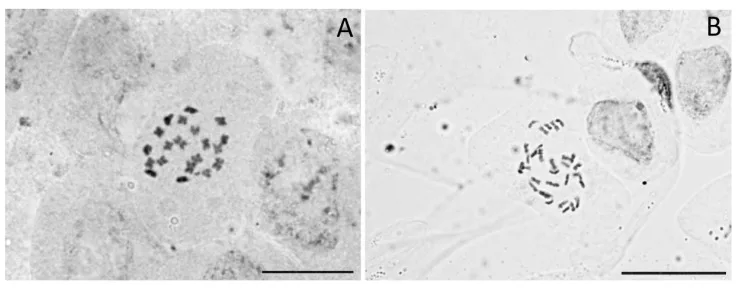
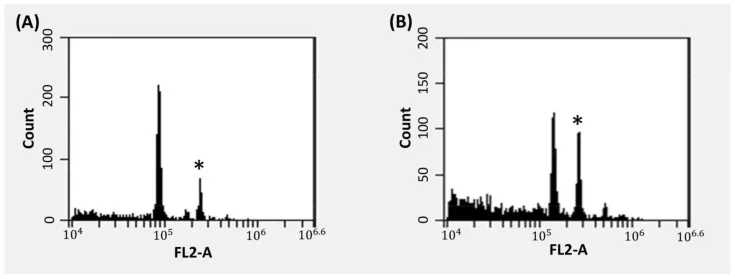
Ploidy is determined by flow cytometry: the instrument measures the amount of DNA in cell nuclei. Diploids in Balant and colleagues’ study had 1.8-2.2 picograms of DNA per nucleus; the triploid had 2.9. For confirmation, chromosomes are counted under a microscope, usually in root tips. Balant et al., 2022, Crawford et al., 2021
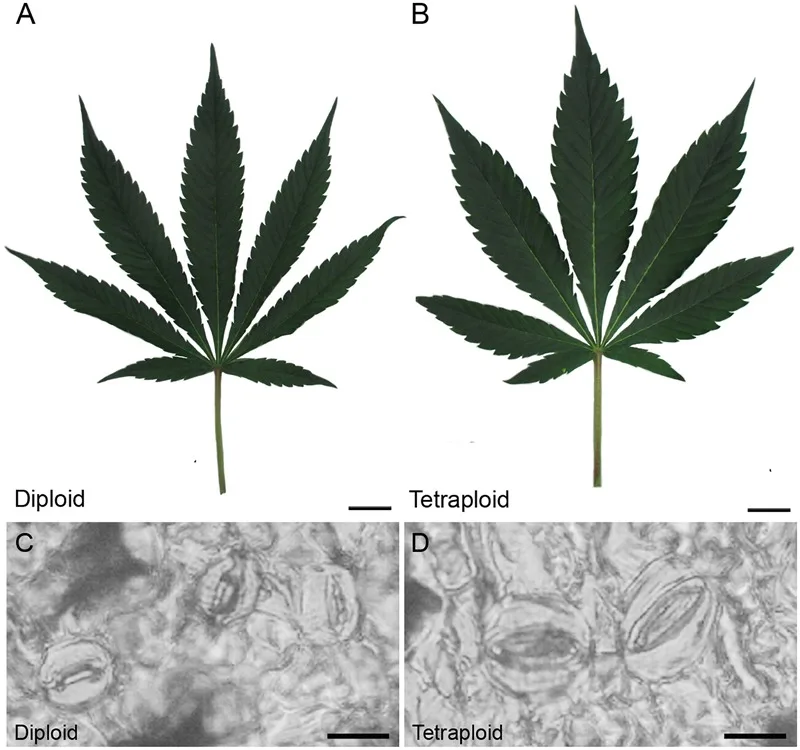
Stomata provide an indirect sign. The tetraploid in Parsons and colleagues’ study had 256 stomata per square millimetre of leaf, versus 552 in the diploid, and the stomata themselves were larger. The plant’s general appearance cannot establish ploidy. Parsons et al., 2019
Who sells triploids
- Dark Heart (California), January 2022: PistilGuard, described by the company as “virtually seedless even under pollen exposure.” Initially, sales were limited to customers and trial partners. Greenhouse Grower
- Humboldt Seed Company, January 2024: OG Kush Triploid and Donutz Triploid. Cannabis Science and Technology
- Trilogene Seeds, April 2024: a triploid range in which, according to the company, seeds “virtually disappear.” Cannabis Science and Technology
- Remix Genetics and Hidden Harvest (Canada): University of Guelph lines, with initial sales planned for early 2024. In April 2025, the university announced the release of tetraploid and triploid lines. StratCann, University of Guelph
- Oregon CBD: triploid industrial hemp varieties Lifter, Suver Haze, White CBG and others labelled Seedless. Cornell University, 2022
The statements here about seeds, yield and THC come from the companies themselves. The independent trials described above were conducted on industrial hemp.
Frequently asked questions
Is triploidy a mutation?
Yes, a genome mutation: the number of chromosome sets changes. It does not produce a distinctive leaf shape like Freakshow or Duck.
How many chromosomes does triploid cannabis have?
30, three sets of 10. Ordinary cannabis has 20; a tetraploid has 40.
Can you recognise a triploid by its appearance?
No. Ploidy is determined by flow cytometry or chromosome counting.
Will a triploid definitely produce no seeds?
Not definitely. In trials, there were 77-99.5% fewer seeds than in diploids, but individual seeds still formed.
Can a line be maintained from a triploid?
No, it produces almost no seeds. Triploid seeds are made each time by crossing a tetraploid with a diploid.
Does a flat stem mean polyploidy?
No, that is fasciation, a change in growth at the tip. Read more in the article on fasciation.
Conclusion
A triploid is a plant with three sets of chromosomes instead of two. It is produced by crossing a tetraploid with an ordinary plant, and sometimes arises on its own. Under pollen exposure, it has far fewer seeds, but not zero. Independent trials have not confirmed a general increase in yield or THC, and a triploid cannot be distinguished from an ordinary plant by appearance.