
Hey bro! Today Poland is on the agenda. Why did I even decide to dig in this direction? Because Poland is one of the most contradictory cases in Europe: on the one hand, you can still go to jail here for a joint in your pocket; on the other, pharmacies dispense medical cannabis, the CBD market is growing, and parliament is seriously discussing decriminalization. In other words, while some people are doing time, others are already getting legal treatment and marching for legalization.
In this first part of our big deep dive, we’ll figure out what the legal situation is, how regulation has evolved, where medical cannabis stands, what’s going on with recreational use, and how Polish society and politics see the issue today.
Legislation: legal norms and the history of regulation
Current law and penalties
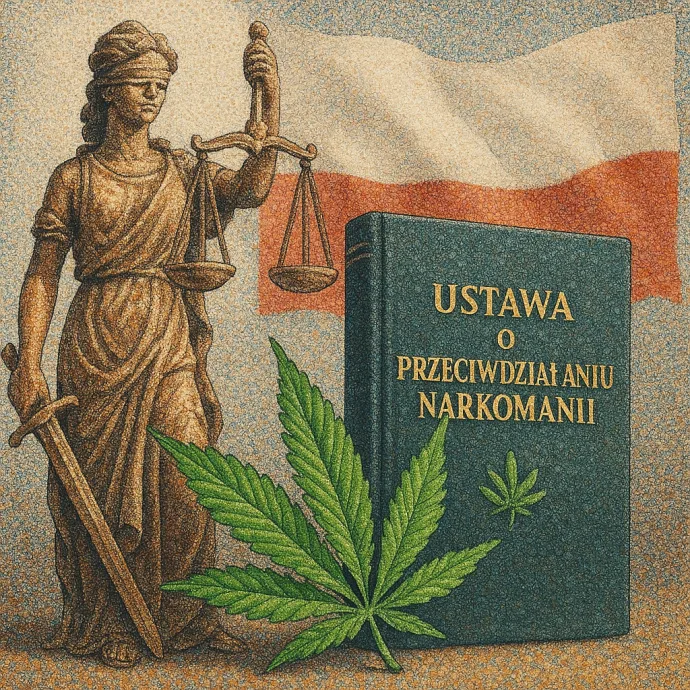
In Poland, recreational cannabis use is prohibited by law. Under the Act on Counteracting Drug Addiction (Ustawa o przeciwdziałaniu narkomanii), possessing or growing any amount of cannabis (except industrial hemp) is a criminal offense. The baseline penalty for possessing even a small amount of marijuana is up to 3 years in prison. If the amount is deemed “significant,” the penalty can go up to 10 years behind bars. The law does allow for leniency: in a case of “lesser gravity,” the court may limit itself to a fine or up to 1 year of imprisonment. On top of that, since 2011 there has been a provision that lets law enforcement drop criminal proceedings for possession of an insignificant amount intended solely for personal use. Put simply, if someone is caught for the first time with a small amount for personal use and punishing them would serve no purpose, the case can be closed even before proceedings formally begin. However, the law sets no formal quantity thresholds for what counts as “insignificant” — the decision is left to investigators and the courts. So even though the law strictly criminalizes possession, in practice softer measures can apply to small amounts.
Definitions and exceptions
Polish law distinguishes between industrial hemp and all other cannabis. Fiber (industrial) hemp is defined as plants with no more than 0.3% THC in the flowering tops. Anything above 0.3% THC in the dried aerial parts of the plant (excluding seeds) counts as narcotic raw material (the so-called “zioło konopi innych niż włókniste” — literally “herb of hemp other than fiber hemp”). Marijuana, hashish and extracts are officially listed in Schedule I-N (strictly controlled narcotic substances) under a Health Ministry regulation. Their use is permitted only for medical, scientific or industrial purposes in accordance with the law. The only full exception to the possession ban is medical marijuana obtained with a prescription: if a person is carrying a cannabis preparation officially prescribed by a doctor, possessing it is not a crime.
Historical context
Cannabis has a long history in Poland: the plant was grown and used on the country’s territory for centuries, right up to the 20th century. The first restrictions came in the interwar period — Poland, like other countries, signed the 1925 International Opium Convention, which indirectly affected the weed trade. In 1930 legislation, hemp was mentioned for the first time as a substance harmful to health. In 1951, already in the era of the Polish People’s Republic, ganja was formally added to the list of narcotics, and its production and sale were outlawed. Notably, until 1997 possession and use were not considered criminal offenses — only distribution was prosecuted. It was only with the new version of the law in 1997 that Poland criminalized the very act of possessing drugs, including marijuana, for the first time. In the 2000s the laws got tougher, but mounting criticism of repressive policy led to partial liberalization in 2011, when amendments introduced discretion (the right not to prosecute) for small amounts, as described above.
Emerging reforms
In recent years, reforming cannabis legislation has been actively debated. Until 2023, the ruling party (the conservative PiS) consistently opposed legalization and stuck to a hard line. But in the fall of 2023, the parliamentary elections reshuffled the political landscape: a coalition of parties came to power, many of which are more open to the idea of decriminalizing weed. Against this backdrop, work resumed in the Sejm on initiatives to soften the law. In November 2024, after the change of government, the relevant Sejm committee endorsed the concept of decriminalizing 15 grams and one plant, sending the proposal to the new prime minister, Donald Tusk, for the government to work out its position. In parallel, a cross-party working group on marijuana policy reform was set up in parliament. For example, in September 2024 the “Parliamentary Group for the Depenalization of Marijuana” took shape, led by MPs Klaudia Jachira and Ryszard Petru, aimed at finding compromise solutions that would allow possession of small amounts. Also, in December 2023 the libertarian wing of the Confederation party announced it was setting up a team of experts to prepare a bill legalizing recreational marijuana. Full legalization with a regulated market, though, needs broader support, and the public debate around it continues.
Medical use: regulation and access
Legalization of medical cannabis
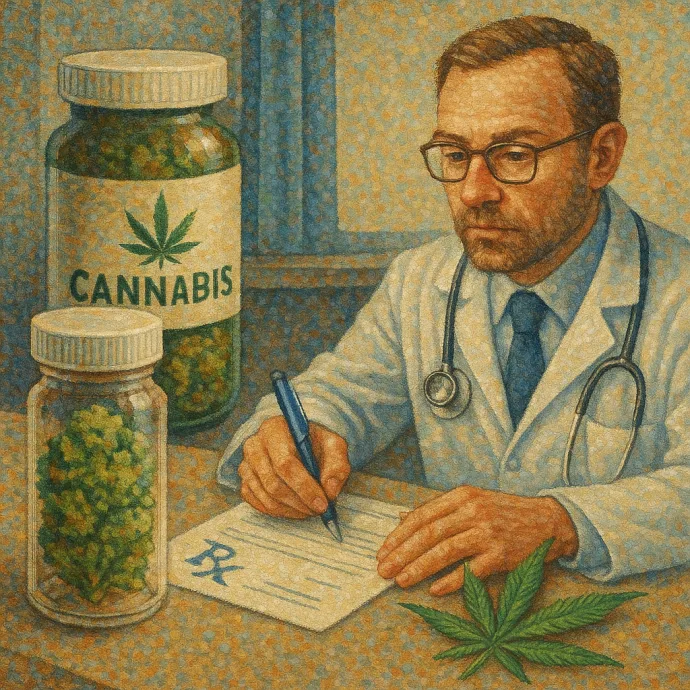
Medical cannabis in Poland was legalized by a law passed in July 2017 (an initiative of MP Piotr Liroy-Marzec from the Kukiz’15 movement). The amendments took effect on November 1, 2017, changing the Act on Counteracting Drug Addiction. From that moment on, dried flowers were officially recognized as a pharmaceutical raw material from which pharmacies can compound prescription medicines. In other words, any licensed doctor in Poland gained the right to prescribe herbal cannabis preparations — under the same rules as other controlled substances (opioid painkillers, for example). The law does not limit the list of conditions — the decision on indications is left to the doctor, although the lack of official clinical guidelines makes doctors cautious. Currently, several medical marijuana varieties with different THC:CBD (tetrahydrocannabinol and cannabidiol) ratios are available in Poland. A pharmaceutical spray, Sativex — THC and CBD in a 1:1 ratio — is also registered and used for spasticity in multiple sclerosis.
Production and imports
Initially, Polish law banned the cultivation of medical cannabis by private individuals or commercial companies. Patients have no right to grow plants themselves for treatment. So from 2017 on, all medical cannabis was imported — primarily from Canada, the Netherlands, Germany, and later Denmark and Portugal. This led to high prices and periodic shortages: pharmacy stocks depended on imports, which didn’t always meet demand. In response to patient complaints, the law was amended in March 2022: research institutes are now allowed to cultivate non-fiber cannabis (above 0.3% THC) to obtain raw material for medicines. A special license from the Chief Pharmaceutical Inspector (GIF) is required, and cultivation is possible only under the umbrella of state research institutions supervised by the Ministry of Agriculture. Still, it took more than a year and a half to actually get domestic production going: in December 2023 the first permit for a legal medical marijuana plantation was issued — in the village of Konopnica (Lublin Voivodeship). That was an important milestone: for the first time, medicinal cannabis will be produced on Polish soil, which could bring prices down and end the dependence on imports.
Access for patients
Officially, any patient with a medical indication can get a prescription for these preparations in Poland, but in practice access remains limited. Treatment is fairly expensive because the Ministry of Health doesn’t include cannabinoid preparations on the reimbursement list. Patients have to pay the full cost out of pocket, which adds up to significant sums for the chronically ill. (Only in isolated cases has the Health Ministry covered costs through individual access programs on vital medical grounds.) On top of that, few doctors are eager to prescribe weed: according to surveys, more than 60% of Polish doctors admit they don’t know enough about medical cannabis, and about 93% are in favor of clear official guidelines for its use. Even so, the number of patients using cannabis therapy grew every year. By the end of 2022, doctors were writing roughly 3,000 new prescriptions a month. In 2023, access to prescriptions became easier through specialized clinics and telemedicine services, and a trend emerged of some people getting medical marijuana essentially for recreational use. In response, starting in the fall of 2024, the authorities tightened the prescribing requirements: an in-person doctor’s visit (instead of a remote consultation) is now mandatory for every prescription. This led to a noticeable drop in dispensing: for example, about 68,000 doses or packages were dispensed in October 2024, and only 28,000 by December. A representative of the Supreme Medical Chamber commented that such a drop was to be expected, since “previously a significant share of the medical stuff was used not for medical reasons, but for recreation.” Going forward, Poland’s medical cannabis system will keep developing — with more domestic production, prices may come down over time and more doctors may become willing to prescribe it.
Recreational use: practice and prevalence

Complete illegality and no legal market
As noted, recreational (non-medical) marijuana use in Poland is illegal. There are no legal mechanisms for obtaining stuff for leisure — growing, selling and possessing are prohibited outside the narrow medical segment. Unlike some neighboring countries, Poland has not yet officially decriminalized even small amounts (there’s only the possibility of having a case dropped at the authorities’ discretion, but that’s not a citizen’s right — it’s a privilege applied selectively). So anyone who uses weed without a prescription does so at their own risk, breaking the law. Even so, marijuana remains the most widely used illegal drug in the country.
Prevalence of use
According to research, by the early 2010s Polish society was showing a noticeable rise in green interest. According to 2013 data, 17.3% of Poland’s adult population had tried bud at least once in their lives. Use is especially common among young people: about 17.1% of young adults (usually the 18–34 age group) reported smoking marijuana in the past year. That’s a pretty high level, comparable to some Western European countries, which speaks to how popular “weed” is among the new generation of Poles. Other studies note that over the past 20 years, cannabis use among Polish teenagers has grown several times over. Despite the threat of punishment, tens of thousands of people in the country use marijuana recreationally on a Regular seeds can produce both male and female plants. regular ↗ basis.
Law enforcement in practice
Polish police and courts register thousands of weed-related cases every year. Most are minor offenses for possessing a few grams. Usually, if someone is caught for the first time with a small amount, the authorities try not to let the case end in actual prison time. They may settle for a suspended sentence or community service or, as mentioned, drop the investigation altogether at an early stage. Still, a significant number of young people get criminal records under the “drug” article for marijuana every year. Human rights advocates keep criticizing this, pointing out that the punishments are disproportionate to the harm. A peculiar status quo has taken root in society: the police keep fighting distribution (seizing large shipments, shutting down underground grows), but small-scale end users are often treated leniently. This situation persists pending possible official decriminalization, which is under discussion.
Related phenomena
Recreational marijuana use in Poland is often tied to youth subcultures — for example, the reggae and hip-hop music scenes. Users are also more concentrated in cities, especially among students and the creative intelligentsia. By comparison, so-called “hard” drugs (amphetamines, opiates) are used much less often, and society views them far more negatively. Marijuana, on the other hand, has carved out a special place: despite the bans, it has firmly entered the everyday life of part of the population as a relatively familiar psychoactive substance.
Public opinion: the attitudes of society, youth, politicians and the media
Society’s general attitude
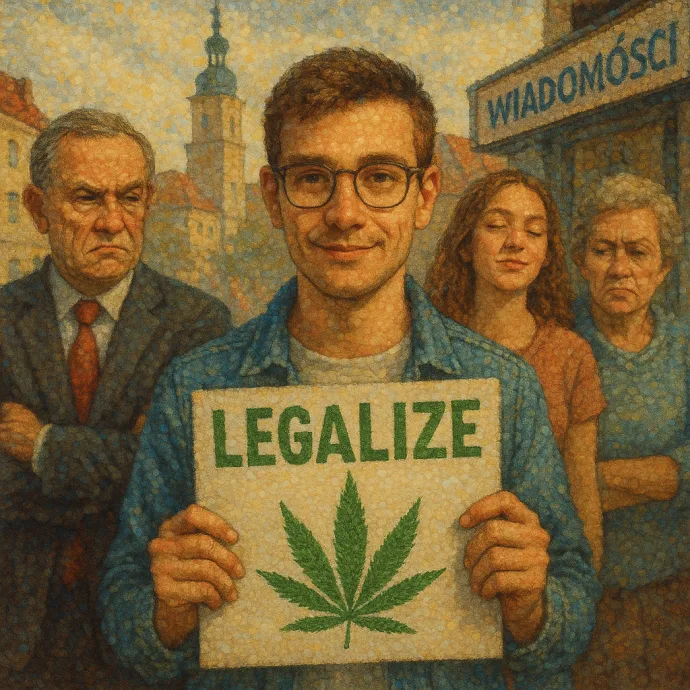
Polish society is generally fairly conservative about drugs, but on marijuana, views are gradually shifting. Current polls show polarized opinions: roughly half the population supports softening the policy, and half is against it. According to a 2023 study, 40.1% of Poles favor legalizing marijuana, while 45.1% oppose the idea. The rest are undecided. So opponents of legalization are slightly ahead, but the gap is small, and opinion is split almost down the middle. For comparison, in 2012–2015 there were significantly more opponents — around 60–70%. The trend of recent years is a gradual rise in tolerance. Especially notable is that most Poles don’t support prison sentences for minor cannabis-related offenses. According to a poll by the state-run Public Opinion Research Center (CBOS), 73.4% of adult respondents are against jailing people for possessing small amounts of marijuana for personal use. In other words, even many opponents of full legalization agree that a “joint in your pocket” shouldn’t be punished as a crime. This creates a public demand for depenalization that politicians can’t ignore.
Youth
The most liberal group when it comes to ganja is young people (18–30). Among young Poles, the share of those who have tried marijuana is much higher, and so is support for legalizing it. Polls show that up to 65–70% of young people are in favor of decriminalizing (removing penalties for) marijuana. Of course, there are also those with a negative attitude (usually for religious or sports-and-health reasons), but overall, the youth audience is more progressive on this issue than older people. Public drug prevention campaigns in schools usually put marijuana in the “soft” drug category and warn about the risks, but without the old melodrama.
Politicians and parties
Poland’s political spectrum is divided on cannabis. Conservative forces (especially Law and Justice — PiS, the ruling party from 2015 to 2023) take a hard line: they oppose both recreational legalization and broad decriminalization. In PiS rhetoric, marijuana often featured as a “gateway drug” leading to hard addiction, and the party rejects legalization. On the other side, liberal and center-left parties are more open to reform. Back in 2012–2015, the leader of the Twój Ruch movement, Janusz Palikot, and MP Robert Biedroń publicly advocated legalization. The well-known libertarian Janusz Korwin-Mikke also backed the idea of a free weed market. The breakthrough came with lobbying for medical use: thanks to the efforts of rapper-turned-MP Piotr Liroy-Marzec (allied with a number of progressive lawmakers), the medical cannabis law passed almost unanimously. Today, the clear supporters of recreational marijuana legalization are the left-wing coalition (New Left), some liberals from Civic Platform, and part of the Confederation party (its libertarian youth wing). For example, Confederation MP Konrad Berkowicz said in 2023 that his party would push for full legalization. At the same time, many moderately conservative politicians are still taking a cautious stance, waiting to see how the public reacts. Overall, the topic is gradually gaining legitimacy: where talk of legalization used to be considered fringe, it’s now discussed in the Sejm, and the issue is on the new government’s agenda.
Media and public discourse
The Polish media are covering cannabis more and more actively. The biggest news portals (Onet, Gazeta, TVN24 and others) publish pieces on how legalization has worked abroad (for example, in Canada, Uruguay, a number of US states, and the recent reforms in Germany), comparing it with the situation in Poland. The tone of the press varies: conservative outlets (“Sieci,” “Gazeta Polska”) emphasize the risks and cases of abuse, while liberal ones (“Gazeta Wyborcza,” “Newsweek Polska”) more often give the floor to experts who point out the advantages of regulation over prohibition. There’s an interesting discourse analysis study of the Polish daily press: it showed that terms like “drug addict” and “threat to youth” dominated in the 2000s, but by the late 2010s the media narrative had shifted toward discussing regulation and public health, not just repression. Many outlets now openly ask: “Should Poland follow the Western countries’ example on legalization?” In popular culture (TV shows, internet memes), marijuana is often portrayed in a half-joking, tolerant way, which also reflects the softening of public opinion.
Conclusion
Poland’s cannabis regulation system is a complex and contradictory organism. The law remains harsh, but common sense is already breaking through the cracks. Repression coexists with the first medical marijuana plantations, bans with a growing CBD market, and young activists are changing the language of public debate.
At the same time, the country has already come a long way, from total denial to partial legalization — and that movement continues.